- Car
- Ralt (0 offers)
Buy Ralt Classic Cars
Ralt single-seaters connect Ron Tauranac’s Australian beginnings with some of the most competitive customer racing cars of the 1970s and 1980s. Find documented RT1, RT3, RT4 and RT30 racing cars for historic competition and collection on Classic Trader.
Search results
Currently, there are no matching listings for your search.
Create search alert
Let yourself be notified as soon as a listing is published that matches your search filters.
Ralt listing references from Classic Trader
Below you will find listings related to your search that are no longer available on Classic Trader. Use this information to gain insight into availability, value trends, and current pricing for a "Ralt" to make a more informed purchasing decision.
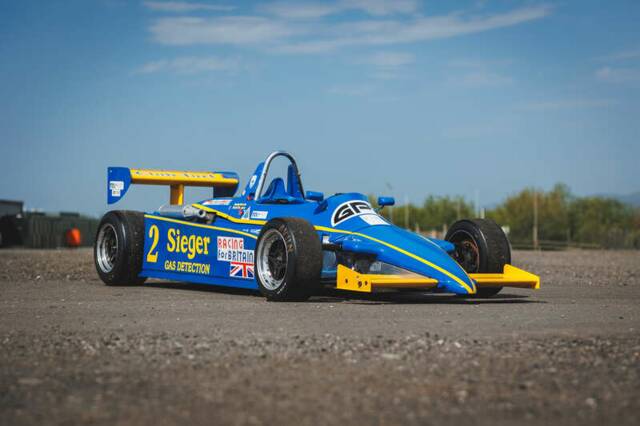
1983 | Ralt RT3 Formula 3
1983 Ralt Formula 3 RT3/83 #375 - Ex-Martin Brundle

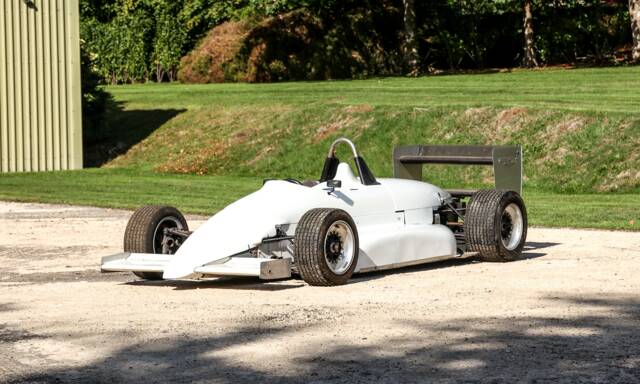
1983 | Ralt RT3 Formula 3
1987 Ralt Formula 3
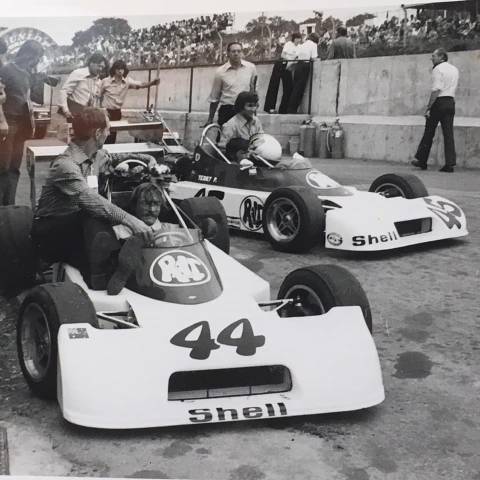
1975 | Ralt RT1
1 of 2 Ralt works cars, competed in the F3 European championship 1975

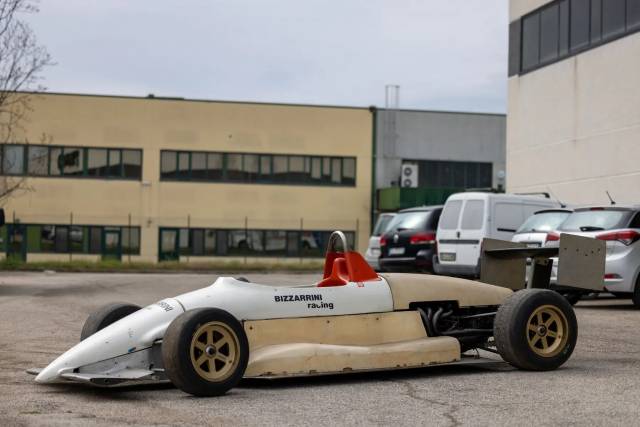
1985 | Ralt RT30/86
Giotto Bizzarrini's Car - Historic Project!

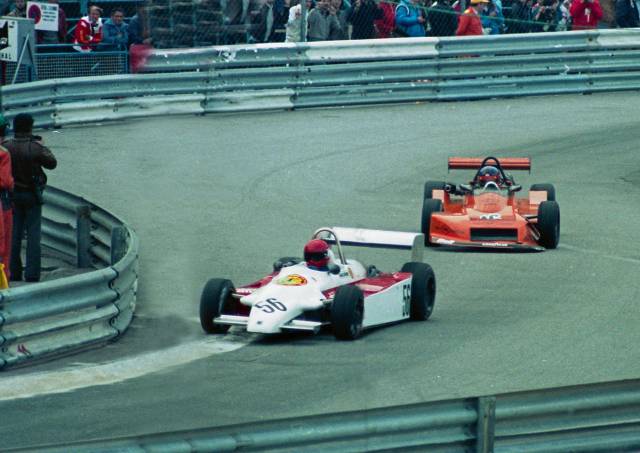
1979 | Ralt RT3 Formula 3
1979 Ralt RT3 F3
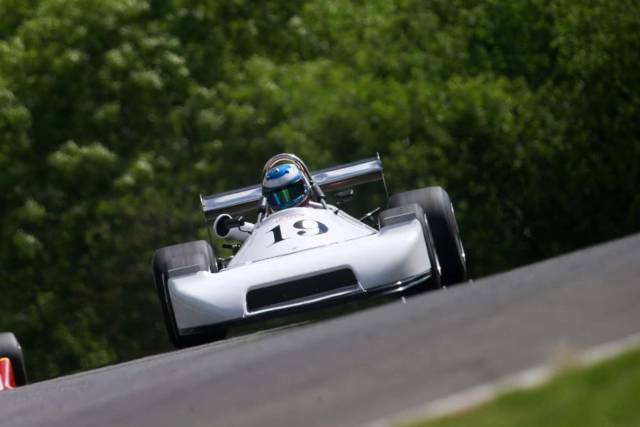
1978 | Ralt RT1
1978 Ralt RT1 (FIA)
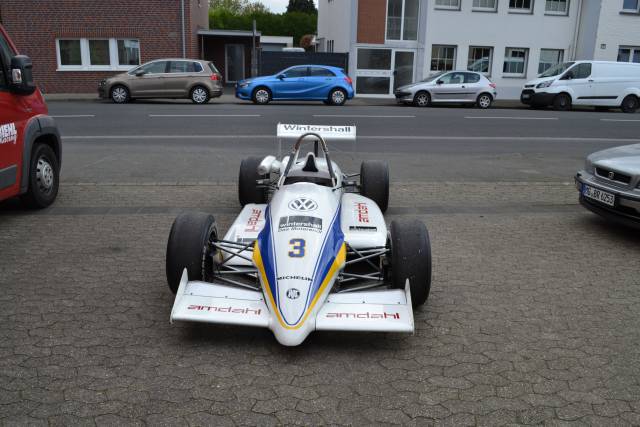
1986 | Ralt RT30/86

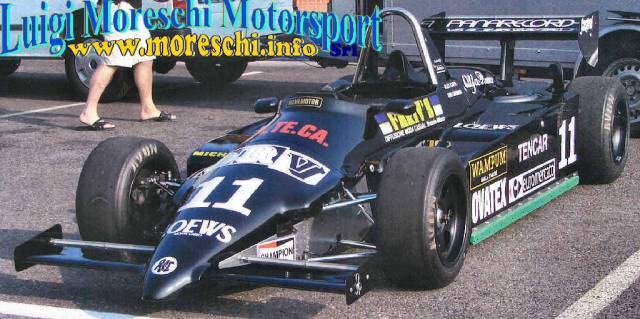
1984 | Ralt RT3 Formula 3
RALT RT3/84 F3
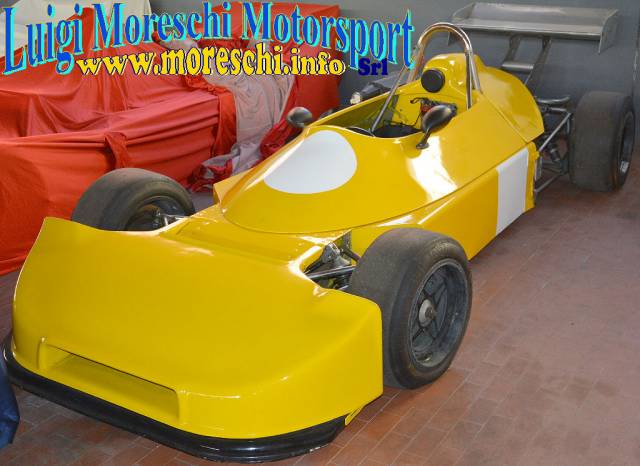
1977 | Ralt RT1
Ralt RT1 F3 Toyota Novamotor
Create search alert
Let yourself be notified as soon as a listing is published that matches your search filters.
Ralt: Australian roots, international reach
Ralt was never a road-car marque. It is the name on purposeful customer single-seaters: cars conceived to be serviced, set up and raced by private teams rather than admired from behind a velvet rope. Yet the story begins in Australia. The name joins the initials of Ron and Austin Lewis Tauranac, brothers who built specials in New South Wales during the 1950s. Ron Tauranac’s early Australian work, and his long friendship with Jack Brabham, formed the practical engineering outlook that later made Brabham and then Ralt such respected names.
Tauranac moved to Britain, partnered with Brabham in Motor Racing Developments and helped establish Brabham as both a Grand Prix force and a prolific constructor of customer machinery. When he left the Brabham business after Bernie Ecclestone acquired it, Tauranac returned to independent design. Ralt was founded in 1974; its first major product, the RT1, appeared for 1975. The formula was simple but not simplistic: an aluminium monocoque, a steel rear structure where practical, conventional suspension geometry and components a competent race workshop could understand.
That approach mattered in Australia. The country’s vast distances, smaller specialist network and demanding summer calendar make a racing car’s serviceability more than a virtue. Australian owners have long relied on carefully planned freight, local machinists and marque-minded preparers. A Ralt with sound drawings, proper setup notes and a sensible spares package is therefore much more attractive than a superficially complete car whose history and components cannot be traced.
The RT1 was adaptable across Formula 2, Formula 3 and Formula Atlantic specifications. It also quickly proved fast: Larry Perkins won the 1975 European Formula 3 Championship in an RT1, a result that resonates particularly strongly with Australian enthusiasts. Perkins had already made his name at home before becoming one of the most accomplished Australian racing engineers and drivers of his generation. The RT1 gave Ralt credibility, while its mix of aluminium structure and accessible rear end set a template for the marque.
By the turn of the decade Ralt had become a defining constructor in junior single-seater racing. The RT3, introduced for 1979, evolved the idea into a ground-effect Formula 3 car. Through the early 1980s it was the chassis to beat in Britain and Europe. Drivers who later reached Formula 1—including Nelson Piquet, Derek Warwick, Elio de Angelis, Jonathan Palmer and Ayrton Senna—raced Ralts during formative seasons. Senna’s 1983 British Formula 3 campaign with West Surrey Racing in an RT3 is especially well documented, which makes provenance claims around surviving RT3s a field requiring exceptional care.
Alongside Formula 3, the RT4 became one of the important Formula Atlantic chassis of its era. Formula Atlantic had genuine relevance in Australia, particularly when the Australian Grand Prix was run as a major national event before its Formula 1 era. At the 1981 Australian Grand Prix at Calder, Brazilian Roberto Moreno won in a Ralt RT4, beating a field that included much more powerful Formula 5000 machinery. That success links an English-built customer car directly to Australian Grand Prix history and helps explain why an RT4 with local race documentation deserves close attention.
Ralt continued into later Formula 3 with the RT30 and subsequent derivatives, shaped by the post-ground-effect regulations of 1985. It also built Formula 3000 cars such as the RT20, RT21 and RT22. Tauranac sold the business to March in 1988. Later Ralts can be compelling historic racing cars, but the independent Tauranac period remains the heart of the marque for many collectors. Tauranac’s own reconstruction records approximately 1,083 Ralt cars, including 1,047 built under his direct responsibility. That useful total does not authenticate any individual car: for a racing chassis, identity always rests on its number, logbooks, period photographs and continuous paper trail.
Why Ralt matters to collectors
Ralt’s appeal is its combination of serious period competition history and unusually rational design. An RT1 can represent an approachable entry to historic single-seater ownership; an RT3 is a central artefact of early-1980s Formula 3; an RT4 pairs Atlantic performance with Australian Grand Prix significance; and an RT30 reflects the regulatory reset that followed the ground-effect era. These are representative points within the make, not interchangeable labels.
For an Australian buyer, the strongest Ralt is rarely the one with the loudest former-driver claim. It is the car whose individual story can be demonstrated. A chassis advertised as having a Senna, Piquet, Perkins or Moreno connection may have been built to the same specification, run by the same team, or worn similar colours without having been their actual race car. The difference affects historic eligibility, collectability and value. Ask for dated photographs that show the chassis number or distinctive features, contemporary entry lists, old CAMS/Motorsport Australia logbooks, overseas competition records and correspondence with known owners.
Period correctness is not the same as untouched originality. Racing cars were altered while active: tubs were repaired, engines changed, suspension upgraded and bodywork replaced. A properly recorded replacement tub can be safer and more usable than an unrestored accident-damaged original. Conversely, a convincing-looking recreation may have limited value for FIA or domestic historic competition. The question is whether the car’s present configuration is plausible for its period and whether its changes are honestly recorded.
Engines also require context. An RT3 might carry a 2.0-litre Toyota, Volkswagen or Alfa Romeo Formula 3 engine; an RT4 is commonly associated with the 1.6-litre Cosworth BDA or BDD; an RT1 may have raced in several categories over its life. A later Ford Duratec installation can make a car enjoyable and practical in some events, but it does not automatically carry the same historic standing as its original specification. Before buying, establish the rules of the Australian category or overseas event you intend to enter, then match the car—not just its model name—to those rules.
Technical data: key Ralt single-seaters
These figures describe typical period configurations, not a specification sheet for every surviving car. In racing, weight, power, wheelbase, gearbox and even category can change with the date of competition. A seller should be able to explain exactly what is fitted, why it is fitted and when the work was done.
Market overview and buying tips in Australia
The Australian Ralt market is small, international and highly conditional. Price follows provenance, readiness, eligibility and spares more closely than paintwork or a famous model badge. A running RT3 with a verified tub, fresh engine and Hewland, current safety equipment, substantial logbook history and an appropriate historic passport is not comparable with a rolling chassis, a long-stored project or a car rebuilt from unrelated components.
Recent international references help frame an Australian budget, although freight, exchange rate and compliance can materially alter the landed figure. RaceCarsDirect marked an RT3-485 as sold in 2025 at £45,000 after a substantial 2024 build. A separate 1983 RT3 described with an HTP and fresh rebuild was advertised in Belgium late in 2025 at €51,000; that was an asking price, not a confirmed sale. In 2024, a complete RT4-661 with Duratec power, FT200 gearbox, history file and spares was marketed at €52,000. These are useful anchors for documented, raceable examples rather than universal valuations. A bare chassis may cost far less; a car with verified Australian Grand Prix, championship or major-driver provenance can sit far above them.
Translate overseas prices cautiously. The A$ amount moves with currency, crate or container freight, marine insurance, port and brokerage costs, and any remedial work discovered after arrival. A buyer considering a £45,000 car should budget from the landed, inspected and event-ready total—not the converted purchase price. A locally known Ralt can command a rational premium if its logbooks, support network and Australian history remove uncertainty.
For an imported racing car, first determine whether it will be permanently imported, temporarily imported for competition, or retained as an unregistered track-only machine. The Australian Border Force treats imported goods under customs rules; import duty and 10% GST can apply, with GST calculated on the customs value plus duty and certain transport and insurance amounts. Duty treatment depends on tariff classification, origin and documentary eligibility, so a customs broker should confirm it before funds are committed. Do not assume a 30- or 40-year-old racing car is automatically duty-free simply because it is historic.
The federal road-vehicle import process is separate from customs clearance. Most open-wheel Ralts are not realistic road cars: they lack the equipment and approval pathway expected for normal road registration. If road use is even contemplated, obtain written advice from the relevant state or territory authority before buying. Historic or club permit schemes are state-based, not a universal registration shortcut, and they generally impose eligibility, club membership, conditional-use and inspection requirements. For the normal owner, enclosed trailer transport, secure workshop storage and a clear plan for Motorsport Australia or organiser eligibility are the practical essentials.
Luxury car tax is another issue to check, rather than presume away. The ATO’s rules distinguish certain vehicles and circumstances, and thresholds change over time. A specialist broker or tax adviser can assess whether a particular imported racing car is within an exemption or subject to a charge. Keep the purchase invoice, shipping documents, import declaration and valuation evidence. This file matters at resale as well as at the border.
Inspection priorities for a Ralt:
- Verify the chassis first. Match the stamped or manufacturer number, identification plate, old logbooks, FIA Historic Technical Passport where applicable, invoices and photographs. Contact registries, prior teams and preparers where a major history is claimed.
- Examine the monocoque professionally. Inspect aluminium skins, rivet lines, honeycomb areas, front bulkhead, rollover-bar mounts, suspension pick-ups and crash structure for corrosion, dents, loosened fasteners and repaired accident damage. Request non-destructive inspection if the tub’s condition is uncertain.
- Measure rather than admire. Check suspension rockers, pushrods, wishbones, rod ends, uprights, bearings and pickup geometry. Fresh paint cannot prove alignment, crack-free components or accurate corner weights.
- Demand engine and gearbox evidence. Obtain the engine builder’s identity, dyno sheet, hours since rebuild, oil-analysis history if available and permitted rev limit. For a Hewland, inspect the casing, dog rings, gears, differential and included ratios. A gearbox rebuild, suitable Atlantic engine or scarce period parts can change the true acquisition cost quickly.
- Audit safety and consumables. Fuel-cell age, belts, extinguisher system, seat, brake lines, electrical isolation and wheel condition may determine whether the car can run at its first meeting. Expired safety items are normal on stored historic racers, but should be priced as immediate work.
- List every spare. Nose cones, sidepods, moulds, wheels, wet wheels, gear sets, suspension pieces, setup sheets and transport stands have real financial and practical value in Australia. Confirm that they are included in the sale, not merely shown in photographs.
Parts availability is best described as manageable rather than effortless. Hewland expertise, fabrication, bearings, rod ends and many consumables can be sourced in Australia or internationally, but model-specific castings, original bodywork and period engine parts may require patient searching. Buy the strongest package of car, documentation and spares you can afford. An apparently cheaper project can absorb its saving in freight and workshop hours before it ever reaches a circuit.
The Ralt driving experience
A Ralt is not a softened interpretation of a racing car. The driver sits low between the tub, fuel cell and exposed wheels, with airflow, vibration and surface changes transmitted directly through the structure. At speed, a well-sorted RT3 develops the calm, planted feeling expected of a ground-effect Formula 3 car, but it asks for smooth inputs and an understanding of its tyres, ride height and aerodynamic balance. Its rewards are the clarity of the steering and the satisfying mechanical precision of the Hewland shift.
An RT1 feels more visibly mechanical and, in the right specification, can be a compelling way to learn a historic single-seater’s rhythms. The RT4 raises the sense of occasion. Its Atlantic engine and aerodynamic grip create a quicker, broader-shouldered experience, especially on a fast Australian circuit where the car can stretch its legs. Formula 3000 Ralts are different again: more power, greater load, more intense preparation and a correspondingly larger consequences budget.
For a first historic Formula-car owner, the best purchase is usually the Ralt that recently ran under knowledgeable supervision, not the fastest-looking restoration project. Arrange a test or shakedown day with the preparer present. Watch oil pressure and water temperature, inspect leaks after the run, review setup notes and ask how the car starts from cold. Respectful use protects scarce machinery; it also makes the ownership experience far more rewarding.
Form shaped by function
Ron Tauranac’s design language was engineering-led. The RT1’s planar aluminium surfaces, practical rear frame and simple glassfibre bodywork prioritised strength and access. On the RT3, aerodynamics became visibly structural: a narrow tub allowed broad sidepods and underbody work, while inboard suspension reduced disturbance to the airflow. The RT30 makes the next regulations-driven step unmistakable, with a flat-floor solution and its striking asymmetric protective and cooling forms.
That functional honesty is part of a Ralt’s visual appeal. Correct livery can enhance a car, particularly where photographs show it in a period team scheme, but colour alone proves nothing. Treat claims such as “Senna car”, “West Surrey car” or “Australian Grand Prix colours” with precision. Same type, same team, period-style livery and documented race history are four different things. The last is what collectors should pay for.
Formula Atlantic and Australian Grand Prix heritage
Ralt’s Australian significance is more than the birthplace of its designer. Before Formula 1 assumed control of the Australian Grand Prix in 1985, the event’s identity was shaped by local racing culture and eclectic grids. Formula Atlantic cars could challenge, and on the right day defeat, larger-engined machinery. Roberto Moreno’s 1981 Calder victory in an RT4 is among the memorable examples. It gives an Australian owner a tangible connection to the nation’s pre-Formula 1 Grand Prix story.
The wider Ralt record is equally rich: European Formula 2 success, junior-category championships and an extraordinary list of future Grand Prix drivers. However, make-level heritage should be an invitation to investigate individual cars, not a shortcut around verification. The right Ralt can be a competitive historic racer and a genuinely important piece of Australian-connected motor-racing history; the wrong one can be an expensive collection of period parts.
Summary: choosing a Ralt in Australia
Ralt classic cars represent Australian-born engineering with world-class customer-racing results. RT1, RT3, RT4 and RT30 each illuminate a different chapter, while the RT4’s Formula Atlantic and 1981 Australian Grand Prix link is especially meaningful locally. Find a car with a confirmed identity, honest period specification, continuous documentation, current mechanical evidence and a realistic Australian import and operating budget. Then a Ralt is not merely a display piece: it is a direct, credible route into historic single-seater competition.