- Car
- Radical (0 offers)
Buy Radical Classic Cars
Radical builds British sports racers for drivers who measure a car in laps, not kilometres. From an early 1100 Clubsport to a current SR3 or turbocharged SR10, a documented, supported Radical can make Australian track days and one-make racing remarkably direct.
Search results
Currently, there are no matching listings for your search.
Create search alert
Let yourself be notified as soon as a listing is published that matches your search filters.
Radical listing references from Classic Trader
Below you will find listings related to your search that are no longer available on Classic Trader. Use this information to gain insight into availability, value trends, and current pricing for a "Radical" to make a more informed purchasing decision.
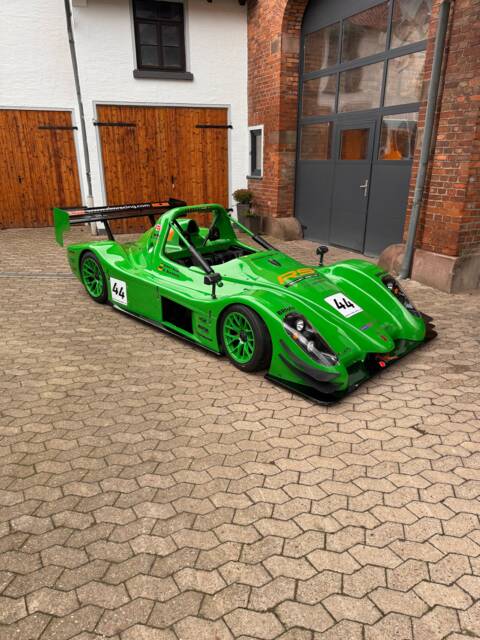
2014 | Radical SR3 RS 1500
Radical SR3

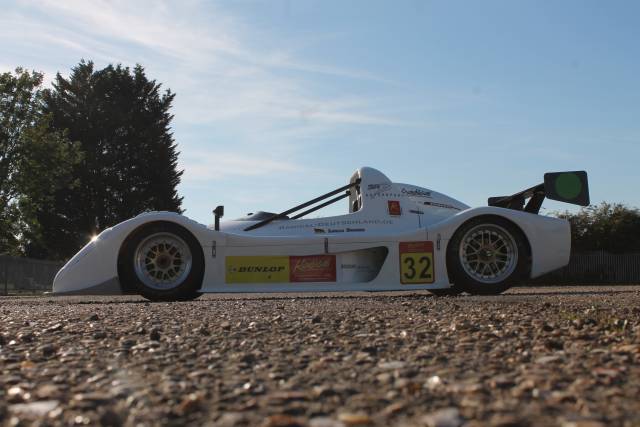
2005 | Radical SR3

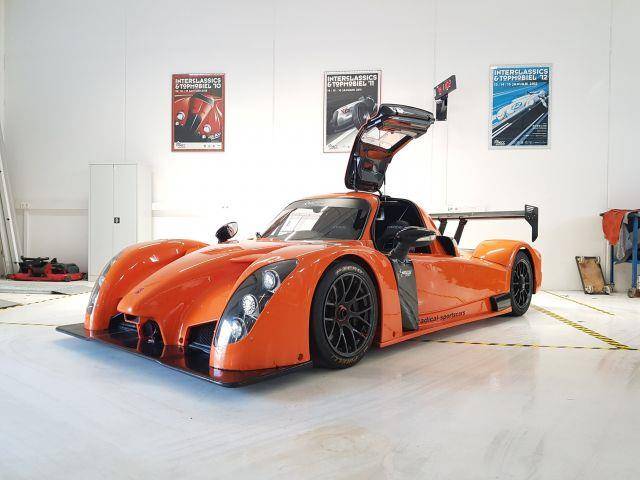
2016 | Radical RXC 500 Turbo
Sonstige Sonstige
Create search alert
Let yourself be notified as soon as a listing is published that matches your search filters.
Radical: a different kind of collector car
Radical is unusual among collector marques because it did not begin by building a road car and then adapting it for motorsport. Phil Abbott and Mick Hyde founded Radical Sportscars in 1997 at Peterborough, Cambridgeshire, with the opposite idea: a compact, purpose-built sports racer that a determined private owner could run, repair and race. Its name is direct, but the engineering logic is pragmatic. A tubular steel spaceframe, lightweight glass-reinforced-plastic body panels, motorcycle-derived power and meaningful aerodynamic downforce offer a level of circuit performance that conventional sports cars struggle to approach at comparable weight and cost.
The first 1100 Clubsport used an 1,100 cc Kawasaki motorcycle engine and established the formula: open cockpit, exposed intentions, little unnecessary mass and a chassis designed to be used hard. The 1300 Prosport followed in 1999 with a hand-built Radical Performance Engines (RPE) unit, larger slicks and adjustable rear wing. These early cars are now particularly appealing to Australian historic and club-level enthusiasts because their layout is simple, their pace remains vivid and they represent the period before Radical became an international single-make racing presence.
The make’s decisive model arrived in 2002. The two-seat SR3 made the sports-racer experience more accessible without making it soft, and became Radical’s enduring volume reference. Early Tracksports evolved through aerodynamic updates, the SR3 RS from 2009, the RSX introduced late in 2014, then the XX and XXR generations. The model-year register records the first SR3 as a 2002 car, while the company has described the line as its best seller, with more than 1,300 examples delivered by 2020. Its continuing production matters in Australia: an older car is part of a long-lived ecosystem rather than an orphaned prototype.
Radical widened the range rather than abandoning its core. The compact SR4 revived the original Clubsport spirit; the SR8, launched in 2005, used Radical’s own high-revving V8 and brought near-prototype pace to amateur owners. The Radical Sportscar Registry records 272 SR8 chassis, making a sound, well-provenanced example a genuinely limited proposition. Radical also progressed to the SR9 LMP2 programme, first raced at Le Mans in 2006, and introduced the enclosed RXC in 2013. The RXC brought coupe bodywork, four-wheel-derived turbo power in some versions and GT racing ambitions, while retaining the marque’s low, cab-forward character.
In 2020 the SR10 added a turbocharged RPE-Ford EcoBoost four-cylinder and a Hewland six-speed transaxle. It was conceived for owners wanting greater torque and longer service intervals without losing the quick reactions of an SR chassis. Today’s SR3 XXR and SR10 XXR show that Radical is still a live motorsport maker, not merely a historic badge. That is a valuable distinction for an Australian buyer: support, technical knowledge, spares and an active race paddock can be more important than an odometer reading.
What defines a Radical
The defining experience is power-to-weight combined with aerodynamic grip. A Radical does not need supercar horsepower to feel startling. The current SR3 XXR is quoted at 232 bhp and 620 kg; even before downforce enters the equation, that is a serious ratio. It also has a sequential gearbox, race brakes, slick-capable suspension geometry and a seating position that places the driver close to the front axle. In a quick corner, the car’s aerodynamic platform and low mass let the driver carry speed rather than merely waiting to accelerate.
This is not a make whose appeal is confined to one configuration. An early Clubsport rewards mechanical sympathy and momentum; an SR3 offers the broadest combination of pace, passenger seat and established competition infrastructure; the SR8 has the sensory event of an RPE V8; an RXC gives a more enclosed, GT-like environment; and an SR10 supplies turbocharged torque and a more durability-focused powertrain. They are examples of one philosophy, not separate luxury trim levels.
The construction has practical advantages. GRP bodywork can often be repaired or replaced more economically than exotic road-car panels, and a steel spaceframe makes damage inspection conceptually straightforward. But “straightforward” does not mean cheap or casual. A repaired Radical should be assessed like a race car: jig records where applicable, alignment figures, suspension pickup integrity, photographs before refinishing and invoices from a recognised preparer matter far more than glossy paint.
For Australians, right-hand drive (RHD) is a useful preference rather than an automatic guarantee of suitability. Radical has supplied RHD, LHD and, on later cars, centre-hand-drive specifications. RHD eases paddock familiarity for drivers used to Australian road cars and may strengthen local resale appeal, but seat moulding, steering configuration, pedal position, control layout and category eligibility should be confirmed from the actual chassis specification. A professionally maintained LHD or centre-seat racer is usually a better purchase than an undocumented RHD example.
Technical data across the Radical range
The figures below identify representative Radical types. Specifications vary by year, engine option, race kit and series regulations; a buyer should treat the car’s build sheet and logbook as the authority.
The chassis is generally a welded tubular spaceframe clothed in composite panels, not a monocoque supercar. That helps explain both the direct steering feel and the inspection priorities. Suspension is race-car double-wishbone in character, while later cars may carry adjustable dampers, air jacks, data systems and FIA fuel cells. A 2020 SR3 XX brochure listed 1,340 cc and optional 1,500 cc RPE-Suzuki engines, a six-speed paddle-shift sequential gearbox, Quaife limited-slip differential, 76-litre FIA fuel cell and Life Racing electronics. Those are substantial assets only if their service histories are complete.
Market overview & buying tips
Australian Radical supply is smaller than the UK’s, so the best buying decision is rarely made by sorting on price alone. The local market has factory representation: Radical Australia East supplies new and used cars, genuine parts and mechanical components, while GWR Australia and Radical Australia West/Arise Racing provide further expertise. The SR3 XX has eligibility for the national RA Cup and state-level categories, while Radical Australia East identifies the SR10 for state competition such as the NSW Supersport Championship, club events and track days. Confirm the current regulations and class structure with the organiser before committing to a specific car.
Price anchors need context. A 2021 SR3 XX advertised in Western Australia in 2025 at A$125,000 plus GST included a rebuilt engine with 26.5 hours, dealer preparation, RHD, AiM SmartyCam, spare wheels, Intrax dampers and air jacks. That is a useful real Australian asking-price reference, not a universal valuation. In the UK, a 2026 SR3 sales-history dataset placed the median at £28,528, with £16,742 low and £90,294 high. At an illustrative A$1.95 to £1, that equates to about A$56,000, A$33,000 and A$176,000 before freight, taxes, biosecurity, compliance and preparation. The spread is exactly the point: engine hours, specification, spares and crash history move a Radical’s value far more than paint colour or nominal age.
For new-car context, Hagerty UK reported 2023 list prices of £46,995 for an SR1 and £125,900 for an SR10. Using the same rounded exchange-rate illustration, those are roughly A$92,000 and A$245,000 before Australian landed costs. Do not use converted foreign prices as a substitute for a dealer quote. Currency movements, sea freight, insurance, port fees, duty, GST, possible luxury-car tax, brokerage, cleaning, storage and local commissioning are all separate variables. A locally supported, ready-to-run Australian car can be better value than a superficially cheaper UK import.
The inspection order should be race-car specific:
- Identity and provenance: Match chassis plate, firewall stamping where fitted, logbook, build sheet and sale invoice. Confirm actual build and delivery year; Radical chassis sequences can distinguish model years more reliably than registration paperwork.
- Hours and life limits: Request engine, gearbox and differential hours, ECU downloads, rebuild invoices and the preparer’s recommended next-service point. “Low use” without records is not evidence.
- Structure and suspension: Inspect the spaceframe, welds, front and rear crash structures, wishbones, rod ends, uprights and suspension pick-ups before judging cosmetic bodywork. Seek evidence of proper post-impact measurement and alignment.
- Consumables and safety: Date the fuel cell, belts, fire system and seats; assess discs, calipers, dampers, tyres, wheel bearings and dry-sump hoses. Competition equipment expires even when it looks clean.
- Systems and spares: Test cooling, wiring, PDM/ECU, dash, gearshift and data logging. Itemise spare wheels, noses, wings, splitters, ratios, starter equipment and setup tools. These can materially alter the true purchase cost.
An independent pre-purchase inspection by a Radical-experienced race workshop is sensible. It should include a cold start, leak check, clutchless shift operation where appropriate, corner-weight/alignment discussion and a review of service-hour evidence. Ask whether the quoted price includes GST, and distinguish a genuine tax invoice from an informal private sale.
Importing to Australia: build the landed-cost plan first
An imported Radical must not be assumed road-registerable because it has UK plates, a road-going derivative or RHD. Under Australia’s Road Vehicle Standards framework, an import approval is required before import of a road vehicle. A purpose-built circuit car may instead need an advisory assessment as a non-road vehicle or a non-RAV entry import approval for race/rally use; the correct pathway turns on the particular car and intended use. The Department advises applicants not to ship before approval is issued. A non-RAV approval is for vehicles not used on public roads, or only in exceptional circumstances, and race applications require evidence such as club membership, event or series details, competitor information and chassis/VIN details.
Freight should therefore be quoted as a complete project: collection in the UK or Europe, secure transport, container or RoRo choice, marine insurance, Australian port handling, customs broker, inspection, delivery and commissioning. Strip mud, rubber debris, grass, insects and loose organic material from undertrays, radiators, wheel arches, wheels, cockpit and spares crates before loading. The Department of Agriculture says used vehicles are subject to external and internal inspection on arrival unless processed by a recognised offshore treatment provider, and contamination can lead to treatment, re-inspection and delay at the importer’s expense. A race car that has recently run on a wet circuit deserves particularly careful cleaning.
State and territory registration is separate from federal import approval. The Australian Border Force explicitly notes that a valid approval does not guarantee a state authority will register the vehicle. A Radical should normally be budgeted and marketed as circuit-only unless the exact chassis has a demonstrable, lawful local registration route. The requirements differ between jurisdictions; specialised rally arrangements, such as Western Australia’s overseas-rally provisions, do not create a general road-registration entitlement for an SR3 or SR8. Obtain written advice from the relevant state authority and insurer before relying on any road use. For most owners, a trailer, secure storage and circuit access are the honest ownership plan.
The Radical driving experience
On a warm-up lap, a Radical feels small, exposed and purposeful. Vision is broad over the front arches; the steering is quick; every vibration arrives with little upholstery between the driver and the mechanism. The first sensation is not raw speed but immediacy. Brake pressure, steering input and throttle position make a tangible difference, which rewards a disciplined driver more than a spectacularly aggressive one.
An early motorcycle-engined car brings the intensely mechanical character of a superbike powertrain: revs, sequential shifts and momentum are central. The SR3 makes that accessibility easier to share because of its two-seat layout, yet it remains a machine to be driven accurately. The SR8’s V8 replaces the motorcycle note with a hard-edged, high-revving soundtrack and much greater event value. In contrast, the SR10’s turbo torque lets the driver exit corners with a fuller shove and can make longer sessions less demanding, while the aero and sequential transmission preserve the core Radical sensation.
Australian circuits make the distinction clear. At flowing venues, a Radical’s low mass and downforce encourage commitment through high-speed direction changes; at stop-start circuits, brake stability and traction reward careful setup. It is not a car to take to a café, and heat, tyre management, noise limits, fuel availability and trailer logistics are part of the day. The payoff is that a well-set-up Radical offers a close, repeatable conversation between driver, data and circuit.
Design and engineering philosophy
Radical’s styling follows airflow and access rather than fashion. The low nose, front arches, sidepods, rear wing and diffuser make the cars immediately recognisable, but the visual drama has a job. Open SR models prioritise cooling, downforce and service access; the RXC’s canopy form adds an enclosed silhouette without pretending to be a conventional grand tourer. Across generations, the cars became more polished in lighting, cockpit ergonomics and electronics while preserving the cab-forward, prototype-like stance.
The practical design question for a buyer is not whether a car wears a particular livery. It is whether the aerodynamic surfaces are straight, securely mounted and correct for the series. Inspect splitter mounts, dive planes, rear-wing supports, diffuser fixings and composite repairs for workmanship and symmetry. A missing or improvised panel can affect balance as well as value. Original factory parts, a sensible setup sheet and the correct wheel/tyre package are more useful than cosmetic upgrades.
Racing community and ownership support
Radical’s real product has always been more than a chassis. One-make racing, dealer preparation, trackside spares and a progression from track days to serious competition give owners a route into prototype-style motorsport. The Australian network matters because a race car’s season can be decided by parts availability and competent preparation. Before buying, speak to the intended local workshop about lead times for engine work, gearbox service, body panels, electronics and consumables, then ask what they know of the specific chassis.
The marque’s competition credibility includes the SR9 LMP2 programme and the SR8 LM’s 6 min 48 sec Nürburgring Nordschleife production-car lap, a record that Radical says stood for 12 years. Yet the lasting attraction is more democratic: a private owner can learn data analysis, racecraft, setup and mechanical discipline in a car designed for that process. A Radical may be a collector car, but its best preservation method is conscientious use.
Buy Radical classic cars with the right evidence
A Radical is a specialised purchase, not a generic weekend toy. Choose the model that suits your intended circuit programme, experience and support network: early Clubsports and Prosports for elemental simplicity, SR3s for breadth and established racing relevance, SR8s for rarity and V8 theatre, RXCs for enclosed-cockpit character, and SR10s for turbocharged performance with modern durability thinking.
For an Australian buyer, the strongest car is usually the one with clear chassis identity, complete hour-based maintenance, RHD or another consciously chosen driving configuration, credible local support and a transparent landed-cost or Australian ownership history. Budget freight and biosecurity properly, establish the import and state-registration position before money changes hands, and treat circuit-only status as the default unless written evidence proves otherwise. Find Radical offers on Classic Trader, then buy the history, preparation and support behind the car—not merely the lap-time promise.