Honda Vamos classic cars for sale
The Honda Vamos stands out as a rare and distinctive leisure mini-vehicle. Initially launched in the early 1970s and revived in the late 1990s, the Vamos represents a unique chapter in Honda’s history with its open design and compact dimensions. Discover this exceptional Honda on our marketplace and explore its detailed story below.
Search results
Currently, there are no matching listings for your search.
Create search alert
Let yourself be notified as soon as a listing is published that matches your search filters.
Create listing
Do you have a Honda Vamos that you want to sell? Then create a listing now.
Create listingHonda Vamos listing references from Classic Trader
Below you will find listings related to your search that are no longer available on Classic Trader. Use this information to gain insight into availability, value trends, and current pricing for a "Honda Vamos" to make a more informed purchasing decision.
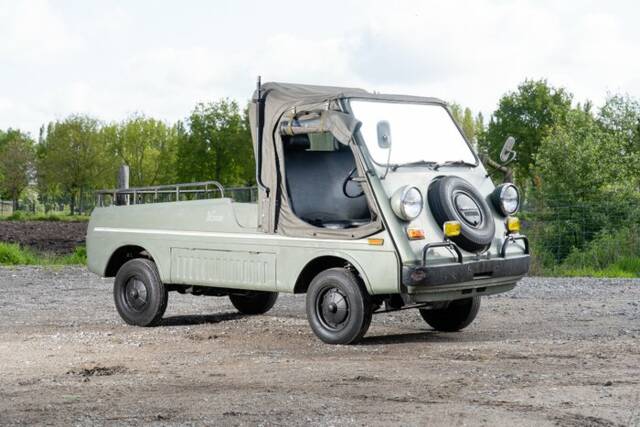
1970 | Honda Vamos
Honda - Vamos TN360 - 1970
Create search alert
Let yourself be notified as soon as a listing is published that matches your search filters.
Create listing
Do you have a Honda Vamos that you want to sell? Then create a listing now.
Create listingHonda Vamos Classic Cars: Prices & Market Values
History of the Honda Vamos
The Honda Vamos was introduced in 1970 as a light open leisure vehicle aimed at the increasingly adventurous Japanese market. Designed for practical off-road and countryside leisure activities, it featured a Spartan, utilitarian construction and a minimalist, roofless structure. The original Vamos was produced only until 1973, making it a rare sight. Decades later, in 1999, Honda revived the Vamos name as a trim level for its Acty microvan, targeting drivers seeking compact and versatile transportation with echoes of classic charm.
Model history of the Honda Vamos
The first generation Vamos did not have a direct predecessor; it was Honda's response to mini-leisure vehicles becoming popular in Japan. After ending production in 1973, the nameplate remained dormant until the late 1990s. In 1999, Honda reintroduced the Vamos as a variant of the Acty, blending the microvan's practicality with the nostalgic aura of the original. The Acty-based Vamos inherited the reliable, compact rear-engine platform, and continued in production through the 2000s. No direct successor has been announced, making the Vamos a stand-alone entry in Honda's classic lineup.
Highlights of the Honda Vamos
The Honda Vamos is notable for its unusual open body built on a light commercial vehicle chassis. The early 1970s version prioritised versatility and utility with minimal weather protection, making it suited to rural and outdoor pursuits. The late-1990s reintroduction as an Acty variant brought modern engineering while referencing the playful character of the original model.
Technical Data
Special editions and collectible models
There are no notable factory-issued special editions of the original Honda Vamos. However, some Acty-based Vamos variants from later years offered unique paint schemes and option packages that appeal to collectors, especially in the Japanese domestic market.
Weak spots and common issues
Information on well-documented weak spots for the Honda Vamos is limited due to its rarity, particularly in Europe. Maintenance challenges mainly relate to the scarcity of certain body and trim parts for the original models, and age-related wear typical of small-capacity, air-cooled engines. For later Acty-based Vamos models, mechanical reliability is strong, but specialised parts and trim for the unique Vamos features can be harder to source compared to standard Acty vans.
Engine and performance, transmission and handling
The 1970s Honda Vamos models were powered by a modest air-cooled two-cylinder engine mated to a manual transmission, delivering limited power yet offering a lightweight, nimble driving experience ideal for rural roads and light utility use. Handling was defined more by its rugged, utilitarian setup than dynamic performance. The Acty-based modern Vamos models employed modern kei-van underpinnings, giving them greater reliability and usability for daily errands in densely populated urban settings. Popular variants include the original open-top leisure versions of the 1970s as well as Acty-based Vamos vans from the late 1990s and early 2000s, which offer improved comfort and drivability whilst retaining compact dimensions.
Interior, comfort, exterior and design
The first-generation Vamos featured an unadorned open cabin, basic instrumentation, and weather-resistant vinyl seats designed for easy cleaning. The exterior was characterised by its almost skeletal, minimalistic look with exposed framework and simple lines. No doors, a flat floor, and easily removable roof and side panels set it apart visually and functionally. Later versions adopted modern kei-van bodywork, maintaining the compact footprint but adding sliding doors, a full metal roof, and a more conventional interior layout with upgraded comfort and materials, such as cloth seating and improved dashboard ergonomics.
Other relevant features
The name 'Vamos' referencing the Spanish word for ‘let's go’ hints at its positioning as a fun, go-anywhere runabout. The model is an outlier in Honda’s line-up, never intended for the mass market outside of Japan and famously quirky even by Japanese automotive standards.
Summary
As a highly unusual member of Honda’s automotive legacy, the Vamos exemplifies resourcefulness and originality. Its rarity, both as a 1970s open leisure vehicle and as an Acty-derived microvan, makes it a unique choice for collectors and enthusiasts seeking distinctive utility or nostalgic Japanese design from the era.