- Car
- Studebaker
- Studebaker E-Series (1 offer)
Studebaker E-Series classic cars for sale
The Studebaker E-Series represents a crucial era in American truck history, prized by enthusiasts who value authentic mechanical construction and robust utility. Designed for practicality, these vehicles appeal to collectors seeking originality and distinctive features found only in post-war Studebaker trucks.
Search results
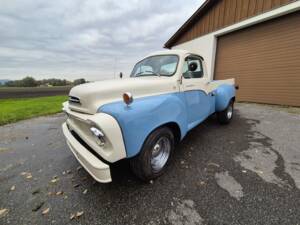
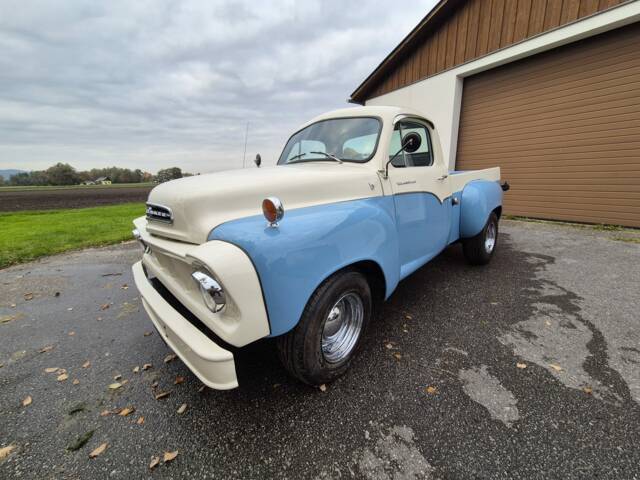
1957 | Studebaker Transtar ¾-ton
1957 Studebaker Transtar 3E7

Studebaker E-Series listing references from Classic Trader
Below you will find listings related to your search that are no longer available on Classic Trader. Use this information to gain insight into availability, value trends, and current pricing for a "Studebaker E-Series" to make a more informed purchasing decision.
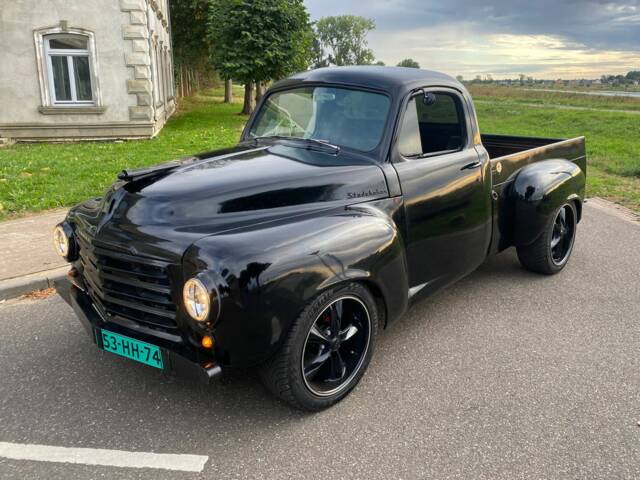
1959 | Studebaker V8 DeLuxe
Studebaker Deluxe Pickup | 1959 | Route 66 Auctions - For sale by auction. Estimate 19800 EUR

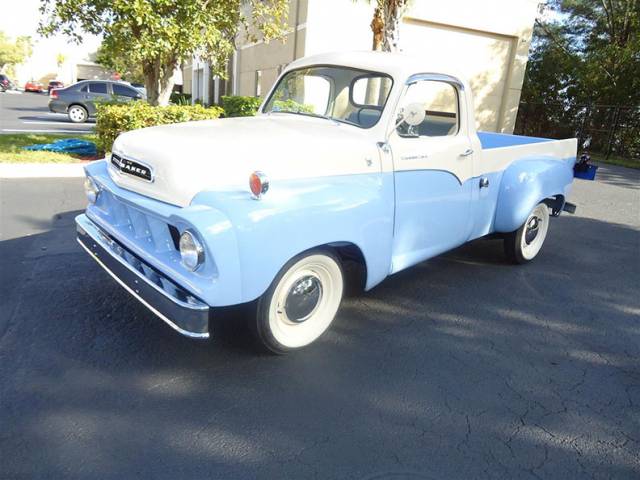
1957 | Studebaker Transtar ¾-ton
Studebaker E-Series Classic Cars: Prices & Market Values
History of the Studebaker E-Series
The Studebaker E-Series trucks, produced in the 1950s, stand as hallmarks of the brand's innovative period before Studebaker ceased operations in the 1960s. With roots tracing back to the Champion and Commander lines, the E-Series was developed to provide both commercial utility and personal convenience. The trucks were introduced in response to shifting post-war transportation demands, aimed at businesses and private owners needing dependable work vehicles. The E-Series was built in South Bend, Indiana, and became recognized for its balanced approach between comfort and robust construction.
Model History
The Studebaker E-Series directly succeeded earlier Studebaker 2R series trucks, which set a foundation with their functional styling and inline engines. As manufacturing advanced, the E-Series incorporated updated grilles, enhanced interiors, and increased payload capacities. Variants within the E-Series included different bed lengths, engine configurations (from the reliable inline 6 to V8 options later in the production run), and trim levels catering to various customer preferences. The E-Series paved the way for the transitional Champ pickup before Studebaker ultimately exited the truck sector.
Highlights of the Studebaker E-Series
Studebaker E-Series trucks distinguish themselves through their solid chassis, unique grille styles, and a cab design focusing on visibility and driver comfort for the era. Enthusiasts also appreciate original features like the large rounded fenders and the utilitarian dashboard layouts. The trucks were known for their resilience and straightforward mechanics, making them easy to maintain and modify for performance or restoration projects.
Technical Data
Special Editions and Collectible Models
Within the E-Series lineup, special attention is given by enthusiasts to models equipped with the powerful V8 engines introduced in the later production years, as well as variants featuring rare trim packages or custom paint. These models, though not officially branded as limited editions, are especially valued due to their comparative rarity and period upgrades.
Weak Spots and Common Issues
As with many commercial vehicles of the 1950s, E-Series trucks can exhibit frame rust, particularly in the cab floor, rocker panels, and rear bed supports. Mechanical components like the carburettor and braking systems may require routine rebuilding due to age-related wear. Wiring harnesses in unrestored examples can be brittle, and original rubber parts almost always need replacement. Regular inspection for body corrosion and proper lubrication of drivetrain components is essential to preserve function.
Engine and Performance, Transmission and Handling
Depending on the configuration, E-Series trucks deliver modest power and torque figures by modern standards but are noted for their reliable torque delivery and straightforward serviceability. The driving experience emphasises a rugged, unfiltered connection with the road. Drum brakes and recirculating ball steering require careful handling and planning, particularly under load. Off-road and rural applications benefit from high ground clearance and robust suspension, while paved road performance remains steady but workmanlike. Highlighted variants include the E5 with its sought-after inline 6-cylinder engine, known for durability and accessible service parts, and the late E-Series trucks equipped with V8 motors, offering improved acceleration and load-carrying ability. Both appeal to collectors who value originality and period-correct restoration.
Interior, Comfort, Exterior and Design
The E-Series is renowned for its utilitarian styling, with a distinctive front grille and smooth, rounded body panels that echo early post-war aesthetics. Interiors are minimal, outfitted with durable vinyl, straightforward instrumentation, and ample storage space behind the bench seat. Collectors take interest in trucks that retain factory hardware, original badges, and rare two-tone paintwork. Accessories such as chrome trim, fog lamps, and period-appropriate wooden bed rails further differentiate well-optioned models.
Other Relevant Features
Notable for its simplicity, the E-Series offers a platform well suited to customisation, whether for period-correct restorations, hot rod builds, or workhorse preservation. The simple design translates to straightforward upgrades, such as converting to 12-volt electrical systems or fitting modern radial tyres without detracting from originality.
Summary
Studebaker E-Series trucks combine post-war American design with durable mechanical engineering. Their robust construction, easy maintenance, and a selection of engine options ensure they remain appreciated by classic truck enthusiasts and those valuing straightforward, mechanically honest vehicles. The E-Series upholds its relevance in the collector market thanks to its balance of functionality, period charm, and adaptability to a range of restoration philosophies.