Renault Fuego classic car for sale
The Renault Fuego stands out as a genuine sport coupé from the 1980s, recognised for its aerodynamic design and technical novelties. As the first production car with a Cd value as low as 0.32–0.35 and world-firsts like remote central locking, it's a vehicle that captures the attention of enthusiasts seeking something unique from Renault’s classic range.
Search results
Currently, there are no matching listings for your search.
Create search alert
Let yourself be notified as soon as a listing is published that matches your search filters.
Create listing
Do you have a Renault Fuego that you want to sell? Then create a listing now.
Create listingRenault Fuego listing references from Classic Trader
Below you will find listings related to your search that are no longer available on Classic Trader. Use this information to gain insight into availability, value trends, and current pricing for a "Renault Fuego" to make a more informed purchasing decision.
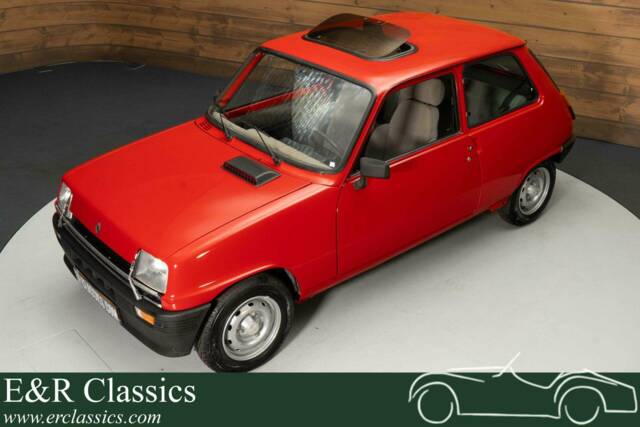
1982 | Renault Fuego GTL
Renault Coupe 5 TS | Gerestaureerd | Zeer goede staat | 1982

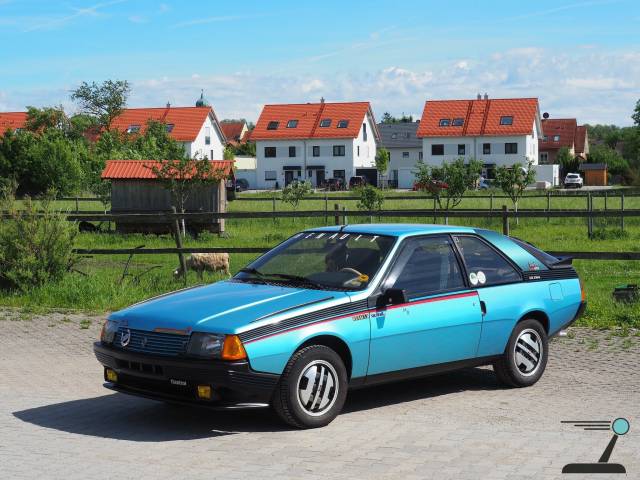
1980 | Renault Fuego GTX

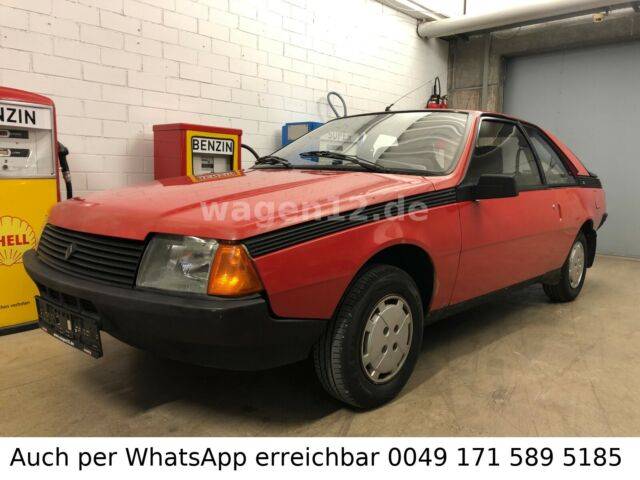
1982 | Renault Fuego GTS
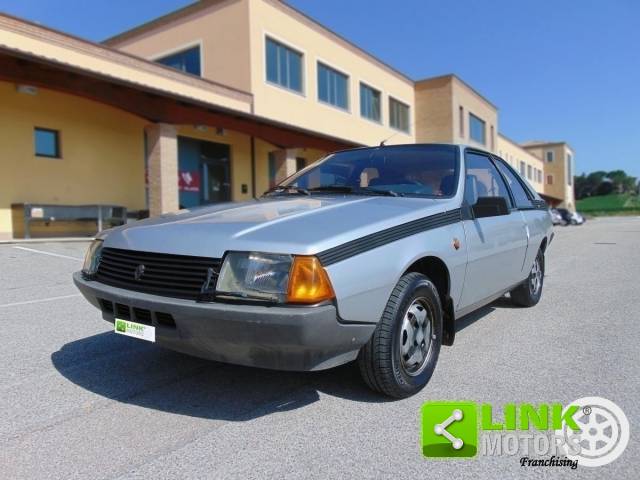
1981 | Renault Fuego GTL
Renault Fuego GTS 1.7, DEL 1981, ISCRITTA ASI, PERFETTA

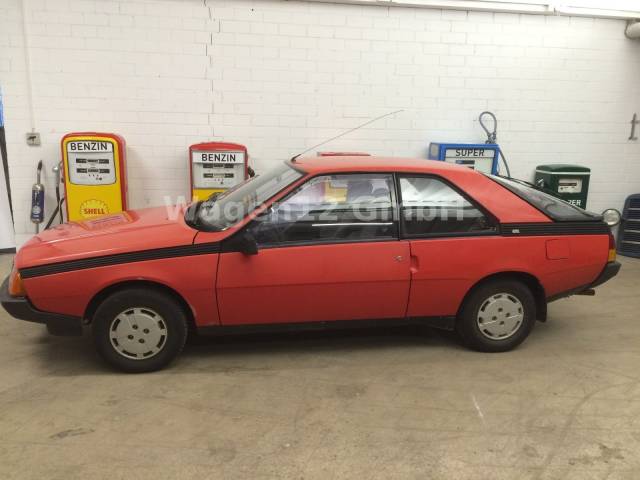
1986 | Renault Fuego GTL
Renault Fuego GTL
Create search alert
Let yourself be notified as soon as a listing is published that matches your search filters.
Create listing
Do you have a Renault Fuego that you want to sell? Then create a listing now.
Create listingRenault Fuego Classic Cars: Prices & Market Values
History of the Renault Fuego
Produced between 1980 and 1986 in Europe and until 1992 in South America, the Renault Fuego took over from the Renault 15 and 17 coupés. Renault manufactured the majority of the 265,367 cars in France, with further production in Spain and Argentina, where it lingered on as the GTA Max until 1992. With sales stretching across Europe, North and South America, and Australia, the Fuego became synonymous with sporting flair in the Renault lineup, particularly at the turn of the decade. The name Fuego, meaning 'Fire' in Spanish, accents the intent: a sharp, distinctive car with international reach. AMC even imported it into the US, adding to its cult-like status.
Model History
The Fuego continued the coupé tradition at Renault, succeeding the Renault 15 and 17. It was built on the Renault 18 platform, sharing much of its running gear, and integrated advanced elements like double wishbone front suspension adapted from larger Renaults. The model lineup spanned from the economical 1.4 TL and 1.6 GTL, to the more potent GTS, GTX, and TX. The high-performance Turbo (introduced post-1983 facelift) and the innovative Turbo Diesel fixed the Fuego as a technology leader. The last update came in 1983 with new bumpers, interior fabrics, and even higher equipment options, before production wound down in the mid-1980s.
Highlights and Distinctive Features
A pioneer in the wind tunnel, the Renault Fuego achieved a drag coefficient between 0.32 and 0.35, a benchmark at the time for four-seaters. It was also the first vehicle to introduce remote central locking ('PLIP'), and the first passenger car worldwide with an audio remote control on the steering wheel. In 1982, the Turbo Diesel version set the record as the fastest diesel car, clocking 180 km/h. Its reputation during the early 1980s as Europe's best-selling coupé (1980–1982) underlines its significance. Its technical advancements, variety of powertrains, and innovative options like power steering and alloy wheels (in top trims) further mark it out.
Technical Data
Special Editions and Collectible Models
Distinctive editions include the Fuego Turbo, launched after the 1983 facelift, which featured the 1.6-litre engine and specific velour interiors. The Argentinian GTA Max, built from 1990 onward as a Phase III facelift, marks the terminal point of Fuego production, adding further collectibility. Country-specific variants, such as the Turbo Diesel, bore signature bonnet bulges, extra grille slots, and 'Turbo D' emblems.
Engine, Performance and Handling
The Fuego’s powertrain lineup is diverse: the base 1.4 stood for economy, while both carburettor and injection 1.6 and 2.0 engines catered to buyers wanting more. The Turbo introduced new standards for compact coupés and, with the Diesel, the Fuego even temporarily claimed the speed crown among diesel cars. Notably, both manual and automatic gearboxes were available. The double wishbone front suspension (sourced from larger Renault models) and negative steering offset contributed to excellent stability and precise cornering. Power steering and high-grade equipment elevated the upper models’ driving experience. Key versions: Fuego Turbo – 1.6-litre turbo, manual; Fuego GTX – 2.0 or, in some markets, 2.2-litre EFI, manual/auto; Fuego Turbo Diesel – 2.1-litre diesel, manual. Each offered different balances of performance, handling, and comfort.
Interior, Comfort and Design
Michel Jardin styled the Fuego’s body under the direction of Robert Opron, giving the car a distinct, low-drag outline with sharp, coupé-flavoured lines that defined its era. François Lampreia’s interior design focused on clarity, comfort, and—after the 1983 facelift—plush velour seats in striking combinations (sepia, ash grey, or black/red striping for the Turbo). Dashboards and interiors shifted in design with the model updates, and the car’s exterior often reflected its engine or trim through details like alloy wheels or grille inserts. Equipment levels reached high for the time: electric windows, central locking, air conditioning, fog lamps, headlamp cleaning, and alloy wheels were some highlights.
Other Notable Features
The Renault Fuego brought several market firsts, such as the 'PLIP' remote locking system. Additionally, in 1984, its dashboard design found further use in the facelifted Renault 18. Differences in market versions (LHD, RHD, special country trims) resulted in varying levels of interior/exterior equipment, making many Fuegos unique to their original sales market.
Summary
The Renault Fuego forms a singular chapter in Renault history—combining advanced engineering, contemporary design, and a broad engine mix into a sporty coupé package. Offered in several markets and configurations, with technical innovations like a low-drag body and world-first convenience features, the Fuego's appeal to collectors lies in its distinct period character, strong engineering roots, and relative rarity today.