Nissan Maxima classic cars for sale
The Nissan Maxima stands as a flagship full-size sedan that brought refinement and technical sophistication to the Nissan line-up. Launched originally in 1982, it has become known for its blend of comfort, robust engineering and advanced features throughout its model history.
Resultados de la búsqueda
Actualmente no hay anuncios que coincidan con su búsqueda.
Create search alert
Let yourself be notified as soon as a listing is published that matches your search filters.
Create listing
Do you have a Nissan Maxima that you want to sell? Then create a listing now.
Create listingNissan Maxima listing references from Classic Trader
Below you will find listings related to your search that are no longer available on Classic Trader. Use this information to gain insight into availability, value trends, and current pricing for a "Nissan Maxima" to make a more informed purchasing decision.
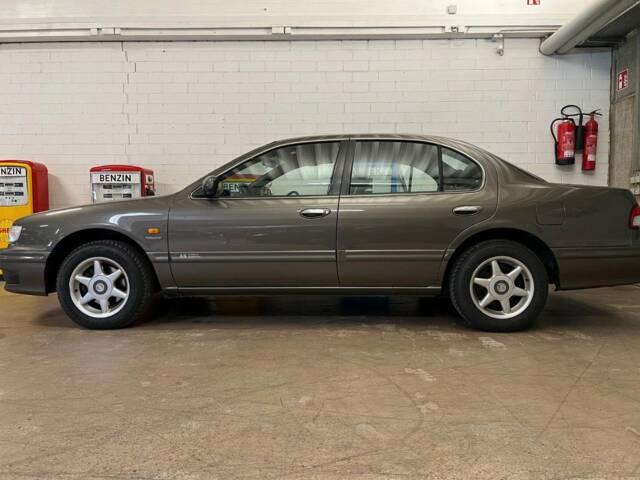
1998 | Nissan Maxima 2.0 V6
Nissan Maxima 2.0 V6 24V Exclusive
Create search alert
Let yourself be notified as soon as a listing is published that matches your search filters.
Create listing
Do you have a Nissan Maxima that you want to sell? Then create a listing now.
Create listingNissan Maxima Classic Cars: Prices & Market Values
History of the Nissan Maxima
Introduced in 1982 as the Datsun Maxima, this model succeeded the Datsun 810 and marked Nissan’s ambitions in the premium sedan segment. Over eight generations, the Maxima solidified its reputation as a full-size car, consistently featuring a front-engine layout and seating for five. Initially aimed at the North American, Middle Eastern, South Korean and Chinese markets, the Maxima combined solid Japanese engineering with international styling cues and was always marketed as the manufacturer’s flagship sedan outside Japan. Early models maintained rear-wheel drive before a platform shift to front-wheel drive, paving the way for its established comfort-oriented driving dynamic.
Model history
The Nissan Maxima originated from the Datsun 810 lineage and was completely rebranded by Nissan in the early 1980s to emphasise its move upmarket. Spanning eight generations, each iteration introduced new technological advancements, greater cabin refinement, and evolving exterior styling. The third generation (known by the manufacturer code A32) particularly distinguished itself with improvements in chassis dynamics and features often only found in luxury segments. Subsequent generations would continue this trend, making the Maxima a mainstay in the full-size segment globally.
Highlights of the Nissan Maxima
The Maxima was notable for bringing V6 powertrains and high equipment levels into a segment that often favoured practicality over driving engagement. Technological features, like early adoption of digital dashboards and advanced audio options, gave the Maxima a unique selling point through the 1980s and 1990s. Its reputation for refined ride quality, coupled with robust mechanical reliability, has ensured lasting interest amongst dedicated Nissan fans.
Technical Data
Special Editions and Collectible Models
Certain model years of the Maxima were offered with limited-edition trims, especially in the A32 generation, featuring unique paintwork, additional interior equipment, or commemorative badging. While comprehensive global lists are rare, in select markets, 'SE' (Sports Edition) or special anniversary models are particularly sought after for their enhanced interior furnishings and distinctive exterior details.
Weak Spots and Common Issues
No specific weak spots are recorded in our current data. As with all ageing large Japanese saloons, prospective buyers should check for regular maintenance, particularly around the timing belt (on earlier V6 engines), suspension bushings, and electronic features, which were comparatively advanced for their era.
Engine and Performance, Transmission and Handling
The third-generation Maxima (A32), which dominates classic listings, distinguished itself through its smooth V6 engine, delivering ample torque and refinement that was unusual for mainstream Japanese cars of its time. Automatic transmissions dominated, though manual gearboxes were also available in some markets and trims. Suspension tuning prioritised comfort, but the Maxima still managed a responsive, comfortable drive suitable for long motorway journeys or urban use. Later models carried a reputation for effective braking and composed high-speed handling, further solidifying its standing among enthusiasts. - A32 Maxima SE: Noted for sportier suspension tuning and manual transmission option.
- Maxima GXE: Geared toward comfort with additional interior features.
Interior, Comfort, Exterior and Design
Over its various model runs, the Maxima featured design efforts led by Nissan’s in-house styling studios, presenting a modern yet understated silhouette with aerodynamic principles in mind. Many models featured optional leather upholstery, digital instrument clusters, and advanced options such as high-powered Bose audio systems – unusual for Japanese sedans of the period. The A32, in particular, offered a cohesive interior layout, supportive seats, and extensive electric options (windows, mirrors, seat adjustments). Special paint finishes and wheel designs highlighted certain editions, making original-condition examples stand out at any classic gathering.
Other Features
The Maxima often benefitted from Japan-market options exported as upgrades in select regions. Adaptive cruise control, sophisticated air conditioning, sunroofs, and advanced audio were part of the Maxima package depending on market and trim.
Summary
The Nissan Maxima embodies the technical confidence and international outlook of 1980s and 1990s Japanese saloon design. With a strong focus on cabin comfort, reliable V6 technology, and a model history that favours luxury as much as practicality, the Maxima remains an interesting choice for classic car enthusiasts who appreciate subtlety, engineering advancement and a robust driving experience in a classic Japanese sedan.