Nissan Cherry classic cars for sale
The Nissan Cherry, originally introduced as the Datsun Cherry, marked Nissan’s entry into the world of front-wheel drive superminis in 1970. Known for its compact design and innovative engineering, the Cherry gained popularity in Europe both under the Datsun and Nissan badges. With various body styles and reliable engines, it holds a distinct place in the history of Japanese small cars.
Search results

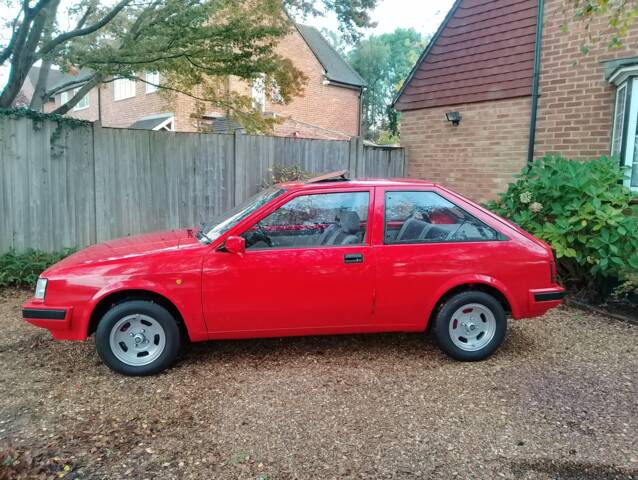
1985 | Nissan Cherry
Maxima 1.3 GS
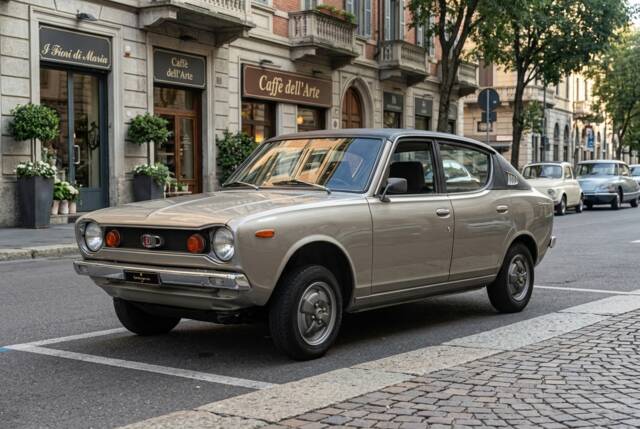
1975 | Nissan Cherry
Nissan DATSUN 100 A (CHERRY)
Auctions ending soon

Loading…
Loading…
Loading…
Loading…
Nissan Cherry listing references from Classic Trader
Below you will find listings related to your search that are no longer available on Classic Trader. Use this information to gain insight into availability, value trends, and current pricing for a "Nissan Cherry" to make a more informed purchasing decision.
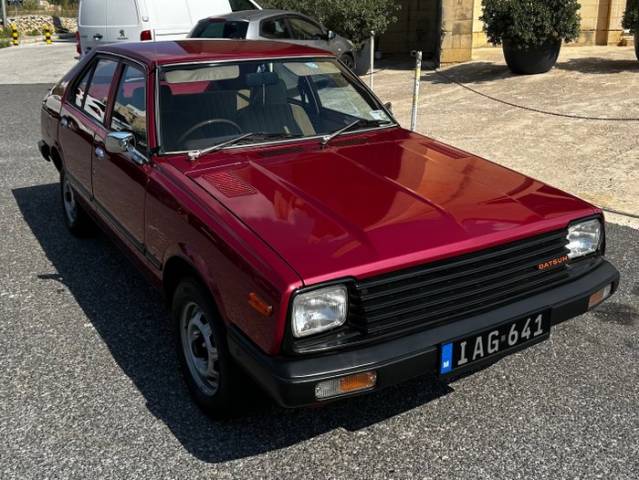
1982 | Nissan Cherry
Nissan - Datsun Cherry - 1982
Nissan Cherry Classic Cars: Prices & Market Values
History of the Nissan Cherry
The Nissan Cherry made its debut in 1970 as the Datsun Cherry, establishing itself as Nissan’s first front-wheel-drive subcompact. Its name refers to the Japanese cherry blossom festival, underlining the car’s origin and spirit. Production ran until 1987, with the Cherry offered in several variants: saloon, estate, hatchback, and coupe forms. Early European models appeared as the Datsun 100A and 120A, transitioning to the Cherry name in 1972. The model’s evolution included a collaboration with Alfa Romeo, resulting in the Nissan Cherry Europe for markets like Austria. The Cherry featured moderate trim levels and practical usability, tailored to urban environments. Its role in Nissan’s expansion into Europe was significant, bridging the gap to later superminis like the popular Sunny, which replaced the Cherry in 1987.
Model history
The Cherry’s production spanned 1970 to 1987, beginning as the Datsun Cherry and ending under the Nissan nameplate. Initial variants included the Datsun 100A and 120A, produced with two- and four-door configurations and equipped with 45 hp and 52 hp engines, respectively. In 1982, official imports to Germany began, with the range quickly expanding in both engine options and equipment. In 1983, the Cherry Special brought increased power, and a diesel engine was introduced in 1985. The arrival of the Nissan Sunny in 1986 marked the end of the Cherry era.
Highlights of the Nissan Cherry
Distinctive among Nissan’s superminis, the Cherry pioneered front-wheel drive for the brand and built a reputation for reliability, manoeuvrability, and a choice of practical body shapes. Collaborations—such as the Cherry Europe project—highlighted the model’s international reach. Notably, the Cherry offered progressive powertrains for its class, including a diesel option toward the end of its production.
Technical data
Special Editions and Collectible Models
Special variants such as the Cherry Special (introduced in 1983 with 75 hp) and the unique Cherry Europe—created with Alfa Romeo collaboration—are notable. The Cherry Europe distinguished itself with Italian design touches yet Japanese mechanical underpinnings, making it particularly interesting for enthusiasts.
Weak Spots and Common Issues
No specific weak spots or recurring faults are documented in the provided data. However, as with many classics from this era, pay close attention to rust on the sills and wheel arches, electrical system wear, and the condition of interior fittings due to age and typical usage patterns.
Engine, Performance, Transmission and Handling
The Cherry’s handling was praised in its day, attributing its agile city manner to a compact wheelbase and front-wheel-drive layout. Early models, like the Datsun 100A, delivered 45 hp through a four-speed gearbox, while the Cherry Special and later models exceeded 70 hp, offering more spirited performance. Despite its modest power output, the Cherry’s lightweight construction provided a lively driving experience, especially in urban and suburban scenarios. Diesel options introduced in the mid-1980s catered to economy-minded drivers. - Datsun 100A: 45 hp, four-speed, practical and reliable.
- Datsun 120A: 52 hp, improved acceleration.
- Cherry Special: 75 hp, upgraded trim and more engaging drive.
- Cherry Diesel: introduced in 1985, economic alternative for long-distance commuters.
Interior, Comfort, Exterior and Design
The Cherry was designed for daily practicality, with interior layouts optimized for comfort and functionality. The dashboard and controls reflect the minimalist Japanese style of the period, favouring durability over extravagance. Body styles included two- and four-door saloons, hatchbacks, estates, and a coupe. Special editions—such as the Cherry Europe—featured unique interior fabrics, badges, and subtle Italian influences in detailing. The European market also saw exclusive paint schemes and accessories tailored to local tastes.
Other relevant features
The Cherry’s role in establishing Nissan’s presence in Europe cannot be underestimated. The association with Alfa Romeo for the Cherry Europe variant demonstrated a rare cross-brand partnership in the small car segment, and the Cherry’s adaptability for various markets—both in branding and technical specification—sets it apart from many contemporaries.
Summary
The Nissan Cherry stands as Nissan’s pioneering front-wheel-drive subcompact, offered across a wide spread of versions and engine options from 1970 to 1987. It made its mark thanks to international collaborations, a broad selection of body styles, reliable mechanics, and adaptability to market needs across Europe. The Cherry remains a noteworthy classic for those interested in Japanese automotive history and innovative supermini engineering.