Mazda RX-2 classic cars for sale
The Mazda RX-2 brought rotary power to family sedans in the early 1970s, distinguishing itself with unique technology and subtle design differences in a market dominated by traditional engines. Discover how this rare saloon established a cult following among enthusiasts and racers alike.
Résultats de la recherche
À l'heure actuelle, il n'y a pas d'annonces correspondant à votre recherche.
Create search alert
Let yourself be notified as soon as a listing is published that matches your search filters.
Create listing
Do you have a Mazda RX-2 that you want to sell? Then create a listing now.
Create listingMazda RX-2 listing references from Classic Trader
Below you will find listings related to your search that are no longer available on Classic Trader. Use this information to gain insight into availability, value trends, and current pricing for a "Mazda RX-2" to make a more informed purchasing decision.
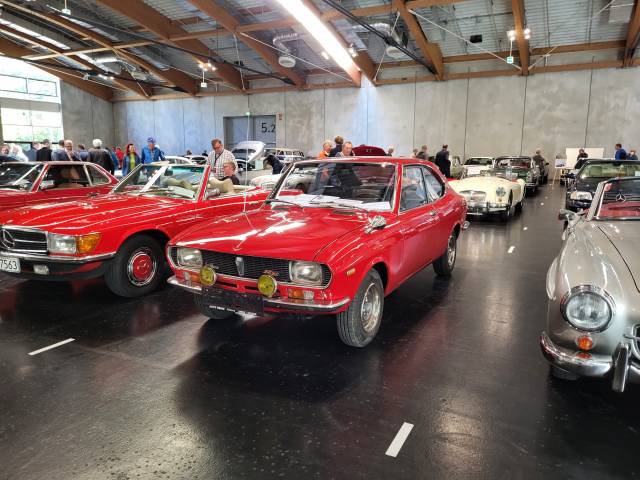
1972 | Mazda RX-2
Zu besichtigen auf der Classic Expo Salzburg 2022
Create search alert
Let yourself be notified as soon as a listing is published that matches your search filters.
Create listing
Do you have a Mazda RX-2 that you want to sell? Then create a listing now.
Create listingMazda RX-2 Classic Cars: Prices & Market Values
History of the Mazda RX-2
Mazda launched the RX-2 in 1970, at a time when the automotive industry was exploring alternatives to mainstream piston engines. The RX-2 was one of the first mass-market cars to adopt Mazda’s innovative rotary engine technology, positioning it apart from conventional models. Sold in some regions as the Mazda Capella, the RX-2 built Mazda’s reputation for taking risks and challenging mechanical norms. The car’s technical curiosity and performance advantage for its time, especially compared to its mid-size rivals, established the foundation for Mazda's rotary series during the 1970s.
Model History
The RX-2 was part of the Mazda Capella family and stood out as the rotary-powered variant among more conventional siblings. While the Capella name covered several body styles and generations, the RX-2 was produced from 1970 to 1978. As a precursor to well-known rotary models, it was eventually succeeded by the Mazda RX-3 and, later, the RX-4, but held its own place as Mazda’s first widely-exported rotary sedan.
Highlights of the Mazda RX-2
The RX-2 distinguished itself with its twin-rotor 12A engine, smooth power delivery, and lightweight construction. The rotary engine’s compactness allowed for a lower bonnet line and more agile handling compared to piston-engined contemporaries. Its adoption in motorsport, particularly in touring car racing, cemented the RX-2’s reputation for robustness and tuning potential. In terms of supply and demand, according to our stats, RX-2 listings account for 100% of Mazda classic car offerings here, and RX-2 demand represents 100% of Mazda listing views on our platform, clearly showing a focused interest in this rare model.
Technical Data
Special Editions and Collectible Models
There are few factory-recognised special editions of the RX-2, but export models, especially those delivered to Australia and the US, occasionally featured different trim levels or badging. Some versions were adapted for motorsport homologation, becoming extremely desirable among collectors seeking period-correct racing heritage.
Weak Spots and Common Issues
Like many early rotary engines, the RX-2's 12A Wankel motor is sensitive to oil quality and sealing issues. Rotor apex seal wear and fuel consumption are typical points of concern. Some body panels may also be prone to corrosion, particularly in cars subjected to humid or salty environments. Spares for the rotary engine and body can be scarce, so buyers should inspect mechanical and structural integrity carefully.
Engine and Performance, Transmission and Handling
The 12A rotary delivered a free-revving character uncommon among similarly priced saloons, producing lively acceleration and a unique exhaust note. With rear-wheel drive and a relatively low kerb weight, the RX-2 offered agile cornering and sharp steering feedback. The model was well-regarded by club racers and tuners for its responsiveness and modifiability. Gearbox options varied between manual and automatic, both providing reliable performance when properly maintained. Notable variants include both early and late RX-2 saloons and coupés, with club racers often preferring early lightweight versions for track conversion.
Interior, Comfort, Exterior and Design
The RX-2 combined understated 1970s styling with sporty details, such as quad headlights and subtle fender lines. Inside, materials were typical of the era, focusing on durable vinyl and simple layouts. Instruments emphasised the rotary motor’s higher RPM range, with special badging to note its Wankel heritage. Some export versions included additional trim details, distinct alloy wheels and factory racing stripes, reflecting Mazda’s desire to set the RX-2 apart visually.
Other Features
The RX-2’s status as Mazda’s first rotary sedan outside Japan makes it a reference point for the brand’s later technical direction. Its motorsport history, especially in endurance and touring car racing, adds further interest for historic motorsport collectors.
Summary
The Mazda RX-2’s exclusive rotary engine, rarity, and role in establishing Mazda’s international reputation for unconventional engineering make it a unique proposition among classic cars. With all current Mazda listings and demand on our platform centred on the RX-2, it stands as a cult favourite for rotary fans and those seeking an unusual classic with significant technical character.