Lotus 91 Classic Cars for Sale
The Lotus 91 represents a unique chapter in Formula One history, embodying the design vision of Colin Chapman and his team for the 1982 season. As one of the last Lotus cars influenced directly by Chapman, its engineering and racing pedigree set it apart in the world of classic motorsport.
Suchergebnisse
Zur Zeit sind keine passenden Inserate zu Ihrer Suche veröffentlicht.
Create search alert
Let yourself be notified as soon as a listing is published that matches your search filters.
Create listing
Do you have a Lotus 91 that you want to sell? Then create a listing now.
Create listingLotus 91 listing references from Classic Trader
Below you will find listings related to your search that are no longer available on Classic Trader. Use this information to gain insight into availability, value trends, and current pricing for a "Lotus 91" to make a more informed purchasing decision.
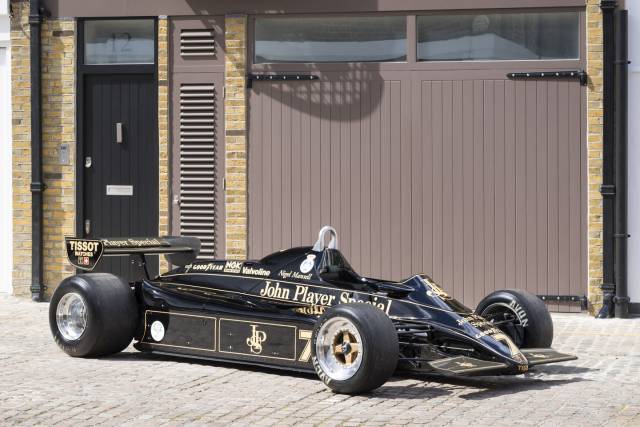
1982 | Lotus 91 Formula 1
Ex-Nigel Mansell example
Create search alert
Let yourself be notified as soon as a listing is published that matches your search filters.
Create listing
Do you have a Lotus 91 that you want to sell? Then create a listing now.
Create listingLotus 91 Classic Cars: Prices & Market Values
History of the Lotus 91
The Lotus 91 debuted in the 1982 Formula One season and was crafted under the direction of Colin Chapman, Martin Ogilvie, and Tony Rudd. The car marked an evolution of the ground-effect era, blending innovative chassis design with aerodynamic efficiency. Its entry highlighted a transitional period for Lotus as the team adapted to new technical regulations and an increasingly competitive F1 landscape. Lotus 91s competed at the top level of motorsport, showcasing the marque’s approach to lightweight construction and agile handling, even as the team navigated a shift from Lotus’ dominant days of the 1970s.
Model History of the Lotus 91
Within Lotus’ single-seater lineage, the 91 followed a sequence of innovative F1 designs. The predecessor, the Lotus 87, struggled due to its weight and reliability issues. The introduction of the Lotus 91 was intended to restore Lotus’ competitive edge by utilizing a stronger, lighter carbon composite chassis and refined aerodynamics. The successor to the 91 would be the Lotus 92, signaling further technological shifts with turbocharged powertrains in F1.
Highlights of the Lotus 91
The Lotus 91 was notable for its use of composite materials, a refined development of ground effect aerodynamics, and its performance under the reliably quick hands of drivers like Elio de Angelis. The car’s design features such as the low-drag bodywork and development under Chapman’s philosophy of minimising weight made it uniquely competitive in a tightly regulated environment.
Technical Data of the Lotus 91
Special Editions and Collectible Models
The Lotus 91 was produced exclusively for Formula One, and as such, each chassis holds individual racing history. Notable chassis, such as those driven by Elio de Angelis, are especially valued for their F1 provenance and unique heritage within Grand Prix racing.
Weak Spots and Common Issues
As a racing car from the early 1980s, the Lotus 91’s maintenance requires specialist knowledge, particularly in dealing with period-specific materials such as carbon composites and the Cosworth DFV engine. Availability of original parts can be limited, and preservation involves meticulous upkeep of competition-level components and electronics.
Engine and Performance, Transmission and Handling
Powered by the legendary Cosworth DFV V8, the Lotus 91 delivered competitive performance in line with the best naturally aspirated F1 cars of its era. The car featured responsive manual transmission and razor-sharp steering, supported by a lightweight chassis that emphasised agility and mid-corner speed. Its capabilities were best showcased on technical circuits, making it a favourite among drivers during its campaign. Chassis raced by Elio de Angelis and Nigel Mansell, each associated with specific grand prix performances and technical evolution of the 91 model during the season.
Interior, Comfort, Exterior and Design
The Lotus 91’s design focused on pure function, with a cockpit tailored for minimal weight and maximum driver control. Externally, the car featured Lotus’ signature black-and-gold livery, a compact body with smooth airflow management, and subtle branding. Materials included lightweight carbon composites and racing-grade aluminium. Special equipment was race-focused: stripped interiors, quick-release steering, and advanced suspension geometry for its time.
Other Noteworthy Features
The Lotus 91 is significant for representing one of the last cars overseen by Colin Chapman. The blend of ground-effect technology and classic F1 aesthetics makes it a technical reference point in Lotus history and a favourite for historic race series and collectors of Grand Prix machinery.
Summary
The Lotus 91 stands as a testament to Lotus’ race-focused engineering and innovation in the early 1980s. It bridges the gap between yesterday’s mechanical simplicity and the era of composite materials and ground-effect aerodynamics. With low presence in both classic car supply and demand, it remains a sought-after rarity for those interested in genuine Formula One heritage.