Lancia Artena classic cars for sale
The Lancia Artena, produced from 1931 to 1942, represents Lancia's innovative engineering approach in the interwar years. Known for its advanced V4 engine, robust lightweight chassis, and a production run that included both civilian and military variants, the Artena stands out with performance and craftsmanship typical for early Italian automotive design.
Search results
Currently, there are no matching listings for your search.
Create search alert
Let yourself be notified as soon as a listing is published that matches your search filters.
Create listing
Do you have a Lancia Artena that you want to sell? Then create a listing now.
Create listingLancia Artena listing references from Classic Trader
Below you will find listings related to your search that are no longer available on Classic Trader. Use this information to gain insight into availability, value trends, and current pricing for a "Lancia Artena" to make a more informed purchasing decision.
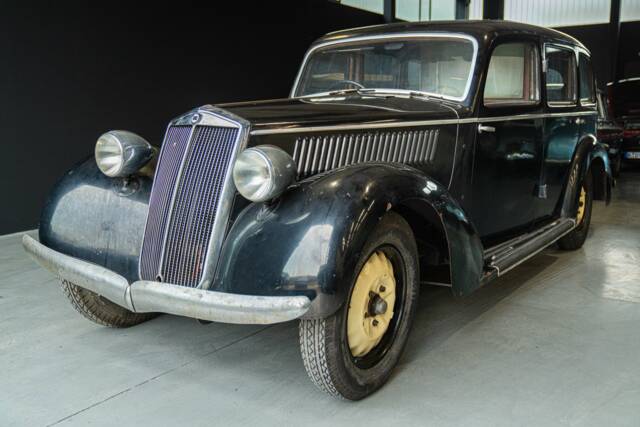
1941 | Lancia Artena

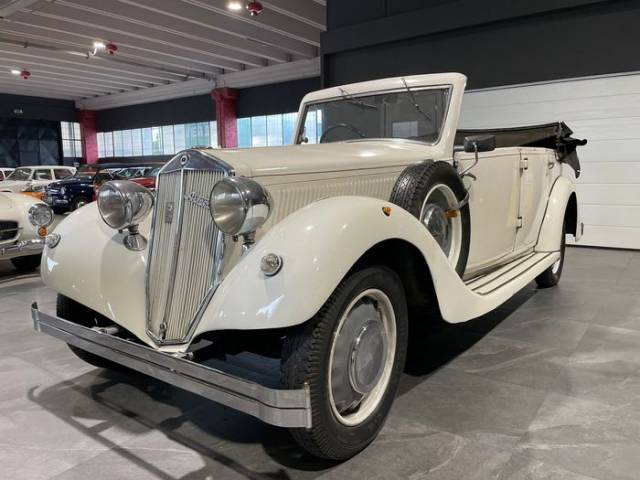
1936 | Lancia Artena

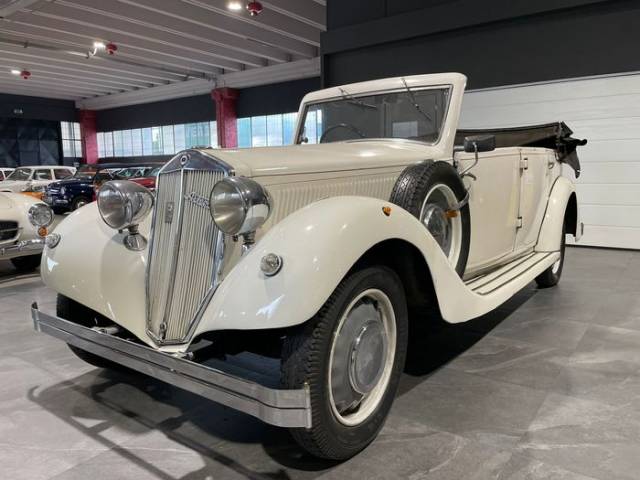
1936 | Lancia Artena
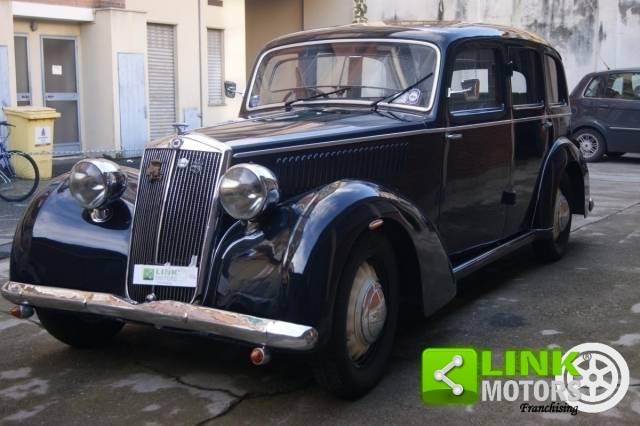
1957 | Lancia Artena
LANCIA ARTENA MINISTERIALE IV SERIE 1940 500 ESEMPLARI COSTRUITI POSSIBILITA' DI GARANZIA SULLA MECCANICA
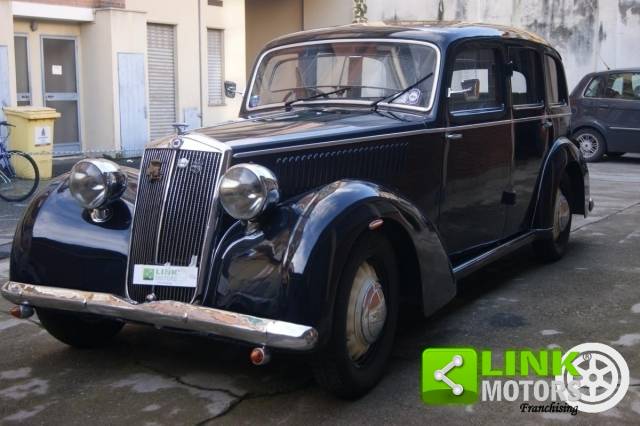
1957 | Lancia Artena
LANCIA ARTENA MINISTERIALE IV SERIE 1940 500 ESEMPLARI COSTRUITI POSSIBILITA' DI GARANZIA SULLA MECCANICA
Create search alert
Let yourself be notified as soon as a listing is published that matches your search filters.
Create listing
Do you have a Lancia Artena that you want to sell? Then create a listing now.
Create listingLancia Artena Classic Cars: Prices & Market Values
History of the Lancia Artena
Lancia introduced the Artena at the 1931 Paris Motor Show as the successor to the Lancia Dilambda. It marked a departure from Lancia's tradition, with its name referencing the ancient town of Artena rather than following the company's Greek letter naming scheme. Production was split into four distinct series, interrupted between 1936 and 1940, with a total of 5,567 vehicles built. During its production, the Artena served as a flexible base for various body styles, supplying chassis to Italy’s most prominent coachbuilders such as Pininfarina, Carrozzeria Touring, and Stabilimenti Farina. The Artena was resurrected in the early 1940s predominantly for official and military use, highlighting its adaptability and reliability in diverse roles.
Model history of the Artena
Four series of the Artena were produced: the first and second between 1931 and 1933 (with revisions aimed at noise reduction and chassis tweaks), the third from 1933 to 1936 with optional wheelbase lengths, and the fourth series from 1940 to 1942—primarily serving the military and public services. The Artena replaced the Lancia Dilambda and eventually gave way to the Lancia Aprilia in 1937, a model renowned for aerodynamic innovation. Across its evolution, the Artena preserved core technical attributes such as its V4 engine and chassis construction, building a reputation for durability and consistent performance over high mileage with minimal maintenance.
Highlights of the Lancia Artena
The Artena distinguished itself with its pioneering 17-degree narrow-angle 1.9-litre V4 engine, which delivered performance approximating six-cylinder competitors while maintaining a notably lighter and more robust structure. The chassis, strengthened with a distinctive X-frame design, permitted a variety of body styles to suit both luxury and utilitarian needs. Factory models were offered mainly as saloons, but many Artenas received convertible or coupé bodies from famed Italian coachbuilders. Notably, civilian production stopped after the third series, but demand for its reliability led to a brief revival for service vehicles during WWII.
Technical data of the Lancia Artena
Special editions and collectible models
The wider coachbuilt market for the Artena resulted in unique examples, particularly those bodied by Pininfarina, Carrozzeria Touring, and Stabilimenti Farina as cabriolets, coupés, or torpedoes. Ambulance variants built on the fourth series chassis featured expanded interiors for service use. Limited wartime production further contributes to the rarity of late-series Artenas.
Weak spots and common issues
Information on specific weak spots for the Artena is limited. Nevertheless, early 20th-century Lancias are valued for their robust engineering. Nonetheless, as with all pre-war vehicles, careful inspection for chassis corrosion, wear in the suspension components, and proper engine lubrication is recommended. Parts availability can be a concern, especially for coachbuilt bodies or war-era variants, so sourcing original components often requires specialist expertise.
Engine, transmission and handling
Artena’s 1.9-litre narrow-angle V4 engine was celebrated for its reliability and smooth running. Its four-speed manual gearbox and sturdy yet lightweight chassis contributed to stable handling and relatively brisk acceleration for its period. Testing in the 1930s recorded maximum speeds just over 110 km/h, brisk acceleration from 16 to 48 km/h in as little as 6 to 13 seconds, and strong braking distances for a car of its size and class. In today’s market, the Series III Artena stands out with the highest demand, combining the most desirable technical refinements and body options.
Interior, comfort, exterior and design
The Artena’s design philosophy focused on marrying robust mechanicals with elegant Italian bodywork. Cabin comfort varied by the builder, but even standard factory saloons offered surprising refinement for their class. High-end coachbuilt versions might feature lush materials, bespoke instrumentation, and custom trims. The chassis was designed for flexibility—allowing long or short wheelbases and supporting a range of body styles. Historically significant colours and trim options are preserved on surviving examples, and period accessories range from additional exterior lamps to custom-fabricated dashboards or rooflines depending on the carrozzeria involved.
Other relevant features
The Artena was notable for being one of the earliest cars designed to run 100,000 km without significant overhaul, reflecting Lancia’s focus on long-term reliability. The military and ambulance versions further attest to its utility and technical adaptability, rarely matched by contemporary competitors.
Summary
The Lancia Artena remains an important chapter in Italy’s pre-war automotive history, offering technical ingenuity in its V4 engine and chassis, a remarkable breadth of body designs thanks to partnerships with Italy’s top coachbuilders, and a robustness proven by its service in both civilian and military roles. Interest on the collectors’ market is focused strongly on the Series III, confirming its status as the most coveted evolution of this historically significant model.