Hudson Pacemaker classic cars for sale
Produced in 1939 and reintroduced between 1950 and 1952, the Hudson Pacemaker stands out as a significant chapter in Hudson’s portfolio. With its blend of pragmatic engineering and period-specific styling, the Pacemaker appeals to classic car collectors seeking a piece of authentic American motoring history.
Search results
Currently, there are no matching listings for your search.
Create search alert
Let yourself be notified as soon as a listing is published that matches your search filters.
Create listing
Do you have a Hudson Pacemaker that you want to sell? Then create a listing now.
Create listingHudson Pacemaker listing references from Classic Trader
Below you will find listings related to your search that are no longer available on Classic Trader. Use this information to gain insight into availability, value trends, and current pricing for a "Hudson Pacemaker" to make a more informed purchasing decision.
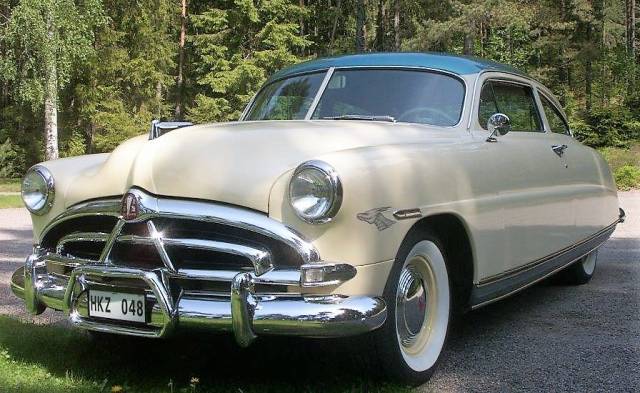
1951 | Hudson Pacemaker
Hudson Pacemaker Brougham
Create search alert
Let yourself be notified as soon as a listing is published that matches your search filters.
Create listing
Do you have a Hudson Pacemaker that you want to sell? Then create a listing now.
Create listingHudson Pacemaker Classic Cars: Prices & Market Values
Introduction and history of Hudson Pacemaker
The Hudson Pacemaker made its initial debut in 1939, just before automotive production was heavily impacted by the Second World War. After its single model year, the Pacemaker was discontinued but returned to the market in 1950 as Hudson’s response to the evolving demands of the postwar economy car sector. The reintroduced Pacemaker targeted buyers seeking a more accessible entry into Hudson ownership, placing emphasis on basic but reliable motoring while retaining the robust construction typical of the era. Production persisted until 1952, after which the model was integrated into Hudson’s broader range as the company faced increasing industry pressures.
Model history
The 1939 Hudson Pacemaker represented an affordable entry-level model in the Hudson lineup. When reintroduced for the 1950 model year, the Pacemaker picked up where it left off by serving as Hudson’s most economical and compact model. Across 1950 to 1952, it provided a lower-cost alternative to the more elaborate Hudsons like the Super Six and Commodore. The Pacemaker was ultimately phased out after the 1952 model year as Hudson restructured its offerings prior to the eventual merger with Nash-Kelvinator to form American Motors Corporation.
Highlights of Hudson Pacemaker
Across both its pre-war and early 1950s incarnations, the Pacemaker was defined by its straightforward engineering, sturdy build, and classic styling cues like a prominent grille and well-proportioned bodywork. The car set itself apart from competitors by staking a claim as a practical family car that didn’t sacrifice the characterful lines and durable chassis construction associated with Hudson. Recognisable for its period-specific details, the Pacemaker is a key reference point for enthusiasts tracing Hudson’s evolution from the pre- to postwar eras.
Technical data
Special Editions and Collectible Models
No widespread special editions of the Pacemaker are recorded, but survivor models with original features or exceptionally well-preserved condition command additional attention among collectors.
Weak Spots and Common Issues
No widespread or model-specific weaknesses are documented for the Hudson Pacemaker in the available material. As always, attention should be paid to rust in structural components, typical wear in engine internals, and the availability of specific trim and replacement parts for restoration.
Engine and Performance, Transmission and Handling
Pacemakers were never positioned as performance cars in the Hudson range. With their reliable straight-six engines and straightforward manual gearboxes, they delivered moderate acceleration and a comfortable, stable ride. The handling reflected the design standards of the era: soft suspension prioritised comfort over sporting dynamics, but period reviews noted the solidity and road-holding capabilities, particularly for a model at the economical end of the spectrum. The most sought-after Pacemakers are those with the original six-cylinder engine and manual transmission, especially those in factory-correct specification and trim.
Interior, Comfort, Exterior and design
Hudson outfitted the Pacemaker in a style representative of its production periods: functional dashboards, generous bench seating, and minimal, durable trim marked the interior. The exterior design captured late 1930s curves or the smooth, streamlined look typical of early 1950s American cars. While not lavishly appointed, some versions came with optional chrome accents and two-tone paintwork. Hudson engineering was known for robust construction—visible in the substantial doors and fittings, which proved resilient over decades. Optional accessories were limited but period correct, often including heater, clock, and deluxe trim packages.
Other relevant features
Some Pacemakers now offer fascinating restoration potential due to the relative simplicity of their mechanicals and the distinctive design elements from both the pre-war and postwar production runs. Surviving examples often reflect the ingenuity of enthusiasts in sourcing parts or recreating authentic interiors.
Summary
The Hudson Pacemaker remains an important reference point in American automotive history, representing Hudson’s versatility and ability to adapt to changing market conditions before and after World War II. Known for practicality and distinctive styling, Pacemakers are treasured by connoisseurs who appreciate their honest engineering and period authenticity.