Ferrari F40 classic car for sale
Ferrari's F40 is a purebred high-performance machine conceived to celebrate the marque’s 40th anniversary. With a stripped-down, uncompromising focus on speed, the F40 defines the era’s supercar with its lightweight construction, powerful twin-turbo V8, and aesthetic dominated by exposed carbon fibre and a monumental rear wing. The F40 stands as the last Ferrari overseen by Enzo Ferrari himself and remains an engineering reference point for enthusiasts and collectors.
Search results
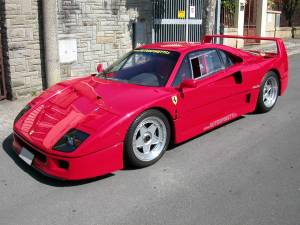
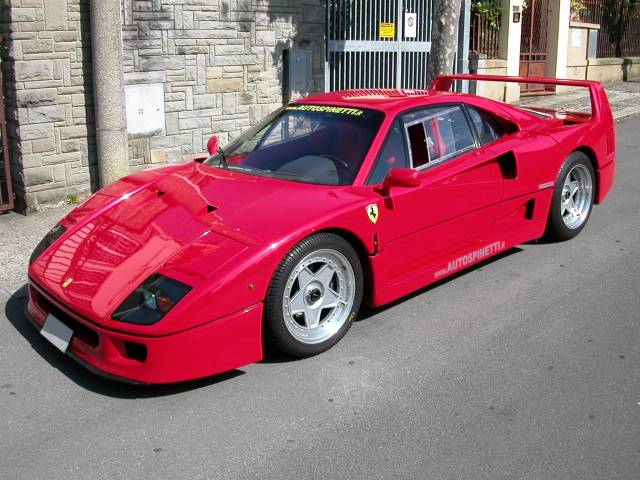
1990 | Ferrari F40
Ferrari F40 "Lexan" 1990

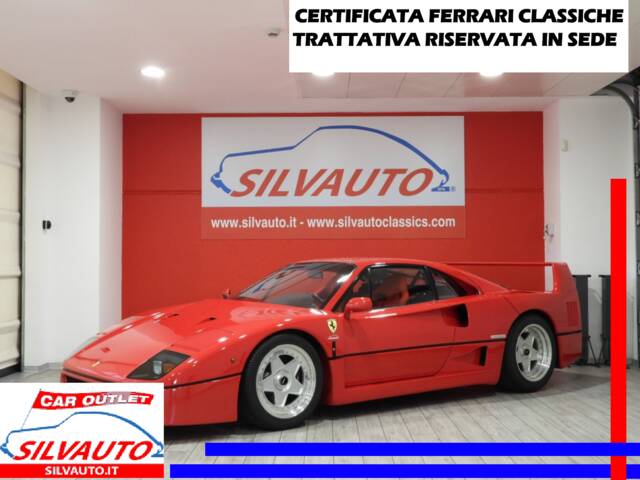
1989 | Ferrari F40
FERRARI CLASSICHE CERTIFIED – STUNNING
Auctions ending soon

Loading…
Loading…
Loading…
Loading…
Ferrari F40 listing references from Classic Trader
Below you will find listings related to your search that are no longer available on Classic Trader. Use this information to gain insight into availability, value trends, and current pricing for a "Ferrari F40" to make a more informed purchasing decision.
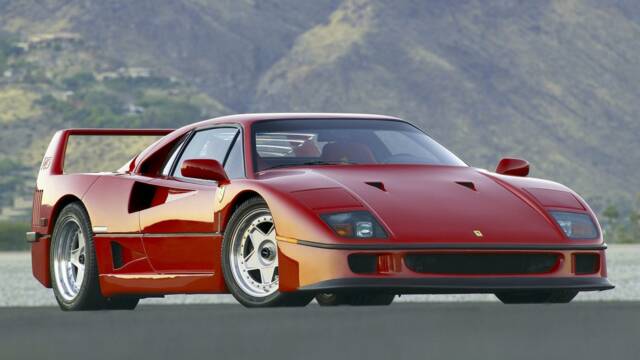
1990 | Ferrari F40

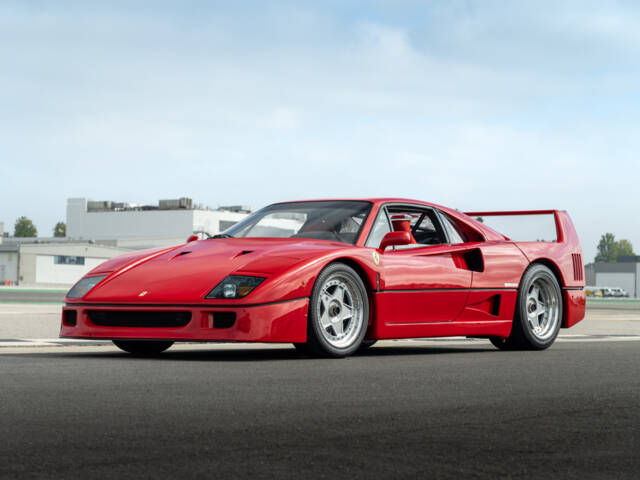
1990 | Ferrari F40
1990 Ferrari F40
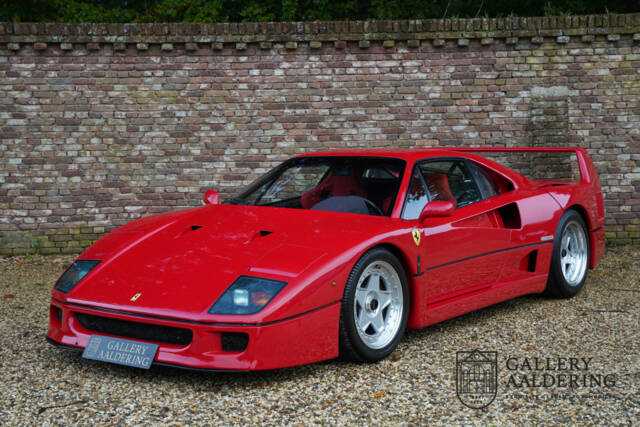
1992 | Ferrari F40
Ferrari F40 "European market example" Only 10.000 KM from new, History confirmed with Marcel Massini report, A rare and desirable European-specification example, Recent major service by F40 specialist, Original colour combination of Rosso Corsa with Stoffa Vigogna interior, Accompanied by leather Ferrari pouch and booklets, The F40 - favorite of many F1-drivers

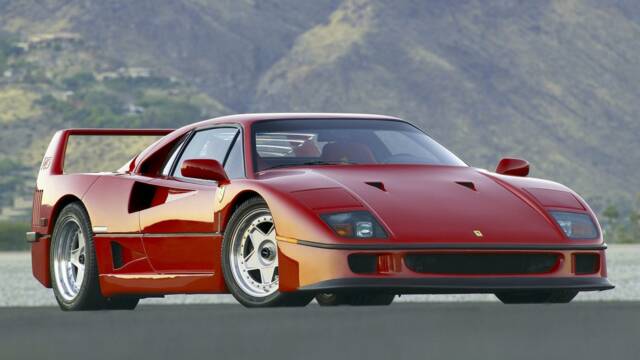
1987 | Ferrari F40
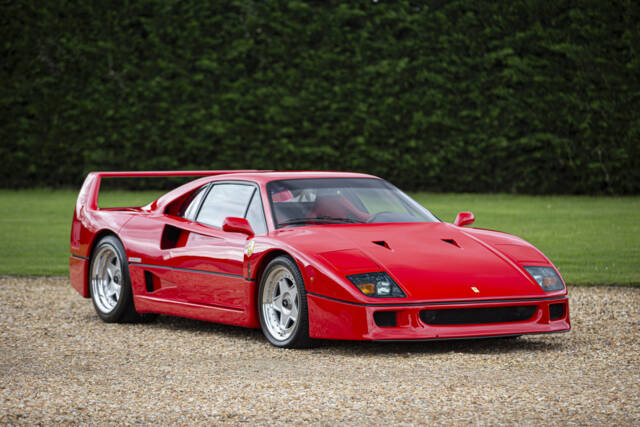
1989 | Ferrari F40
1989 Ferrari F40
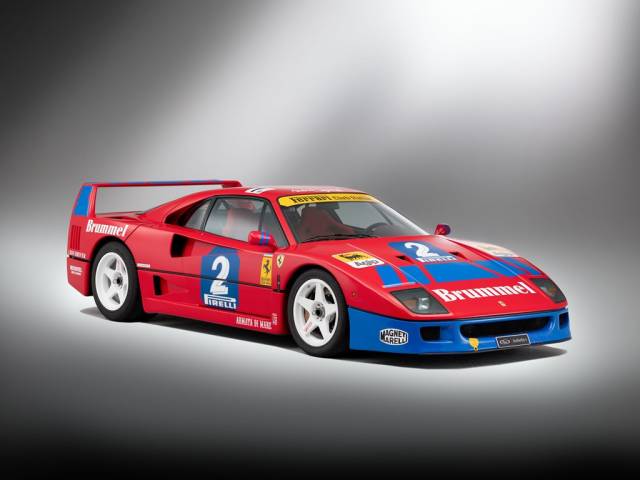
1990 | Ferrari F40 GT
1990 Ferrari F40 GT
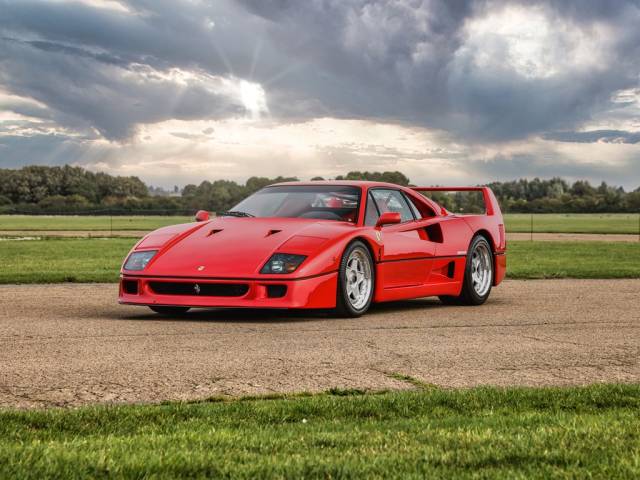
1990 | Ferrari F40
1990 Ferrari F40
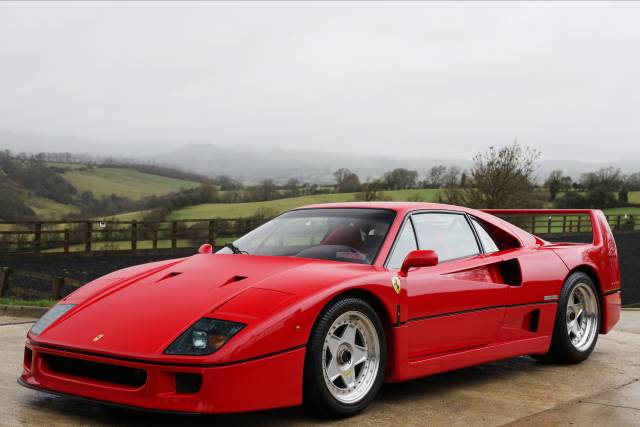
1988 | Ferrari F40
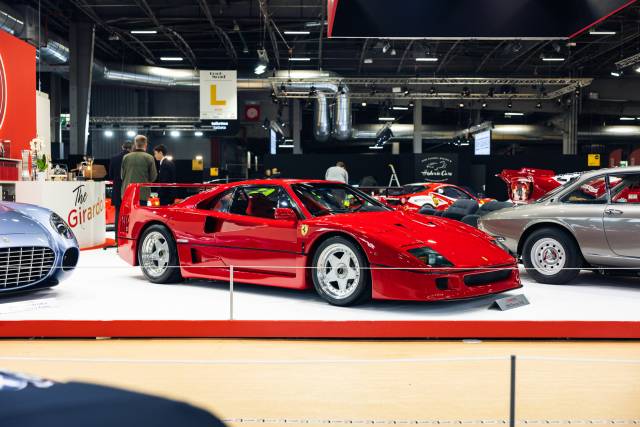
1992 | Ferrari F40
ONLY 749KM FROM NEW & CLASSICHE CERTIFIED
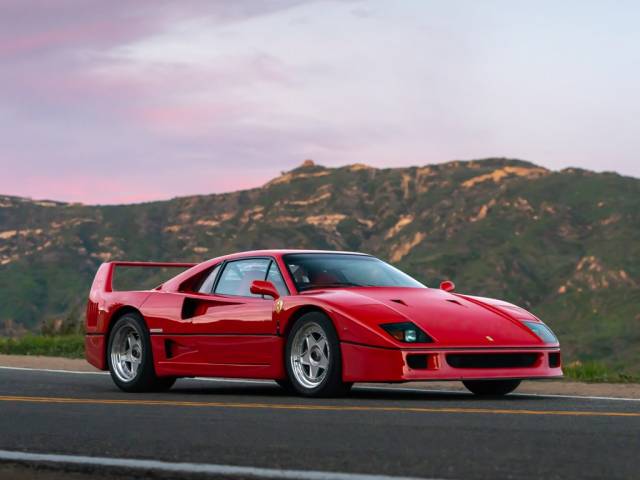
1991 | Ferrari F40
1991 Ferrari F40
Ferrari F40 Classic Cars: Prices & Market Values
History of the Ferrari F40
Launched in 1987 to mark Ferrari’s 40th anniversary, the F40 broke cover at the Frankfurt Motor Show and was later presented at Maranello. Initially intended as a limited run of 400 cars, overwhelming demand pushed total production to around 1,311 units. Only a handful were finished in colours other than Rosso Corsa, with less than ten delivered in yellow, two in black, and a unique white example commissioned by the Sultan of Brunei. This model is notable as the final car developed under Enzo Ferrari’s direct leadership. The combination of extreme performance and focused engineering set new benchmarks for road cars. After Enzo Ferrari’s death, the F40’s value rose sharply, setting price records in collector circles.
Model History and Lineage
The F40 succeeded the 288 GTO, on which it was loosely based, and served as Ferrari’s top-of-the-line offering until the F50 took over in 1996. Unlike its immediate successor, the F40 was designed with almost no concessions to comfort or electronics, closely mirroring its Group B homologation racing roots. Production ran from 1987 to 1992 for road cars, with further evolutions, including the F40 LM, Competizione, and GTE race versions, built between 1994 and 1996. Market values fluctuated sharply after its release, with some cars selling well above list price in the late 1980s and early 1990s.
Highlights and Special Features of the F40
Every element of the F40 is purpose-driven, from its tube steel chassis with carbon, kevlar, and Nomex panels, to its Koni coilovers and distinctive polycarbonate rear window for improved engine cooling. Its huge rear wing, dramatic air intakes, and triple exhaust arrangement highlight the focus on high-speed stability and engine efficiency. The car’s handbuilt quality includes Schedoni leather luggage and tools as standard, and interior appointments are kept to the barest essentials to prioritise weight savings. Notably, there is no ABS, traction control, or power steering, enhancing driver involvement.
Technical Data
Special Editions and Collectors’ Models
The F40 LM, F40 Competizione, and F40 GTE stand apart as competition-focused evolutions, each adapted for track use with power outputs raised up to 537 kW (730 PS). Only 19 F40 LMs and even fewer Competizione and GTE variants were built, making these variants particularly sought-after by motorsport enthusiasts. Right-hand drive conversions are exceedingly rare, typically completed for specific high-profile clients such as the Sultan of Brunei. Early production cars with sliding 'Lexan' windows and without catalytic converters are especially desirable in collector circles.
Weak Points and Common Issues
Potential buyers should note the F40’s spartan construction, which, while great for minimum weight, does not insulate well against noise or heat. The absence of electronic driver aids requires an experienced hand, especially in wet or variable conditions. Early cars ('non-cat, non-adjust') are more raw but lack modern emissions controls and may not be suitable for all markets. Some models are delivered with fixed Lexan windows, limiting ventilation. Service records, original Schedoni accessories, and Ferrari Classiche certification play a significant role in confirming authenticity and preserving value. Given the car’s high-strung nature, careful attention to turbo seals, fuel tanks, and composite bodywork integrity is critical. OEM replacement parts can be hard to source and very costly due to the specialised construction.
Engine, Performance, Transmission, Handling
With 478 PS and a kerb weight close to 1,200 kg, the F40 accelerates from 0 to 100 km/h in 3.8 to 4.4 seconds and achieves a top speed just over 320 km/h (201 mph)—the first production car to break the 200 mph barrier. The five-speed manual with traditional Ferrari gated shift offers immediate, mechanical engagement. The lack of power assistance for steering or brakes demands a driver’s undivided attention, rewarding skill and precision. Despite the uncompromising set-up, the ride is surprisingly supple thanks to Koni adjustable dampers, and body control remains sharp at high speeds. Early European-spec models are lighter and have a stronger performance edge versus US versions due to fewer emissions controls. - F40 'non-cat, non-adjust' (lightest, purest specification)
- F40 US (with catalytic converters, air conditioning)
- F40 LM (race spec, up to 730 PS)
- F40 Competizione / GTE (ultimate competition variants)
Exterior, Interior, Comfort, and Design
Styled by Pininfarina’s Leonardo Fioravanti, the F40 cuts a profile defined by racing aerodynamics and function-first details: fixed headlights, a massive rear wing, deep NACA ducts, and lightweight plexiglass. The interior forgoes all extravagance—no carpets, just thinly padded carbon fibre bucket seats (upholstered in red Stoffa Vigogna or Stoffa Vignona cloth), chord-pulled plastic door panels, a simple instrument cluster, and basic climate controls. All cars ship with Rosso Corsa paint, though rare exceptions exist. Standard accessories include a Schedoni leather case and high-quality tools. Early cars have Perspex sliding side windows, later replaced by winding windows for some markets. Every design choice reflects the car’s intent: minimal weight and maximal driver engagement.
Other Notable Features
As standard, each F40 includes a high-spec tool kit, owner's manual set, and Schedoni leather luggage. Ferrari Classiche certification and the so-called 'Red Book' are highly valued, confirming originality and matching numbers. Many cars have very low mileage, stored in collections from new, but regular exercise is crucial to the health of the engine and drivetrain. Notable customer-specific one-offs exist, including RHD builds and bespoke colours for VIP clients.
Summary
The Ferrari F40 represents a peak moment in sports car engineering. Developed to celebrate a company milestone, with every design and engineering decision guided by the quest for performance, it stands alone in Ferrari’s history as the final project personally championed by Enzo Ferrari. Unique materials, aggressive aerodynamics, and a spartan interior all serve the singular goal of speed, creating a car whose reputation is built on recorded achievements and uncompromising execution. For those in search of a driving experience unfiltered by electronic aids, and a genuine link to Ferrari’s motorsport DNA, the F40 remains unmatched.