- Car
- Eicher (0 offers)
Buy Eicher Classic Tractors
Eicher classic tractors stand out for their air-cooled diesel character, brave engineering and unmistakable presence at British rallies and shows. Rare in the UK and often imported from mainland Europe, they appeal to buyers who want something different with real collector charm.
Search results
Currently, there are no matching listings for your search.
Create search alert
Let yourself be notified as soon as a listing is published that matches your search filters.
Eicher listing references from Classic Trader
Below you will find listings related to your search that are no longer available on Classic Trader. Use this information to gain insight into availability, value trends, and current pricing for a "Eicher" to make a more informed purchasing decision.
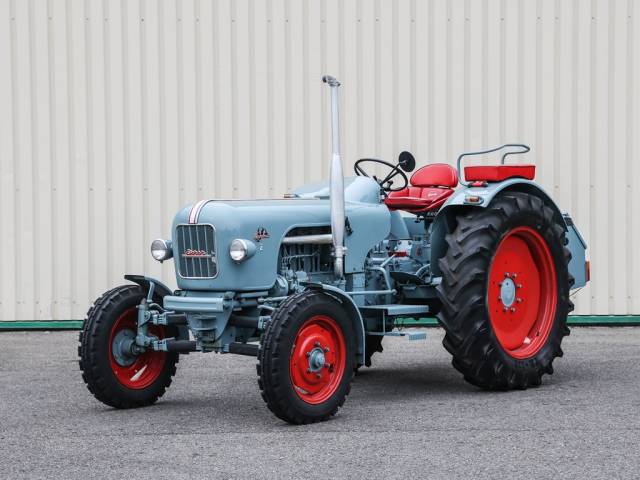
1962 | Eicher EM 600 "Mammut" II
1962 Eicher Mammut 2

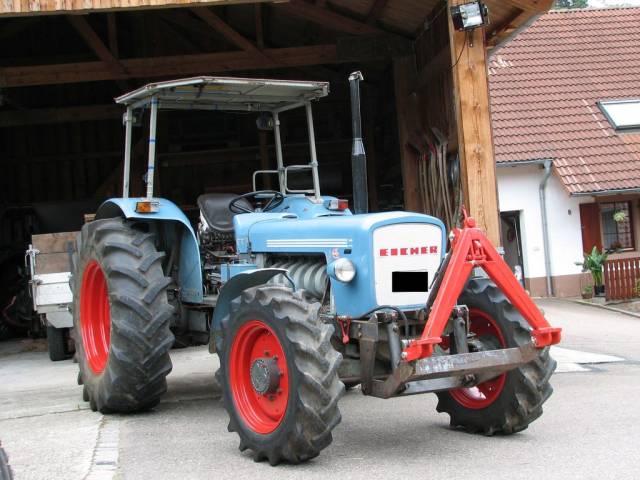
1974 | Eicher 3014 Wotan II A
Eicher Wotan II

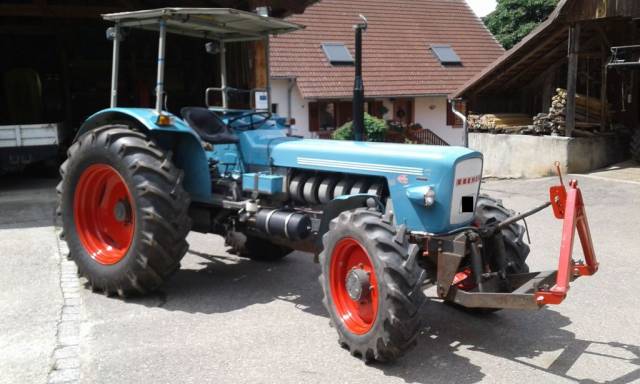
1976 | Eicher 3014 Wotan II A

Create search alert
Let yourself be notified as soon as a listing is published that matches your search filters.
History
Eicher sits in a special place in European tractor history. Founded in Bavaria in the early 20th century as a repair business for agricultural machinery, the firm grew into one of Germany’s most distinctive tractor makers and became best known for its air-cooled diesel engines. For collectors today, that technical independence matters almost as much as the styling: Eicher built machines that sounded different, ran differently and looked different from the better-known British names.
The first post-war Eicher tractors established the company’s reputation for practical innovation. The ED 16/I of 1948 was the world’s first series-produced tractor with an air-cooled diesel engine, a breakthrough that removed the risk of frozen radiators and reduced maintenance in hard winter use. That technical choice became a long-term identity marker. While many manufacturers followed the path of liquid cooling and familiar layouts, Eicher kept refining air-cooling, developing a family of motors that were durable, compact and instantly recognisable by their sound.
By the late 1950s and 1960s, the brand had entered its most collectable era. The famous Raubtierserie — the “big cat” line — gave the tractors names that enthusiasts still remember: Leopard, Panther, Tiger, Königstiger, Mammut and Wotan. For British collectors, those names carry an added appeal because they feel more like proper characters than catalogue numbers. At classic tractor shows, an Eicher is rarely mistaken for anything else.
That period is also why Eicher is relatively rare in the UK. Unlike Ford, Massey Ferguson or David Brown, Eicher was never a mainstream British market staple. Most examples found here arrived as imports, often later in life, and many were brought over by enthusiasts who had seen one abroad, heard one at a rally or wanted something unusual for a collection. The result is a small but loyal British following.
The story continued in the 1970s when Massey Ferguson became involved and Eicher’s range gradually shifted towards numbered models and more internationalised components. Production ended in Europe in the early 1990s, but the older air-cooled tractors survived as a niche classic with strong recognition in continental Europe and growing interest in Britain.
Highlights
Eicher’s appeal is not built on one single model. It comes from a mix of engineering personality, scarcity and the way the tractors fit into the wider collector scene.
Air-cooled diesel identity: Eicher was a pioneer here, and that is still the headline feature for many buyers. The motor architecture is mechanical, honest and easy to understand. There is no radiator to worry about, which is a real advantage for owners who use their tractor lightly but regularly.
Distinctive sound and feel: The dry, sharp note of an Eicher diesel is unlike the more familiar British four-cylinder hum. At a steam fair or vintage tractor gathering, the sound alone draws a crowd. That matters on the UK show circuit, where character often carries as much weight as horsepower.
The Raubtierserie names: Leopard, Tiger, Königstiger and Wotan are memorable in a way few tractor ranges can match. For collectors, model identity is part of the fun, and Eicher gives you that in spades.
Colour and stance: The classic alpine blue bodywork with red wheels has become a signature look. It is bright without being gaudy, and it photographs brilliantly on a misty British field or under the tents at a county show.
Rarity in the UK: An Eicher is still a conversation piece. British buyers often see them as a way to stand apart from the usual Massey Ferguson, Fordson and Nuffield crowd while staying within the practical, usable classic tractor bracket.
Parts support: While the UK is not Eicher’s home market, parts availability is better than many assume. Basic service parts, gaskets, ignition and fuel components, and many wear items can be sourced through specialist European suppliers. For a collector, that makes ownership less daunting than the rarity might suggest.
Technical Data
Eicher’s technical formula is easy to admire because it stayed consistent. The EDK engine family used a modular approach to cylinder count and displacement, which kept the brand coherent across the range. For buyers in Britain, that means a small Leopard and a large Wotan still feel related, even if their use cases are very different.
The biggest issue on the technical side is not complexity but age. As with any classic tractor, condition matters more than brochure numbers. Check the cooling fan, fins and air passages carefully; an air-cooled machine relies on clean airflow in a way a water-cooled tractor does not. Gearboxes are generally robust, but worn linkages, tired clutches and neglected brakes are common on older imports that have spent years stored rather than used.
Market Overview & Buying Tips
In the UK, Eicher is still a niche buy, and that creates a market with two very different audiences. One group wants an affordable, usable show tractor with a strong visual identity. The other wants something rare enough to stand out in a serious collection. Both groups are active, but neither market is deep, so good examples can sell quickly once the right buyer sees them.
Recent UK auction results show that Eicher tractors can be remarkably accessible. A circa 1960s Eicher tractor sold for £3,000 at Mathewsons in May 2025, while an Eicher tractor described as running and driving made £1,800 at H J Pugh in July 2024. A better-documented 1967 Eicher ES 202, imported new to Kent and used on a hop farm, made £2,600 in 2022. These prices suggest that entry-level Eicher ownership in Britain is possible without paying classic-Ford-level money, especially if the tractor is complete and mechanically sound.
At the upper end, restored continental examples indicate what the rarer models can reach. A professionally restored Eicher EM 300 Königstiger has appeared at around €8,500 online, while other well-presented examples have been listed much higher depending on specification, originality and finish. For a British buyer, the more relevant point is that import quality, paperwork and transport can shift the landed cost significantly.
Typical UK buying bands:
- £1,500–£3,500: Project tractors, rough but running examples, incomplete machines, or imports with uncertain history.
- £3,500–£7,500: Usable, tidy tractors with working hydraulics, decent tyres and presentable paint.
- £7,500–£15,000: Strong restorations, rare variants, early ED models, and examples with good provenance.
- £15,000+: Top-condition Wotan, rare all-wheel-drive variants, or museum-grade restorations.
For British collectors, the import angle matters. Many Eichers in the UK have come from Germany, the Netherlands or Austria, where the marque is better known and the supply is wider. That can be a smart route, but it also means you need to budget for transport, VAT where applicable, registration paperwork, and a proper inspection on arrival. A cheap tractor in Europe can become an expensive one once haulage and recommissioning are added.
What to look for:
- Correct model identity. The badge name alone is not enough; verify the technical designation on the plate.
- Cooling system condition. Air-cooling fins must be clean and complete. Missing tinware or blocked airflow can cause overheating.
- Cold start behaviour. A healthy diesel should start cleanly without drama, even if it is an older single-cylinder machine.
- Brake performance. Many tractors for sale have brakes that “work” but are far from correct.
- Originality. Original colour, wheels, instruments and trim matter more than flashy repainting.
- Paperwork. UK buyers should value a V5, import documents and any evidence of agricultural or show use.
British road-use rules also make ownership easier than newcomers sometimes expect. Tractors used for agricultural, horticultural or forestry work are generally exempt from the standard MOT system, though the keeper remains responsible for roadworthiness. Historic tractors over 40 years old can often sit within the historic vehicle tax class if they meet the usual requirements, but if a tractor is only being used as a hobby machine, that does not automatically make it eligible for agricultural fuel or unrestricted road use. For show and road-run owners, it is worth checking the latest DVLA and HMRC guidance before buying.
Driving Feel
An Eicher feels mechanical in the best possible way. There is little separation between driver and machine, and that is exactly why collectors like them. The controls are direct, the sound is physical and the pace is honest. You do not so much sit on an Eicher as work with it.
On start-up, the tractor announces itself with the distinctive beat of an air-cooled diesel. The fan note adds a steady background hiss, and the engine settles into a hard-edged idle that feels more industrial than refined. On a small Leopard or Panther, the rhythm is almost hypnotic. On a Tiger or Königstiger, there is more urgency and a stronger pull through the drivetrain. The bigger Wotan cars the same family sound into a different league altogether.
Driving on the road, Eicher tractors usually feel lighter and more agile than their size suggests. They were built for practical farm work, not for comfort, so the steering, pedals and gear changes all require proper attention. That is part of the appeal. British classic tractor owners often enjoy taking their machines to ploughing matches, shows and charity runs, and an Eicher is ideal for that kind of use because it has enough character to make the journey worthwhile without being too precious to operate.
The experience also suits the UK scene. Vintage tractor rallies, steam fairs and county shows are social occasions as much as machinery events, and Eicher’s rarity means owners are often asked about the make by visitors. At a British Tractor Club gathering or a local rally, the tractor becomes a talking point, not just a vehicle.
Design
Eicher design evolved in clear stages, and that is part of its charm. The early post-war tractors are compact and purposeful, with an almost hand-built quality. They look like machines made to solve a problem rather than impress a crowd.
The 1950s and 1960s brought the signature Eicher identity. The alpine blue paint, red wheels, slim bonnet lines and distinctive frontal stance gave the tractors a recognisable family face. The big-cat names were not just marketing; they matched the visual confidence of the tractors. A Tiger or Königstiger looks assertive but not overstyled, and that balanced aesthetic works well for collectors who appreciate authenticity.
The later 3000-series tractors became more angular and more international in appearance. They followed the design language of the late 1960s and 1970s: squarer bodywork, more substantial grilles, larger cabs and a more industrial stance. Some buyers prefer the earlier charm of the big cats, while others like the later utility look because it suits road work and field demonstrations.
In Britain, the colour scheme matters more than many owners realise. On a grey showground or in a barn-find setting, Eicher blue stands out immediately. That visual recognition is a marketing strength on a marketplace page: the tractor does not need explanation before it catches the eye.
Other
For UK enthusiasts, Eicher ownership fits neatly into the broader classic tractor culture. The British scene is built around clubs, working events and preservation groups, and that social framework makes a niche marque easier to enjoy. Shows such as the Newark Vintage Tractor & Heritage Show and the Somerset Vintage & Classic Tractor Show regularly draw machines from across the UK and Europe, while local ploughing matches and village rallies keep the hobby grounded in use rather than just display.
Eicher also benefits from a collector mindset that values something different. In a field full of familiar British makes, an imported German tractor feels fresh without being obscure for the sake of it. It has enough heritage, enough engineering credibility and enough visual appeal to make sense in a serious collection.
The British import story is part of the attraction too. Some tractors came in via private enthusiasts, others via dealers or from farm clearances on the continent. That means provenance can vary widely, from well-documented machines with history files to anonymous imports that need detective work. For buyers, that is part of the fun, but it also means due diligence matters.
Summary
Eicher classic tractors offer British buyers a rare mix: genuine engineering significance, strong visual identity and a market that is still accessible compared with many blue-chip classics. The early ED tractors matter because they changed diesel tractor history. The big-cat models matter because they turned practicality into personality. And the later 3000-series and Wotan models matter because they extend the story into heavier, more road-capable territory.
For UK collectors, the key advantages are clear. Eicher is uncommon, good examples are still findable in GBP, and imported tractors can deliver real value if they are properly checked before purchase. The main risks are equally clear: patchy paperwork, tired brakes, neglected cooling tinware and restoration work that looks better than it performs.
If you want a tractor with character, a proper show presence and a sound unlike anything else in the row, Eicher is a compelling choice. Find the right one, and you get a classic that is both practical and distinctive — the sort of machine that earns respect on the road, on the stand and in the shed.