- Car
- Donkervoort (7 offers)
Buy Donkervoort Classics
Since 1978, Donkervoort has built ultra-light Dutch sports cars for drivers who think a Caterham still sounds almost civilised. From the early S7 to the 500 hp F22, these hand-built machines offer raw pace, tiny production numbers and a very British kind of open-air obsession seen through a Dutch lens.
Search results
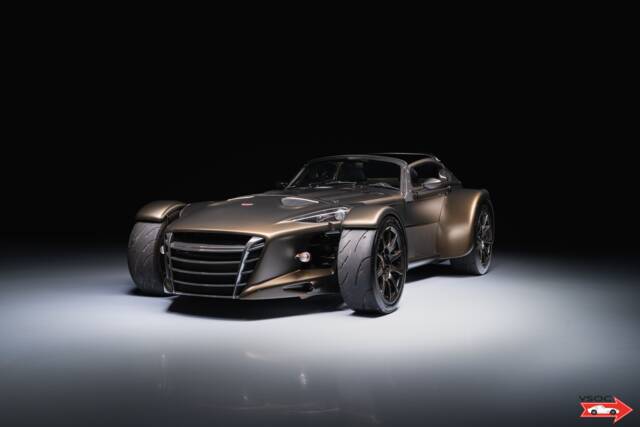
2019 | Donkervoort D8 GTO-RS
Very limited & ultra-light, track-oriented Dutch sports car. Only 9.233km!

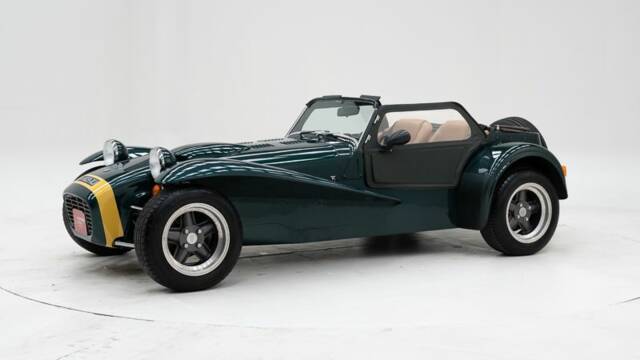
1985 | Donkervoort S8A
1985 Donkervoort Super Eight '85


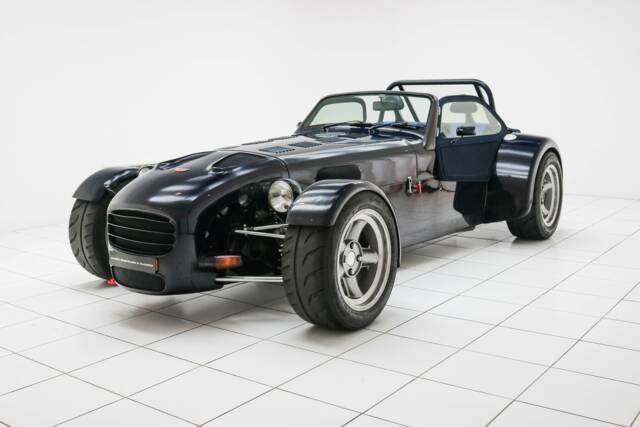
2002 | Donkervoort D8 180R
Carbon - Master Switch - Cup version - 1 of 29


2004 | Donkervoort D8
1.8 Audi 320R Wide-Track BBS – 320 hp – Dry sump – History – Serviced
Newsletter
The best Donkervoort listings, straight to your inbox
Get hand-picked Donkervoort listings, plus the best of cars, motorbikes, and auctions on Classic Trader — all in one place.

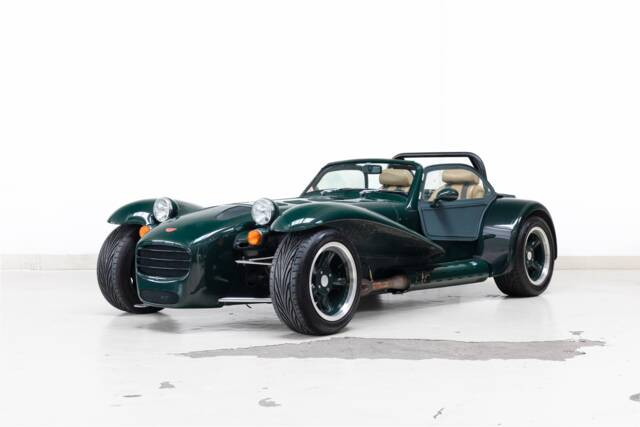
1997 | Donkervoort D8 Zetec
Long Term Ownership - Upgraded Zetec -
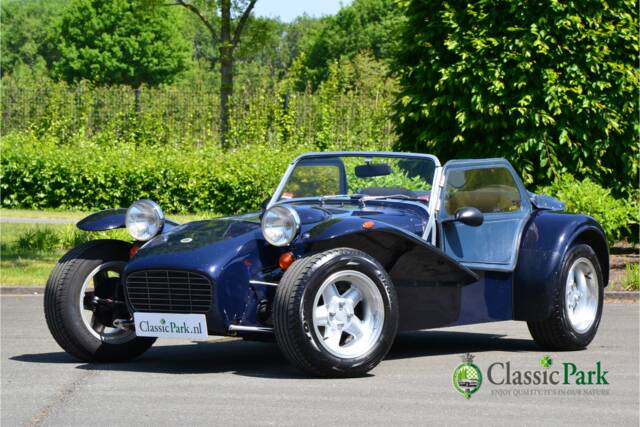
1984 | Donkervoort S8
Donkervoort S8 2.0
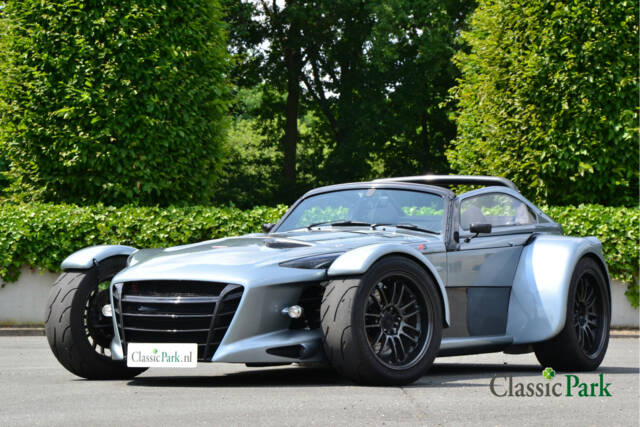
2017 | Donkervoort D8 GTO-RS
Donkervoort D8 GTO-RS
Donkervoort listing references from Classic Trader
Below you will find listings related to your search that are no longer available on Classic Trader. Use this information to gain insight into availability, value trends, and current pricing for a "Donkervoort" to make a more informed purchasing decision.
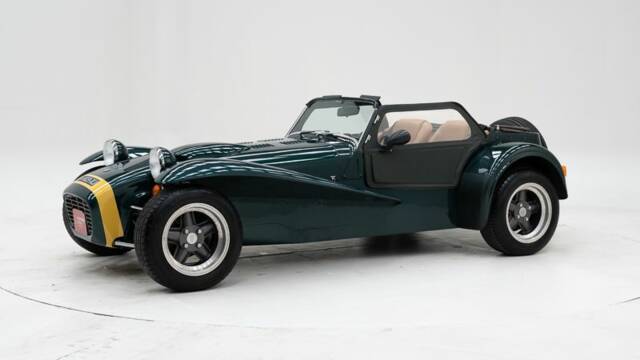
1985 | Donkervoort S8A
1985 Donkervoort Super Eight '85
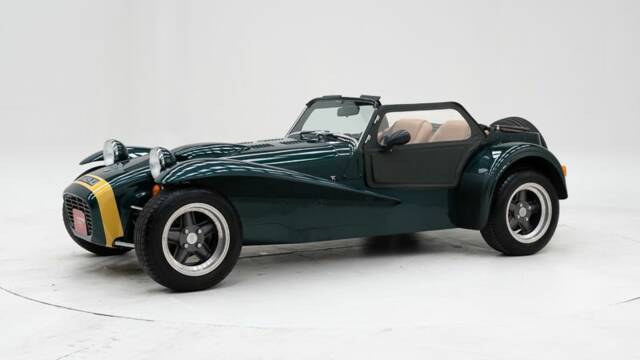
1985 | Donkervoort S8A
1985 Donkervoort Super Eight '85
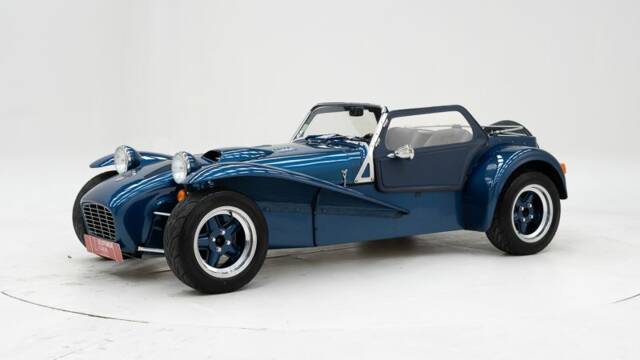
1984 | Donkervoort S8
1984 Donkervoort Super Eight '84
History & Heritage
Donkervoort makes immediate sense to British enthusiasts because its starting point is also one of Britain’s great automotive ideas: Colin Chapman’s doctrine of lightness. The difference is that Donkervoort did not remain a Lotus Seven replica builder. Over almost five decades, the Dutch company turned that familiar roadster formula into something rarer, faster and more extreme than most UK buyers expect.
The story begins in 1978, when Joop Donkervoort wanted to import Seven-style kit cars into the Netherlands and discovered that local approval rules made that route difficult. His response was not to abandon the concept, but to engineer his own version. The first S7 used a 1.6-litre Ford Crossflow and weighed roughly 500 kg, giving it the kind of power-to-weight ratio that made small B-roads feel like special stages. For a British reader, the idea is familiar; the execution already was not. These early cars were hand-built, low-volume and slightly more exotic than the average Seven derivative.
The S8 and later S8A moved the formula on with broader tracks, improved packaging and more developed chassis engineering. By the mid-1980s Donkervoort had also started to separate itself visually and technically from pure Seven orthodoxy. Bonded and riveted aluminium construction, a relentless search for weight reduction and a growing interest in turbocharged performance gave the marque its own identity.
That transition became obvious with the S8AT, which added turbo power to the classic open body. It was quick in a way that many light sports cars of the period were not: not merely nimble, but properly urgent. Then came the wonderfully uncompromising D10 of 1988, created for the company’s tenth anniversary. With no windscreen and only minimal concessions to comfort, it announced that Donkervoort was no longer interested in being the Dutch answer to anything. It wanted to be Donkervoort.
For collectors, one of the decisive turning points is the D8 of the 1990s. The new model family brought more maturity, more power and clearer product differentiation. Early Ford Zetec cars are often the usable entry point today, but the standout collector version is the D8 Cosworth. Using the famous 2.0-litre Cosworth YB turbo engine, the D8 Cosworth delivered between 220 and 280 hp in a package weighing under 700 kg. That is why it has such a strong reputation among serious drivers: it combines old-school boost, tiny mass and almost no electronic safety net.
From 1999, Donkervoort moved to Audi-sourced turbo engines, first the 1.8T and later the charismatic 2.5-litre five-cylinder TFSI. That partnership mattered enormously. It gave the company a powertrain base with stronger emissions compliance, excellent tuning potential and better long-term parts support than many tiny manufacturers enjoy. For UK buyers this is relevant: a Donkervoort may be exotic, but much of its engine-service logic is less obscure than the badge suggests.
The Donkervoort that truly broke into wider enthusiast consciousness was the D8 270 RS, which set a Nürburgring Nordschleife record for a road-legal production car in 2004. That result was more than a publicity stunt. It told the market that Donkervoort was not simply a boutique roadster maker but a manufacturer capable of embarrassing established supercar names.
Then came the D8 GT in 2007, the first closed Donkervoort. This is one of the key make-level collector models because it widened the brand’s appeal without softening its core. With its gullwing doors, carbon bodywork and tiny kerb weight, the D8 GT remains one of the most unusual low-volume performance coupes of the 21st century. In British terms, it sits somewhere between a competition tool and a design oddity: impossible to confuse with anything from Caterham, Lotus or Radical.
The next major leap was the D8 GTO, launched at the end of 2011 and sold through the 2010s in several forms. It shared only a small fraction of parts with the earlier D8 270. The car was longer, wider and much more serious, with full carbon bodywork and the Audi five-cylinder producing 340 hp, 380 hp and eventually more. Among the special editions, the D8 GTO-JD70 stands out as the make’s defining modern collector piece. Built to honour Joop Donkervoort’s seventieth birthday, it pushed power to 415 hp and weight down to around 680 kg, while Donkervoort claimed more than 2G of lateral acceleration on road-legal tyres.
Finally, there is the F22, revealed in 2022 under the leadership of Denis Donkervoort. It is still unmistakably a Donkervoort, but it is also the most complete and expensive car the company has built: 500 hp, 640 Nm, about 750 kg, a carbon twin-targa roof and a degree of usability no earlier Donkervoort really attempted. In Britain, where the romance of the lightweight sports car remains strong, the F22 reads like the genre rewritten for the hypercar age.
Highlights & Features
What defines a Donkervoort classic is not just low weight. Plenty of cars claim that. What defines the marque is how consistently it treats weight, feedback and immediacy as non-negotiable engineering goals.
For a make-level buyer page, five models tell the story best:
- S7: the foundational Donkervoort and the closest link to the Seven tradition.
- D8 Cosworth: the cult turbo car for buyers who want old-school violence in a featherweight chassis.
- D8 GT: the rare closed Donkervoort, with gullwing doors and real collector appeal.
- D8 GTO-JD70: the distilled peak of the GTO era, brutally fast and very limited.
- F22: the modern flagship, sold out early and already treated as a significant collector car.
Several brand-wide traits matter when assessing listings:
1. Extreme low-volume production
Donkervoort has built only around 1,500 cars since 1978. That gives the marque a different market profile from Caterham, Lotus or Morgan. Supply is always thin, and the best cars can move quietly through specialist networks.
2. Hand-built construction
These are not mass-produced sports cars. Chassis details, option mixes and factory upgrades can vary significantly. On a UK purchase, documentation matters more than usual because specification differences affect value.
3. Strong engine identity
Early Ford-powered cars have simple charm, but the Audi-era cars transformed the market perception of the brand. The 1.8T cars are fast and tuneable; the 2.5 TFSI GTO and F22 cars feel more like miniature hypercars.
4. No-compromise driving philosophy
Even later cars keep a startling degree of directness. Steering assistance, ABS and lift systems arrived only where Donkervoort believed they improved usable performance rather than diluted the car.
5. A natural fit for UK enthusiast culture
Britain still understands the appeal of a light, open, minimalist performance car in a way many markets do not. If you already appreciate Lotus Seven, Caterham, Westfield or even a stripped-out Elise, a Donkervoort feels culturally familiar. What changes is the level of rarity, finish and sheer pace.
That last point is important. In the UK, Donkervoort is often viewed as a more intense continental cousin to Caterham: same basic promise of low mass and high feedback, but with more bespoke engineering, more carbon, more turbocharged power and generally much higher entry prices.
Technical Data
These figures explain why Donkervoort occupies such a strange, attractive niche. Early S7 and S8 cars still belong to the classic lightweight-roadster world. The later GTO and F22 cars belong to an altogether more violent category, yet they never abandon manual gearboxes, low seating positions and close mechanical intimacy.
Market Overview & Buying Tips
The British market for Donkervoort is tiny, and that shapes the buying strategy. Most UK buyers do not wait for the right car to appear domestically. They shop the Netherlands, Belgium, Germany and France, then decide whether the car is special enough to justify import paperwork, left-hand-drive compromises and a wider maintenance relationship.
That sounds daunting, but Donkervoort is actually one of the easier obscure marques to understand if you approach it methodically.
What cars cost in 2024-2026
Public European asking prices in 2024-2026 give a useful guide once converted into sterling.
- S7 / S8 / S8AT: AutoScout24 listings in 2026 show running S8 and S8AT cars at roughly €32,950 to €49,950, which is about £28,000 to £43,000 at recent exchange rates. Donkervoort’s own pre-owned channel has also advertised a factory-backed S7/S8 at €94,900 - around £81,000 - showing how much provenance and restoration quality can change the picture.
- Early D8 / Zetec / 180R-type cars: current public asks of €39,950, €55,990 and Donkervoort’s own €69,900 pre-owned example translate to roughly £34,000 to £60,000. This is where many first-time marque buyers begin.
- D8 Cosworth: public availability is sporadic, which is the real market story. Buyers often benchmark these cars against strong early-D8 money and pay a premium for authenticity, condition and proper Cosworth history. In practice, a genuine Cosworth is a Europe-wide hunt, not a casual UK classifieds purchase.
- D8 GTO / GTO-RS: Donkervoort’s 2026 factory-backed used stock has included cars at €154,900, €159,900 and €174,900, or about £133,000 to £150,000. AutoScout24 asking prices for recent GTOs sit in a similar band and can stretch beyond it.
- D8 GTO-JD70 / GTO-40: a JD70 on Donkervoort’s own pre-owned page has been advertised at €239,900 in 2026, roughly £206,000, while a low-mileage JD70 publicly advertised in Europe at €199,900 lands around £172,000. A GTO-40 offered at €189,900 works out at about £163,000.
- F22: this is already a six-figure-sterling collector car. Donkervoort’s own 2026 pre-owned examples have been listed at €359,900 and €399,900, with a further European classified around €381,065. In British money that is roughly £310,000 to £345,000.
For UK buyers, those numbers matter for another reason: they are usually only the starting point.
UK import reality
If you import a Donkervoort into Great Britain, GOV.UK says you must complete the core sequence: import declaration, VAT and duty where applicable, NOVA notification within 14 days, vehicle approval where required, DVLA registration and insurance. That applies whether the car comes from mainland Europe or elsewhere.
There are three British-specific details worth understanding before you buy:
1. Left-hand drive is normal
Most Donkervoorts on the market are LHD. That is not a defect; it is simply the reality of a Dutch marque sold mainly in continental Europe. On British B-roads, a Donkervoort’s tiny width helps, but overtakes, toll booths and sight lines on narrow lanes all feel different. If you want a car for Sunday blasts and the odd track day, LHD is usually acceptable. If you plan regular touring in heavy UK traffic, think about it harder.
2. Vehicle approval can be simpler on older cars
GOV.UK states that if a vehicle was first registered or manufactured more than 10 years ago, it may not need approval. Where approval is required for an EU-registered imported car, you will generally need a European Certificate of Conformity, and a left-hand-drive vehicle may need a GB conversion IVA certificate. GOV.UK quotes a £100 fee for that certificate.
3. MOT and tax rules strongly favour the oldest cars
In Britain, a vehicle built or first registered more than 40 years ago can be MOT-exempt provided it has not been substantially changed. GOV.UK also notes that, from 1 April 2026, vehicles built before 1 January 1986 can move into the historic tax class. For Donkervoort, that means the very earliest S7 and S8 cars may enjoy meaningful ownership advantages in the UK, while later D8, GTO and F22 models remain normal MOT cars.
Practical buying advice
Chassis condition matters more than glamour
These cars are light because every component works hard. Check the chassis carefully for corrosion, poor repairs, accident history and evidence of improper jacking. A tatty carbon panel is expensive; a compromised structure is worse.
Factory history is worth paying for
Donkervoort’s own pre-owned operation and heritage support add credibility. A car with traceable factory servicing, certificates and documented upgrades is easier to value than a modified example with patchy records.
Know which era suits you
An S7/S8 is for buyers who truly want classic simplicity. An early D8 is usually the more practical entry point. A Cosworth is for people who enjoy old turbo character and are willing to search. A GTO or JD70 is supercar-fast and financially much closer to GT3 RS territory than to Caterham money. The F22 is almost its own category.
Do not assume Caterham running costs
The philosophy may look familiar, but the market does not. Consumables, bespoke trim, carbon parts and factory-specific details can be expensive. A Donkervoort is small; it is not cheap.
Use UK enthusiast culture to your advantage
Britain has a strong network of specialists used to lightweight, track-focused cars. Even if no local garage knows Donkervoort intimately, many understand alignment, corner weighting, dampers, turbo diagnostics and hand-built performance cars. That lowers the ownership barrier more than you might think.
Driving Feel
The easiest way to explain a Donkervoort to a British enthusiast is to start with a Caterham and then stretch the idea until it becomes almost absurd.
An early S7 or S8 gives you the sensations you hope for from a classic roadster: exposed cockpit, low scuttle, unfiltered steering and the sense that the car weighs little more than the weather around it. On a good British B-road it would feel alive at sane speeds, always moving on its suspension, always talking.
The D8 Cosworth changes the mood completely. This is still a lightweight sports car, but now it has the famous Cosworth YB turbo punch. Instead of merely carrying speed, it hurls itself between corners. Boost arrives with intent, and because there is so little mass to control, every throttle input seems larger than expected. It is not delicate in the manner of a small British roadster; it is tense, noisy and slightly outrageous.
The D8 GT adds another layer. The roof and coupe body make it feel more serious, more enclosed, more like a competition car that happens to be road-legal. Yet it keeps the Donkervoort traits of low inertia, sharp steering and absolute transparency. It is the car in the range for buyers who want Donkervoort theatre without giving up the idea of a proper body shell.
Then come the five-cylinder cars. A D8 GTO-JD70 does not merely feel fast. It feels structurally incapable of wasting a movement. The Audi inline-five gives the car a muscular, off-beat soundtrack that British buyers already know from fast Audis, but the Donkervoort application is far more dramatic because there is so little around you: no weight, no insulation, very little distance between body and road.
The F22 is the most complete expression of that experience. It is still raw by modern standards, but it finally adds enough practicality to make the performance almost surreal. You have 500 hp, a manual gearbox, a removable roof and a boot large enough to suggest actual touring. On paper that sounds civilised. On the move, it still feels like the road surface is wired straight into your ribcage.
That is why Donkervoort suits Britain conceptually so well. The UK has always loved cars that turn a narrow lane into an event. A Donkervoort simply turns that tradition up to a level that borders on the excessive.
Design
Donkervoort design is best understood as engineering made visible. The early cars wear their Seven ancestry openly: long bonnet, separate wings, tiny cockpit, cycle-fender logic and obvious mechanical honesty. To British eyes, the DNA is clear.
But Donkervoort gradually moved beyond homage. By the time of the later S8A and D8, the shapes were cleaner, wider and more assertive. The basic proportions still said lightweight roadster, but the detailing signalled a manufacturer with its own technical agenda.
The D8 GT is the moment where design becomes genuinely singular. Gullwing doors on a tiny Dutch performance coupe should look awkward. Instead, they make the car look like a low-volume endurance racer. The unusual combination of minimal frontal area, exposed intent and compact carbon bodywork gives it real presence.
With the D8 GTO, Donkervoort became much more modern without losing identity. The body grew wider and more muscular, the surfaces cleaner, the openings more integrated and the whole car more aero-conscious. Special versions such as the Bare Naked Carbon Edition amplified the sense that this was a technical object first and a stylistic exercise second.
The JD70 refined that theme into something almost forensic. Every vent, diffuser line and exposed-carbon surface exists for a reason. It is dramatic, but not decorative.
The F22 carries the idea furthest. It is larger, visually cleaner and more resolved, with a proper sense of premium engineering. Yet it is still unmistakably a Donkervoort because it refuses the conventional supercar layout. It remains front-mid-engined, compact in footprint, manually geared and visibly obsessed with weight.
Other
Two extra points matter in the British context.
First, motorsport credibility. Donkervoort’s Nürburgring record culture, one-make racing experience and GT4 programme give the brand substance beyond novelty. This is useful in the UK because buyers here often like their roadsters backed by competition logic, not just lifestyle marketing.
Second, club culture. Britain has one of Europe’s healthiest lightweight-sports-car communities. Even where there is no formal Donkervoort club infrastructure on Caterham scale, the marque fits naturally into track-day paddocks, specialist dealer conversations and Seven-adjacent enthusiast circles. A Donkervoort owner in Britain is unlikely to be understood by the average passer-by; among serious roadster people, however, the car makes perfect sense.
Summary
Donkervoort is one of the most focused sports-car makers in Europe: a Dutch manufacturer built on a very British love of lightness, openness and driver commitment, then pushed far beyond traditional roadster limits.
For collectors, the key milestones are clear. The S7 anchors the origin story. The D8 Cosworth is the cult turbo weapon. The D8 GT is the rare coupe collectors watch closely. The D8 GTO-JD70 represents the peak of the GTO era. The F22 is the modern halo car and already priced like one.
For UK buyers, the appeal is obvious but the process needs realism. Expect to buy in continental Europe, expect left-hand drive, and budget properly for registration, tax, approval and transport. In return, you get something Britain still values deeply: a lightweight performance car that makes every journey feel mechanical, intimate and memorable.
If you want the rarest answer to the question that once led many enthusiasts to Lotus or Caterham, a Donkervoort is not just an alternative. It is the extreme conclusion.