- Car
- Autobleu (1 offer)
Autobleu classic cars for sale
Autobleu represents a unique chapter in French automotive history, standing out as both a supplier of performance parts and a small-scale producer of customised vehicles, often based on mainstream models like the Renault 4 CV. Collectors and enthusiasts value Autobleu examples for their rarity and for the technical sophistication of their enhancements.
Search results
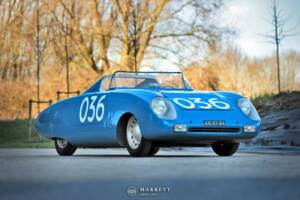
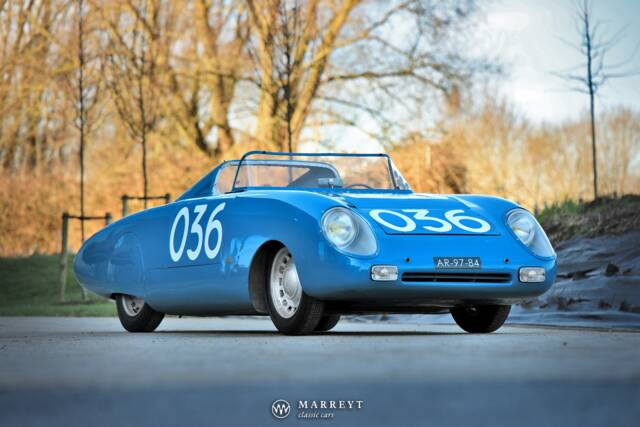
1954 | Autobleu 750 MM
Prototype - Mille Miglia 1954, 1955 & 1956

Introduction and history of Autobleu
Autobleu was more than just a name in the automotive aftermarket; it was a Paris-based innovator, crucial in the post-war era for enthusiasts seeking performance upgrades for their standard vehicles. Best known for their intake and exhaust manifolds, Autobleu’s components became the heart of many performance-tuned French cars in the 1950s and 60s. The company capitalised on France's thriving culture of car customisation, collaborating with larger manufacturers and select coachbuilders to assemble a small number of bespoke vehicles, most notably conversions of the Renault 4 CV.
Model history
Autobleu did not develop independent model lines in the traditional sense. Instead, their best-known work involved personalising existing vehicles—especially the Renault 4 CV—by collaborating closely with Renault and applying their signature performance parts and styling touches. The scarcity of these conversions makes them significant curiosities on the classic car market today.
Highlights of Autobleu
The defining highlight of an Autobleu vehicle is its blend of recognised French engineering with aftermarket ingenuity. Their high-flow intake and exhaust manifolds, in particular, offered improved breathing and performance for modestly powered engines like the Renault 4 CV’s. The company’s role in fostering the French tuning scene and influencing a generation of engineers should not be underestimated.
Technical data
Special Editions and Collectible Models
Due to the handcrafted nature of Autobleu's work and the limited number of vehicles produced, every surviving Autobleu can be considered special. No mass-produced limited-edition models exist, but documented show cars or well-preserved conversions are especially sought after among connoisseurs.
Weak Spots and Common Issues
Owning an Autobleu requires attention to the unique aftermarket components, particularly the intake and exhaust systems, as replacements can be hard to source. Like many cars based on mid-century mass-produced platforms, attention should also be paid to corrosion, the integrity of donor vehicle mechanical parts, and to maintaining authenticity in restoration.
Engine and Performance, Transmission and Handling
Autobleu’s focus was on tangible performance improvements for everyday French cars. The Renault 4 CV, when equipped with Autobleu manifolds and tuning, delivered livelier throttle response and a modest horsepower gain over stock. Handling alterations were limited, as most modifications centred on engine breathing and visual flourishes. The lightweight, rear-engined layout of the base 4 CV contributed to nimble city handling.
Popular models:
- Renault 4 CV Autobleu: The quintessential example, recognisable by its branded manifolds and subtle styling tweaks. undefined
Interior, Comfort, Exterior and Design
Autobleu vehicles fused standard French utilitarian designs with restrained custom touches, both outside and in. While most retained the basic interior of the donor vehicle, some incorporated unique steering wheels, exclusive colour trims, and occasional additions of chrome details. The exterior could feature subtle badging and minor modifications to grilles and bumpers, showcasing the owner's desire for individuality without compromising the original design ethos.
Other relevant features
Autobleu’s influence extended beyond cars: their performance parts were used in both road and competition applications and inspired a generation of French tuners and mechanics. Surviving components and cars are now prized for their historical and engineering value.
Summary
Autobleu stands as a specialist in French automotive history, known for marrying aftermarket ingenuity with accessible vehicles like the Renault 4 CV. Their cars and parts remain rare finds, sought after by those who appreciate detail-driven mechanical enhancement and bespoke craftsmanship rooted in the golden era of French car culture.