Peugeot D3 classic cars for sale
The Peugeot D3 is a French-built forward control van that stands out with its robust engineering and versatile utility. Originally a Chenard-Walcker design, the D3 became a Peugeot after 1950 and is beloved among enthusiasts for its classic lines, practical build and suitability for conversion into food trucks, campers or promotional vehicles.
Search results
Currently, there are no matching listings for your search.
Create search alert
Let yourself be notified as soon as a listing is published that matches your search filters.
Create listing
Do you have a Peugeot D3 that you want to sell? Then create a listing now.
Create listingPeugeot D3 listing references from Classic Trader
Below you will find listings related to your search that are no longer available on Classic Trader. Use this information to gain insight into availability, value trends, and current pricing for a "Peugeot D3" to make a more informed purchasing decision.
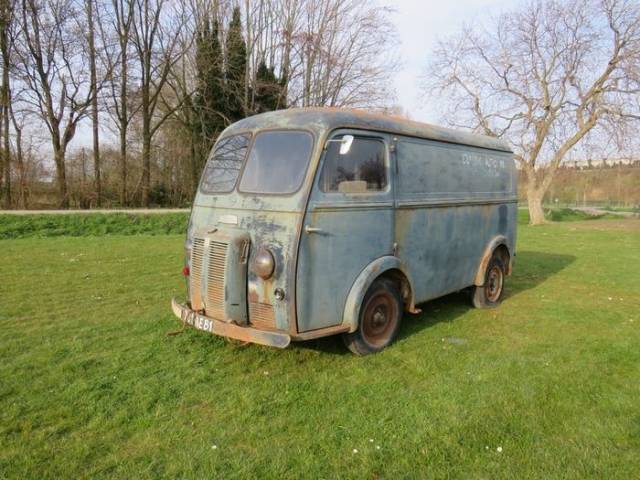
1952 | Peugeot D3A

Create search alert
Let yourself be notified as soon as a listing is published that matches your search filters.
Create listing
Do you have a Peugeot D3 that you want to sell? Then create a listing now.
Create listingPeugeot D3 Classic Cars: Prices & Market Values
History of the Peugeot D3
The Peugeot D3 traces its lineage back to Chenard-Walcker, a once-prominent French automaker. In the late 1940s, Chenard-Walcker introduced a front-wheel drive light van that immediately drew attention for its practical forward control layout, maximising cargo space. Peugeot acquired Chenard-Walcker in 1950, updating and branding the model as the D3. Production began in October 1950, continuing until it was succeeded by the D4 in 1965. This made the D3 a constant presence on French roads, especially as a favourite for small businesses, craftsmen and tradesmen across the country.
Model History of the D3 Series
The Peugeot D3 replaced the original Chenard-Walcker van after the Peugeot takeover, bringing subtle improvements and the reliability of the Peugeot badge. The D3A, introduced in 1952, featured a 1,290cc four-stroke engine, marking an improvement in performance and reliability. Over time, additional upgrades led to the D4 model, which modernised the van further, but the D3 remains the recognisable face of the early Peugeot van family. Its robust construction and adaptability for various uses—from delivery van to mobile shop or even food truck—made it highly popular during its production run.
Highlights of the Peugeot D3
Among vintage vans, the Peugeot D3 stands out due to its practical forward control design, granting excellent cargo space relative to its footprint. The 1,290cc water-cooled engine is straightforward and reliable, mated to a robust 4-speed gearbox. The vehicle can serve original commercial uses or be converted into food trucks, campers or promotional vehicles, giving collectors a huge range of possibilities in restoration. Documentation such as French registration papers are often available, and many examples still possess matching identity plates and engine numbers. Genuine survivors are often found as restoration projects, which is attractive for purist enthusiasts. The rugged body offers stamina for both frequent use and static display.
Technical Data
Special Editions and Collectible Models
No officially documented limited editions or factory-offered special models are recorded for the Peugeot D3. However, surviving examples with original fittings or those preserved in authentically French commercial liveries are sometimes considered particularly desirable. Conversion into unique food trucks or promotional vehicles has also led to some one-off re-interpretations prized by collectors and businesses alike.
Weak Spots and Common Issues
No systematic weak spot data is documented for the Peugeot D3. However, as with most commercial vehicles of the era, attention should be paid to rust, especially around the sills and floor panels, as well as wear to the drivetrain from heavy historical use. Sourcing specific trim or mechanical parts may require extra effort, though the mechanical simplicity of the 1,290cc engine aids restoration.
Engine and Performance, Transmission and Handling
The D3's 1,290cc water-cooled four-stroke engine provides solid torque for a van of its size, paired with a resilient four-speed manual gearbox. Its front-wheel-drive configuration was unusual among contemporaries, enabling responsive handling and better traction under load. The robust chassis and utilitarian suspension setup were optimised for reliable service over rural and urban roads. While not built for speed, the D3's focus on function makes it endearing for historic vehicle users. Notable is the Peugeot D3A variant, particularly models kept close to original specification and still bearing legible identity plates and original engine numbers.
Interior, Comfort, Exterior and Design
The D3 features the classic French forward control design, with a short bonnet and flat front that distinguish it visually from British and German rivals of the period. Interior appointments are typically utilitarian but practical, with basic seats and simple controls designed for ease of maintenance and frequent daily use. The emphasis inside and out is on function, with robust switchgear and durable cabin trim. Some D3s may carry unique period accessories or be finished in traditional commercial colours, which adds further appeal for collectors or businesses wanting authentic fleet vehicles. Aside from its body style, presence on the road is underscored by its upright stance and characterful proportions.
Other Relevant Features
One of the D3's modern appeals is its suitability as a base for full restoration, conversion into campers, or transformation into mobile businesses such as food trucks. This adaptability is supported by its rugged shell and straightforward mechanical construction, making these vans highly flexible for a range of enthusiast uses.
Summary
The Peugeot D3 combines straightforward engineering with attractive French van styling and a broad base of enthusiast interest, both as an original utility vehicle and as a project for creative conversions. Its unique history as a product of both Chenard-Walcker and Peugeot, robust mechanicals and enduring visual appeal make it a distinctive alternative to other European classics of its era.