Jaguar C-Type classic cars for sale
The Jaguar C-Type, originally built for the endurance race at Le Mans from 1951 to 1953, was produced in just 53 units and remains a reference point for lightweight engineering, aerodynamics, and British motorsport history. With its distinctive Malcolm Sayer-designed aluminium body and racing pedigree, the C-Type continues to attract significant attention from enthusiasts across the globe.
Search results
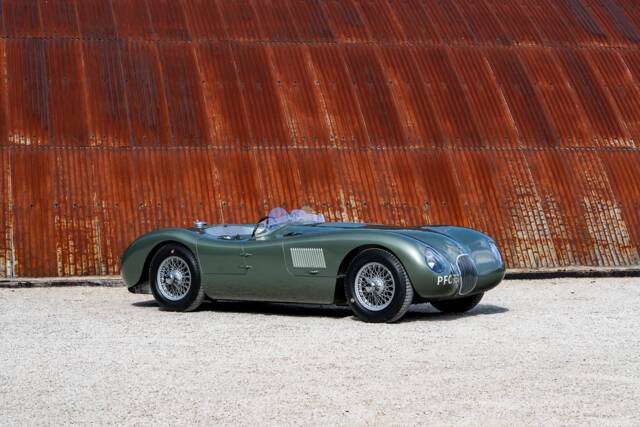
1950 | Jaguar XK 120 C (C-Type)
Toolroom Copy Replica

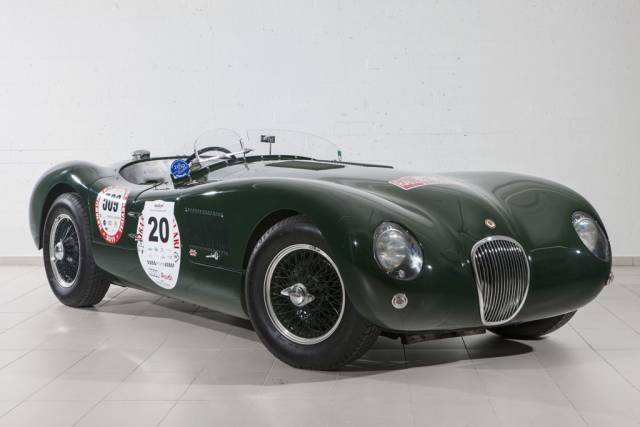
1953 | Jaguar XK 120 C (C-Type)
Jaguar C Type recreation
Jaguar C-Type listing references from Classic Trader
Below you will find listings related to your search that are no longer available on Classic Trader. Use this information to gain insight into availability, value trends, and current pricing for a "Jaguar C-Type" to make a more informed purchasing decision.
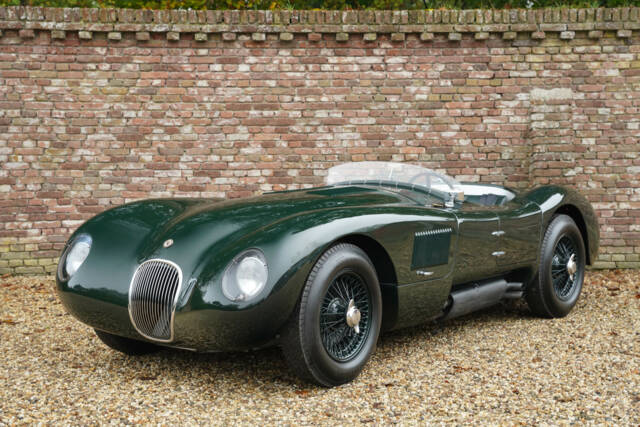
1953 | Jaguar XK 120 C (C-Type)
Jaguar C-Type "XP/11" Believed to be the "Experimental Engineering Jaguar XP/11", Used for the development of the upcoming D-Type, Believed to be the one-off XKC 054/XP/11 - Designed to investigate monocoque construction (predecessor of the Jaguar E-Type), Well-known history among Jaguar connoisseurs,

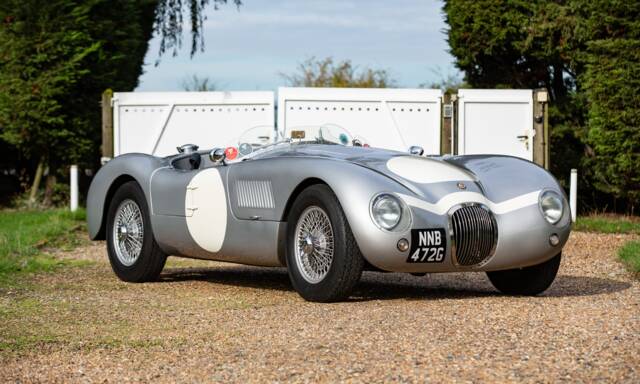
2016 | Jaguar C-Type
2016 Jaguar C-Type by Realm
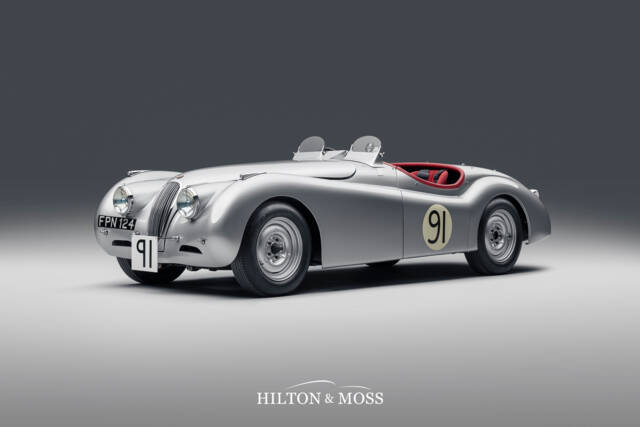
1951 | Jaguar XK 120 C (C-Type)
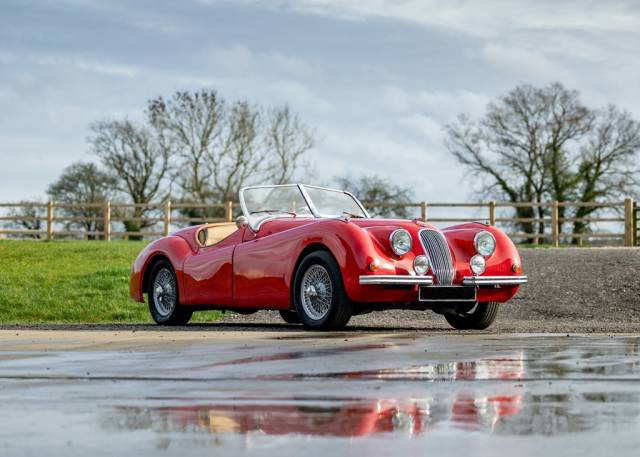
1978 | Jaguar XK 120 C (C-Type)
Jaguar XK120 Roadster recreation
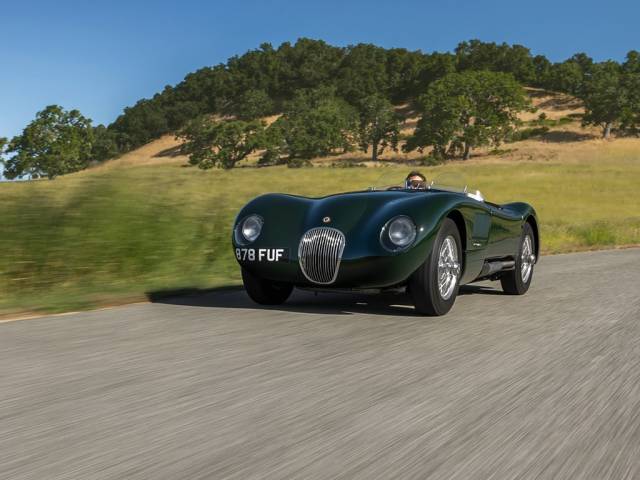
1952 | Jaguar XK 120 C (C-Type)
1952 Jaguar C-Type
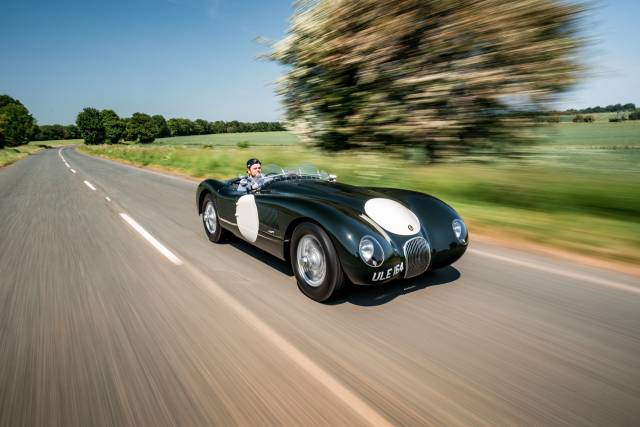
1953 | Jaguar XK 120 C (C-Type)
1957 Full Aluminium Tool Room Copy C Type Replica
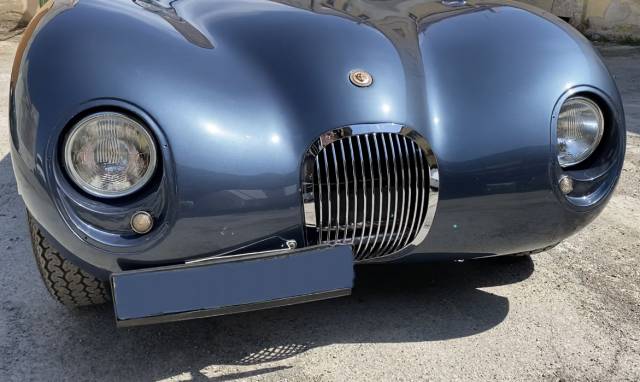
1953 | Jaguar XK 120 C (C-Type)
C-Type recreation based on XK120

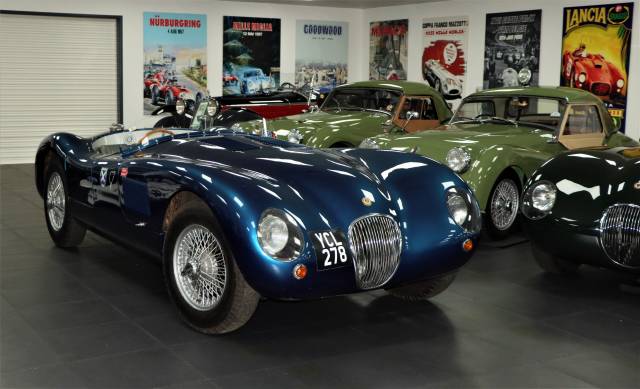
1964 | Jaguar XK 120 C (C-Type)
(1964) Proteus C-Type Jaguar 3.8 replica
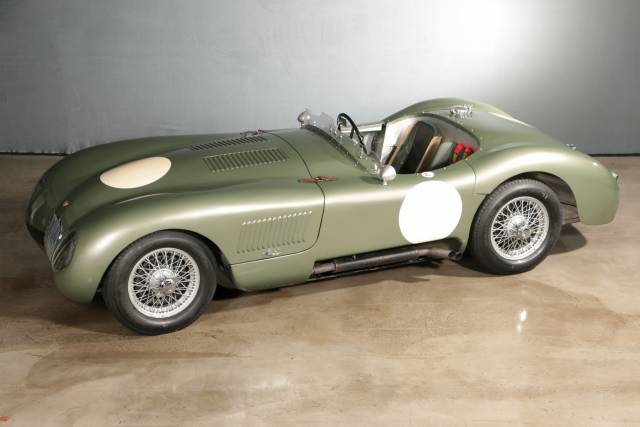
1954 | Jaguar XK 120 C (C-Type)
C-Type "Competition Sportroadster"

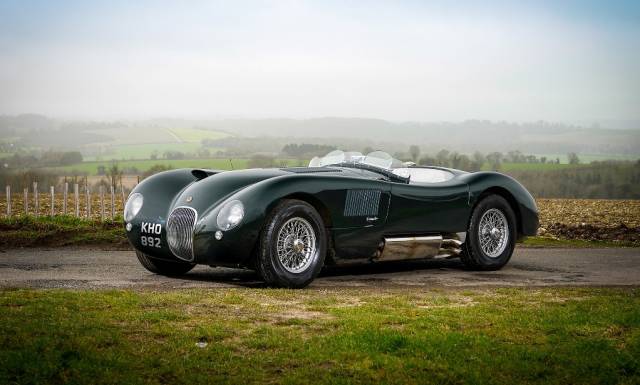
1953 | Jaguar XK 120 C (C-Type)
Jaguar C-Type 'Tool-Room copy' 1953/1996
Jaguar C-Type Classic Cars: Prices & Market Values
Introduction and history of the Jaguar C-Type
Developed specifically for motorsport, the Jaguar C-Type—formally known as XK120C (‘C’ for ‘Competition’)—emerged as a direct evolution of the XK120 Roadster. The C-Type was engineered for speed and endurance, with its first and most famous appearance at the 24 Hours of Le Mans in 1951 resulting in an immediate victory. The design by Malcolm Sayer put the emphasis on minimal weight, superior aerodynamics, and robust mechanicals. Jaguar subsequently refined the C-Type after its initial success, introducing upgrades in both performance and reliability for subsequent seasons. The C-Type cemented its place in international racing by winning Le Mans twice, in 1951 and 1953. Only 53 units were built before being succeeded by the more radically designed D-Type at the end of 1953.
Model history
The C-Type evolved directly from the XK120, sharing its straight-six engine albeit with increased performance and a spaceframe chassis optimised for racing. Early cars used drum brakes but later switched to pioneering disc brakes after facing stiff competition, especially from Mercedes-Benz. After Le Mans success and hardware updates, the final production in 1953 marked the end of the C-Type, succeeded by the D-Type, Jaguar’s next leap in competition technology.
Highlights of the Jaguar C-Type
- First Le Mans appearance in 1951 won outright by Walker/Whitehead.
- Aluminium lightweight body, designed for minimal drag.
- Malcolm Sayer’s design and focus on innovative streamlining.
- Extensive use of aluminium reduced curb weight to ca. 960 kg.
- First to utilise disc brakes in a significant way in endurance racing.
- Small production run: only 53 original cars built.
- Easily distinguishable by the low-slung, minimalist two-seater configuration, spaceframe chassis, and centrally mounted XK engine.
- Strong historical link to the golden era of British motorsport.
Database insights: According to Classic Trader data, C-Type models make up 90% of all Jaguar C-Type listings and account for over 93% of viewing demand for Jaguar models within this series, demonstrating a very high level of interest relative to other Jaguar classics.
Technical data
Special Editions and Collectible Models
Because only 53 original C-Types were built, many are uniquely specified. Later production (chassis XKC050-053) received lighter bodywork, rubber fuel bladders, and three Weber carburettors for higher-output racing; some featured unique ‘Le Mans’ specification details. True originals rarely surface, but expertly crafted recreations by Suffolk Sportscars, Realm Engineering and others use historically accurate chassis and mechanicals, sometimes offering wider engine and gearbox choices. The exclusivity and close connection to Le Mans heritage, particularly the two-time winning chassis, mark certain C-Types as especially notable among collectors.
Weak Spots and Common Issues
The C-Type’s aluminium body is prone to denting and corrosion if not properly cared for, while early cars with drum brakes may show fade under hard use. Cars subjected to heavy track use require regular inspection of the chassis’ welded joints and suspension bushings. Cooling was a concern in early model years, so checking radiator condition and coolant channeling is critical. Restored examples or replicas often use modern upgrades (brakes, ignition) to mitigate original vulnerabilities, but provenance and correct specification are vital for originality.
Engine and Performance, Transmission and Handling
Powered by the Jaguar XK straight-six, the C-Type delivered 160–310 HP (depending on tuning), propelling the lightweight chassis from 0–100 km/h in around 6 seconds and to a top speed of up to 288 km/h in high-output form. The C-Type uses a four-speed manual gearbox. Early cars had drum brakes, but later racing versions and eventual road cars benefited from all-round disc brakes, making them more reliable and competitive. Thanks to its near 50:50 weight distribution and double wishbone front suspension, the C-Type offered outstanding road feel and balance—qualities that were directly responsible for its Le Mans victories. Most sought-after examples feature the lighter late-production chassis with triple Weber carburettors and ‘Le Mans’ upgrades, making them both historically and technically significant.
Interior, Comfort, Exterior and Design
Malcolm Sayer’s aerodynamic design is instantly recognisable by the sweeping nose, minimal cockpit, exposed aluminium bodywork, and period-accurate details: 16-inch wire-spoke wheels, Perspex headlight covers, and Le Mans-style fuel filler caps. Interiors are pure race spec: simple, deeply bucketed leather seats, period gauges, and levers arranged for fast, intuitive access. Chromed grilles, Raydot mirror, and bespoke period switchgear remain hallmarks. Owners could originally select steering orientation. Options on present-day recreations include custom upholstery colours, modern ignition systems, and even discreet 12V sockets.
Other relevant features
Faithful recreations by firms like Suffolk or Realm Engineering allow for left- or right-hand drive variants, different XK engine displacements, and numerous bespoke trim and finish choices. Historic authenticity, matching numbers, and documentation remain the most crucial factors for valuation. Road-registered examples typically blend period looks with acceptable levels of comfort for longer journeys, beyond strict track-use.
Summary
The Jaguar C-Type is synonymous with the heights of 1950s British competition engineering: lightweight aluminium body, XK engine, and a proven Le Mans pedigree. With only 53 units built and a high demand among collectors—demonstrated by its high share of both supply and viewing traffic—the C-Type is a significant focal point for enthusiasts. Whether searching for an original, a period-built continuation, or a faithful recreation, the C-Type combines pure racing history with enduring technical fascination.