Peugeot 203 classic cars for sale
The Peugeot 203, produced from 1948 to 1960, marked the post-war rebirth of Peugeot’s engineering with its robust four-cylinder engine, monocoque bodywork, and an impressive range of body styles—from classic saloon to prized cabriolets. Its spacious Familiale version and characteristically durable mechanics continue to distinguish the 203 in today’s classic car scene.
Résultats de la recherche
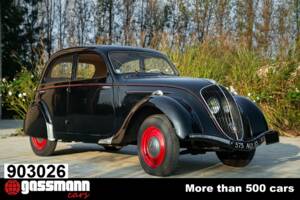
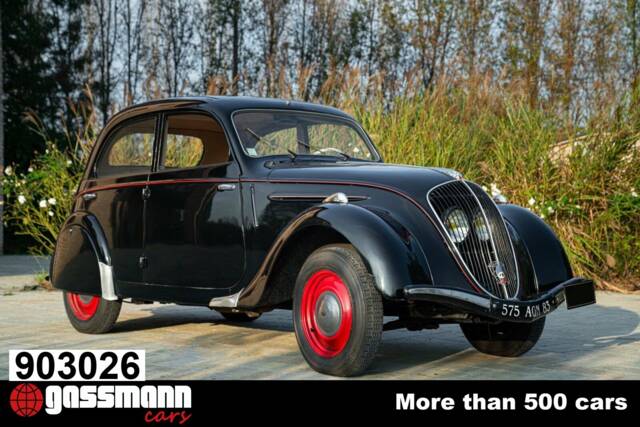
1949 | Peugeot 203
202 BH Limousine
History and Development of the Peugeot 203
Introduced in 1948 and produced until 1960, the Peugeot 203 stands as a testament to Peugeot’s post-war resurgence. The 203 was Peugeot’s first all-new model developed after World War II, directly succeeding the 202 and was, between 1949 and 1954, the only car in Peugeot’s range. This model featured a modern monocoque (self-supporting) body, hydraulic brakes, and independent front suspension with a transverse leaf spring and rack-and-pinion steering—innovations for its time. Its initial launch reflected the growing demand for reliable family transportation and set a benchmark in French automotive design, helping Peugeot recover production momentum after the war.
Model Series History
The 203 followed the Peugeot 202 and filled the market until the introduction of the 403. Available in an unusually wide selection of bodies—including saloon, coupé, cabriolet, diverses estates, and utilitarian/military derivatives—it was aimed at a broad audience. Over its production run, the 203 underwent several facelifts, with key updates such as the fully synchronized gearbox from 1954 and the removal of the bonnet lion mascot in 1958 for enhanced passive safety. Export versions with up to twelve wheelbases were supplied, notably to French colonial markets. Variants such as the sturdy Familiale were particularly successful for family and utility use.
Highlights and Standout Features
The Peugeot 203 earned a reputation for remarkable mechanical durability—particularly its tough 1.3-litre engine. The variety of body styles set it apart, from practical Familiale estates to sought-after cabriolets and the rare 'découvrable' with sliding roof. The rack-and-pinion steering, robust drivetrain, and hydraulic brakes were advanced for family cars of the period. Luxurious post-1950 variants featured leather interiors. Unique features across versions include the 'casse dents' seat form, central rear license plate illumination, and attention to practical details such as multiple body lengths.
Technical Data
Special Editions and Collectible Models
Notable special editions of the Peugeot 203 include the cabriolet and 'découvrable' with sliding roof, both highly prized for their rarity. The Familiale version with extended cabin-room became popular for its adaptability to family needs. From 1950, higher-spec variants offered leather seats, while specific military models such as the VSP and 203 RB were adapted for rural and defence applications. Certain variants are instantly recognisable by features like four-spoke steering wheels, unique rear window shapes, and 'Signets d’ailes' wing trim.
Engine, Driving Experience, Transmission and Handling
The 1.3-litre inline-four delivers 44 PS, offering lively performance for its class and era. A four-speed manual transmission—fully synchronised after 1954—ensures smooth progress. Rack-and-pinion steering lends precise handling, a trait later adopted by the 403. Suspension design, with independent front and a rear live axle, produces secure, predictable road manners. The robust drivetrain gained a reputation for near indestructibility, and the car’s rear-drive layout suits relaxed, long-distance touring. The 203’s solid build and balance are complemented by the hydraulic braking system, reassuring even by modern standards. • Peugeot 203 Cabriolet: Highly sought after for its open-top experience and stylish lines. • Peugeot 203 Familiale: Popular among collectors for its generous seven-seater layout. • Peugeot 203 Découvrable: The sliding roof version combines exclusivity with fresh-air motoring.
Interior, Comfort, Exterior and Design Details
Styled with a nod to contemporary American sedans, the 203’s sweeping front fenders and gently sloping rear gave it a distinctive and imposing look in late-1940s Europe. Despite its length, the interior is relatively compact, but the Familiale and estate models compensate with more space. Interiors evolved from utilitarian to more luxurious, particularly from 1950, with optional leather seats and other upgrades. Details like the central rear license plate light, four-spoke steering wheel, and specific trims distinguish different model years and versions. The accessory list included a factory-fitted sliding roof and, on request, luxury fitments for the period.
Other Relevant Features
In addition to a broad civilian range, the Peugeot 203 served in military (VSP/203 RB) and rural utility roles. A four-wheel-drive prototype was developed for the French military, though it did not see mass adoption and was ultimately converted into a fire engine for Peugeot's own use.
Summary
The Peugeot 203 broke new ground for Peugeot in post-war Europe with its monocoque construction, advanced (for its class) chassis components, and exceptionally robust engine. It remains a distinct entry in European classic motoring, notable for its range of versions and reliable mechanics. Its prime variants—such as the cabriolet and Familiale—continue to be of special interest to collectors and enthusiasts alike.