- Motorcycle
- Villiers (0 offers)
Buy Villiers motorbikes
Born in Wolverhampton, Villiers powered the backbone of Britain’s lightweight motorcycling story. From Francis-Barnett and James to Greeves and Sun, these hard-working two-strokes still speak to Mod-era style, practical engineering and unmistakable British character.
Search results
Currently, there are no matching listings for your search.
Create search alert
Let yourself be notified as soon as a listing is published that matches your search filters.
Create listing
Do you have a Villiers that you want to sell? Then create a listing now.
Create listingVilliers listing references from Classic Trader
Below you will find listings related to your search that are no longer available on Classic Trader. Use this information to gain insight into availability, value trends, and current pricing for a "Villiers" to make a more informed purchasing decision.
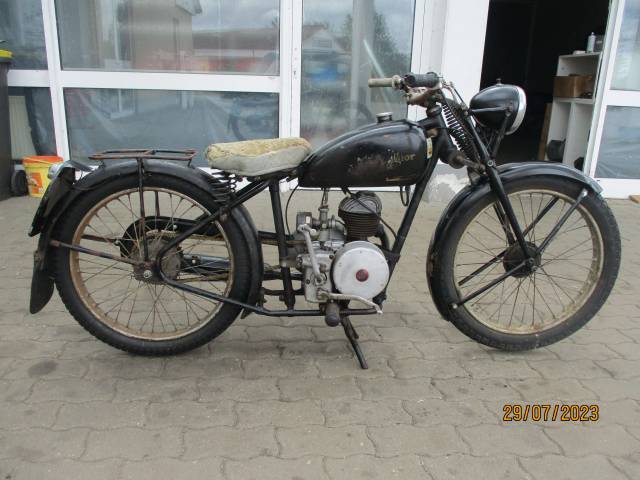
1955 | Villiers 125
Sonstige Marken Excelsior Superconsort F4

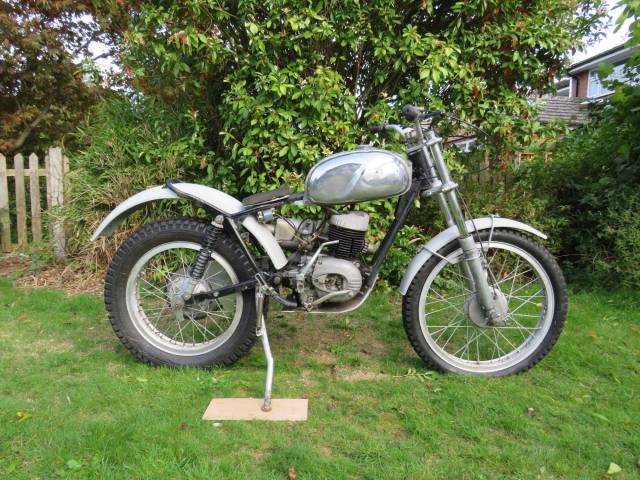
1970 | Villiers 98
c.1970 Villiers 9F Trials Bike 98cc

Create search alert
Let yourself be notified as soon as a listing is published that matches your search filters.
Create listing
Do you have a Villiers that you want to sell? Then create a listing now.
Create listingHistory
Villiers is one of those names that tells you almost everything you need to know about early and post-war British motorcycling: practical, ingenious, compact and built for real roads, real budgets and real riders. The story begins in Wolverhampton, where the Villiers Street factory gave the brand its name and its identity. That Black Country origin matters. Villiers was not a romantic boutique maker chasing glamour; it was a serious engineering firm from the industrial heart of England, and that is exactly why it became so influential.
The company’s roots go back to the late 1890s, when John Marston’s family interests expanded from cycle components into precision-made parts and then small engines. By the early 20th century, Villiers was no longer just making pieces for bicycles; it was building the sort of compact power units that would later keep Britain mobile through the leanest years of the century. The brand’s first motorcycle engines arrived before the First World War, and after early experimentation Villiers found the formula that would define it for decades: simple two-strokes, easy to manufacture, easy to service and affordable to buy.
That formula was a revelation in a country where thousands of riders wanted transport rather than prestige. In inter-war Britain, and especially after 1945, Villiers became the default choice for light motorcycles, autocycles and utility machines. The name appeared across the country on motorcycles wearing badges from Francis-Barnett, James, Greeves, Sun, DMW, Cotton, Norman, Ambassador and more. Villiers rarely built the complete machine itself; instead it supplied the beating heart, allowing many small British manufacturers to stay competitive with modest budgets.
This is part of what gives Villiers such enduring collector appeal today. A Villiers-powered motorcycle is not just one brand’s product. It is a slice of Britain’s wider motorcycle ecosystem, where local frame builders, trial specialists and roadster makers each put their own stamp on a reliable engine package from Wolverhampton. For buyers in Great Britain, that link still resonates. It is hometown engineering with national reach.
Villiers also lived through the shift from pre-war craftsmanship to post-war standardisation. That transition made it especially important in the 1950s, when Britain needed light motorcycles that could be produced quickly and repaired cheaply. The company supplied many of the engines that kept school leavers, commuters and club riders on the move. Even as Japanese competition later changed the market forever, Villiers had already secured its place in British motorcycling history.
The strongest modern collecting thread runs through the post-war single-cylinder machines and the later twins. The small 98cc and 125cc engines sit at one end of the scale, but the most sought-after collector models tend to be the familiar 197cc and 246cc units fitted into lively roadsters and trials bikes. For many buyers, the appeal is as much about the marque on the tank as the engine inside: a Francis-Barnett Falcon, a James Captain, a Greeves trials machine or a Sun Villiers lightweight all tell different stories, yet they share the same Wolverhampton DNA.
Highlights
What makes Villiers special is not only the engineering, but the culture around it. Villiers engines were built into motorcycles that were meant to be used hard, maintained at home and kept alive for decades. That is why the brand remains so visible in the classic scene. If you are browsing listings today, you will often find machines that embody a very British blend of thrift and charm: stripped-back roadsters, trials bikes with a race-bred edge, and petite lightweights that still look ready for a Sunday run to the café.
The most collectible Villiers-related machines tend to fall into a few clear groups.
- Francis-Barnett models such as the Falcon and Cruiser. These are among the best-known Villiers-powered road machines, with strong post-war club appeal and unmistakable period style.
- James lightweights and utility bikes, especially the Captain, Cavalier and military-flavoured ML. They represent sturdy British transport with a bit of elegance.
- Greeves trials and scrambles machines. These are the enthusiast’s choice, combining Villiers power with proper competition intent.
- Sun Villiers lightweights from the vintage and post-war periods. These are less common, and usually attract buyers who like characterful, well-aged machinery.
- DMW and Cotton models. Scarcer than the big names, they appeal to riders who enjoy something a little more unusual.
For a UK audience, Villiers also carries a kind of cultural shorthand. This is the engine of the post-war small machine, the engine that sits in the background of the British motorcycle boom, the engine that helped create the look and sound of local rides, club runs and Saturday meets. That links neatly with Mod culture too: not because every Villiers bike was a Mods’ machine, but because the lightweight British two-stroke world fed the same taste for sharp styling, individuality and affordable mobility. In the UK, a smartly presented Villiers motorcycle can still feel cool in a way that never quite dates.
Auction results from 2024 and 2025 underline that appeal. A 1921 Sun Villiers 293cc Lightweight sold at Bonhams Stafford in October 2024 for £3,680 including premium, while a 1924 Sun Villiers 250cc sold at Shuttleworth in May 2025 for £2,185. At the more competition-focused end, a 1963 Greeves Silverstone (RAS) 250cc sold for £4,500 in 2023, a 1964 Greeves Silverstone 249cc brought £4,025 in 2024, and a c.1967 Greeves Silverstone Starmaker 250cc sold for £2,530 in 2025. These are not speculative headline figures; they show a real market where condition, originality and model choice matter more than mere engine heritage.
Technical Data
Villiers produced many engine variants, but for collectors and buyers the following types matter most. They cover the core post-war and late-period machines you are most likely to encounter on the market.
Common Villiers traits are easy to summarise: air cooling, simple crankcases, kickstart starting, chain final drive and a layout designed for economical manufacture. That simplicity is part of the charm, but also part of the buying logic. A Villiers motorcycle should be inspectable, understandable and maintainable without fear of exotic engineering.
Most road machines have modest outputs by modern standards, often around 8 to 12 bhp for smaller singles and more for the twin-cylinder versions. That is enough for relaxed country-road use, club runs and historic events. Weight varies widely by model, but many sit roughly in the 90-145 kg range, which keeps them manageable even for newer classic buyers.
For the buyer, the key mechanical question is often not whether the engine is powerful enough, but whether the particular model retains the correct components. Original carburettor type, gearbox, electrics, tank badges and frame details can make a major difference to value. On a Villiers bike, authenticity is often worth more than outright cosmetic shine.
Market Overview & Buying Tips
The Villiers market in Great Britain is broad, but not uniform. Prices depend heavily on the host motorcycle’s marque, the engine type, the originality of the build and whether the bike is a usable road machine, a concours restoration or a restoration project. In practical terms, Villiers ownership is still accessible, but the best machines are no longer bargain-basement buys.
For current UK-market thinking, it helps to separate the field into three groups.
1. Entry-level projects
These are incomplete or long-stored motorcycles, often with tired paint, missing paperwork or a non-running engine. In 2024-2025 UK sale rooms, project-level Villiers-powered machines and loose engine lots often sat in the low hundreds to low thousands of pounds. Bonhams sold a c.1950 Villiers-engined project in 2021 for £552 including premium, and a 2025 Bonhams lot of Villiers engine and gearbox components sold for £307.20. Those results show that parts and projects remain genuinely attainable, though a cheap purchase can become expensive quickly once framework, chrome and correct trim are added.
2. Good usable classics
This is the sweet spot for many buyers. A decent Francis-Barnett, James or Sun Villiers machine with sensible history, decent cosmetics and a running motor often sits roughly in the £2,000 to £5,000 bracket, depending on model. A nice, usable Greeves trials or road-race derivative can move higher, especially if it is known, sorted and competition-ready. The 2024 and 2025 auction results above suggest that well-presented Villiers bikes are not just curiosity pieces; they are actively traded motorcycles with a stable enthusiast base.
3. Special or competition machines
Greeves Silverstones, rarer military or export variants, and historically important models like the James ML can push well beyond the usual lightweight range. Their value is driven by rarity, motorsport history and the quality of the restoration. These are the motorcycles for buyers who want a conversation piece with real provenance.
When buying a Villiers motorcycle, check the following carefully:
- Crank seals and bottom end condition: air leaks and tired seals can ruin starting and idle quality.
- Cylinder and piston wear: many engines have seen long storage and corrosion.
- Ignition components: condensers, coils and flywheel magnetos age badly.
- Carburettor originality: wrong jets or incorrect replacement carbs can make a bike feel poor even when the engine is healthy.
- Gearbox operation: Villiers gearboxes are usually durable, but worn selectors and bearings can still spoil the ride.
- Frame rust and previous repairs: especially under the engine cradle, around stand mounts and at suspension pivots.
- Paperwork and matching numbers: on classic British bikes, this can be the difference between a solid buy and a difficult restoration.
Parts supply is better than many buyers expect. The UK still has an active Villiers scene, with specialists, club networks and marque knowledge across the country. That matters because a Villiers bike should never feel like a dead-end purchase. If you are buying the right machine, you are buying into a living parts and information ecosystem.
For the market as a whole, the best advice is simple: buy the most original example you can afford, not the shiniest repaint. A smart-looking restoration can hide incorrect detailing, while a lightly worn but honest machine often offers better long-term value.
Performance
Riding a Villiers motorcycle is about pace with personality. These are not bikes for chasing modern traffic with aggression. They are about momentum, mechanical sympathy and the pleasure of hearing a small two-stroke settle into its work. On a good roadster, the power delivery is clean and direct, with enough torque for easy back-road use and enough character to keep every mile interesting.
The smaller 197cc singles are probably the most representative Villiers experience. They start with a firm kick, settle into a neat idle and pull cleanly through the gears. In today’s terms, performance is modest, but the response feels lively because the bikes are light and uncomplicated. Around town and on secondary roads they feel entirely appropriate, even brisk. That is part of the appeal: they make sensible speeds feel enjoyable.
The 246cc engines and twin-cylinder units add a more relaxed, grown-up feel. They are better suited to riders who want a little more flexibility and less constant gear changing. A well-set-up Villiers twin can feel smoother than expected, with a reassuring steadiness that suits longer club runs and vintage rallies.
In competition machines such as Greeves trials models and Silverstone racers, the experience changes again. Here the engine is not about easy manners; it is about tractable delivery, low weight and a chassis that lets the rider exploit grip and balance. That is why Villiers became such a natural fit for trials and scrambles in the UK. The engines were compact, robust and tuneable enough to stay relevant in the hands of skilled riders.
What does all this mean for a modern buyer? It means you should match the machine to your intended use. If you want a relaxed Sunday classic, choose a well-sorted road machine. If you want something for historic events, club competition or simply a sharper riding experience, a Greeves or other sporting Villiers build may be the better path.
Design
Villiers itself did not define a single visual language in the way a full motorcycle manufacturer might. Instead, the design story is spread across the brands that used its engines. That makes the Villiers world unusually rich. One engine family, many personalities.
Francis-Barnett gave Villiers power a practical, sometimes almost upright look. These bikes often have purposeful tanks, sensible seating positions and a distinctly British modesty about them. They were built for real riders, not for posing. Yet that restraint now reads as style. A clean Francis-Barnett can look wonderfully period-correct without trying too hard.
James took a slightly more polished approach. Its lightweights often have a cleaner, more elegant stance, and the best examples carry real post-war charm. The James ML is the opposite end of the scale: compact, military and almost eccentric in appearance, which is exactly why collectors find it so compelling.
Greeves is the design outlier and perhaps the most visually distinctive Villiers associate. The rubber-sprung front end and competition posture gave Greeves bikes a recognisable silhouette that still stands out at any show or auction. They look like machines engineered for a job, which they were.
Sun Villiers bikes tend to sit closer to the utilitarian end of the spectrum, but that is part of their vintage appeal. Their lines often reflect an older era of lightweight motorcycle design, and the result can be quietly handsome rather than overtly dramatic.
For accessories and originality, buyers should pay attention to the details: badges, tank paint, carburettor fitment, toolbox presence, exhaust shape, saddle type and electrical equipment. On a Villiers-powered classic, these finishing touches often say more about authenticity than any polished engine case ever will.
Other
Villiers also matters because of what it represents in British motorcycle culture beyond the road. It sat at the centre of the post-war light motorcycle boom, helped private owners stay mobile, and powered countless club bikes and competition specials. In that sense, it belongs in the same wider conversation as the rest of Britain’s great lightweight names.
That is where Francis-Barnett, Greeves and James come in so naturally. These are the UK staples that helped define the Villiers market. They are the marques a buyer in Great Britain instinctively understands, because they were part of ordinary motorcycling life for generations. Add in the Wolverhampton connection, and Villiers feels even more rooted: a local industrial story that became a national one.
There is also a strong afterlife in classic events. Villiers-powered bikes remain eligible for many vintage runs, local displays and club gatherings, and they tend to suit that world perfectly. They are light enough to manage, simple enough to maintain and distinctive enough to attract conversation in the paddock.
If you are buying for use rather than storage, that is a major advantage. A good Villiers bike is not just a museum object. It is a machine you can start, ride and understand. That practical honesty is why the market has stayed healthy.
Summary
Villiers is one of the great British engine names because it combined industrial discipline with broad cultural reach. From Wolverhampton to the club scene, from Francis-Barnett to Greeves, and from everyday lightweights to competition specials, Villiers powered the machines that many riders still recognise instantly.
For buyers in Great Britain, the appeal is clear: accessible prices for projects, solid demand for honest usable classics, and stronger money for rare or historically important machines. The 2024-2025 auction market shows that good Villiers motorcycles are still active, still desirable and still very much part of the classic-bike conversation.
If you want a British two-stroke with real heritage, practical ownership and strong period character, a Villiers motorcycle is a very smart place to start. Find the right one, and you are not just buying a machine — you are buying a piece of Wolverhampton-built motorcycling history.
Buy your Villiers motorbike on Classic Trader and find the best offers now.