- Motorcycle
- VOR (0 offers)
Buy VOR Motorcycles
Hand-built in the heart of Brianza and forged through years of Husaberg development, VOR motorcycles represent the pinnacle of Italian boutique engineering. These rare four-stroke machines, known for their gear-driven cams and forward-kicking starters, offer a visceral riding experience that separates collectors from casual enthusiasts.
Search results
Currently, there are no matching listings for your search.
Create search alert
Let yourself be notified as soon as a listing is published that matches your search filters.
VOR listing references from Classic Trader
Below you will find listings related to your search that are no longer available on Classic Trader. Use this information to gain insight into availability, value trends, and current pricing for a "VOR" to make a more informed purchasing decision.
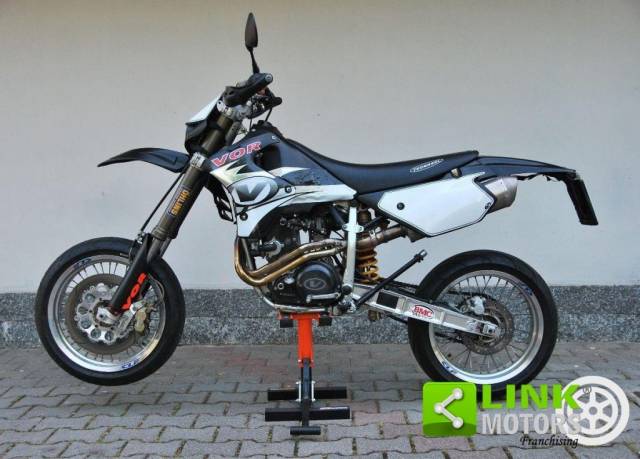
2000 | VOR SM 503
VOR Supermotard 503 "Doppia Omologazione Motard/Enduro" - 2000

Create search alert
Let yourself be notified as soon as a listing is published that matches your search filters.
History & Heritage
The story of VOR – Vertemati Offroad Racing – is one of the most compelling chapters in modern motorcycle history. It is a tale of two brothers, Alvaro and Guido Vertemati, whose obsession with perfection led them from a small garage in Ronco Briantino to the global stage of World Enduro and Motocross. While the brand VOR officially emerged in 1998, its roots stretch back a decade earlier to the family’s workshop in Lombardy.
During the late 1980s and early 1990s, the Vertemati brothers became the official Husaberg importers for Italy. At the time, Husaberg was the radical upstart of the off-road world, having been founded by former Husqvarna engineers who refused to let the four-stroke dream die. The Vertematis didn’t just sell these Swedish machines; they refined them. Their racing team, Vertemati Husaberg, became a laboratory for innovation. They developed custom frames, swingarms, and engine internals that were often superior to the factory parts coming out of Sweden.
By the mid-1990s, the brothers had essentially designed their own motorcycle. Legend has it that Joel Smets, the Belgian motocross giant, used Vertemati-developed technology to help secure his world titles. When the partnership with Husaberg eventually dissolved, the brothers decided to go it alone. In 1998, VOR was born, taking over the manufacturing rights for the Vertemati-designed machines. The factory was established in Ronco Briantino, near Monza, bringing high-end industrial manufacturing to the brothers’ artisanal vision.
The early 1998 and 1999 models were pure competition thoroughbreds. There were no compromises for the street; these were bikes built to win at the highest level of the International Six Days Enduro (ISDE) and World Motocross. However, the relationship between the creative brilliance of the Vertemati brothers and the commercial realities of the VOR factory was often strained. The brothers eventually left the company to resume building ultra-limited motorcycles under their own name, while VOR continued to evolve the designs into more production-ready models like the EN 400 and the legendary 503 series.
In the UK, VOR gained a cult following during the supermoto boom of the early 2000s. British riders, long accustomed to the utilitarian nature of Japanese trail bikes, were mesmerised by the "black rhinoceros" from Italy. The brand’s presence in Britain was bolstered by its success in the hands of Mika Ahola. The Finnish legend, a seven-time ISDE World Trophy winner, cemented the brand's reputation for durability and speed by becoming the fastest overall rider at the 1999, 2001, and 2002 ISDE events on a VOR. For British enduro fans, seeing a boutique Italian brand beat the factory giants from KTM and Husqvarna was nothing short of legendary.
Production eventually ceased around 2005 as the company struggled with the immense costs of hand-assembling such complex machines. Today, it is estimated that only a few hundred VOR motorcycles were ever produced across all models, making them some of the rarest sights at any vintage off-road meeting or supermoto track day in the United Kingdom.
Highlights & Features
A VOR is not just a motorcycle; it is a collection of engineering statements. At a time when the "Big Four" Japanese manufacturers were just beginning to take four-stroke motocross seriously, VOR was already producing machines that looked like they belonged in a museum of industrial design.
The heart of every VOR is the engine. Unlike almost every other off-road bike of the era, which used a timing chain, the VOR single-cylinder engine featured gear-driven overhead cams. This eliminated the risk of chain failure and provided incredibly precise valve timing. The engine casings were often cast from magnesium to save weight, and the lubrication system used crankcase pressure rather than a conventional oil pump—a radical solution that reduced internal friction and complexity.
The forward-kicking starter is perhaps the most famous, or infamous, feature of the VOR. To start the bike, the lever is kicked forward rather than backward. While it takes a few attempts to master the technique, it allows the rider to keep their weight centered over the bike during the starting procedure. This was a direct result of the Vertemati brothers' racing experience, where a quick restart on a muddy hillside could mean the difference between winning and losing.
Another racing-derived feature was the cassette-style gearbox. This allowed mechanics to pull the entire gear cluster out of the side of the engine without splitting the crankcases. For a privateer racer or a serious British enduro rider, this meant the bike could be re-geared for a specific event—moving from a wide-ratio five-speed for a desert race to a close-ratio three-speed for a supermoto circuit—in a fraction of the time it would take on a standard bike.
The chassis was equally exotic. VOR used a perimeter bolt-together frame made from chrome-moly steel with an oval cross-section. Instead of a single welded unit, the frame consisted of several sections bolted together, allowing for precisely tuned flex and easier repair. The swingarm was a work of art in itself: a CNC-machined I-beam aluminium component that was significantly stiffer and lighter than the cast or welded parts used by competitors.
Top-tier components were standard. British buyers were treated to Paioli or Kayaba upside-down forks and a fully adjustable Öhlins rear shock. Braking was handled by Brembo, with the supermoto models receiving massive 320mm floating discs and four-piston calipers that could stood the bike on its nose with a single finger.
Technical Data
Common Specifications Across the Range:
- Frame: Chrome-moly steel perimeter bolt-together frame with oval tubing and aluminium subframe.
- Carburation: Dell'Orto VHSB 38mm (EN/MX) or PHM 38 (SM).
- Ignition: SEM or Ducati electronic ignition.
- Front Brake: 270mm disc (EN/MX) or 320mm disc (SM).
- Rear Brake: 220mm disc.
- Clutch: Magura hydraulic actuation.
- Wheelbase: 1,485mm.
- Seat Height: 960mm (EN/MX) or 920mm (SM).
Market Overview & Buying Tips
Owning a VOR in the United Kingdom is a commitment that requires both mechanical sympathy and a talent for detective work. Because the brand was so short-lived and production numbers were so low, there is no established dealer network or massive warehouse of "new old stock" parts. However, for the collector who appreciates rarity, a VOR offers an incredible amount of "wow factor" for a relatively modest investment.
UK Price Trends
Historically, VOR motorcycles have been undervalued in the UK, often because potential buyers are intimidated by the lack of parts support. This creates opportunities for the savvy enthusiast.
- Auction Results: At the Bonhams Stafford Sale in 2019, a c.2001 VOR SM 503 Supermoto sold for just £1,265 including premium. Another c.2003 VOR 450 Enduro sold at the same event for £805. These prices reflect the "niche" status of the brand outside of the hardcore enthusiast circle.
- Private Sales: In the current 2024–2025 market, a well-maintained, road-legal VOR EN 400 or 503 can be found for between £2,000 and £3,500. Exceptional examples, particularly the SM 503 supermoto with a known history, can reach £4,500.
- Investment Potential: While they aren't appreciating as fast as early Japanese MX bikes, VORs are "bottoming out" in value. As the generation that grew up watching Mika Ahola enters the collector market, these machines are likely to see a steady increase in interest.
Essential Inspection Points
When viewing a VOR in the UK, pay close attention to the following areas:
- Spare Parts Availability: This is the elephant in the room. Engine internals like pistons and valves often need to be sourced from specialists who can adapt parts from other boutique brands like Husaberg, TM, or Vertemati. Consumables like Dell'Orto jets, Brembo pads, and Öhlins seals are easily available through the UK trade. However, bodywork and VOR-specific frame components are practically non-existent. If the plastics are cracked, you will likely be looking at a custom repair or a very long wait on eBay.
- The Engine: Listen for unusual mechanical noise from the gear-driven cams. While robust, the gears can whine if they are worn or if the oil hasn't been changed frequently. The magnesium casings on early models are prone to corrosion, especially if the bike has been stored in a damp UK garage. Check for "furring" around the water pump and engine mounts.
- The Starting Ritual: Ask the owner to start the bike from cold. If they struggle with the forward-kick technique, it might indicate that the carburation is out of sync or the ignition is weak. The Dell'Orto VHSB carburettor is sensitive to setup; a poorly tuned VOR is a nightmare to start when hot.
- Chassis Integrity: Inspect the bolt-together joints of the perimeter frame. Look for signs of stress cracks or loose fasteners. The CNC-machined swingarm should be checked for gouges or signs of impact from heavy off-road use.
- Road Legality: Many VORs were brought into the UK as competition-only machines. If you intend to ride it on the road, ensure it has a valid V5C logbook and an age-related registration. Converting a pure MX bike to road-legal status in the UK requires a daytime MOT and an MSVA (Motorcycle Single Vehicle Approval) in some cases, which can be a bureaucratic headache.
Buyer Profile
The ideal VOR owner is someone who enjoys the "wrenching" as much as the riding. You need to be comfortable participating in online forums and Facebook groups like "Vertemati - VOR Fan Club" to trade technical knowledge and lead on spare parts. It is a bike for the individualist—the rider who wants to turn up to a local green lane or a track day and know that they have the only machine of its kind in the car park.
Performance & Riding Experience
Riding a VOR is a sensory experience that feels entirely different from the refined, almost clinical nature of a modern KTM or Honda. It is a mechanical, "old school" four-stroke experience that rewards the rider who puts in the effort to understand its character.
The 503cc engine is the star of the show. It doesn't have the instant, snappy throttle response of a modern fuel-injected bike. Instead, it builds power with a deliberate, muscular feel. Once you get the gear-driven cams singing, the bike has an incredible "over-rev" capability that allows you to hold a gear much longer than you would expect. On a fast British enduro course or a sweeping supermoto track, this allows for a fluid riding style with fewer gear changes.
The handling is defined by the bike's stability. With a wheelbase of nearly 1,500mm and a relatively high center of gravity, the VOR isn't the quickest-steering bike in tight woods. It requires a firm hand to initiate a turn. However, once leaned over, it feels incredibly planted. On high-speed trails or open moorland, the VOR is in its element, soaking up bumps and ruts with the composure of a desert racer.
The Öhlins rear suspension is world-class, even by modern standards. It provides a level of traction and feedback that makes the bike feel very connected to the terrain. The front forks, whether Paioli or Kayaba, often benefit from a modern re-valve and spring change to suit the typical UK rider's weight and the varying terrain of British enduro.
The Supermoto SM 503 version is a different animal. With 17-inch wheels and sticky rubber, the bike's inherent stability turns into a confidence-inspiring platform for deep lean angles. The massive Brembo brakes provide "one-finger" stopping power, and the smooth power delivery of the large-displacement single allows for controlled slides on corner entry. It is a bike that makes you feel like a hero, provided you can master the forward-kicking start in the paddock.
Design & Aesthetics
The VOR design philosophy can be summarised as "brutal elegance." There are no decorative flourishes; every line and every component is there because it serves a technical purpose.
The all-black bodywork was a bold choice in an era when most manufacturers were using bright primary colours. It gave the VOR a stealthy, aggressive appearance that earned it the "black rhino" nickname. The silver accents of the chrome-moly frame and the gleaming aluminium of the CNC-machined swingarm provided a high-tech contrast that made the bike look far more expensive than its rivals.
The frame architecture is the most striking visual element. The oval-section tubes and the visible bolts at the frame junctions give the bike a "prototype" look, as if it has just rolled out of a racing department's development lab. This is industrial design in its purest form—honest, functional, and visually captivating.
The ergonomics are spacious. The VOR is a large motorcycle, and riders over six feet tall will find it much more comfortable than many cramped modern machines. The seat is narrow and firm, allowing for easy movement, and the high-quality Magura controls feel like they belong on a factory works bike.
Racing Heritage & Cultural Impact
While VOR may have been a small company, its impact on the off-road racing world was massive. In the late 1990s and early 2000s, the brand was a symbol of European artisanal excellence taking on the global industry.
The name Mika Ahola will forever be linked with VOR. The Finn was a force of nature in the enduro world. His three consecutive overall victories at the International Six Days Enduro (ISDE) from 1999 to 2002 on a VOR proved that the bike was more than just a boutique curiosity; it was a world-beater. In the UK, where the ISDE holds a special place in the hearts of off-road fans, Ahola’s exploits gave the brand an aura of invincibility.
In the United States, the influential Motocross Action Magazine (MXA) famously dubbed the VOR 503MX "the Lamborghini of motocross bikes." This quote captured the essence of the brand: exotic, temperamental, beautifully engineered, and undeniably fast.
The cultural impact of VOR lies in its refusal to follow the herd. While the rest of the world was moving toward mass production and cost-cutting, VOR stayed true to the Vertemati brothers' vision of a hand-built, no-compromise racing machine. It represents a time when two brothers in a small Italian town could still dream of building the best motorcycle in the world—and, for a few brief years, actually succeed.
Summary
Buying a VOR is an act of passion. It is not a logical choice for someone who just wants a reliable weekend trail bike. It is a choice for the historian, the engineer, and the rider who wants to feel a direct connection to a unique era of motorcycle development.
With its gear-driven cams, perimeter frame, and hand-built Italian heritage, a VOR offers a riding and ownership experience that is unlike anything else on the market. In the UK, the rarity of these machines ensures that they will always be a talking point, whether you are at a classic show or a local track.
While the parts supply requires patience and the starting technique requires practice, the reward is a machine that represents the very best of boutique engineering. As a collector's item, the VOR is a piece of history that continues to deliver a visceral, high-performance thrill every time the engine roars to life. If you are looking for an off-road machine that combines the soul of an Italian exotic with the pedigree of a world champion, it is time to find a VOR.
UK Owner's Checklist:
- Registration: Check for V5C and age-related plate.
- Engine: Verify gear-driven cam noise and magnesium casing condition.
- Suspension: Confirm Öhlins shock condition (serviceable in UK).
- Carburettor: Check for hot-start issues with Dell'Orto setup.
- Support: Join the "Vertemati - VOR Fan Club" on social media.