- Motorcycle
- Motovespa (0 offers)
Buy Motovespa Scooter
Motovespa is Vespa with a Spanish twist: Madrid-built scooters that mixed Piaggio DNA with local engineering flair. From Mod-era relevance to the coveted DS 200, these are rare classics with real collector appeal in the UK.
Search results
Currently, there are no matching listings for your search.
Create search alert
Let yourself be notified as soon as a listing is published that matches your search filters.
Create listing
Do you have a Motovespa that you want to sell? Then create a listing now.
Create listingMotovespa listing references from Classic Trader
Below you will find listings related to your search that are no longer available on Classic Trader. Use this information to gain insight into availability, value trends, and current pricing for a "Motovespa" to make a more informed purchasing decision.
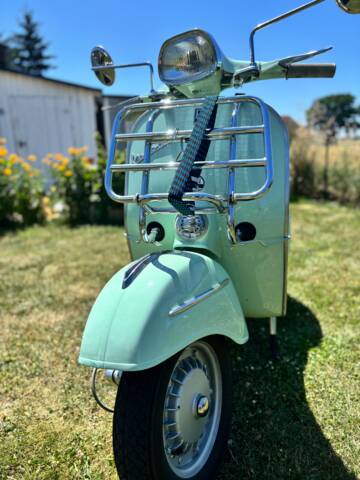
1967 | Motovespa Vespa 125 SL
Vespa Torismo

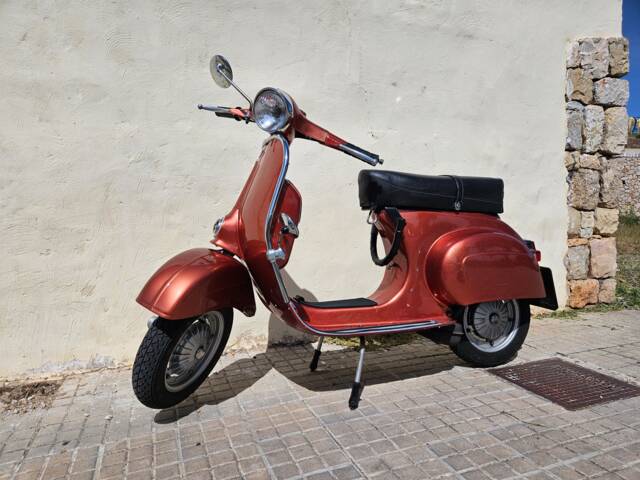
1975 | Motovespa Vespa 125 SL
1975 Motovespa Vespa 125 SL – Historically registered and ready to ride for the season

Create search alert
Let yourself be notified as soon as a listing is published that matches your search filters.
Create listing
Do you have a Motovespa that you want to sell? Then create a listing now.
Create listingHistory
Motovespa is one of the most intriguing branches of Vespa history because it sits at the point where licensing, politics and local engineering all collide. In the early 1950s, Spain was still economically restricted and difficult to supply with imported machinery. Piaggio, looking to expand beyond Italy, saw an opportunity to build Vespas locally and launched production in Madrid under the Motovespa name. The result was not merely a copy of the Italian scooter, but a long-running Spanish interpretation that would develop its own identity over several decades.
The first Motovespa scooters appeared in the early 1950s, and production soon moved from partly imported machines to fully Spanish-built examples. That shift matters to collectors because it marks the moment when Motovespa stopped being a licensing exercise and became a genuine industrial story in its own right. The Madrid plant did not just assemble kits; it adapted, refined and, in some cases, improved the formula. For enthusiasts of classic scooters, that is where the brand becomes more than a footnote.
As the 1960s arrived, Motovespa started to move away from simple small-capacity commuters and into more distinctive family models. The 125 and 150 series established the brand in Spain, but the real fascination for modern collectors lies in the later 150 Sprint, 160 GT, DS 200 and TX 200 machines. These scooters show how Motovespa balanced Italian Vespa architecture with Spanish components, Spanish production decisions and, in some cases, Spanish technical boldness.
The 160 GT was a key step because it introduced the Femsatronic electronic ignition in Motovespa form before such systems were widely adopted elsewhere in the Vespa family. For collectors, that makes the model especially interesting: it is not just a prettier scooter, but a technical milestone. Spanish-made electrical components, local tuning choices and subtle chassis differences gave Motovespa its own flavour.
Then came the model that made the brand a cult object among Vespa people: the DS 200. This is the scooter most likely to stop a scooterist in their tracks. The DS paired a PX-style frame with a Rally-style front end and early 200cc running gear, creating a machine that was neither a pure Rally nor a pure PX. In the UK scene, where Mod history and scooter identity still matter, the DS 200 has become the one that serious collectors talk about first. It feels like a bridge between eras, and that is exactly why it is desirable.
Motovespa production continued into the late 1990s. By then the classic era had passed, and the company’s role in Vespa history was already secure. Today, the surviving scooters are scattered across Spain and the rest of Europe, with only a small number making their way onto the UK market. That scarcity keeps values interesting and makes the brand a rewarding target for buyers who want something more distinctive than a standard Italian Vespa.
Highlights
Motovespa stands out because it offers genuine Vespa appeal without being the obvious choice. That alone is a major highlight for UK collectors. In a market crowded with PX125s, Primavera conversions and heavily modified specials, a Motovespa immediately feels more specific, more historic and more conversation-worthy.
The first highlight is technical independence. Motovespa was not content to simply follow Piaggio production line by line. Spanish-built components, local electrical systems and market-specific details gave many models a slightly different character from their Italian cousins. The 160 GT’s electronic ignition is the best-known example, but it is not the only one. For buyers, this means a Motovespa can be both familiar and fresh at the same time.
The second highlight is the DS 200. In UK scooter culture, certain machines carry symbolic weight: Douglas Vespas, Lambrettas with proper club history, early Italian Vespas with authentic Mod provenance. The DS 200 belongs in that same conversation because it looks and feels like a special factory machine rather than a later tune-up. It is the sort of scooter people remember after a show. The combination of PX frame, Rally-style front and early 200cc power makes it a genuine oddity in the best sense.
The third highlight is Spanish originality. A lot of classic scooter buyers are used to thinking in Italian categories, but Motovespa rewards those who look wider. Spanish trim, Spanish badges, Spanish electrics and Spanish production details all matter. Even on the more ordinary 125s and 150s, the correct Motovespa parts and details can be the difference between an average scooter and a true collector machine.
There is also a cultural highlight that matters a great deal in Britain: Mod relevance. Scooters were not just transport in the UK; they were uniform, attitude and social identity. The Mod scene turned the scooter into a style object, and the best-known machines from the 1960s and 1970s are still discussed in that language today. Motovespa may not be as instantly recognised as Lambretta or Italian Vespa, but that is precisely why it stands out. For a British buyer who wants a scooter with period flavour but less predictability, Motovespa fits the brief very well.
Another important highlight is rarity outside Spain. That scarcity raises the stakes. A Motovespa is not the scooter next door. It is the kind of machine that prompts questions at every event: what is it, where was it made, and is it original? For many collectors, that attention is a feature, not a burden.
Technical Data
Motovespa built a wide range of scooters, so the table below focuses on the most relevant collector models in the brand’s history.
Reference specifications: Motovespa 160 GT
Reference specifications: Motovespa DS 200
The figures above are useful because they show how Motovespa progressed. Early machines are simple by modern standards, but the later scooters are technically more sophisticated than many buyers expect. The 160 GT and DS 200 are the standouts for collectors because they combine usable performance with genuine factory character.
Market Overview & Buying Tips
The UK market for Motovespa is small, uneven and very much driven by enthusiasm rather than volume. That means prices vary sharply depending on model, originality and condition. In 2024–2025, British asking prices seen on Car & Classic, eBay UK and social listings such as Facebook Marketplace UK show a market that is still accessible for projects but already strong for the rarest scooters.
Typical UK asking ranges are roughly:
Those ranges are supported by live-market behaviour. Car & Classic regularly shows classic Vespa listings in the UK market, and Motovespa-specific examples appear at the upper end of the scooter spectrum when they do surface. eBay UK often shows more variable pricing, with projects and incomplete machines priced far lower, but the best DS and 160 GT machines move quickly when they are sensibly described and properly documented. Facebook Marketplace UK tends to reflect local seller expectations, which means you can sometimes find a lower entry point, but you must work harder to verify the scooter’s authenticity and condition.
For a rare make like Motovespa, condition is only part of the story. Correct identity is just as important. Ask for frame numbers, engine numbers and photos of all badge points, trim and paint details. A scooter that looks tidy but carries the wrong engine or a mismatched front end may still be usable, but it loses value quickly once collectors notice.
What to look for
- Frame corrosion: Floor edges, tunnel base and leg-shield seams are the usual problem zones.
- Femsatronic health: On 160 GT and DS 200 models, the electronic ignition is a major buying point. Repair can be awkward if parts are missing.
- Spanish-specific details: Badges, switches, wiring and trim can differ from Italian equivalents.
- DS authenticity: A DS 200 should not be treated like a standard PX or Rally conversion. The correct front end, mask and dashboard matter.
- Paper trail: UK registration, import paperwork and old ownership records increase confidence and value.
- Parts supply: TX 200 parts are easiest; early bodywork and trim are harder and more expensive.
Market behaviour in the UK
The UK buyer base is split. One group wants a usable scooter for club runs, weekend rides and local events. The other wants a collector object with real rarity value. Motovespa suits both groups, but the best opportunities usually sit in the middle: honest original machines that are complete, running and not over-restored.
For sellers, presentation matters a lot. A Motovespa described as “Spanish Vespa”, “rare DS 200” or “Femsatronic 160 GT” will usually attract better attention than a generic classic scooter listing. Buyers in Britain know the Vespa market well enough to recognise the interesting details, and they respond to proper information.
If you are buying in the UK, be patient. The right machine may not appear every month. When it does, act on the paperwork, the bodywork and the originality before you get distracted by fresh paint or shiny chrome.
Performance
Motovespa performance varies a lot by model, but the brand’s best scooters have a surprisingly grown-up feel. The early 125s are charming rather than fast, yet they are still capable classics for relaxed riding. They suit city use, coastal roads and short social runs far better than high-speed touring.
The 150 Sprint is where the range starts to become genuinely enjoyable for regular use. With a 4-speed gearbox and more usable output, it feels less like a museum piece and more like a proper vintage scooter. It still needs sympathy, but it has enough pace to make sense in modern traffic if the route is chosen well.
The 160 GT is widely regarded as one of the most interesting Motovespas to ride. The electronic ignition gives it a crispness that older contact systems do not always match, and the engine feels alert without losing its old-school character. It is not a modern scooter in any sense, but it has enough refinement to feel special. For many riders, that is the sweet spot: old enough to have soul, technical enough to be enjoyable.
The DS 200 is the performance hero. With around 12 hp and 200cc-class torque, it is the scooter most likely to make a strong first impression. The ride is familiar to anyone who knows a PX or Rally, but the front-end feel and model identity are different enough to give it extra charm. It has the poise of a serious factory machine, not a later custom conversion.
On British roads, Motovespa performance is often more about character than outright speed. The scooters are narrow, light and easy to place, which makes them good companions for Sunday runs, club rallies and pub meet-ups. Drum brakes and vintage suspension mean you ride with anticipation, but that is part of the appeal. A Motovespa rewards an engaged rider.
Design
Motovespa design is fascinating because it stays close to the Vespa form while still feeling unmistakably Spanish once you know what to look for. That balance is one reason collectors like it. The scooters look right, but not too familiar. They carry the general Vespa silhouette, yet the details set them apart.
The early scooters are visually close to their Italian ancestors, which is exactly how licensing stories usually begin. But as Motovespa matured, the brand developed its own visual identity. The broad-frame models, the different badge treatments, the Femsatronic-era details and the DS 200’s unusual mix of PX and Rally cues all give the range a distinct appearance.
The DS 200 deserves special mention because it is arguably the most interesting-looking Motovespa. The body is PX-derived, but the front end nods to the Rally 200, and that creates a slightly hybrid visual effect that collectors love. It looks factory-built because it was factory-built, yet it does not fit neatly into the standard Vespa family tree.
The 160 GT has a cleaner, more balanced profile. It is less dramatic than the DS, but it is elegant in a mature way. The lines are purposeful, the proportions work well and the scooter carries itself with a quiet confidence. For buyers who prefer understated classics, the 160 GT is a strong choice.
Colour and trim matter hugely. Original paint, correct badges and period switchgear can transform the impression of a Motovespa. Over-restoration can make these scooters look generic, while a sympathetic restoration preserves the Spanish identity that makes them collectible in the first place.
From a UK Mod perspective, this is exactly the sort of machine that works at shows. It has enough style to satisfy the scene, enough history to spark conversation and enough rarity to keep interest high. A Motovespa parked next to a familiar Lambretta or PX125 stands out immediately without trying too hard.
Other
Motovespa’s wider appeal in Britain is tied to the scooter culture that made the UK such an important market in the first place. The Mod era gave classic scooters a meaning that went far beyond transport. They became symbols of taste, rebellion and belonging. In that context, Motovespa is especially interesting because it adds a slightly outsider edge to a well-known story.
The Spanish Vespa angle is particularly strong for UK buyers. The British scooter scene has always had room for machines with provenance and personality, and Motovespa offers both. The DS 200 is the headline act, but even the more ordinary 125s and 150s can make sense for collectors who want something off the beaten track.
There is also a practical side to ownership. Spares for later PX-based machines are easier to source, and the classic scooter community in the UK is strong enough to support most normal maintenance tasks. Club networks, specialist workshops and online parts suppliers all help. Early body panels, however, are a different matter, which is why a complete scooter is worth paying for.
At rallies and shows, Motovespa usually performs best as a story. It is a talking point, a rarity and a reminder that Vespa history was never limited to Italy. For collectors who enjoy explaining their scooter, that matters. The make has enough depth to satisfy historians and enough charisma to satisfy riders.
Summary
Motovespa is a rare and rewarding classic scooter make for UK buyers. It combines Vespa heritage, Spanish engineering and strong Mod-era relevance in a way that few other brands can match. From early 125s through the 160 GT to the sought-after DS 200, the range offers real collector value.
In the 2024–2025 UK market, good project scooters can still be found at approachable prices, but the best restored and original machines are already commanding serious money. The strongest purchases are the ones with correct numbers, strong bodywork, proper Spanish details and a credible history.
If you want a classic scooter that feels familiar but not ordinary, Motovespa is an excellent choice. Find Motovespa offers and prices on Classic Trader and buy the one that fits your garage, your route and your taste.