- Motorcycle
- MV Agusta (4 offers)
Buy MV Agusta Motorcycle
Since 1945, MV Agusta has defined the pinnacle of Italian motorcycling, combining 38 world championship titles with the sculptural design of Massimo Tamburini. From the dominant GP era of Mike Hailwood to the modern F4 and Superveloce, these machines represent the "Ferrari of motorcycles" for the discerning British collector.
Search results

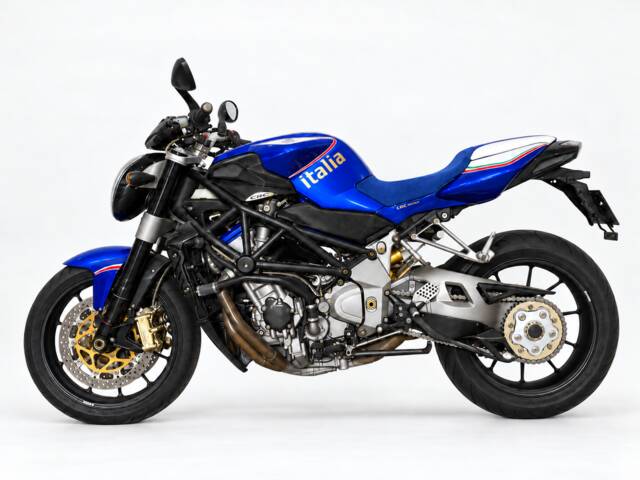
2007 | MV Agusta Brutale 910 R
Brutale 910 R Italia

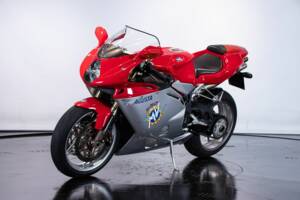
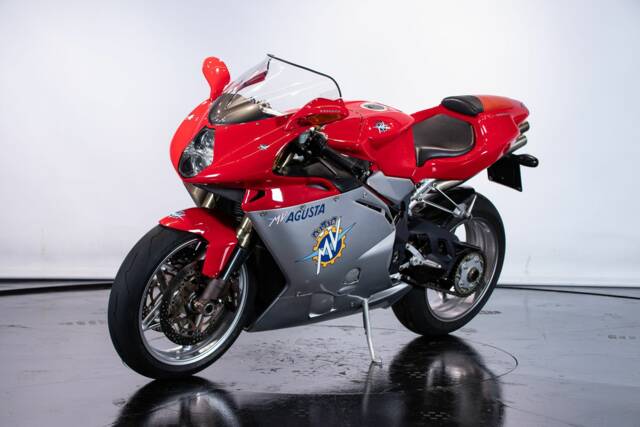
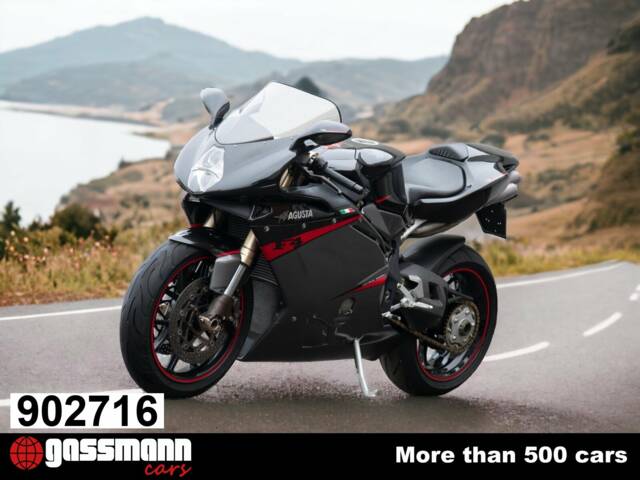
2006 | MV Agusta F4 1000 S
F4 1000 S - R312 Bodykit

Newsletter
The best MV Agusta listings, straight to your inbox
Get hand-picked MV Agusta listings, plus the best of cars, motorbikes, and auctions on Classic Trader — all in one place.
MV Agusta listing references from Classic Trader
Below you will find listings related to your search that are no longer available on Classic Trader. Use this information to gain insight into availability, value trends, and current pricing for a "MV Agusta" to make a more informed purchasing decision.
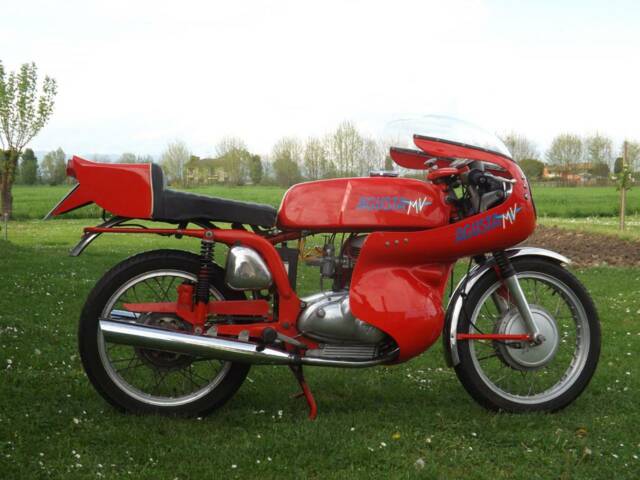
1972 | MV Agusta 350 S
-
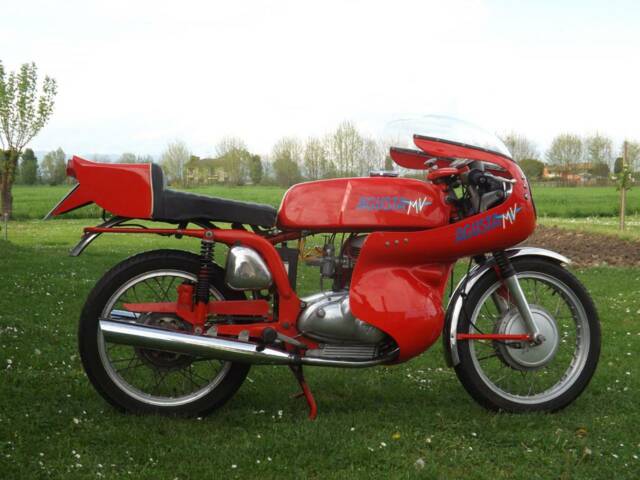
1972 | MV Agusta 350 Bicilindrica
-
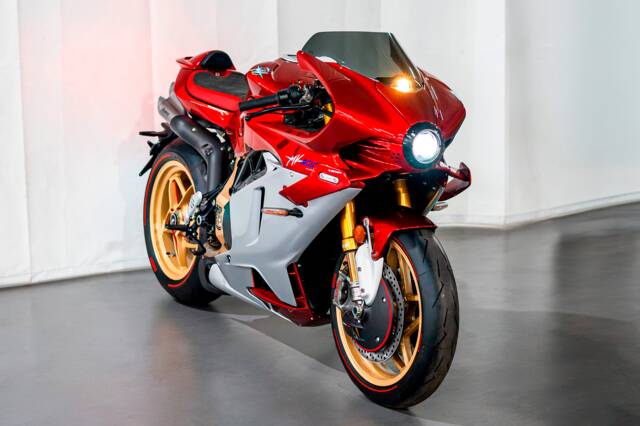
2011 | MV Agusta Superveloce 1000 Serie Oro
MV Agusta Superveloce 1000 Oro – No. 102/500

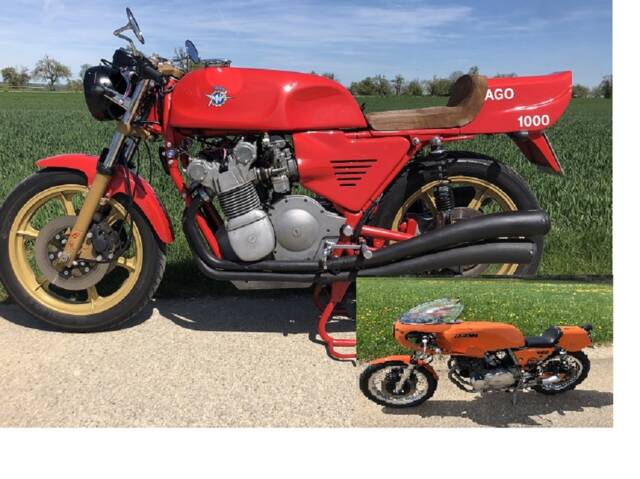
1980 | MV Agusta F4 AGO
MV Agusta AGO 1000 & Laverda 750 SFC
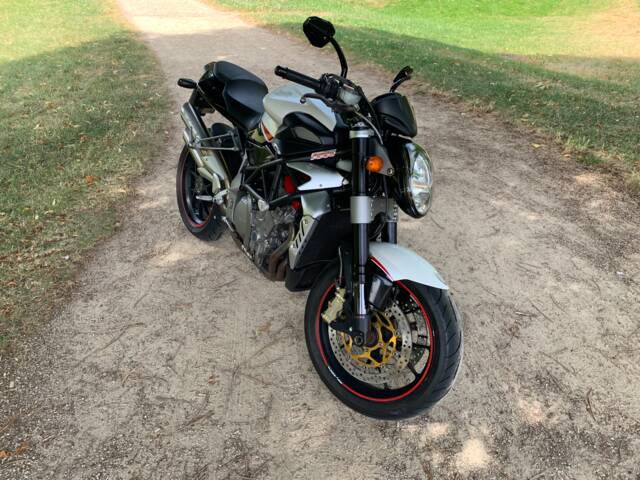
2007 | MV Agusta Brutale 910 R
MV Agusta Brutale 910R | EZ 03/2008 | Originalzustand | HU 06/2028 | 36.664 km
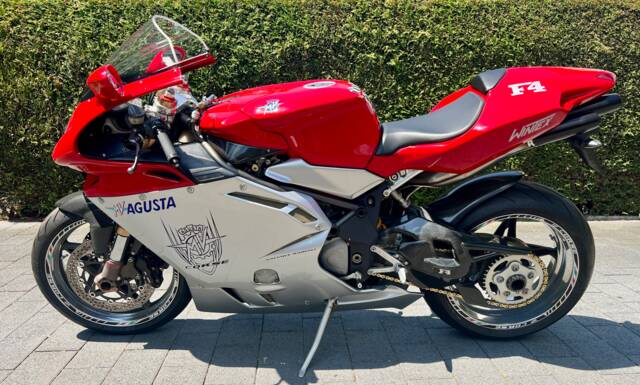
2000 | MV Agusta F4 750 S
Unikat ! Wie Neu ! 1. Serie aus 2000 / 1. Hand
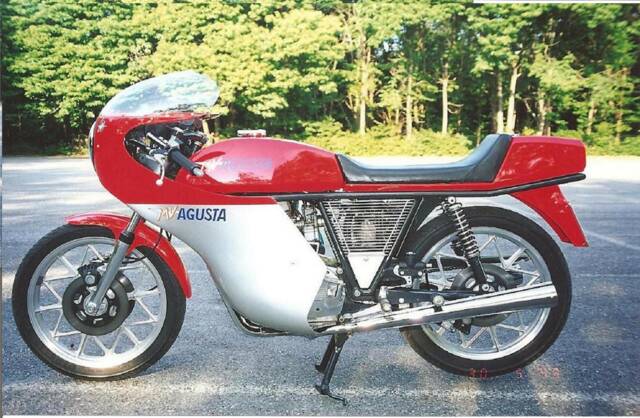
1975 | MV Agusta 350 S Ipotesi
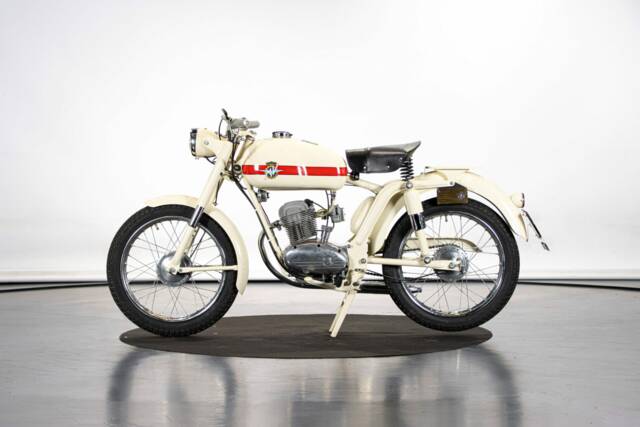
1962 | MV Agusta Liberty I
MV Agusta LIBERTY 50
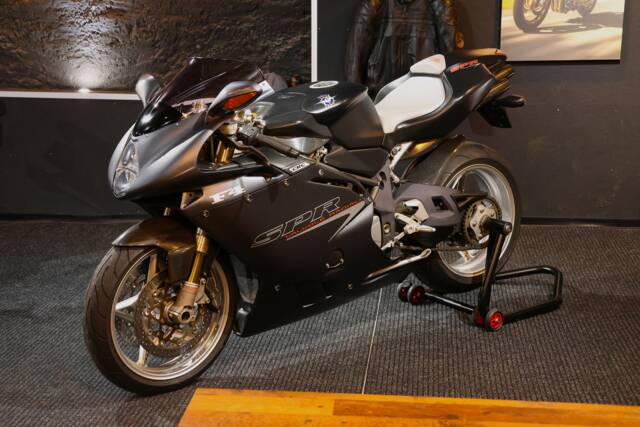
2003 | MV Agusta F4 SPR
Originale F4 750 «SPR» Monoposto, Nummer 33/300, top Zustand

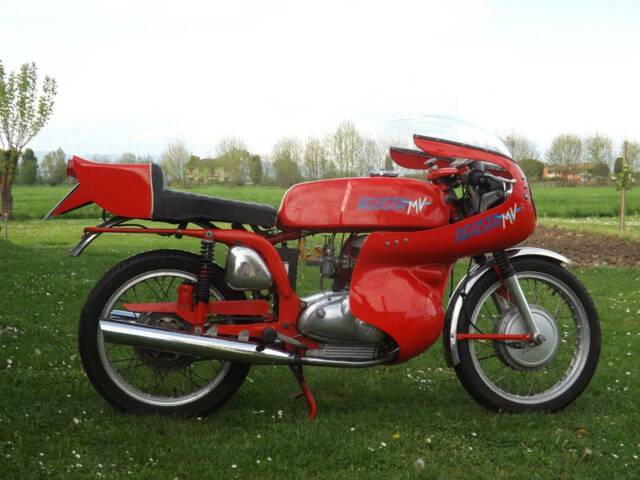
1972 | MV Agusta 350 S
-
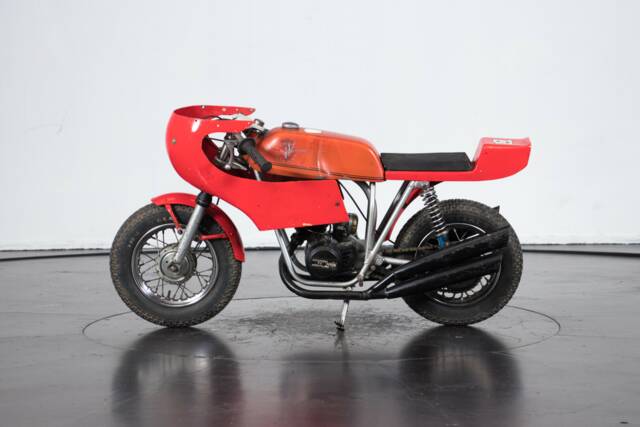
1974 | MV Agusta Mini Bike Racing
MV Agusta Mini Moto
MV Agusta – a name that commands immediate respect in the paddock and on the high street. When Count Domenico Agusta founded Meccanica Verghera in 1945, he wasn't just building transport for a post-war Italy; he was forging a racing dynasty. Between 1952 and 1974, the brand secured 37 constructor world championships and 38 rider titles, a feat largely achieved through the talent of British legends like John Surtees and Mike Hailwood. For the UK enthusiast, MV Agusta isn't just an Italian import; it is a brand inextricably linked to the golden age of British racing and the "Mod" obsession with Italian style. After a period of silence following the factory's closure in 1980, the 1997 debut of the F4—designed by the "Michelangelo of motorcycling," Massimo Tamburini—restored MV to its rightful place. Today, with limited runs like the Superveloce 1000 Serie Oro, MV Agusta remains the ultimate statement of exclusivity and performance.
History & Heritage
The MV Agusta story began in the skies. Count Giovanni Agusta founded an aircraft manufacturing firm in 1907, but it was his son, Domenico, who pivoted to motorcycles after WWII to keep the Varese factory workers employed and circumvent Allied restrictions on aircraft production. The first machine, the MV 98, rolled out in February 1945. Originally intended to be called the "Vespa," the name was already trademarked by Piaggio, forcing a quick rebrand. This humble 98cc two-stroke was the seed from which a giant grew.
By 1948, Domenico’s obsession with racing took hold. He realised that victory on Sunday meant sales on Monday. The British connection was established early; Cecil Sandford secured MV’s first 125cc world title in 1952. This opened the floodgates. The 500cc four-cylinder machines, with their double overhead cams and distinctive howl, became the benchmark of the era. Between 1958 and 1974, MV Agusta won 16 out of 17 possible 500cc rider world titles.
British riders were central to this dominance. John Surtees, the only man to win world championships on both two and four wheels, took four 500cc titles for MV between 1956 and 1960. He was followed by Mike "The Bike" Hailwood, who added four consecutive 500cc crowns from 1962 to 1965. These men didn't just ride the bikes; they helped develop them on the punishing circuits of the Isle of Man TT and Silverstone, cementing the brand's reputation in the UK.
While the racing team conquered the world, the road bikes evolved. The 750 Sport America (1975-1977) was a response to the growing demand for high-performance superbikes, though only 200 units were produced for Europe. The 850 SS Monza (1978) pushed boundaries further with 120 hp, but the rise of the Japanese "Big Four" and the death of Count Domenico in 1971 left the company rudderless. Production ceased in 1980.
The resurrection came in 1992 when the Castiglioni brothers (Cagiva) purchased the brand. They tasked Massimo Tamburini—the genius behind the Ducati 916—with creating a new masterpiece. The result was the F4 750 Serie Oro in 1997. With its radial valves, under-seat exhausts, and single-sided swingarm, it was hailed as the most beautiful motorcycle in the world. It was even exhibited in the Guggenheim Museum. Since then, ownership has passed through Harley-Davidson and the Sardarov family, with a recent partnership with KTM (2023-2025) further refining the engineering and dealer network.
Highlights & Characteristics
What separates an MV Agusta from a Ducati or an Aprilia is exclusivity through limitation. While Ducati produces over 60,000 bikes a year, MV Agusta rarely exceeds 10,000. This scarcity ensures that every MV is a potential collector's item from the moment it leaves Varese.
Key technical hallmarks include:
- Radial Valve Four-Cylinder Engines: A unique layout that allows for a more compact combustion chamber and a higher rev ceiling, producing the signature "MV scream" above 8,000 rpm.
- Tamburini Design DNA: The F4's silhouette, with its organ-pipe exhausts and sculptural fairings, remains the blueprint for modern MV design.
- Trellis Frames & CNC Machining: The use of chromium-molybdenum steel trellis frames mated to aluminium side plates provides a balance of rigidity and feedback that is distinctively Italian.
- Limited Editions: Models like the Senna, Ago, and Claudio are not just trim levels; they often feature significant weight savings through carbon fibre and titanium, along with bespoke engine tuning.
However, owning an MV Agusta requires a commitment to maintenance. Common issues include the sprag clutch on three-cylinder models (Brutale 800, Dragster) produced before 2017. A failure here can be costly, often requiring £1,500 to £2,000 in repairs. Early F4 models (1999-2004) were known for valve train fragility if pushed past 14,000 rpm without a rev limiter. Electronics on 2014-2016 models can also be temperamental, with "Exhaust Error" messages often caused by sensitive sensors.
For the British collector, parts availability has improved significantly. Specialists like STP Race Products and MV Meccanica Verghera Ltd in the UK provide expert support for both modern and classic machines, ensuring these "rolling works of art" stay on the road.
Technical Data
Note: Service intervals are typically short. Expect valve clearance checks every 6,000 miles for the F4 and 9,000 miles for the three-cylinder range. A major service in the UK typically costs between £600 and £1,200.
Market Overview & Buying Tips
The UK market for MV Agusta is robust, driven by a deep appreciation for racing history and the brand's "boutique" status. Prices in 2024-2025 reflect this, with limited editions seeing steady appreciation.
Classic Era (1970s-1980s):
- 750 Sport America: Expect to pay £18,000 to £35,000. Matching-numbers bikes with original exhausts are the "Holy Grail." Be wary of US imports that may have different specifications or higher mileage.
- 850 SS Monza: Prices range from £15,000 to £28,000. Restoration projects can be found for under £10,000, but be prepared for high parts costs—an original exhaust system alone can fetch £4,000.
- 350 S Elettronica: A more accessible entry point at £8,000 to £14,000. Rare, but with lower demand than the four-cylinder models.
Tamburini Era (1998-2009):
- F4 750 Serie Oro: A blue-chip investment. Prices sit between £35,000 and £60,000. A low-mileage example recently sold at auction for over £33,000, but "museum quality" bikes can exceed £50,000.
- F4 1000 Senna: Highly sought after, ranging from £25,000 to £45,000. The connection to Ayrton Senna ensures global demand.
- F4 1000 R / 312 R: The "ridable" classics. Prices are stable at £10,000 to £16,000.
- Brutale 750/910: Excellent value at £5,000 to £9,000. A great way to enter the world of MV Agusta.
Modern Limited Editions (2010-Present):
- F4 RC (Reparto Corse): The ultimate modern F4. A 2014 model with just 8 miles sold in the UK for £33,550 in late 2024.
- Superveloce 800: Used examples are appearing for £14,000 to £20,000. The "Serie Oro" versions of the Superveloce hold their value exceptionally well, often staying near their £25,000+ RRP.
- Brutale 1000 RR: £18,000 to £26,000 on the used market.
Buyer's Advice:
- Service History is King: Do not buy an MV without a comprehensive service record. In the UK, look for stamps from authorised dealers or known specialists like Krazy Horse or Moto V.
- The Sprag Clutch Test: On 675/800 triples, listen for a "clack" or hesitation during starting. If it hasn't been replaced with the updated part, budget for the repair.
- Check for "Exhaust Error": This is a common sensor fault. While often a simple fix, it can sometimes indicate a deeper wiring loom issue.
- Originality: For collector models (Oro, Senna, Ago), ensure all original parts—including the "race kit" exhausts and ECU—are present. Their absence can devalue the bike by 20%.
- Corrosion: Italian finishes can struggle with British salt and damp. Check the exhaust headers and frame welds for signs of neglect.
Riding Experience & Character
Riding an MV Agusta is an exercise in sensory overload. These are not "polite" motorcycles. They are loud, stiff, and demanding, but they offer a level of engagement that few other brands can match.
The F4 Experience: The ergonomics are uncompromising. The footpegs are high, the clip-ons are low, and the seat is firm. Below 30 mph, it can feel clunky and overheating is a constant threat in London traffic. However, once you find an open A-road, the F4 transforms. The engine, which feels somewhat docile below 7,000 rpm, suddenly "comes onto the pipe." The intake roar from the airbox combines with the quad-pipe howl to create a soundtrack that is pure GP racing. The handling is laser-precise; the bike doesn't just turn, it pivots. At high speeds, the Tamburini-designed fairing provides surprising stability, a testament to the hours spent in the CRC wind tunnel.
The Brutale Character: If the F4 is a scalpel, the Brutale is a sledgehammer. Stripped of its fairings, the wind blast becomes significant above 80 miles per hour, but the upright bars give you immense leverage over the front end. The short wheelbase makes it incredibly flickable, perfect for the twisty B-roads of the Cotswolds or the Peak District. The 1000 RR, with its 208 hp, is borderline terrifying—the front wheel wants to skyward in the first three gears, kept in check only by a sophisticated (but sometimes intrusive) traction control system.
The Classic Feel (750 Sport): Riding a 1970s MV is a trip back in time. The Dell'Orto carburettors require a delicate touch on the throttle, and the shaft drive (on the 750 Sport America) creates a unique "lifting" sensation under acceleration. The brakes, even the dual discs on later models, require a firm hand compared to modern Brembos. But the mechanical symphony of the air-cooled four-cylinder is unmatched. It’s a heavy bike, requiring physical effort to muscle through corners, but the reward is a visceral connection to the era of Surtees and Hailwood.
The Triple (Superveloce/F3): The three-cylinder 800cc engine offers a middle ground. It has more low-end torque than the 750cc four, making it a better road bike. The counter-rotating crankshaft (a technology taken directly from MotoGP) reduces the gyroscopic effect, making the bike feel even lighter than its 173 kg suggests. The sound is a rhythmic, metallic growl that turns into a piercing shriek at the 13,000 rpm redline.
Design & Aesthetics
In the world of motorcycling, Massimo Tamburini is a name spoken with reverence. His philosophy was that a motorcycle should be beautiful even when the fairings are removed. The F4 is his masterpiece. Every line serves a purpose, from the teardrop-shaped headlight to the "organ pipe" exhausts that were designed to mimic the pipes of a church organ.
Design Elements:
- The Single-Sided Swingarm: Not just for quick wheel changes in racing, but to showcase the beautiful star-shaped magnesium or aluminium wheels.
- The Trellis Frame: A signature of Italian engineering, often painted in contrasting colours (red or gold) to highlight the bike's skeleton.
- Material Choice: MV Agusta was a pioneer in using exotic materials for road bikes. The "Serie Oro" models featured magnesium swingarms and frame plates, along with full carbon fibre bodywork.
- The "Varese" Paint: The classic red and silver livery is a direct nod to the GP bikes of the 1960s. Modern models like the Superveloce use a "metallic carbon" or "ago red" that features multiple layers of clear coat for a deep, lustrous finish.
Target Group: Historically, MV Agusta owners were "Gentleman Racers"—wealthy individuals who wanted the fastest and most expensive machine available. Today, the demographic has shifted slightly. While still attracting high-net-worth collectors, the brand also appeals to "design purists" and those who find the mass-produced nature of Japanese or even German bikes too sterile. In the UK, an MV Agusta is often a "Sunday bike," kept in a heated garage and brought out for special occasions or track days at Donington Park.
Racing & Culture
The racing heritage of MV Agusta is the bedrock of its identity. For a British audience, this history is deeply personal.
The GP Dominance: The 1960s were the "MV Years." John Surtees proved that a British rider could master Italian machinery, winning seven world titles in total (four in the 500cc class). His transition to Formula 1, where he won the 1964 title with Ferrari, only added to the legend. Mike Hailwood then took the mantle, winning four consecutive 500cc titles. His battles with Giacomo Agostini are the stuff of legend, often decided by mere seconds at the Isle of Man TT.
The Isle of Man TT: MV Agusta has a storied history on the Mountain Course. The bikes were perfectly suited to the high-speed, flowing nature of the circuit. Hailwood’s 1967 Senior TT win on the MV 500 is often cited as one of the greatest races of all time. For many UK fans, the sight and sound of an MV Agusta are forever linked to the hedges and stone walls of the Island.
Mod Culture and Italian Style: In the 1960s, the "Mod" movement in the UK embraced everything Italian—suits, coffee, and scooters. While the majority rode Lambrettas, the more affluent or speed-oriented Mods looked to MV Agusta’s smaller displacement bikes. A 125cc or 150cc MV was the ultimate "cool" accessory, offering more performance than a scooter while maintaining that essential Italian "chic."
Pop Culture: The F4 gained global fame in "The Matrix Reloaded" (2003), where it was used in the iconic highway chase scene (replacing a Ducati after a contract dispute). It has also been the choice of celebrities like Steve McQueen, who owned a 350 S, and Lewis Hamilton, who has collaborated with the brand on several "LH44" limited editions.
Summary
MV Agusta is not a brand for the faint-hearted or the budget-conscious. It is a brand for those who believe that a motorcycle should be more than just a machine; it should be an experience, a piece of history, and a work of art.
For the Collector: The F4 Serie Oro, Senna, and 750 Sport America remain the blue-chip investments. Their value is underpinned by their rarity and their connection to the legends of the sport. For the Enthusiast: The F4 1000 R and the Brutale 800/1000 offer the best balance of performance and "ridability." They are modern classics that can still hold their own on a track or a spirited Sunday ride. For the Newcomer: The Brutale 750 or a standard F4 750 provides an affordable entry point into the marque, allowing you to experience the Tamburini magic without the six-figure price tag.
Final Verdict: Buying an MV Agusta in the UK requires due diligence. You must check the service history, verify the authenticity of limited editions, and be prepared for the higher running costs associated with a boutique Italian brand. But once you hear that four-cylinder engine scream past 10,000 rpm on a crisp British morning, you will realise that some things are worth every penny. MV Agusta isn't just a motorcycle; it's the "Authentic Spirit" of racing, refined for the road.
Key Models to Watch:
- F4 750 Serie Oro (1998): The definitive modern classic.
- 750 Sport America (1975): The peak of the air-cooled era.
- F4 1000 Senna (2007): A tribute to a legend, and a legend in its own right.
- Brutale 750 (2003): The bike that proved MV could do "naked" better than anyone.
- Superveloce 800 (2020): The future of the brand, blending retro style with modern tech.
Whether you are looking to invest in a piece of history or simply want the most beautiful bike in the paddock, MV Agusta remains the ultimate choice for the discerning rider. Find your next MV Agusta on Classic Trader and become part of a legacy that spans from the clouds of Varese to the podiums of the world.