- Motorcycle
- Münch (3 offers)
Buy Münch Motorcycle
Since 1966, the Mammut legend has rolled out of Nieder-Florstadt workshops – handcrafted, car-engined, uncompromising. Friedel Münch's vision created one of the most powerful motorcycles of its era.
Search results
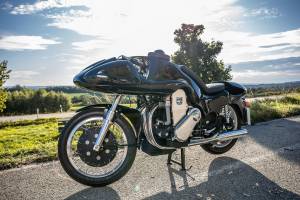
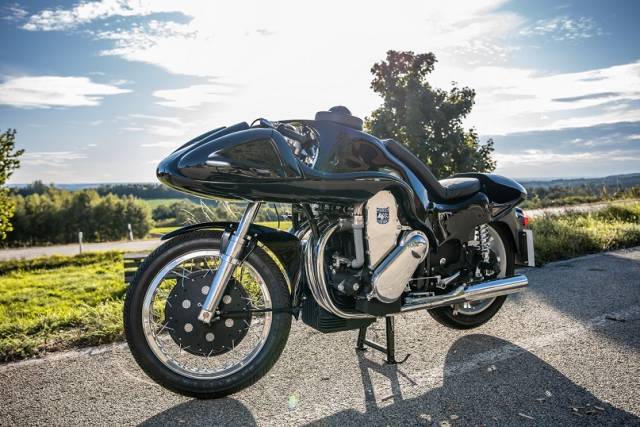
1973 | Münch Mammut TTS
Münch 4 TTS 1200, Sondermodell
VAT is reclaimable

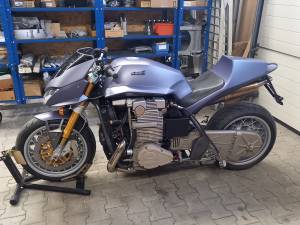
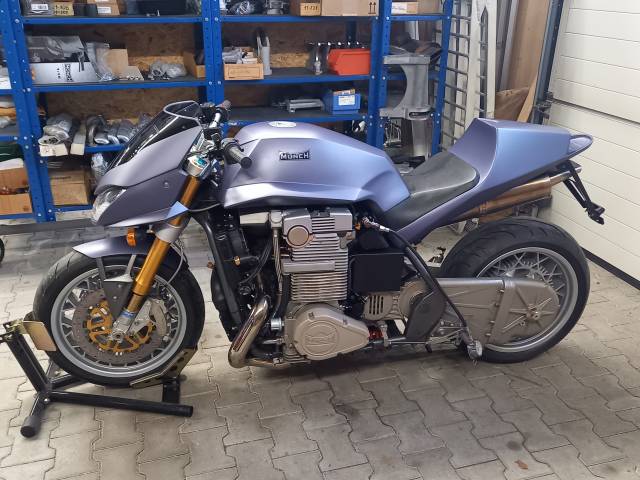
2002 | Münch Mammut 2000
Münch Mammut 2000
VAT is reclaimable
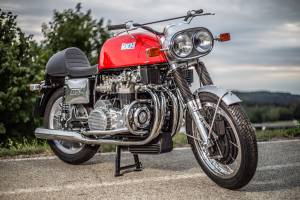
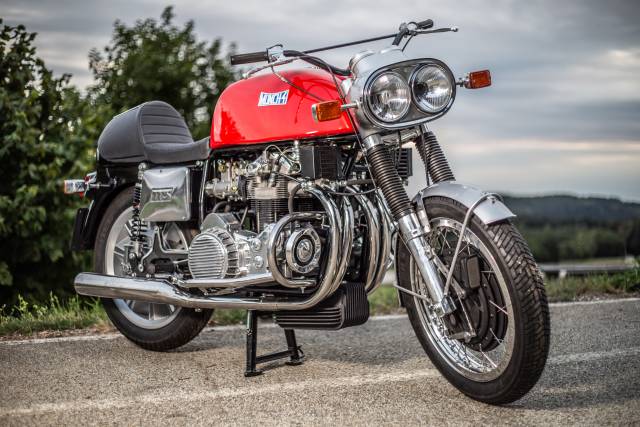
1973 | Münch Mammut TTS
Münch 4 TTS
VAT is reclaimable
History & Heritage
The story of Münch Motorcycles begins in 1966 in Nieder-Florstadt, when engineer Friedel Münch realised a vision that would permanently shape the motorcycle world. Born on 6 February 1927 in Dorn-Assenheim, Münch had begun his career as a mechanic and tuner at Horex. When Horex ceased motorcycle production in 1956, Münch purchased the remaining stock and sold his own tuned café racers from his workshop in Altenstadt.
The decisive moment came in 1966, when wealthy French ex-sidecar racer Jean Murit contacted Münch with a simple commission: build an uncompromising superbike where cost was no object. Münch's answer was radical – he installed an air-cooled NSU Prinz 1000 TT four-cylinder car engine displacing 996 cc into a hand-built motorcycle frame. This was revolutionary at a time when most motorcycles had far smaller displacements.
The Münch Mammut 1000 (officially sold as "Münch TT", as the rights to the "Mammut" name belonged to Maschinenfabrik Berner & Co) was born. With 55 bhp and weighing just 218 kg, the machine reached speeds of up to 185 km/h. The Mammut featured technical innovations ahead of its time: electric starter, a magnesium disc brake at the front, and an enclosed drive chain.
1967 saw the evolved Mammut 1100 with 1.1 litres displacement, before 1970 brought the famous Mammut 1200 TTS with 1,177 cc. This version with 88 bhp at 6,000 rpm and a top speed of 220 km/h became the most characteristic Münch variant. Between 1970 and 1975, around 220 examples of the 1200 TTS were produced – each a handcrafted unique piece.
The late 1970s brought further variants: the TTS-E 1200 with electronic ignition and finally in 1980 the 1,278 cc roadster with 104 bhp. In total, over 500 Münch Mammut motorcycles were produced between 1966 and 1980, with a large portion exported to the USA. In 1969, a Mammut cost 2.5 times that of a BMW R69S – it was exclusive and extremely expensive.
In the early 2000s, Münch dared a revival: the Mammut 2000 with a turbocharged 1,998 cc Opel-Cosworth four-cylinder producing an incredible 260 bhp. This ultra-rare machine was assembled in the Netherlands, but only a few examples were built. At a Bring a Trailer auction in November 2025, a nearly new example with 11 kilometres achieved a bid of £18,000, but remained below reserve.
Highlights & Features
What makes Münch motorcycles so special? The Mammut was technologically far ahead of its time and set benchmarks in an era when superbikes were not yet standard.
Car Engine Heart: The central feature of every Münch is the NSU four-cylinder car engine. The air-cooled, transversely-mounted engine with overhead camshaft (SOHC) was developed for use in the NSU Prinz, but Münch radically optimised it for motorcycle applications. With twin Weber carburettors and high-performance tuning, the 1200 TTS developed 88 bhp – at a time when most motorcycles managed 40-50 bhp.
Pioneering Brake Technology: The early Mammut models were among the first production motorcycles with disc brakes. The 250 mm magnesium disc brake at the front was groundbreaking for the time, though it reached its limits under hard use. Later models received improved brake systems.
Bespoke Exclusivity: Each Münch was created in the Nieder-Florstadt workshop by hand to customer specification. No two Mammut motorcycles are exactly identical. Customers could choose equipment details, paint schemes and technical specifications individually. This bespoke philosophy made each Münch unique.
Imposing Presence: With its massive, unmistakable silhouette, the Mammut appears bulky and intimidating. The transversely-mounted four-cylinder dominates the design, flanked by a double-loop steel frame. The broad flanks, distinctive tank and massive exhaust system give the machine its characteristic "Mammoth" presence.
Enclosed Chain Drive: While most motorcycles used exposed chains, Münch employed an enclosed chain drive – a detail that reduced maintenance requirements and protected against dirt.
TTS Designation: The abbreviation "TTS" stands for "Tourist Trophy Sport" and signals the sporting aspiration of the machine, which was surprisingly agile despite its weight.
Technical Data
Here are the technical specifications of the most important Münch models:
Market Overview & Buying Tips
The Münch market is ultra-exclusive. With only around 500 machines produced between 1966 and 1980 – and an estimated 220 still existing – Münch motorcycles are absolute rarities. Within the dedicated Münch club scene, prices between £25,000 and £42,000 for well-preserved TTS models are typical, with exceptional examples commanding significantly more.
Price Segments by Model & Condition
Mammut 1200 TTS (1970-1975): The most desirable model. Restored or very well-preserved original machines range from £34,000 to £72,000. A 1971 TTS with only 30,002 km achieved £85,500 at Bonhams in 2015. A 1974 TTS-E sold at Bonhams in 2019 for $112,000 (approx. £86,000).
Mammut 1000/1100 (1966-1969): The early models are rarer than the 1200s but often cheaper, as they're considered technically less refined. Prices typically range between £21,000 and £34,000 depending on condition.
Mammut 2000 (2000s): The modern revival is extremely rare. The example offered at Bring a Trailer in 2025 with 11 km reached £18,000 but didn't sell. The actual market value likely sits at £25,000-£42,000 for the few existing machines.
Restoration Projects: Incomplete or heavily restoration-needing Münch projects rarely surface. If they do, prices from £13,000 can be expected, but spare parts are extremely difficult to source and expensive.
Common Weak Points & Inspection Points
NSU Engine Reliability: The car engine is fundamentally robust but prone to overheating under intensive use. Check cooling fins for fouling, watch for oil leaks at cylinder head gaskets, and verify valve clearance settings (should be checked regularly).
Weber Carburettors: The twin-choke Weber carbs are beautiful but tuning-intensive. Incorrect settings lead to poor running, high consumption and hesitation. Professional carburettor tuning is essential.
Rear Tyre Wear: The Mammut had a reputation for chewing through rear tyres extremely quickly – sometimes after just 3,000 to 5,000 km. This resulted from the power, weight and tyre quality available in the 1970s. Modern tyres alleviate but don't eliminate the high wear rate.
Brakes: Early models with magnesium disc brakes showed fading problems under intensive use. Later models with improved brakes are preferable. Check brake pads, fluid and whether discs show cracks.
Gearbox & Clutch: The 4-speed gearbox is robust, but the wet multiplate clutch can wear with improper maintenance. Watch for spongy clutch feel or shifting problems.
Electrics: The 6-volt electrics (later 12-volt) of the early Mammuts are prone to corrosion and contact problems. Check wiring harness, generator (Bosch 400 watt) and ignition coil.
Frame & Swingarm: The double steel loop frame is massive, but check welds for cracks, especially at the swingarm and engine mounting points. Corrosion in hidden areas is a problem with machines stored for decades.
Spare Parts Availability: This is the biggest challenge. Many parts are unique or extremely rare. NSU engine parts are conditionally available, as NSU car clubs also exist. Specific Münch parts (frame, brakes, bodywork) are virtually unobtainable. A company in Lüneburg has been offering the possibility to build an original Münch-4 new for several years, with parts manufactured to original specification.
Club Etiquette: Within the Münch community, it's considered unwritten law that a Münch is not publicly sold without first offering it to club members. This tight-knit community ensures machines are maintained and knowledge of servicing and restoration is preserved.
Buyer Profiles
Collectors of Exclusivity: Buying a Münch means acquiring not an everyday motorcycle but a handcrafted piece of motorcycle history. It suits collectors who appreciate rarities with unique engineering.
NSU Enthusiasts: For lovers of the NSU brand, the Mammut is the motorised pinnacle – a car engine in perfect symbiosis with a motorcycle frame.
Muscle Bike Fans: Those who love the brutal Boss Hoss or Triumph Rocket III will appreciate the ur-mother of all muscle bikes.
Riding Experience
Riding a Münch Mammut is an unforgettable experience. The machine conveys its massive presence from the first second. Starting the NSU four-cylinder produces a distinctive, refined vibration, accompanied by a deep burble from the exhaust pipes. The electric starter – a rarity in the 1960s – awakens the engine effortlessly.
At a standstill, the Mammut appears imposing and heavy, but once rolling, it reveals surprising agility despite its weight. The low centre of gravity and taut chassis setup allow precise cornering, even if the machine is no nimble sports bike. The telescopic fork absorbs minor bumps reliably, while the rear suspension noticeably reaches its limits under full load.
The power delivery is impressive: From 3,000 rpm the engine pushes strongly, and at 6,000 rpm the full 88 bhp unfolds. Acceleration is impressive for the 1970s – 0-60 mph in around 10 seconds. The 4-speed gearbox shifts mechanically precisely, albeit with long ratios designed for high terminal speeds.
At motorway speeds, the Mammut shows its forte: The engine runs at 110-125 mph smoothly and relaxed, without becoming frenetic. Wind protection is minimal though – one must lean firmly into the wind. Fuel consumption with spirited riding runs between 28-35 mpg.
The brakes were good for their time, but by today's standards offer only moderate retardation. Hard braking from high speeds requires forward planning.
The Münch is no motorcycle for short city trips or daily commuting. It's built for long cross-country runs and motorways, where its engine and geometry can shine. The riding feel is masculine, raw and uncompromising – exactly as Friedel Münch intended.
Design & Accessories
The design of the Münch Mammut is no beauty in the classical sense, but a statement of function over form. Friedel Münch was an engineer, not a designer – and it shows. The Mammut appears bulky, masculine and intimidating.
The transversely-mounted NSU four-cylinder dominates the appearance. The massive cooling fins of the air-cooled engine protrude prominently, flanked by gleaming carburettor bells and chromed exhaust headers. The double-loop steel frame surrounds the engine and conveys raw strength.
The tank is broad and flat, typical for the era, and carries the "Münch" emblem. Paint schemes were individual – from classic black through silver to bright colours, buyers could choose. The seats are rather spartanly padded, with focus on functionality rather than comfort.
The instruments are simple and mechanical: speedometer, tachometer, oil pressure and temperature gauges are clearly arranged. No electronic gimmicks, only the essentials.
Special design elements include the enclosed drive chain hidden in an aluminium housing, and the massive swingarm. The early magnesium disc brakes shine silver and are a visual highlight.
Accessories were limited and mostly customer-specific. Some owners had windscreens, individual seat benches or special luggage racks fabricated. The Münch community today occasionally manufactures replica parts or carefully modifies machines.
The target audience for the Mammut were wealthy enthusiasts and speed fanatics willing to pay multiples of a standard BMW or Triumph to own the ultimate handcrafted superbike. The Mammut was never a mass-market motorcycle – it was and remains a symbol of uncompromising engineering and individual luxury.
Other
The Münch Mammut has developed a cult following over the decades that extends far beyond its original fame. Within the close-knit Münch community of passionate owners and enthusiasts, the brand is kept alive. Münch meetings occur regularly, where owners present their machines, exchange stories and share technical knowledge.
A special chapter in Münch history is the Münch Titan KJ3 from 1976 – a prototype with a supercharged 1,800 cc engine that never reached series production. This one-off shows how radical Münch's visions were.
The Mammut gained international attention. A large portion of production went to the USA, where the muscle bike concept found fertile ground. Today many Münch motorcycles reside in American collections.
The Boss Hoss motorcycles from the USA, equipped with Chevy V8 engines, are direct spiritual descendants of the Münch philosophy. The Triumph Rocket III with its 2.3-litre triple also owes conceptual tribute to the Mammut.
Friedel Münch himself worked on motorcycles into old age and passed away having realised his life's vision: to build a motorcycle where nothing is impossible.
Summary
The Münch Mammut is more than a motorcycle – it's a monument to German engineering spirit and uncompromising design. Friedel Münch created with the Mammut a machine that was far ahead of its time and still commands respect and admiration today.
With only around 500 examples produced and an estimated 220 still existing, the Münch is one of the rarest collector motorcycles worldwide. Prices between £25,000 and £72,000 reflect this exclusivity. The challenges lie in spare parts availability and specialised maintenance that only a few master.
The Münch Mammut 1200 TTS remains the most desirable model – the perfect synthesis of power, design and craftsmanship. Owning a Münch means joining an exclusive circle of enthusiasts preserving an extraordinary piece of motorcycle history.
Find your Münch motorcycle on Classic Trader now and become part of this exclusive legend.