- Motorcycle
- Aermacchi (2 offers)
Buy Aermacchi Motorcycle
Since 1912, Aermacchi has blended Italian aeronautical precision with pure racing DNA. From its origins as an aircraft manufacturer to its legendary status on British circuits and its unique partnership with Harley-Davidson, the brand remains a connoisseur's choice for classic enthusiasts.
Search results
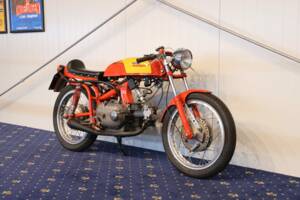
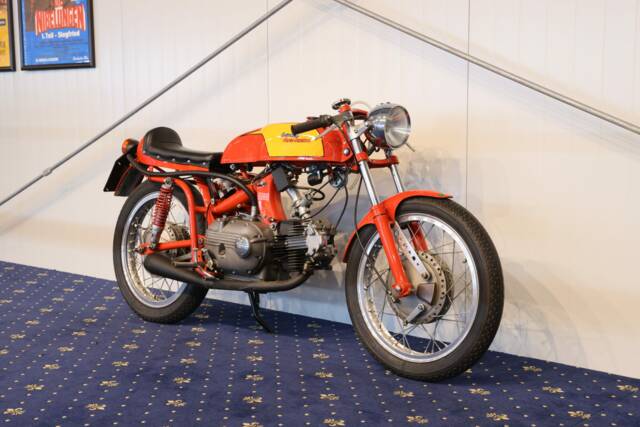
1962 | Aermacchi Ala Verde
1962 Aermacchi Harley Davidson tipo Ala Verde · Sammlung Sonderklasse · No reserve

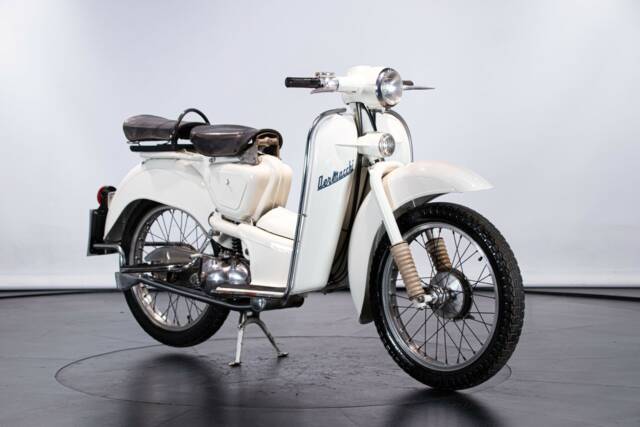

Aermacchi listing references from Classic Trader
Below you will find listings related to your search that are no longer available on Classic Trader. Use this information to gain insight into availability, value trends, and current pricing for a "Aermacchi" to make a more informed purchasing decision.
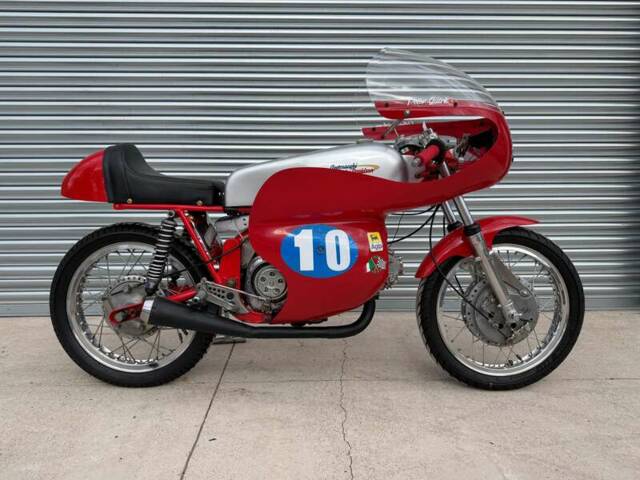
1972 | Aermacchi 350 SS
1972 Aermacchi 350 SS Ala D'Oro Replica Race Bike 344cc

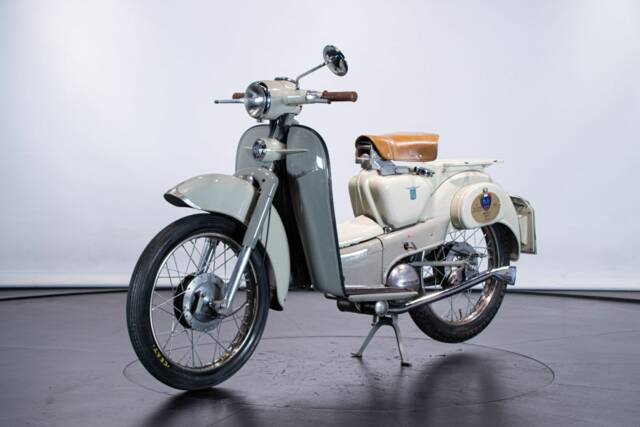
1959 | Aermacchi Zeffiro 125
ASI ORO PLATE !!
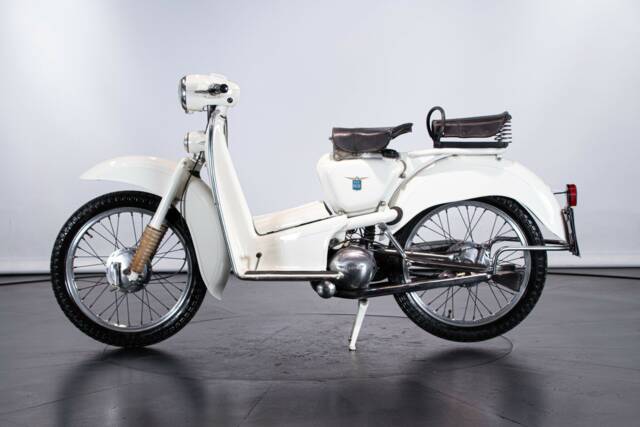
1956 | Aermacchi Zeffiro 125
Aermacchi - Harley Davidson ZEFFIRO 125 2T
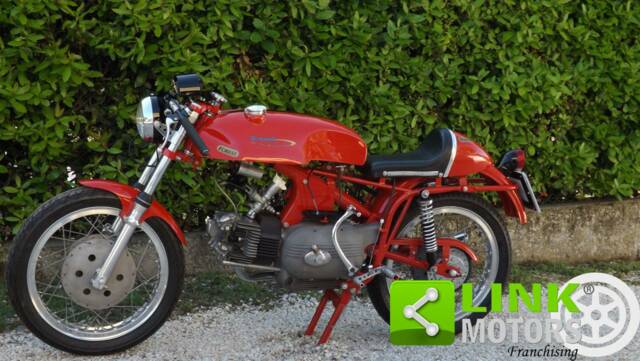
1960 | Aermacchi Ala d'Oro 250
AERMACCHI 250 N anno 1960 completamente restaurata
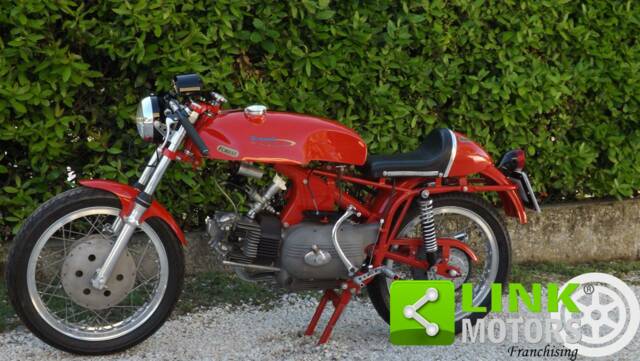
1960 | Aermacchi Ala d'Oro 250
AERMACCHI 250 N anno 1960 completamente restaurata
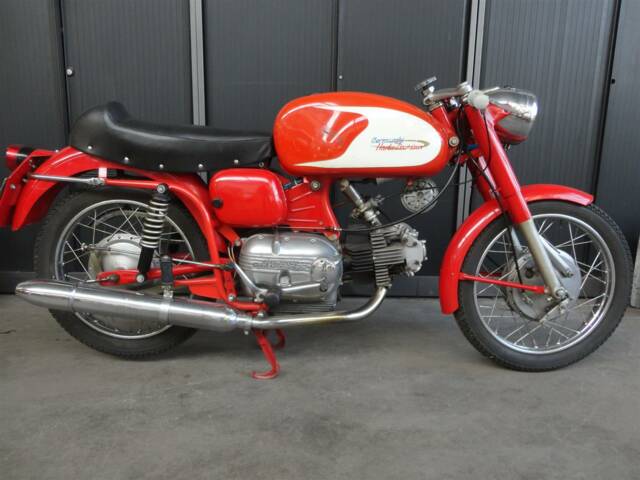
1964 | Aermacchi Ala Verde
Aermacchi Ala Verde

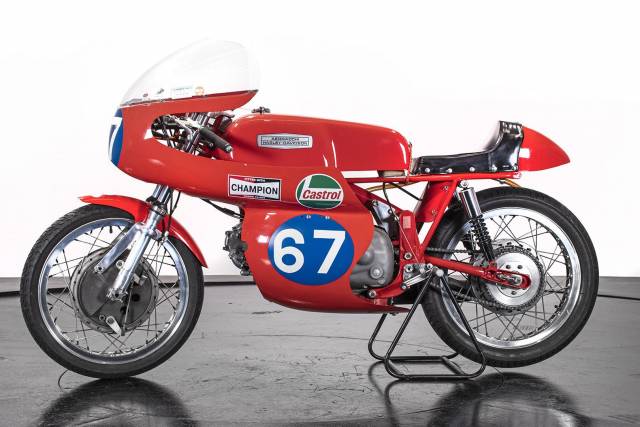
1969 | Aermacchi Ala d'Oro 350
7 of 30 !!! ORIGINAL ORO ASI !!
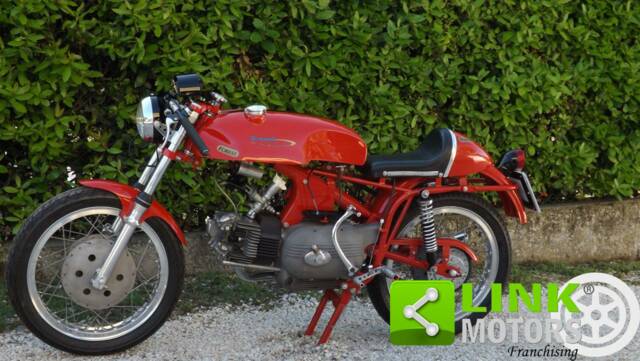
1960 | Aermacchi Chimera 250
AERMACCHI 250 N anno 1960 completamente restaurata
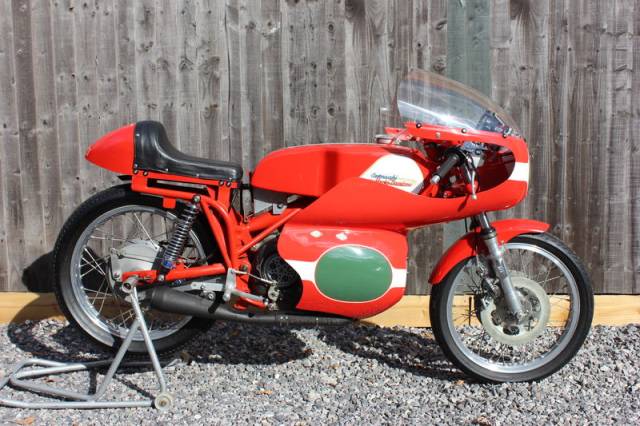
1963 | Aermacchi Ala d'Oro 250S
1963/1968 Aermacchi Race Bike 250cc
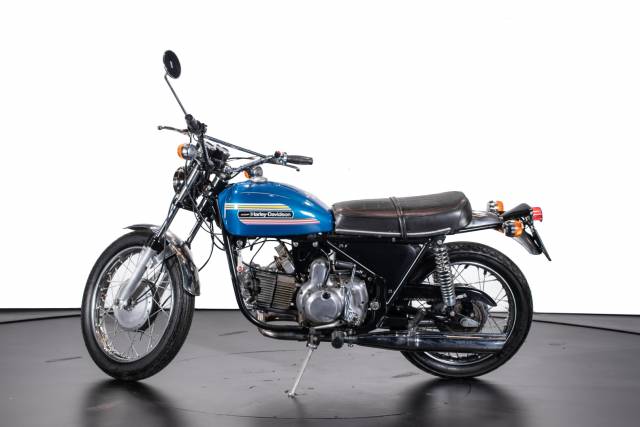
1976 | Aermacchi 350 SS
-
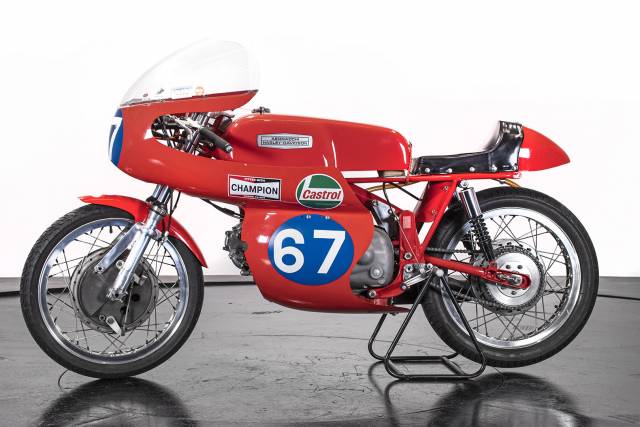
1969 | Aermacchi Ala d'Oro 350
-
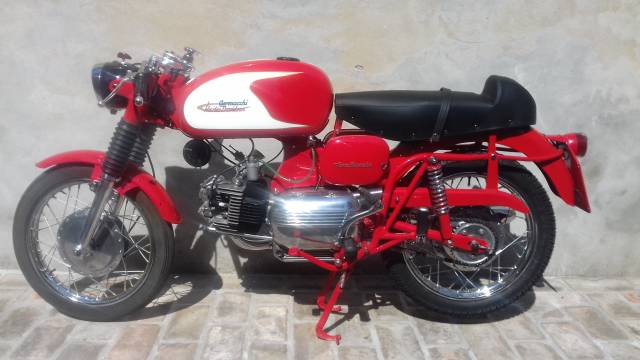
1963 | Aermacchi Ala Azzurra
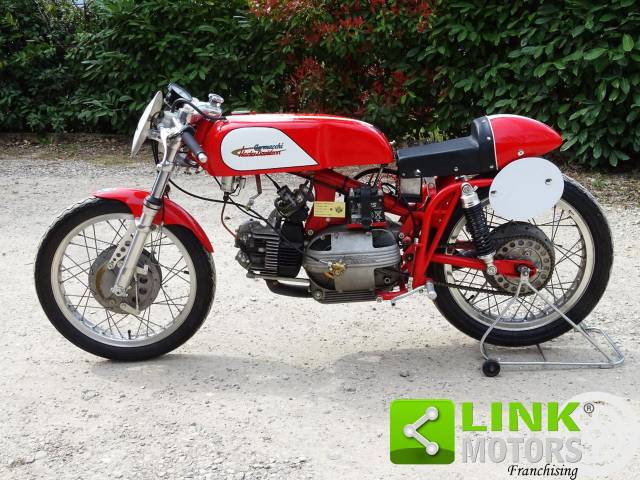
1962 | Aermacchi Ala Rossa 175
AERMACCHI ALA-ROSSA-175-ANNO-1962
History
The story of Aermacchi is one of the most fascinating transformations in industrial history, moving from the heights of aviation to the grit of the racetrack. Founded in 1912 by Giulio Macchi in Milan as Aeronautica Macchi, the company’s name itself is a portmanteau of "Aer" (Air) and "Macchi" (the founder). For over three decades, the firm was a titan of Italian aviation, producing world-class seaplanes and fighter aircraft. Their MC72 seaplane famously set a world speed record of 440 mph (709 km/h) in 1934—a record for piston-powered seaplanes that stands to this day. This obsession with speed and aerodynamic efficiency would later become the hallmark of their motorcycles.
Following the devastation of the Second World War, the Italian aviation industry was grounded by treaty restrictions and a collapsed market. Like many of its contemporaries, Aermacchi had to pivot to survive. The immediate post-war years saw the production of three-wheeled delivery vehicles and the Cigno (Swan) scooter in 1951. These were pragmatic solutions for a nation in need of cheap, reliable transport. However, the aeronautical engineers at Varese weren't content with mere utility.
The true birth of the Aermacchi motorcycle as we know it came in 1956 with the introduction of the Chimera 175. Designed by the visionary Mario Revelli di Beaumont, the Chimera was a futuristic masterpiece, featuring a fully enclosed bodywork that echoed the sleek lines of a jet fuselage. While its radical looks were perhaps too far ahead of their time for commercial success, it introduced the technical layout that would define the brand: the horizontal single-cylinder engine. This layout allowed for a low centre of gravity and exceptional cooling, as the cylinder head sat directly in the airflow.
In the UK, the Aermacchi story took a significant turn through the efforts of Syd Lawton. A former racer and astute businessman, Lawton recognized the potential of these lightweight Italian singles for the British market. He began importing them in the late 1950s, and his workshop became the epicentre of Aermacchi development in Britain. Lawton-prepared machines would go on to dominate the British 250cc and 350cc classes, proving that the "Italian lightweights" could more than hold their own against the established British twins and the emerging Japanese multi-cylinder threats.
The 1960s brought the most famous chapter in the company's history: the partnership with Harley-Davidson. Seeking a way to enter the burgeoning lightweight market in the United States without the massive R&D costs, the Milwaukee giant purchased a 50% stake in Aermacchi's motorcycle division in 1960. This led to a unique cultural and technical hybrid. Machines were branded as Aermacchi in Europe and Harley-Davidson in the US (often under the Sprint name). While the branding was American, the soul remained Italian, engineered in the Varese-Schiranna factory on the shores of Lake Maggiore.
By 1974, Harley-Davidson took full control, but the relationship eventually soured as the Japanese "Big Four" began to dominate the market with high-performance two-strokes. In 1978, the factory was sold to the Castiglioni brothers, who used it as the foundation for Cagiva. Thus, Aermacchi’s legacy lived on, eventually paving the way for the rebirth of brands like Ducati and MV Agusta under the Cagiva umbrella. Today, Aermacchi motorcycles are celebrated not just as curiosities of the H-D era, but as some of the most balanced and rewarding classic machines to ride and race.
Highlights & Features
What sets an Aermacchi apart from its contemporaries is the uncompromising application of aeronautical engineering to two wheels. The most distinctive feature is undoubtedly the horizontal OHV single-cylinder engine. Unlike the vertical or inclined singles of Norton or BSA, the Aermacchi engine lies flat, parallel to the ground. This design wasn't just for show; it provided a remarkably low centre of gravity, making the bikes exceptionally flickable and stable in corners—a trait that made them "giant killers" on tight British circuits like Cadwell Park.
The Ala Verde 250 (Green Wing), produced between 1959 and 1972, remains the quintessential Aermacchi road bike. It was a machine that offered genuine 80 mph performance from a 250cc single, wrapped in a chassis that handled like a dedicated racer. Its success lay in its simplicity and the quality of its components. The "Ashtray" cylinder head—so named for its flat, circular top—became a symbol of the brand's early OHV DNA.
For the racing enthusiast, the Ala d'Oro (Gold Wing) is the holy grail. These were purpose-built production racers that could be bought "over the counter." In an era where most racers were modified road bikes, the Ala d'Oro offered a factory-developed package that was competitive from the moment it left the crate. Its lightweight frame, Ceriani forks, and Dell'Orto carburetion made it a favourite among privateers like Chris Conn, who used the Aermacchi's agility to outmanoeuvre more powerful machines.
The Harley-Davidson Sprint models (250cc and 350cc) represent a fascinating blend of styles. While they retained the Italian horizontal engine, they were often fitted with "Peanut" tanks and styling cues reminiscent of the H-D Sportster. This "Italo-American" fusion created a bike that was as comfortable on a California highway as it was on an Italian mountain pass. The 350 SS (Super Sport) was the pinnacle of this era, offering a reliable 30 hp and a top speed approaching 90 mph, making it a viable long-distance classic today.
Another highlight is the Chimera’s design legacy. While only about 2,000 were built, its influence on motorcycle aesthetics cannot be overstated. It was one of the first motorcycles to treat the machine as a cohesive visual unit rather than a collection of parts. Today, a well-preserved Chimera is a blue-chip investment, prized by collectors for its rarity and its status as a piece of industrial art.
Finally, the racing heritage in the UK is a defining feature. Aermacchis aren't just museum pieces in Britain; they are active participants in the Classic Racing Motorcycle Club (CRMC) and the Manx Grand Prix. The sound of a high-revving Aermacchi single echoing through the Glencrutchery Road is a testament to the enduring performance of these machines. Whether it's the early 250cc models or the later 350cc versions, the Aermacchi remains a "weapon" in the hands of a skilled rider.
Technical Data
The technical evolution of Aermacchi reflects a constant refinement of the horizontal single-cylinder concept. Below is a comparison of the key models that defined the brand's golden era:
Core Technical Characteristics:
- Engine Layout: Air-cooled, horizontal single-cylinder four-stroke (OHV). The horizontal position ensures the cylinder head receives maximum airflow for cooling.
- Valve Train: Two valves per cylinder, operated by pushrods and rockers (OHV). The later racing models featured more aggressive cam profiles and lightened rockers.
- Transmission: Early models featured 4-speed gearboxes, while later 250cc and 350cc models (from the mid-60s onwards) were upgraded to 5-speed units, significantly improving rideability.
- Chassis: Most models used a sturdy tubular steel spine frame. The Chimera was notable for its early use of a rear mono-shock, a feature that wouldn't become common on other motorcycles for decades.
- Braking: Large diameter drum brakes were standard. The racing Ala d'Oro models often featured twin-leading shoe front brakes for improved stopping power on the track.
- Lubrication: Wet sump system. The horizontal layout requires careful oil level management, as the oil pan is relatively shallow and exposed.
The transition to two-stroke twins in the early 1970s (the RR models) marked a radical departure. These water-cooled machines were designed to compete with Yamaha's dominance in Grand Prix racing. While they achieved success, including world championship titles under Walter Villa, they represent a different technical lineage from the classic OHV singles that most collectors associate with the Aermacchi name.
Market Overview & Buying Tips
The market for Aermacchi motorcycles in the UK is currently buoyant, driven by a mix of classic racing demand and a growing appreciation for Italian engineering. Unlike some of their more famous compatriots like Ducati or MV Agusta, Aermacchis remain relatively accessible, though prices for top-tier racing machines and rare road models are climbing steadily.
Price Guide (2024–2025 UK Market):
- Ala Verde 250: Expect to pay between £4,500 and £8,500. A solid, rideable example usually sits around the £6,000 mark. Perfect, concours-standard bikes can exceed £9,000.
- Ala d'Oro 250/350: These are rare and highly sought after for classic racing. Prices range from £10,000 to £20,000+ depending on provenance and racing history. Be wary of "replicas" built from road frames.
- Chimera 175/250: Due to their rarity and design status, these fetch £6,000 to £12,000. The 250cc version is particularly scarce.
- Harley-Davidson Sprint (250/350): These offer the best value for money, with prices typically between £3,500 and £7,500. They are excellent entry points into Aermacchi ownership.
- Racing Projects: Unfinished projects or rolling chassis can be found for £2,000 to £3,500, but be prepared for high restoration costs, especially for engine parts.
What to Look for When Buying:
- Engine Integrity: The horizontal single is sturdy but has specific weak points. Check for oil leaks at the cylinder base and the pushrod tubes. Listen for excessive top-end noise, which could indicate worn rockers or cam followers. A smoky exhaust usually points to worn valve guides or piston rings.
- Gearbox and Clutch: The 5-speed gearboxes are generally reliable, but parts can be hard to find. Ensure the bike shifts cleanly through all gears. The clutch can be heavy; check for slipping under load, especially on the 350cc models.
- Frame and Suspension: Inspect the spine frame for cracks, particularly around the motor mounts and the swingarm pivot. On the Chimera, check the condition of the enclosed bodywork; repairing damaged or missing tinware is incredibly expensive and often requires bespoke fabrication.
- Originality vs. Racing Mods: Many Aermacchis in the UK have been modified for racing. While this can improve performance, it may detract from the value for a pure collector. Check if the engine and frame numbers match the factory records.
- Electrics: Most early models used 6V systems which can be temperamental. Many owners in the UK have converted to 12V electronic ignition (such as Boyer Bransden or Pazon). This is a sensible upgrade for a "rider's" bike but check the quality of the wiring.
- Parts Availability: In the UK, you are in a good position. Specialists like Peter Kyte and the Aermacchi Racing Club provide excellent support. However, some specific trim pieces for road models (like original exhausts or badges) are becoming increasingly difficult to source.
Buyer Profiles:
- The Classic Racer: Looking for an Ala d'Oro or a well-prepared Ala Verde to compete in CRMC events. Focus is on engine build quality and suspension setup.
- The Design Collector: Seeking a Chimera or an early Ala Verde. Focus is on cosmetic originality and "correct" finishes.
- The H-D Enthusiast: Interested in the Sprint models as a unique part of Harley history. These buyers often appreciate the "Americanized" styling and the ease of use.
Performance
Riding an Aermacchi is an exercise in mechanical empathy and rewarding feedback. It is not a bike for the lazy rider; it demands engagement. Starting a classic Aermacchi single is a ritual. You turn on the fuel, tickle the Dell'Orto carb (if fitted), find the compression stroke with the kickstarter, and give it a purposeful swing. When it fires, the sound is unmistakable—a sharp, rhythmic "thump-thump-thump" that smooths out into a purposeful growl as the revs rise.
On the road, the first thing you notice is the handling. Because the engine sits so low, the bike feels incredibly light between your knees. It doesn't "fall" into corners; it carves through them with a precision that belies its age. The narrow tyres and lightweight chassis mean you can change direction with the slightest pressure on the pegs. On a twisty B-road in the Cotswolds or the Highlands, an Aermacchi 250 can easily keep pace with much larger, modern machines.
The power delivery is linear. The OHV engine doesn't have the explosive hit of a two-stroke, but it has surprising torque for its size. The 250cc models are happiest between 4,000 and 6,500 rpm. The 350cc versions offer a bit more "grunt" for overtaking and are more comfortable at modern road speeds. Cruising at 60-65 mph is well within the comfort zone of a healthy 350 SS, though you will feel the characteristic vibrations of a large single through the bars and pegs.
The braking requires a recalibration of your expectations. While the large drums are effective for their era, they lack the initial bite of modern discs. You learn to use both brakes in tandem and to use the engine's compression to slow down. It makes you a more observant, smoother rider.
For those lucky enough to ride an Ala d'Oro on the track, the experience is heightened. The bike feels like a living thing, vibrating with intent. The close-ratio gearbox allows you to keep the engine in its sweet spot, and the lack of weight means you can brake later and carry more corner speed than almost anything else in its class. It is easy to see why riders like Renzo Pasolini were so successful on these machines; they are tools of pure efficiency.
Ultimately, the performance of an Aermacchi is about balance. It isn't the fastest bike of the 60s, nor the most powerful. But in terms of the relationship between power, weight, and handling, it is one of the most harmonious motorcycles ever built. It rewards a smooth, technical riding style, making every journey feel like a lap of the Island.
Design
The design philosophy of Aermacchi was deeply rooted in its aviation heritage. While other manufacturers were still building bikes that looked like motorized bicycles, Aermacchi’s engineers were thinking about aerodynamics, weight distribution, and structural integrity.
The Chimera is the most famous example of this "aero-thinking." Its enclosed bodywork wasn't just a styling exercise; it was an attempt to create a "clean" motorcycle that protected the rider and improved airflow. The way the seat, tank, and side panels flow into one another was revolutionary. Even the front mudguard was integrated into the overall silhouette. While it was a commercial failure, it remains one of the most beautiful motorcycles ever made, a precursor to the fully faired superbikes of the 1980s.
The Ala Verde and Ala d'Oro represent a shift towards a more functional, "naked" aesthetic, but the aeronautical influence remained. The frames were exceptionally stiff for their weight, using high-quality steel tubing. The use of aluminium for engine casings and cycle parts was extensive, keeping the weight down. The "Green Wing" and "Gold Wing" names themselves were a nod to the company's flying past.
The Harley-Davidson era introduced a fascinating design tension. The Americans wanted the bikes to look like "Little Harleys," which led to the adoption of the Peanut tank, chrome fenders, and higher handlebars on some models. This created a strange but appealing hybrid: an Italian thoroughbred dressed in American workwear. The Sprint 350 is perhaps the best example of this, combining the sleek horizontal engine with the rugged, muscular look of a Milwaukee cruiser.
Key design details to appreciate:
- The Horizontal Cylinder: It gives the bike a unique, low-slung profile that is instantly recognizable.
- The "Ashtray" Head: A beautiful piece of functional casting that has become a signature of the brand.
- The Ceriani Forks: Often fitted to the racing models, these were the gold standard of suspension in the 60s and look as good today as they did then.
- The Tank Badges: Whether it's the stylized Aermacchi wing or the combined Aermacchi-Harley-Davidson logo, the branding was always elegant and reflected the pride of the manufacturers.
Aermacchi design was never about excess. It was about purpose. Every line, every casting, and every bracket was there for a reason. This "engineering-first" approach has ensured that the bikes have aged incredibly well. They don't look like "old" bikes; they look like classic examples of form following function.
Racing
Racing is the soul of Aermacchi. Without the racetrack, the brand would likely have remained a footnote in Italian industrial history. Instead, it became a giant-killer on the world stage.
In the Grand Prix world, Aermacchi was a constant threat in the 250cc and 350cc classes throughout the 1960s. Their star rider was the legendary Renzo Pasolini. "Paso" was known for his fearless riding style and his ability to wring every ounce of performance out of the Aermacchi singles. He pushed the multi-cylinder Japanese bikes to their limits, often finishing on the podium against much more complex and expensive machinery. His battles with the likes of Mike Hailwood and Giacomo Agostini are the stuff of legend.
In the United Kingdom, Aermacchi found a second home. The British racing scene in the 60s was the most competitive in the world, and the Aermacchi was the weapon of choice for many top privateers. Chris Conn was one of the most successful, using his Lawton-prepared Aermacchi to win numerous national races and finish high in the world championship standings. The bike's agility made it perfect for the "short circuits" of the UK, where handling often trumped outright power.
The Isle of Man TT and the Manx Grand Prix are where the Aermacchi truly cemented its legend. The 37.73-mile Mountain Course is the ultimate test of a motorcycle's reliability and handling. Aermacchis have a stellar record here. Alan Barnett famously finished 2nd in the 1970 Junior TT on an Aermacchi, split only by the factory MV Agusta of Agostini. In the later "Classic" era, Richard Swallow became synonymous with the brand, winning the Junior Classic Manx GP five years in a row from 1987 to 1991. This incredible feat proved that the Aermacchi design was not just fast, but incredibly durable.
The Syd Lawton connection cannot be overstated. Lawton wasn't just an importer; he was a development engineer who understood how to make the Italian singles survive the rigours of British racing. His "Lawton Aermacchis" featured numerous detail improvements to the lubrication and cooling systems, making them the most reliable racers on the grid.
Today, the Classic Racing Motorcycle Club (CRMC) keeps the flame alive. Aermacchis are still the bikes to beat in the 250cc and 350cc Air-Cooled classes. The sight and sound of a grid full of Aermacchis at Donington Park or Brands Hatch is a reminder of the brand's enduring competitive spirit. For many British enthusiasts, the Aermacchi isn't just an Italian bike; it's a fundamental part of the UK's racing heritage.
Summary
Aermacchi motorcycles represent a unique intersection of aviation precision, Italian style, and British racing grit. They are machines for the enthusiast who appreciates engineering substance over marketing hype. Whether it's the futuristic lines of the Chimera, the balanced performance of the Ala Verde, or the raw aggression of the Ala d'Oro, every Aermacchi carries the DNA of a company that knew how to make things fly.
Key Takeaways for the Buyer:
- Engineering Excellence: The horizontal single-cylinder engine is a masterpiece of low-centre-of-gravity design, offering handling that remains impressive even by modern standards.
- Racing Pedigree: With a history of success in Grand Prix, the TT, and the Manx GP, an Aermacchi is a bike with genuine sporting soul.
- The H-D Connection: The partnership with Harley-Davidson adds a fascinating layer of history and makes some models particularly accessible and easy to maintain.
- Active Community: In the UK, the support for Aermacchi is exceptional, with dedicated clubs, specialists, and a vibrant classic racing scene.
- Investment Potential: While still more affordable than some other Italian marques, prices are rising as more collectors recognize the quality and rarity of these machines.
Owning an Aermacchi is about more than just having a classic motorcycle in the garage. It's about being part of a story that spans from the world speed records of the 1930s to the classic racing podiums of today. It is a bike that rewards the rider who takes the time to understand its quirks and appreciate its strengths. In a world of increasingly homogenized motorcycles, the Aermacchi remains a fiercely individual choice—a "wing" for the road that still knows how to soar.