- Car
- ZENOS (0 offers)
Buy Zenos Classic Cars
Zenos Cars distilled British track-day thinking into a tiny, sharp-edged roadster built in Norfolk. With just around 100 cars made, the E10 range has become a rare way into the lightest end of the British sports-car tradition.
Search results
Currently, there are no matching listings for your search.
Create search alert
Let yourself be notified as soon as a listing is published that matches your search filters.
ZENOS listing references from Classic Trader
Below you will find listings related to your search that are no longer available on Classic Trader. Use this information to gain insight into availability, value trends, and current pricing for a "ZENOS" to make a more informed purchasing decision.
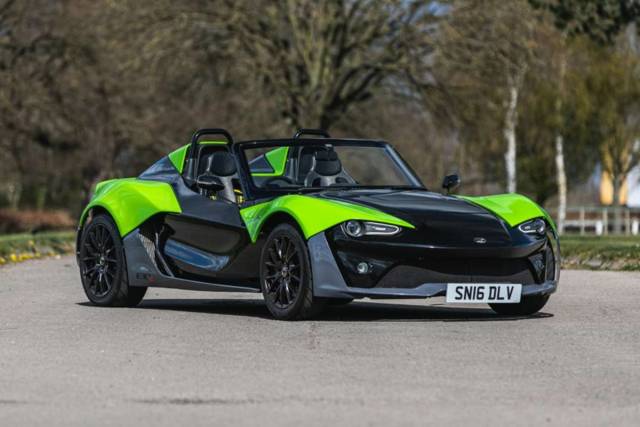
2016 | ZENOS E10 S
2016 Zenos E10S

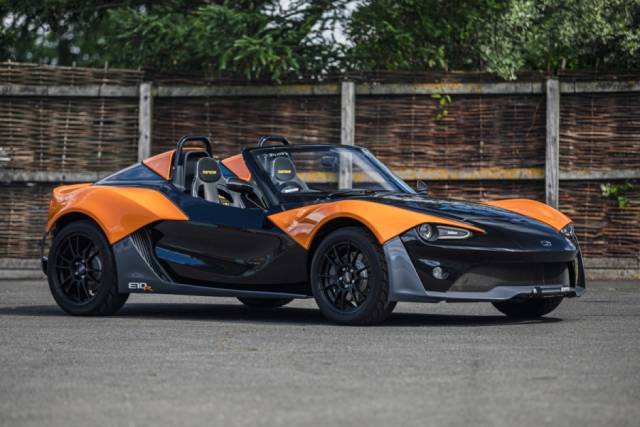
2016 | ZENOS E10 R
Silverstone Classic Live Online Auction 2020; 31st July-1st August
Create search alert
Let yourself be notified as soon as a listing is published that matches your search filters.
History
Zenos is a short chapter, but an important one. The marque was founded in 2012 in Wymondham, Norfolk, by Ansar Ali and Mark Edwards, two men who brought serious Lotus and Caterham experience into a new British sports-car project. That background matters, because Zenos did not arrive as a lifestyle brand or a retro tribute. It arrived as a focused answer to a very specific question: how do you build a modern, accessible, ultra-light track car without losing the honesty that makes a small British roadster special?
The answer was the E10. The name itself signalled engineering intent rather than sentimentality, and the car’s whole concept was aimed at drivers who wanted immediate feedback, low mass and low running costs rather than luxury trim or electronic padding. Zenos launched into a market that already understood the appeal of the Caterham Seven, Ariel Atom and Lotus Elise. In other words, it entered a deeply British lineage of club cars and roadsters that value feel over formality, and lap times over badge theatre.
Production began in January 2015. The first car was the E10, powered by a 2.0-litre Ford Duratec naturally aspirated four-cylinder with 200 bhp. That was followed by the E10 S, which used the 2.0-litre Ford EcoBoost turbo engine for 250 bhp, and then the E10 R, introduced with the 2.3-litre Ford EcoBoost turbo and 350 bhp. Zenos remained a tiny manufacturer throughout its life, with around 100 cars built in total. That rarity is one of the reasons the marque has a strong following today: it never became mainstream enough to lose its edge, but it built enough cars to create a real owner scene.
The company’s life as an independent maker was brief. In January 2017, Zenos went into administration, and in March 2017 its assets were acquired by an AC Cars consortium. That kept the story alive, but the original production run had already become the real object of interest for buyers. The cars built in Norfolk between 2015 and 2016 now stand as the original, first-generation Zenos experience.
In September 2025, the name returned with the announcement of the E10 Rz: a new car using a 380 bhp Volvo engine, priced at £140,000, with 30 cars planned for the first year and deliveries due from Q2 2026. That reboot does not change the attraction of the original cars; if anything, it strengthens it. The early E10s are the cars that established the formula and defined the brand’s reputation.
Highlights
What made Zenos stand out was not a single headline number, but the way every part of the car supported one idea: minimum mass, maximum response. That is a familiar British sports-car principle, but Zenos expressed it with a modern, almost industrial clarity.
The chassis uses an extruded aluminium backbone paired with a recycled carbon-fibre tub. That combination is unusual even among specialist sports cars. It gave Zenos a structural identity of its own: not a copy of old tube-frame formulas, and not an expensive carbon monocoque either. It was a practical, lightweight solution with real motorsport logic behind it.
Another strong point is the bodywork strategy. The E10 uses 18 replaceable body panels, which is exactly the sort of thinking that track-day users appreciate. If you clip a kerb or catch a barrier, you do not automatically face a full-body restoration. You replace the damaged sections. That helps keep repair costs more sensible than many buyers expect from an exotic-looking car.
The suspension layout is equally serious. Zenos used double wishbones all round, with inboard pushrod Bilstein dampers at the front. That gives the car a proper competition feel and keeps the wheel control sharp. It also helps explain why the E10 became such a favourite among drivers who enjoy precision and adjustability more than comfort.
The performance split across the range is clear. The base E10 is the lightest and least powerful, but even 200 bhp is enough in a car weighing only 650 kg. The E10 S and E10 R both weigh around 725 kg, yet they bring far more pace. The top E10 R is the one that best reflects the brand’s wild side: 350 bhp, rear-wheel drive, minimal mass and a 0-60 mph time of around 3.0 seconds.
The result is a car that feels close to the British club-racing ideal. It is not a grand tourer, and it is not a polished supercar. It is a light, mechanical, purposeful machine that rewards commitment. That is why it sits so naturally alongside names such as Lotus, Ariel and Caterham.
Technical Data
The E10 range was intentionally simple in layout but serious in execution. All versions are rear-wheel drive, and the emphasis throughout is on low inertia rather than sheer bulk power. The common Ford-based engine family is useful for ownership, because it keeps many mechanical parts familiar and relatively well supported. That matters in the UK, where buyers of specialist cars often want a combination of rarity and maintainability.
The performance spread is easy to understand. The base E10 is quick because it is so light. The E10 S adds a stronger mid-range thanks to turbocharging. The E10 R is the most dramatic version, and it is the one most often mentioned when enthusiasts talk about the brand. In a car this small and this light, 350 bhp feels huge.
For buyers, weight matters as much as power. A 650 kg sports car with 200 bhp can feel more lively than a much heavier 300 bhp coupé. That is part of the Zenos appeal. The numbers are useful, but the real story is how the weight-to-power ratio transforms the car’s reactions.
Market Overview & Buying Tips
The Zenos market is small, specialist and very UK-centred. With only around 100 built, you are not shopping in a broad supply pool. You are looking for the right car, with the right history, at the right price. For Classic Trader buyers in Great Britain, that is exactly the kind of search where patience pays off.
Auction results from 2021 to 2024 suggest a fairly clear band for the three original variants. E10 cars have traded around £14,600–18,500, E10 S examples around £15,300–21,700, and E10 R cars around £21,100–24,200. A particularly strong result came in November 2024 at Iconic Auctioneers’ NEC Birmingham sale, where an E10 R with just 99 miles sold for £24,188. That price shows two things: low-mileage, well-kept cars still attract attention, and the market has not yet detached from the car’s original positioning.
For UK buyers, this is a useful price structure. It places Zenos below many contemporary exotics, but above ordinary track toy territory. In practice, that means buyers are often comparing it not with mass-market hot hatches, but with Lotus Elise variants, Caterham derivatives and other lightweight British cars. The car fits naturally into Britain’s club-car tradition, where the appeal is usually driven by weekend use, track days and enthusiastic ownership rather than daily commuting.
That tradition matters because the UK remains one of the most active track-day markets in Europe. Brands such as Brands Hatch, Silverstone, Donington Park and Snetterton are part of the same cultural landscape that made cars like the Zenos possible. Norfolk, Zenos’ home county, is especially relevant here: the car was built in a region with a strong motorsport identity and easy access to club-racing culture. For many British buyers, that gives the brand a sense of local authenticity.
When assessing a car, paperwork matters. A V5C should be in order, and the history file should ideally be strong enough to show clear ownership and service progression. Because the cars are so low-volume, many have patchy use rather than high annual mileage. That makes the MOT history especially useful as a verification tool, particularly on low-mileage cars that might otherwise be hard to judge. Gaps are not always a problem, but they need context.
In the UK, specialist insurance is also part of the buying equation. Cars like the Zenos often sit comfortably with Hagerty or Adrian Flux, both of which are familiar to buyers of track-focused or limited-run cars. Track-day cover, agreed value options and correct valuation of modifications can all matter more than a standard policy. Before you buy, check that the car can be insured on terms that match your intended use.
As a buyer, focus on three questions: is the car structurally sound, is it documented, and has it been used in a way that matches its purpose? A Zenos with proper history and sensible upkeep is much more attractive than a neglected low-mileage car with hidden issues.
Driving Feel
A Zenos does not drive like a polished roadster. It drives like a machine built by people who expected the driver to be involved from the first mile. That is why the car appeals so strongly to British enthusiasts who already understand lightweight sports cars. It has the same basic promise as a Caterham or Elise, but it interprets that promise in its own sharper, more modern way.
The seating position is low, the view out is spartan, and the whole car feels compact around the driver. There is no sense of excess. Every movement is immediate. The steering is direct, the chassis is alive, and the car’s mass is so low that small inputs create clear results. That is the point. You are never in doubt about what the car is doing.
The E10 is the gentlest in the family, but “gentle” is a relative term here. With 200 bhp in a 650 kg car, it still feels very fast on a British B-road. The E10 S is probably the most rounded road car of the trio because the turbo torque makes it feel more flexible without becoming too extreme. The E10 R is the most explosive. It has the kind of urgency that makes even familiar roads feel shorter.
On track, the Zenos comes into its own. British track-day culture is full of cars that promise involvement, but the E10 delivers it in a particularly concentrated form. It is small enough to place precisely, light enough to change direction instantly, and powerful enough to make the straights interesting. That combination is what makes it such a good fit for circuits like Snetterton, where fast direction changes and stable braking matter, or Donington, where rhythm and balance are rewarded.
There is a catch: the car asks you to be awake. The original braking setup is known to be underpowered for track use, especially if you push hard for repeated laps. That is why some owners look to 24-7 Motorsport in Norfolk for brake upgrades. The standard package is fine for more measured road use, but buyers intending regular circuit work should ask whether the car has been improved.
Tyres are another important part of the driving story. The original Avon ZZR tyres offer very strong dry grip, but they are not brilliant in the wet. In British weather, that matters. A Zenos on damp roads demands respect, and one on worn or aged tyres can feel much less forgiving than the headline power figures suggest. If you want a car for summer blasts and track days, that is manageable. If you want all-weather ease, it is not the right machine.
The sensation is best described as pure and unsanitised. There is very little filtering between the driver and the road. That makes the Zenos deeply rewarding, but it also means the right buyer is someone who enjoys mechanical honesty rather than one who wants calm refinement.
Design
The Zenos E10 looks the way it does because every visual element follows the engineering. That is a very British way to design a sports car, and it links Zenos to the same philosophy that shaped many classic Lotus and Caterham products. In that tradition, decoration is secondary to function, and function is never hidden.
The silhouette is low, compact and purposeful. The central backbone gives the car its visual spine, while the body panels sit around it as separate functional pieces rather than one seamless shell. The effect is not flashy in the usual supercar sense. Instead, it is technical and honest. The car looks like what it is: a lightweight, track-capable machine built to be used.
The choice of 18 replaceable panels is visible in the body’s broken-up surface treatment, and that can be part of the appeal. It tells you that the car was designed with repairability in mind. It also reflects a very club-racing attitude to ownership, where damaged parts should be replaceable without drama.
The use of recycled carbon fibre for the tub is especially interesting. It is not simply about saving weight. It is also about making a modern low-volume car economically viable without compromising the sensation of structural seriousness. In the metal-and-carbon mix, Zenos found a signature that felt contemporary but still rooted in British specialist-building know-how.
The E10’s design language also fits the wider British roadster story. Britain has long produced cars for drivers who want directness and mechanical clarity: Lotus Elise, Caterham Seven, Ariel Atom, and plenty of smaller club cars besides. Zenos belongs in that company because it respects the same values. It is not trying to be elegant in the conventional sense. It is trying to be right.
That design honesty also helps the car age well in collector terms. A Zenos does not depend on a fashion cycle. Its appeal is in its concept, its rarity and the fact that it was built by people who knew the segment from the inside.
Other
The Zenos story has a few practical ownership angles that deserve separate attention.
First, waterproofing. One of the better-known issues is that the electronics are not fully waterproof, with exposed switches and a starter button that can suffer if the car sees a lot of wet use. In a country like Great Britain, that is not a trivial point. A dry-garaged summer car may never bother you, but a car that lives outside or sees frequent road use needs careful inspection. Test all controls, look for corrosion and check that previous owners have not made crude repair attempts.
Second, documentation. Because the cars are rare, provenance counts. A complete history file should include invoices, service evidence, registration paperwork and ideally enough data to show a coherent ownership story. Cars with very low mileage can be especially attractive, but they also need careful verification. MOT records help here, as do matching service stamps and consistent wear patterns.
Third, parts support. Zenos as a manufacturer no longer exists in its original form, which can worry some buyers. The practical answer is mixed but reassuring: Ford-derived mechanical parts are comparatively easy to source, while unique body and carbon components are much rarer. That means routine maintenance is manageable, but accident repair and trim restoration can require more effort. The owner community is valuable here, especially the Zenos owners Facebook group and specialist forums such as 7s & Sportscars.
Fourth, the UK registration environment is helpful for buyers who want to keep these cars legal and presentable. A properly documented DVLA registration, clear VIN details and accurate V5C records should be checked before money changes hands. That is especially important on any car that has been off the road or lightly used. An organised file gives confidence and protects future value.
Finally, the track-day network matters. A Zenos is not a car you buy only to look at. It lives best when it is driven, whether on road or circuit. That means buying from someone who understands the car’s purpose is valuable, and speaking to other owners before purchase can save time and money later.
Summary
The original Zenos E10 range is one of the most distinctive entries in modern British lightweight sports cars. Built in Norfolk from 2015 to 2016, with only around 100 cars completed, it combines a Ford-based mechanical package with genuinely clever chassis engineering and a clear track-day focus.
For buyers in Great Britain, the attraction is easy to understand. The cars sit naturally within the British roadster tradition, they connect to the country’s track-day culture, and they offer real performance without the price of a modern supercar. Prices in the current market still look relatively accessible, especially for well-kept E10 and E10 S cars, while the E10 R remains the most desirable original variant.
The key buying advice is straightforward: check the electronics, inspect the brakes, assess the tyres, verify the MOT and ownership history, and confirm that the car’s specification matches its intended use. If all of that is in order, a Zenos can be a deeply satisfying purchase.
For enthusiasts who want something rare, British and genuinely focused, the Zenos is not just an interesting choice. It is a very convincing one. Find the right example on Classic Trader, check the paperwork carefully, and buy with confidence.