Vauxhall Cadet classic cars for sale
The Vauxhall Cadet stands as a hallmark of British motor engineering from the early 1930s, marking Vauxhall's move into the competitive medium saloon segment. As the first Vauxhall offered below £300 and the first all-new model after General Motors took control, the Cadet combined British sensibility with American automotive trends. Discover this pioneering classic and its engineering milestones below.
Search results
Currently, there are no matching listings for your search.
Create search alert
Let yourself be notified as soon as a listing is published that matches your search filters.
Create listing
Do you have a Vauxhall Cadet that you want to sell? Then create a listing now.
Create listingVauxhall Cadet listing references from Classic Trader
Below you will find listings related to your search that are no longer available on Classic Trader. Use this information to gain insight into availability, value trends, and current pricing for a "Vauxhall Cadet" to make a more informed purchasing decision.
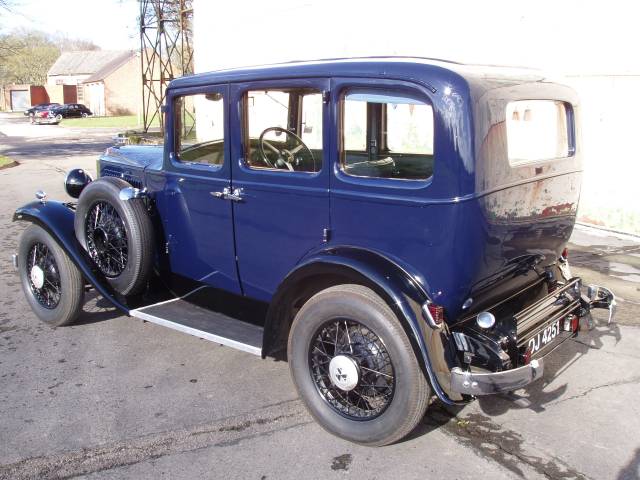
1932 | Vauxhall Cadet Standard
Create search alert
Let yourself be notified as soon as a listing is published that matches your search filters.
Create listing
Do you have a Vauxhall Cadet that you want to sell? Then create a listing now.
Create listingVauxhall Cadet Classic Cars: Prices & Market Values
History of the Vauxhall Cadet
Launched in October 1930, the Vauxhall Cadet VY brought a fresh identity to the Vauxhall range, positioned as an affordable alternative alongside the company’s larger 24 h.p. 20-60 model, later called the Vauxhall Eighty. For Vauxhall, the Cadet meant more than market expansion—it was the first genuine new platform since General Motors had acquired the marque in 1925, symbolising a blending of American automotive thinking and local British adaptation. The Cadet was developed to answer the surge in demand for medium-sized family vehicles and to ensure Vauxhall's relevance in a shifting economic landscape during the interwar years. When exported, the model was usually supplied with a 27 h.p. engine under the VX badge to widen its appeal.
Model History
The Vauxhall Cadet arrived as an entirely new project, breaking from previous practice of evolving existing platforms. Introduced to fill the gap below the high-powered, larger 24 h.p. 20-60 (which adopted the name Eighty), the Cadet was aimed squarely at the emerging middle-class customer seeking value and modernity. Its production ran from 1930 to 1933 before being succeeded by other Vauxhall models better aligned with progressing technological and styling trends. The export version, the VX, addressed markets needing a bit more power, boosting its international profile.
Highlights of the Vauxhall Cadet
The Vauxhall Cadet was designed with a clear focus on value and innovation. It was the brand’s answer to growing demand for accessible, medium-sized cars—distinguished as the first Vauxhall model priced under £300, opening ownership to a broader market. It showcased a blend of American and British engineering philosophies, benefiting from General Motors’ influence post-1925 acquisition. The Cadet was noted for its robust yet modern construction, reliability for the period, and adaptability both for domestic and export markets, with different engine options for the UK and abroad.
Technical Data
Special Editions and Collectible Models
Export versions of the Cadet, known as the VX, came fitted with a 27 h.p. engine. While not strictly a 'limited edition', these models differ mechanically and are of special interest among collectors seeking early Vauxhall export history or higher engine specifications from the period.
Weak Spots and Common Issues
No common documented weak spots or widespread technical faults for the Vauxhall Cadet are reported in the available sources. Maintenance considerations generally centre on the mechanical standards of early 1930s vehicles: age-related issues with materials, lubrication systems and electrical components. As with most vehicles of the period, inspection for corrosion, correct functioning of mechanical linkages and periodic lubrication is important for reliability.
Engine and Performance, Transmission and Handling
The Cadet was available with engines tailored to domestic and export demands: the UK market received a more economical configuration, while overseas buyers often got the VX with a 27 h.p. engine. The car’s American-inspired, yet locally adapted layout meant it delivered solid, predictable handling for its time, with a robust chassis and suspension arrangement focused on everyday usability rather than outright performance. The transmission was geared for smoothness and efficiency, reflecting priorities of the interwar British motoring public. - Vauxhall Cadet VY: Standard UK version: medium-powered engine, practical layout
- Vauxhall Cadet VX (export): 27 h.p. engine, higher performance, rarer in domestic listings
Interior, Comfort, Exterior and Design
The Cadet’s interior reflected the practical standards of early 1930s motoring—a straightforward dashboard, simple instrumentation, and upholstery aimed at offering comfort in a value-oriented product. Externally, the bodywork showcased American influences in mass-market styling but kept British proportions. Variants in finish, trim, and features depended on market and engine choice; export models were often fitted with additional equipment or more robust finishes to endure shipping and foreign climates. Special exterior details or colours, if offered, would have reflected the small-run adaptability of pre-war British production.
Additional Information
Additional period details of the Cadet's options, special accessories, or colour codes aren't detailed in available records. However, like many interwar British cars, authenticity and originality in remaining examples may include dealer-fitted extras and regional trim updates.
Summary
The Vauxhall Cadet stands out as a piece of British and Vauxhall motoring history—an early expression of General Motors’ impact on UK car design, blending American-style advancement with local market sensitivity. Produced from 1930 until 1933, it offered accessible motoring to a new class of buyers, with robust technical underpinnings and a clear departure from Vauxhall’s established large saloons. Surviving examples represent not just a step change for the manufacturer, but a living artefact of a transformative era in automotive history.