TVR 390 classic cars for sale
The TVR 390 stands out among British sports cars for its raw power, unapologetically direct driving experience, and a V8 engine that delivers full-bodied performance. Drivers looking for a truly mechanical connection to the road and unfiltered character will find the 390 to be a unique proposition in the TVR line-up.
Suchergebnisse
Zur Zeit sind keine passenden Inserate zu Ihrer Suche veröffentlicht.
Create search alert
Let yourself be notified as soon as a listing is published that matches your search filters.
TVR 390 listing references from Classic Trader
Below you will find listings related to your search that are no longer available on Classic Trader. Use this information to gain insight into availability, value trends, and current pricing for a "TVR 390" to make a more informed purchasing decision.
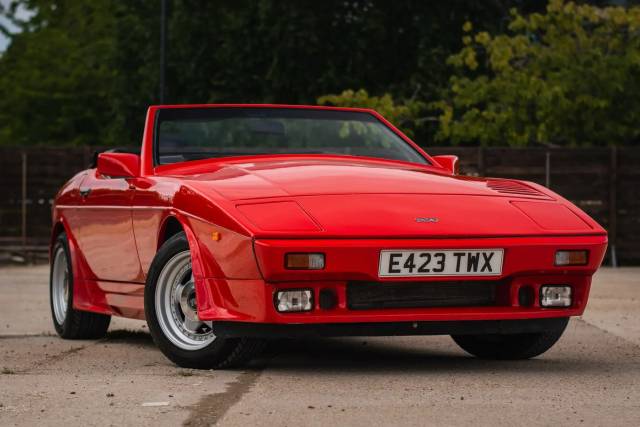
1988 | TVR 390 SE
Fantastic - History - Just 57k Miles
Create search alert
Let yourself be notified as soon as a listing is published that matches your search filters.
TVR 390 Classic Cars: Prices & Market Values
History of the TVR 390
The TVR 390 emerged during the 1980s when TVR sought to combine a lightweight glassfibre body with a potent V8 engine. The '390' in its name references the engine’s 3.9-litre displacement, derived from the Rover V8. TVR's small-scale, enthusiast-driven approach led to the 390 being built in limited numbers. In period, these cars achieved a reputation for their uncompromising nature on and off the track. The TVR 390 was one of the models that reasserted TVR as an uncompromising sports car brand focused on high power and minimal driver aids.
Model history of the TVR 390
The TVR 390 was part of the wedge era, appearing as a further evolution of the earlier 350i models and sitting above them in the company range. Its key advancement was the more powerful 3.9-litre V8, which replaced the less powerful units in lower-spec models. Eventually, the 390 paved the way for even more powerful and wild TVR models like the 420 SEAC, but the 390 marked an important transition — establishing the marque's reputation for high-output V8 performance.
Highlights and unique features of the TVR 390
Distinct features of the TVR 390 include its dramatic wedge-shaped design, pronounced bonnet bulge for the V8, and relatively lightweight construction thanks to the fibreglass body over a tubular steel chassis. The unassisted steering, throttle response, and analogue instrument layout speak to the car’s uncompromising driver focus. The 390’s high-output V8, at the time uncommon in road cars of its class, made it stand out for performance enthusiasts seeking something beyond the mainstream.
Technical data for the TVR 390
Special Editions and Collectible Models
Within the TVR wedge family, the 390 marked the jump to serious V8 power, though not usually produced as a special edition. However, bespoke customer specifications and unique colour and trim choices are common due to TVR’s customisation approach. Many cars are finished to owner-taste with individual paint and trim combinations, making most surviving examples one-of-a-kind.
Weak Spots and Common Issues
Typical concerns for the TVR 390 focus on the fibreglass body, which can exhibit crazing or micro-cracks, and the steel chassis, which must be carefully checked for rust, especially in the outriggers and suspension pickup points. The Rover V8, while robust, is sensitive to overheating if poorly maintained; cooling system integrity is crucial. The unique electrical systems of 1980s TVR models can be temperamental, so attention to wiring condition is important.
Engine, Performance, Transmission and Handling
The 3.9-litre V8 pushes the TVR 390 well into sports car territory, with acceleration and mid-range thrust that would have rivalled more established performance brands of its day. The manual gearbox demands driver engagement, and with rear-wheel drive and a light kerb weight, handling is reactive and rewarding for experienced hands. Steering is unassisted, providing maximum feedback. Minimal driver aids put the onus on the driver, requiring mechanical sympathy and attention at the limits. The TVR 390’s V8 performance was a marked step up over the 350i, setting the tone for later, more extreme models like the 420 SEAC.
Interior, Comfort, Exterior and Design
The TVR 390’s design was shaped in the era of wedges — sharp, aggressive lines, pop-up headlights, and flared wheel arches telegraph intent from every angle. Interiors were bespoke, varying widely in palette and materials, but typically include deeply bolstered seats and a comprehensive analogue instrument suite. The driving position is focused and cockpit-like, while the boot remains modest – this is a car built for driving first. Accessories and extras are often as individual as the cars themselves, with factory options rare and most personalisation selected to order.
Other relevant features
Every TVR 390 is unique, thanks to TVR’s approach to customisation and the sort of owner drawn to the brand. Records, provenance, and originality significantly affect value. Check for sympathetic upgrades such as improved cooling and modernised electrics, which can enhance reliability.
Summary
The TVR 390 encapsulates what makes 1980s British sports cars so appealing to purists: considerable V8 power, a lightweight chassis, and a no-nonsense approach to driving. The limited production run and prevalence of individually specified models ensure that every 390 represents a distinctive experience for those seeking a hands-on, analogue classic sports car.