TVR Griffith Classic Cars for Sale
The TVR Griffith stands for uncompromising British sports car engineering—lightweight fibreglass body, rear-wheel drive, and powerful V8 engines combine to deliver raw, analogue driving. Handmade in limited numbers, the Griffith blends rare status with pure performance. Its thunderous acceleration and sharp handling set it apart, making it a favourite among enthusiasts who value character and mechanical honesty.
Search results
Currently, there are no matching listings for your search.
Create search alert
Let yourself be notified as soon as a listing is published that matches your search filters.
Create listing
Do you have a TVR Griffith that you want to sell? Then create a listing now.
Create listingTVR Griffith listing references from Classic Trader
Below you will find listings related to your search that are no longer available on Classic Trader. Use this information to gain insight into availability, value trends, and current pricing for a "TVR Griffith" to make a more informed purchasing decision.
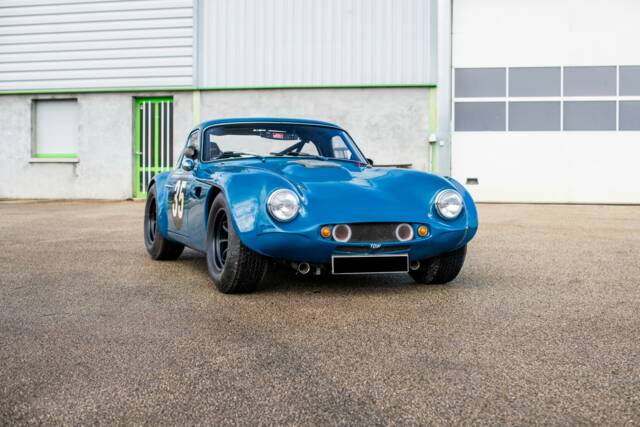
1965 | TVR Griffith 400
“The Blackpool / Long Island Connection”

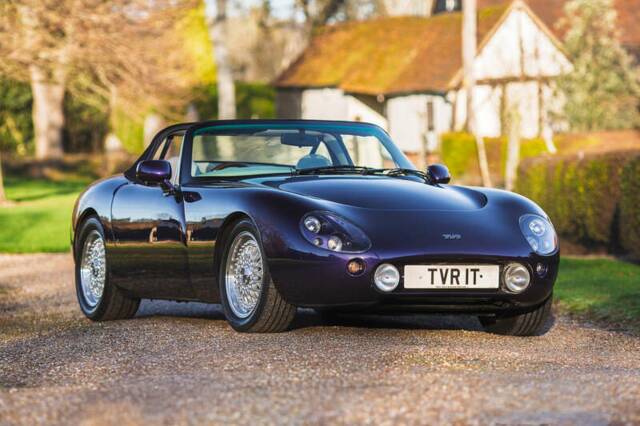
2001 | TVR Griffith 500
2001 TVR Griffith 500 SE #6/100

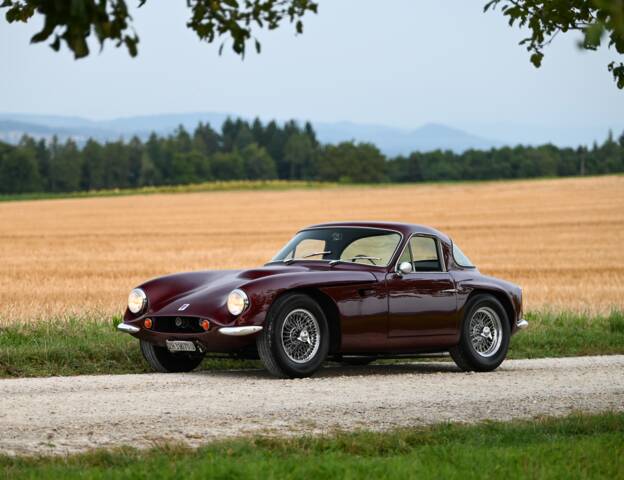
1965 | TVR Griffith 200
1 von 190, extrem seltenes Fahrzeug aus "Griffith Motors" Produktion, Cobra Konkurrenz mit 289 HiPo K-Code


1993 | TVR Griffith 500
TVR Roadster | 1993 - For sale by auction. Estimate 52450 EUR

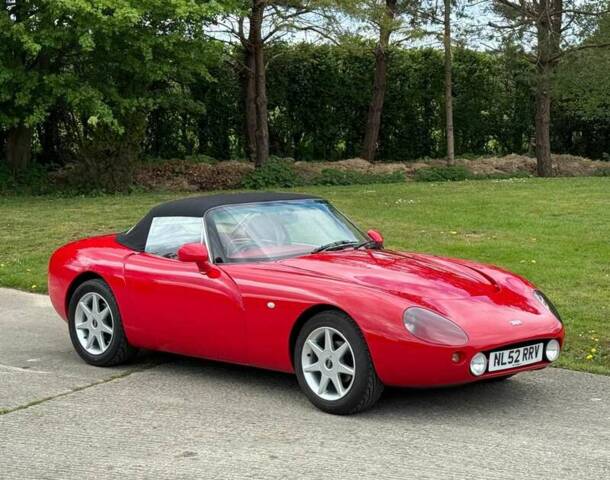
2003 | TVR Griffith 500
2003 TVR Griffith 500SE
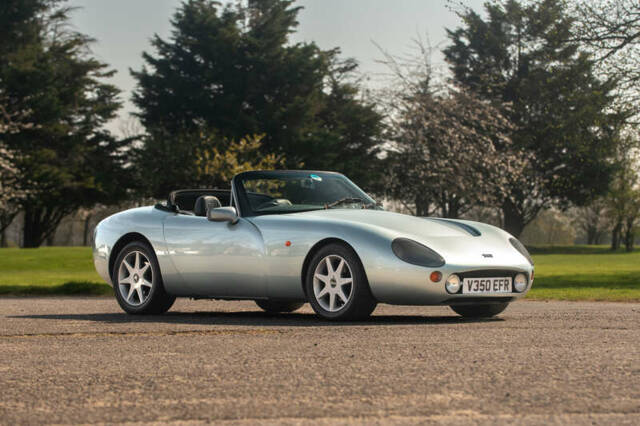
1999 | TVR Griffith 500
1999 TVR Griffith 500
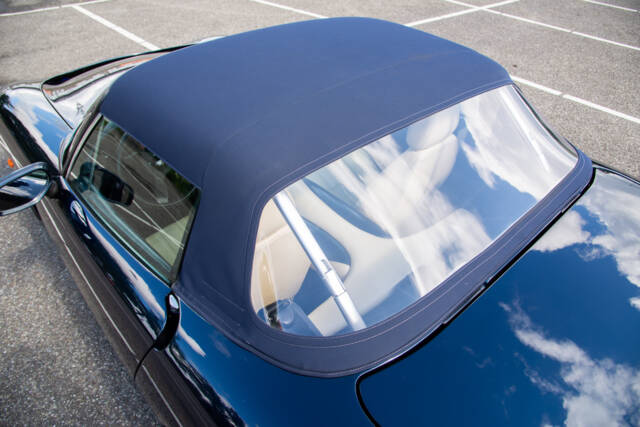
1994 | TVR Griffith
Zeldzaam mooi
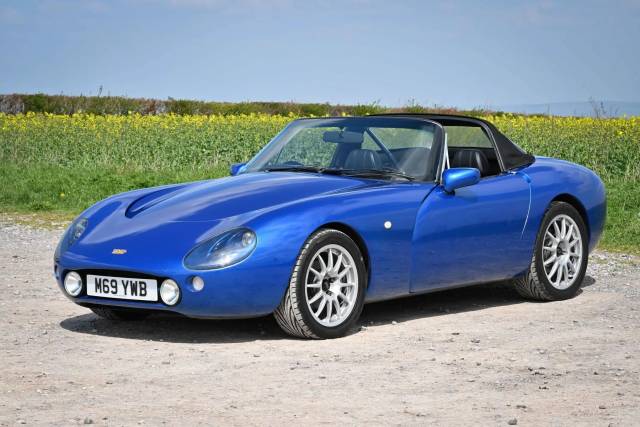
1995 | TVR Griffith 500
Lovely High-Spec. Example - Power Steering
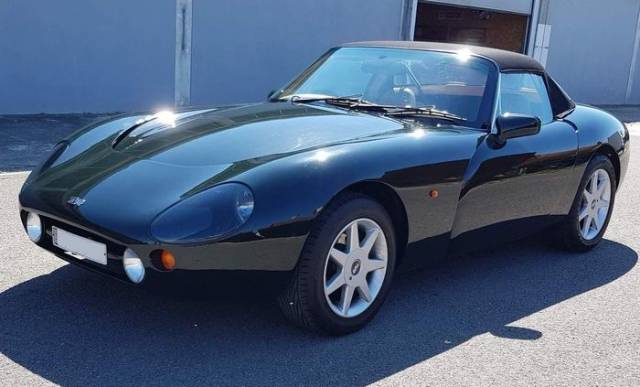
1994 | TVR Griffith 500
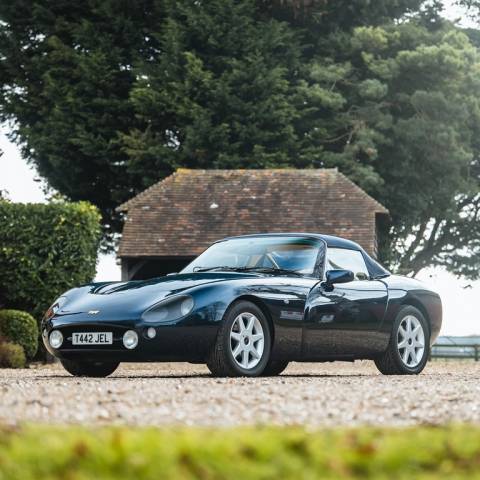
1999 | TVR Griffith 500
TVR Griffith 500
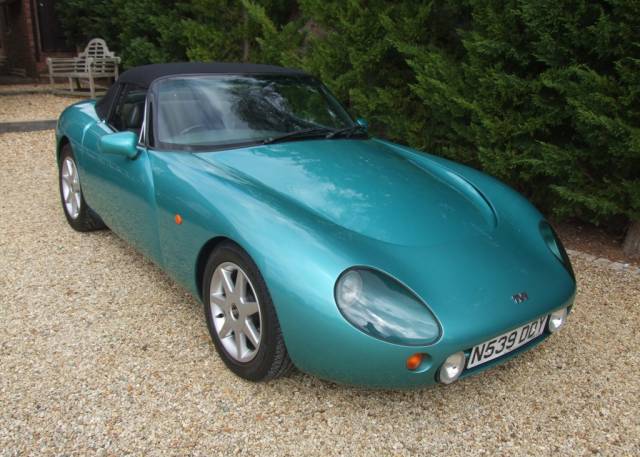
1996 | TVR Griffith 500
TVR Griffith 500
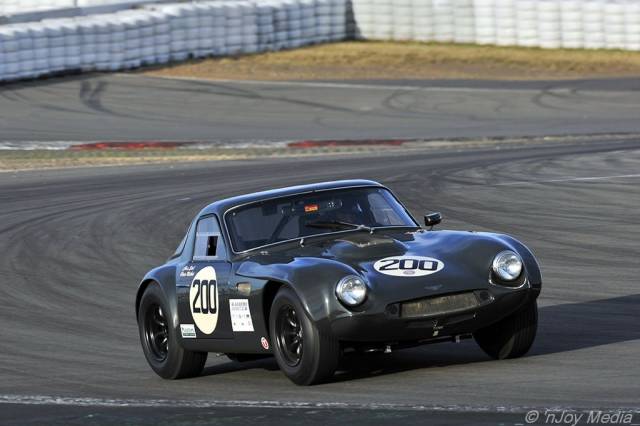
1965 | TVR Griffith 200
FIA Racecar

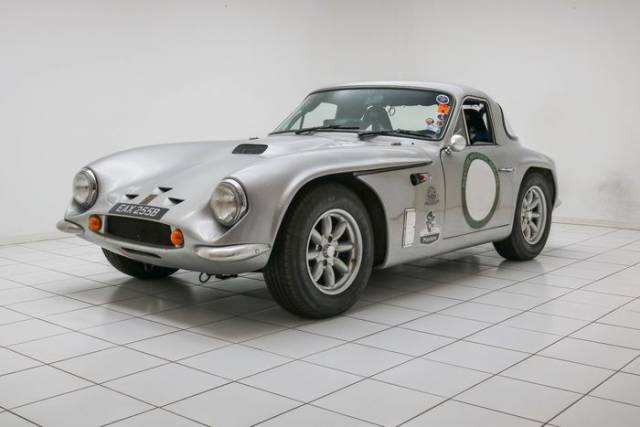
1964 | TVR Griffith 200
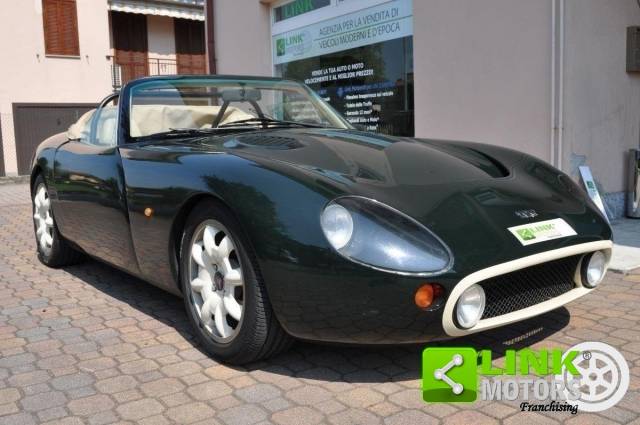
1995 | TVR Griffith
TVR Griffith Big Valve 4.3

Create search alert
Let yourself be notified as soon as a listing is published that matches your search filters.
Create listing
Do you have a TVR Griffith that you want to sell? Then create a listing now.
Create listingTVR Griffith Classic Cars: Prices & Market Values
History of the TVR Griffith
TVR produced the Griffith from 1991 to 2002—a period marked by the brand's commitment to no-nonsense, high-performance sportscars. The Griffith name itself dates back further, referencing TVR's first collaborations with American importers, notably the Griffith 200 and 400 models that featured Ford V8s for the US market. In the early 1990s, TVR revived this historic label for its radically modern, fibreglass-bodied roadster. TVR's focus on lightweight construction, paired with a robust V8, continued to define the Griffith's DNA. Roughly 2,600 units were produced during its run, with later years marked by a 100-unit special edition as production wound down and the Tamora took over as successor. The Griffith's impact was strong enough that it made digital appearances in video games like Gran Turismo, further cementing its cult status.
Model History
The modern Griffith launched in 1991, superseding the earlier 1960s Griffith 200/400 models known for their US export story. Initial models featured a 4.0-litre Rover V8, followed swiftly by a 4.3-litre evolution boasting 284 hp and 414 Nm. By 1993, TVR had further developed the engine to a 5.0-litre version with 345 hp and 475 Nm, refining acceleration and top speed even more. These drivetrains, combined with the manual five-speed transmission and rear-wheel-drive layout, made for a formidable competitor to more established sports cars. TVR largely kept the Griffith mechanically and cosmetically unchanged throughout its run, focusing improvements on engine output and bespoke interior materials. In 2000, production phased down alongside a limited edition special run before ceasing in 2002.
Highlights of the TVR Griffith
The Griffith's defining features centre around its low weight, V8 firepower, and brutally direct driving experience. A fibreglass shell over a tubular steel frame kept weight just above a tonne, translating every horsepower directly to the tarmac. The Griffith 500 model—at up to 350 hp and under 4.2 seconds from 0–100 km/h—fast gained a reputation as a serious alternative to much bigger names, earning monikers like "Porsche-killer" in enthusiast circles. Racing pedigree is reinforced by FIA-homologated variants fit for historic motorsport events. The car's hand-built nature ensures each is unique, with occasional production quirks—anything from loose seals to rattling trim—that fans see as character, not defect.
Technical Data
Special Editions and Collectible Models
The Griffith saw several notable variants. The final 100 cars were produced as a limited edition with unique interior tweaks, external visual identifiers, and metal plaques—sought after for their rarity. Earlier, the racing Griffith 200 and 400 models, especially in FIA-homologated trim, stand out for their pure motorsport configuration and eligibility in historic events like Spa 6 Hours or Goodwood Revival. These race versions feature dedicated equipment: bucket seats, 4-point harnesses, FIA-fuel tanks, and integrated fire suppression.
Weak Spots and Common Issues
TVR Griffiths require attentive upkeep by marque specialists—whether in the UK or through the established TVR network across Europe. Typical concerns involve the quirky hand-built finish, with less-than-perfect seals and occasional interior rattles. The tube-frame chassis must be checked for corrosion (particularly if not previously galvanised), while suspension components—often upgraded in restorations—deserve periodic inspection. Complete history, workshop receipts, and comprehensive documentation are common among well-kept examples and can greatly simplify ownership.
Engine and Performance, Transmission and Handling
Every Griffith delivers on the promise of exhilarating speed and razor-sharp road manners. The car's near 1:1 power-to-weight feel, manual gearbox, and absence of driver aids ensure a direct connection to the road. Depending on engine size, 0–100 km/h times range from 4.7 seconds (early 4.0 and 4.3s) to sub 4.2 seconds in the Griffith 500, with top speeds up to 275 km/h. The car’s short wheelbase, rear-drive layout, and unfiltered steering response require engaged, skilled drivers rather than novices, contributing to its reputation as track-capable and unyielding in character. Popular Models:
- Griffith 200/400 (historic FIA racecars): Noted for American-market focus and racing eligibility.
- Griffith 4.0/4.3: Early 1990s models, highly sought by purists.
- Griffith 500: Ultimate performance with highest power output, best acceleration, and dedicated following.
Interior, Comfort, Exterior and Design
Each Griffith is defined by its bespoke approach—fibreglass panels sit over tubular steel, and most cars feature unique-to-order cabin trims. Available interiors range from artisan leather and wool carpeting to exotic wood inserts and rare colour schemes such as Formula Pearl Scent Red or Grigio Titanio. Targa roofs and soft tops (sometimes in carbon fibre) are found on later cars, while custom alloys, upgraded suspensions (like Nitron dampers), and eye-catching paintwork round out the visual package. The hand-crafted detail means no two Griffiths are ever exactly alike.
Other Features
Documentation is a strong suit—collector owners often boast full histories, original manuals, keys, and maintenance documentation. Cars with original or upgraded FIA-spec racing parts can be both road and competition compliant, broadening appeal to track enthusiasts and historic motorsport participants.
Summary
The TVR Griffith is a rare case study in pure British sports car ethos: brutally fast, stunningly light, and entirely hand-built. With uncompromising mechanical honesty, it continues to capture the imagination of drivers seeking authentic, analogue performance. On the classic car market, it stands alone as the most visible and sought-after TVR model, holding 100% of both supply and demand share in our data. For buyers after mechanical engagement, distinctive design, and true driving theatre, the Griffith is a one-of-a-kind choice.