Sunbeam Mk III classic cars for sale
The Sunbeam Mk III captures the essence of British motoring in the 1950s, blending refined engineering with subtle elegance. As the evolution of the renowned Sunbeam-Talbot 90, it marks a pivotal point in Sunbeam’s post-war history.
Search results
Currently, there are no matching listings for your search.
Create search alert
Let yourself be notified as soon as a listing is published that matches your search filters.
Create listing
Do you have a Sunbeam Mk III that you want to sell? Then create a listing now.
Create listingSunbeam Mk III listing references from Classic Trader
Below you will find listings related to your search that are no longer available on Classic Trader. Use this information to gain insight into availability, value trends, and current pricing for a "Sunbeam Mk III" to make a more informed purchasing decision.
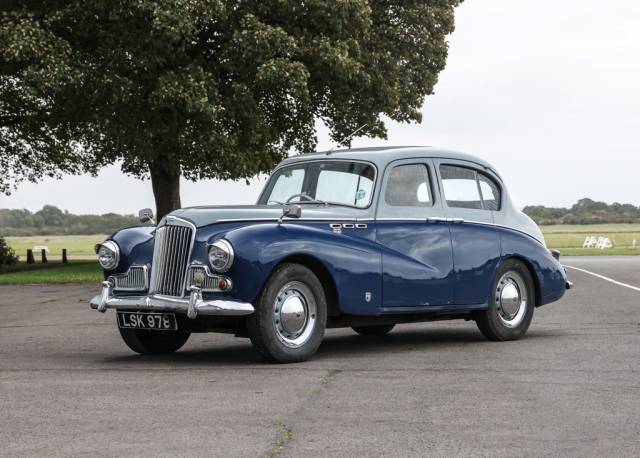
1955 | Sunbeam 90
Sunbeam 90 Mk. III
Create search alert
Let yourself be notified as soon as a listing is published that matches your search filters.
Create listing
Do you have a Sunbeam Mk III that you want to sell? Then create a listing now.
Create listingSunbeam Mk III Classic Cars: Prices & Market Values
History and origins of the Sunbeam Mk III
After the Second World War, Sunbeam-Talbot introduced the Sunbeam-Talbot 90 in 1948 as their answer to the growing demand for sophisticated yet accessible saloons. In 1954, this lineage evolved into the Sunbeam Mk III, a model that continued the tradition of British craftsmanship until 1957. Produced during a transformative era for the British automotive industry, the Mk III retained many hallmarks of its predecessor but refined them further for a discerning clientele. Not only did it build on Sunbeam's established reputation for elegance, but it also captured the aspirations of a growing class of motorists who valued both reliability and style.
Model history of the Mk III series
The Mk III series can trace its roots directly back to the Sunbeam-Talbot 90, a model that established the template for post-war British sports saloons. The Mk III marked the pinnacle of this family before the range transitioned to wholly new designs. Unlike its direct forebear, the post-1954 Sunbeam Mk III adopted incremental upgrades in chassis, bodywork, and drive technology while maintaining the traditional silhouette and refined finish that defined the series. The production run of the Mk III concluded in 1957, after which Sunbeam channels shifted toward newer concepts in performance and style, signalling the end of an era for the marque’s classic saloon cars.
Highlights of the Sunbeam Mk III
The Sunbeam Mk III stands out for its seamless blend of understated elegance and genuine touring ability. Its reputation for precise handling and robust build was complemented by an interior finished to a high standard for its day. Notably, the Mk III offered driving comfort and solid road holding, making it suitable for longer journeys—qualities that placed it ahead of many contemporaries. Sunbeam’s use of steel bodywork over a traditionally constructed chassis helped achieve a balance of durability, performance, and dignified aesthetics.
Technical data – Sunbeam Mk III
Special editions and collectible models
No historically distinct limited editions or extremely rare factory versions are specifically documented for the Sunbeam Mk III. However, original examples with complete period features, such as optional overdrive gearboxes or well-preserved drophead coupés, are particularly sought after by connoisseurs due to their authenticity and period-correct character.
Weak spots and common issues
No specific manufacturer-documented weak spots are listed for the Sunbeam Mk III based on current data. As with many vehicles of its age, routine issues are likely to include corrosion in the steel bodywork, wear to chassis bushings, and general maintenance to the braking system and transmission. Regular, thorough inspections of these areas are key to reliable running.
Engine and Performance, Transmission and Handling
The Mk III’s 2.3-litre four-cylinder engine provided a practical balance of output and durability, delivering moderate acceleration typical of 1950s British saloons. Mated to a four-speed manual with synchromesh on higher gears, the car offers commendable flexibility for leisurely touring. Its suspension setup, consisting of independent front wishbones and a live rear axle with leaf springs, ensures a traditional feel—firm but comfortable, well-suited to the period’s varied driving conditions. The Sunbeam Mk III itself is the standout model within its series—as confirmed by database statistics, it accounts for the entirety of supply and demand in classic Sunbeams currently listed on our platform. The drophead coupé variant, when original and well-maintained, can warrant special consideration due to its unique appeal amongst 1950s convertibles.
Interior, Comfort, Exterior and Design
The design of the Sunbeam Mk III is distinguished by its classic saloon proportions—long bonnet, gently tapering rear, and elegantly integrated front grille. Interiors were finished in traditional British style with leather seating (in higher trims), wood veneer dashboards, and brightwork detailing throughout. Special accessories such as original radio units and period-correct instrumentation consoles enhance authenticity. For connoisseurs, examples featuring factory two-tone paintwork and drophead body conversions represent the pinnacle of Sunbeam Mk III aesthetics.
Other relevant features
The transition from the Sunbeam-Talbot badge to the standalone Sunbeam name during the Mk III’s production run marks a notable point in the brand’s evolution. Enthusiasts and collectors alike value models bearing early-production features, such as unique badging and first-run interiors, for their historical significance.
Summary – Sunbeam Mk III in focus
The Sunbeam Mk III exemplifies 1950s British motoring, blending practical engineering with elegant design cues from the marque’s post-war resurgence. Markedly, it remains the sole Sunbeam model actively represented in the classic car market according to current supply and demand figures, underlining its lasting presence among enthusiasts and sustaining its reputation as a benchmark for its era.