- Voiture
- Studebaker
- Studebaker Flight Hawk (0 one offre)
Studebaker Flight Hawk classic cars for sale
The Studebaker Flight Hawk, introduced for the 1956 model year, was positioned as the entry-level member of Studebaker's Hawk range. Its unique blend of style and affordability attracted buyers seeking a distinctive American sports coupe with practical engineering. Below, you’ll find essential facts and technical specifics about this rarely-seen classic.
Résultats de la recherche
À l'heure actuelle, il n'y a pas d'annonces correspondant à votre recherche.
Create search alert
Let yourself be notified as soon as a listing is published that matches your search filters.
Create listing
Do you have a Studebaker Flight Hawk that you want to sell? Then create a listing now.
Create listingStudebaker Flight Hawk listing references from Classic Trader
Below you will find listings related to your search that are no longer available on Classic Trader. Use this information to gain insight into availability, value trends, and current pricing for a "Studebaker Flight Hawk" to make a more informed purchasing decision.
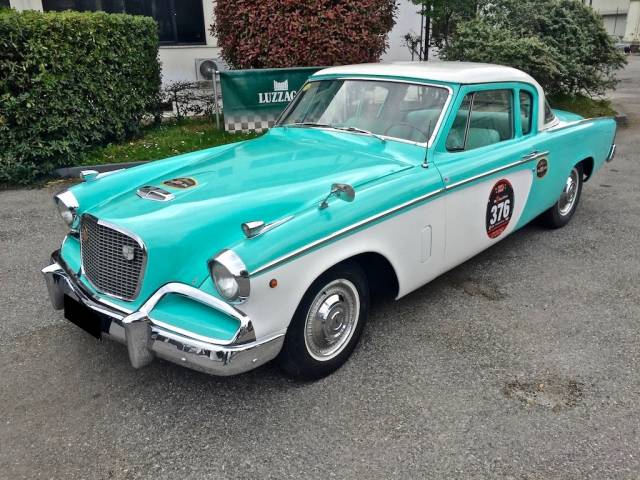
1956 | Studebaker Flight Hawk
Vettura dotata di Passaporto FIVA ha partecipato alla mille miglia del 2009.
Create search alert
Let yourself be notified as soon as a listing is published that matches your search filters.
Create listing
Do you have a Studebaker Flight Hawk that you want to sell? Then create a listing now.
Create listingStudebaker Flight Hawk Classic Cars: Prices & Market Values
History of the Studebaker Flight Hawk
The 1956 Studebaker Flight Hawk was launched as part of Studebaker’s plan to revitalise its postwar lineup. Serving as the most affordable option in the four-model Hawk family, the Flight Hawk was marketed at buyers who wanted a sporty yet economical coupe. Its development paralleled a period of innovation and competitiveness among American manufacturers, with Studebaker seeking to stand out via advanced design and engineering while keeping costs low. The limited one-year production gives the Flight Hawk a unique historical footprint among American coupes of the mid-1950s. With bodywork drawn from the Studebaker Champion and personal styling touches distinguishable from its siblings, the Flight Hawk embodied both economical aspirations and bespoke design choices.
Model History of the Flight Hawk Series
The Hawk lineup was introduced by Studebaker in 1956, following the company’s aim to offer a suite of distinct sports coupes. The Flight Hawk itself was only produced in this inaugural model year and was replaced for 1957 as the Hawk lineup was restructured and simplified. It shared the market with the upscale Golden Hawk, mid-range Sky Hawk, and Power Hawk, each distinguished by unique trim and mechanical options. As the entry-level Hawk, the Flight Hawk stood out with its focus on value, especially attractive to postwar buyers entering the sports coupe market.
Highlights of the Studebaker Flight Hawk
The Studebaker Flight Hawk’s chief feature was its value for money in a stylish package—buyers gained the streamlined Hawk body at a lower price point due to its use of the more economical engine and modest trim options. Unique amongst its siblings, it was the only Hawk to come standard with a six-cylinder engine in 1956, while the rest featured V8 powerplants. Production was limited to a single year, making surviving examples a rare sight. The Flight Hawk’s distinctive chrome details, aeronautical-inspired name, and focused purpose for the cost-conscious enthusiast define its place in automotive history.
Technical Data
Special Editions and Collectible Models
There were no factory special editions of the Flight Hawk, as the model was itself the stripped-down version in the Hawk family. However, original-condition Flight Hawks with rare factory options, unrestored examples, or uniquely specified trim—such as rarely chosen paint colours or period accessories—may attract collector attention due to overall model scarcity.
Weak Spots and Common Issues
Factory documentation and owner experience indicate that mechanical maintenance of the six-cylinder engine is straightforward due to Studebaker’s robust engineering. However, buyers should inspect for rust in chassis rails and floor pans, as corrosion can be more pronounced in cars that were not originally treated for rust protection. Interior chrome trim and unique Hawk bodywork pieces can be difficult to source, given the low production total. As with many American cars from the era, electrical contacts and switches are known weak points.
Engine, Performance, Transmission and Handling
Powered by Studebaker’s reputable inline-six engine, the Flight Hawk delivers more restrained performance than its V8 siblings but shines with smoother running and greater reliability. The lighter weight from its simpler powertrain gives it better front-end balance, resulting in predictable handling characteristics. Both manual and automatic transmissions were available, supporting a relaxed driving experience suited for long-distance cruising or city motoring. Enthusiasts highlight its robust engine and uncomplicated mechanics as strong points for classic usability. Among the Hawk family, the Flight Hawk is less frequently encountered than the Golden Hawk, which tends to be more powerful and richly equipped. However, the Flight Hawk’s rarity and distinctive engine make it an intriguing outlier for collectors interested in Studebaker’s mid-century engineering.
Interior, Comfort, Exterior and Design
The Flight Hawk adopted the hawk-inspired design language seen throughout Studebaker’s 1956 coupe lineup, with a low, streamlined silhouette and pronounced tail fins. Modest chrome trim, practical bench seating, and a restrained dashboard distinguished it from more luxurious Hawk models. Colour options echoed the pastel and metallic trends of the mid-1950s, with factory options for two-tone paint. The interior focused on durability and basic comfort, omitting the elaborate features and materials available on pricier siblings. Optional accessories included a push-button radio and full wheel covers, allowing some degree of specification for cost-conscious buyers. The overall visual impression is sporty yet functional—a reflection of the Flight Hawk’s intended market position.
Other Features
Model-specific literature notes that the Flight Hawk was available with several dealer-installed accessories, including spotlights, bumper guards, and various period-correct trim enhancements. Availability and originality are now important considerations, as these details can influence market value and historic correctness.
Summary
The Studebaker Flight Hawk, produced only in 1956, offers a compelling entry point to postwar American sport coupe design. Its six-cylinder drivetrain, simplified trim, and unique position within the Hawk range make it both accessible and distinctive. Today, the Flight Hawk is of particular interest to enthusiasts of unusual American classics, especially those looking for an alternative to the more common V8-powered models.