- Car
- Steyr-Puch
- Steyr-Puch G-Class (5 offers)
Steyr-Puch G-Class classic cars for sale
The Steyr-Puch G-Class, built since 1979, is famous for its rugged utility, distinctive angular body, and technical partnership with Mercedes-Benz. Designed for both military and civilian duties, the G-Class stands out for its robust engineering, flexible interior, and unique regional branding as the Puch G or Mercedes-Benz G-Class. Its wide range of body forms, engines, and equipment variants make it a favourite among classic off-road enthusiasts.
Search results
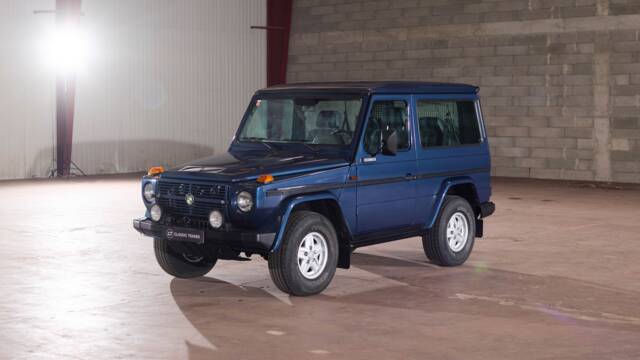
1988 | Steyr-Puch 280 GE (SWB)
Rarely Restored PUCH 280 GE with Matching Numbers, FIVA Passport and Comprehensive Documentation

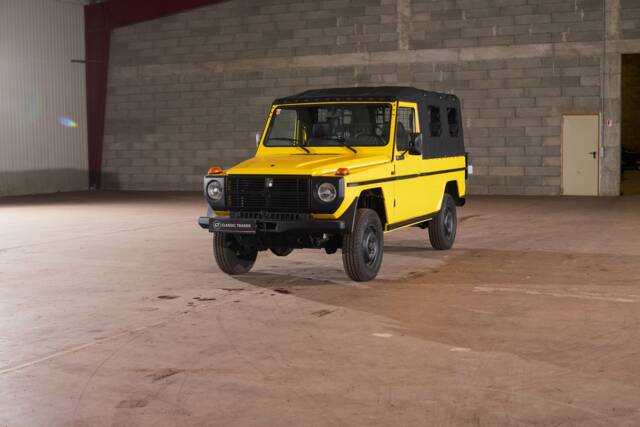
1993 | Steyr-Puch 230 GE (LWB)
1993 Puch 230 GE – Swiss Army vehicle, extensively customized and historically registered in Austria
Auctions ending soon

Loading…
Loading…
Loading…
Loading…
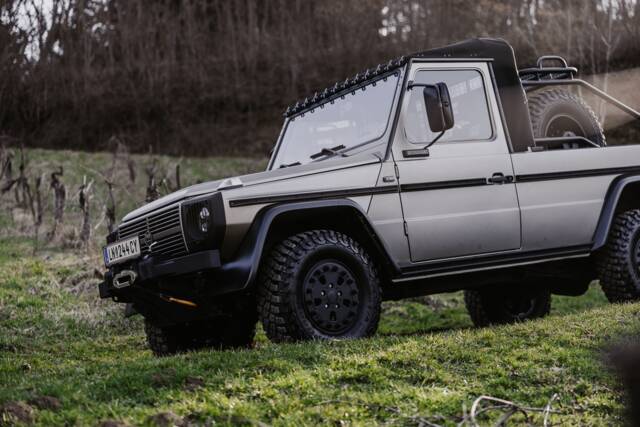
1994 | Steyr-Puch 230 GE (SWB)
"Special" auf Basis aus Schweizer Armeebestand
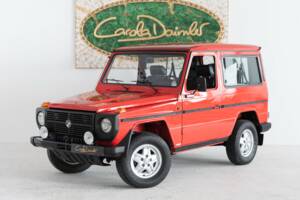
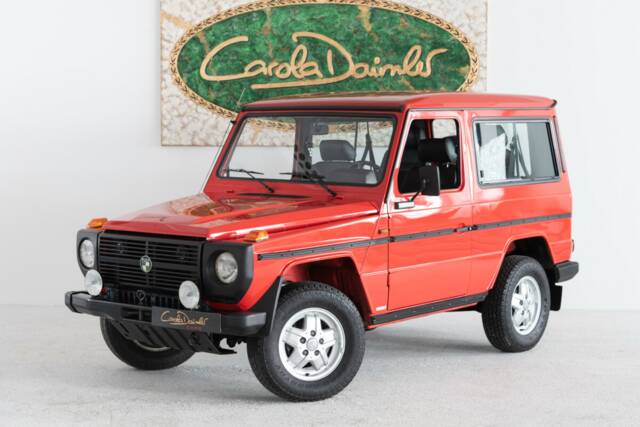
1980 | Steyr-Puch 240 GD (SWB)
Steyr-Daimler-Puch 240GD (W460)

Newsletter
The best Steyr-Puch listings, straight to your inbox
Get hand-picked Steyr-Puch listings, plus the best of cars, motorbikes, and auctions on Classic Trader — all in one place.
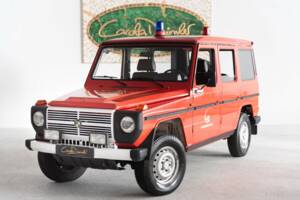
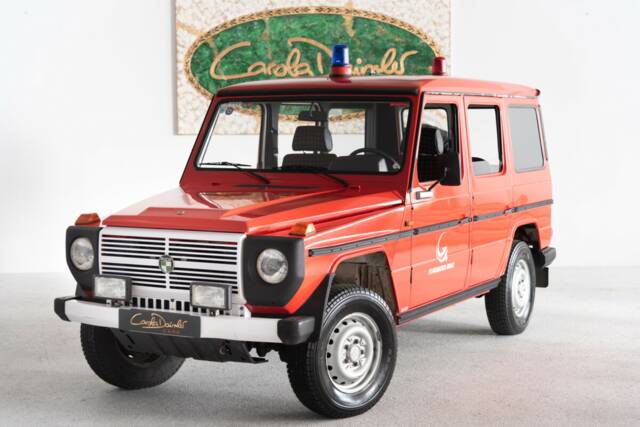
1979 | Steyr-Puch 230 G (long)
Steyr-Daimler-Puch 230GE (W460)
Steyr-Puch G-Class listing references from Classic Trader
Below you will find listings related to your search that are no longer available on Classic Trader. Use this information to gain insight into availability, value trends, and current pricing for a "Steyr-Puch G-Class" to make a more informed purchasing decision.
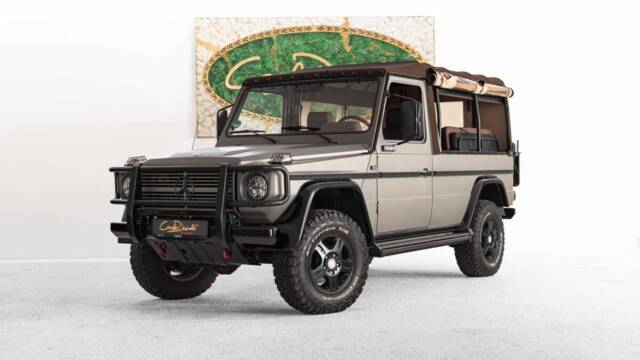
1994 | Steyr-Puch 230 GE (LWB)
Steyr-Daimler-Puch 230GE Cabriolet im Acuma One Design
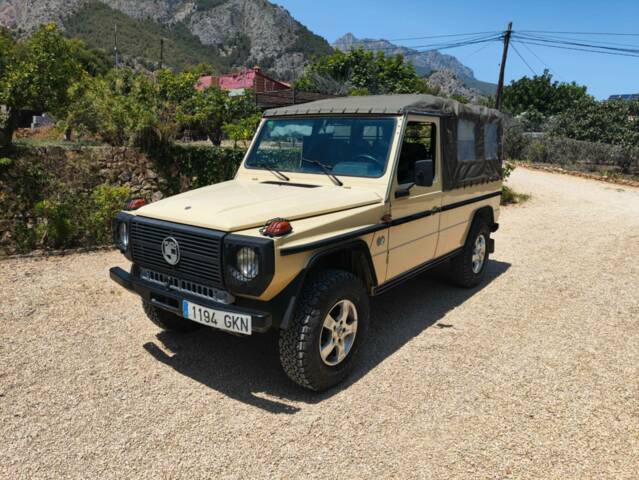
1990 | Steyr-Puch 230 GE (LWB)
Steyr Puch GE230 (Mercedes G class W461) Swiss Army version

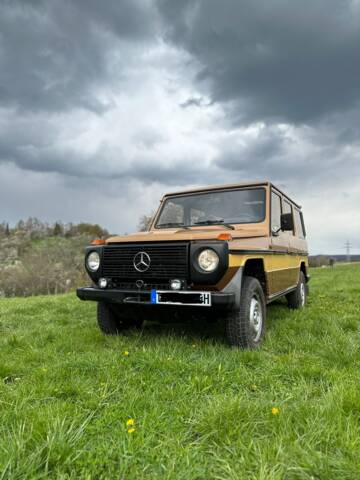
1982 | Steyr-Puch 300 GD (LWB)
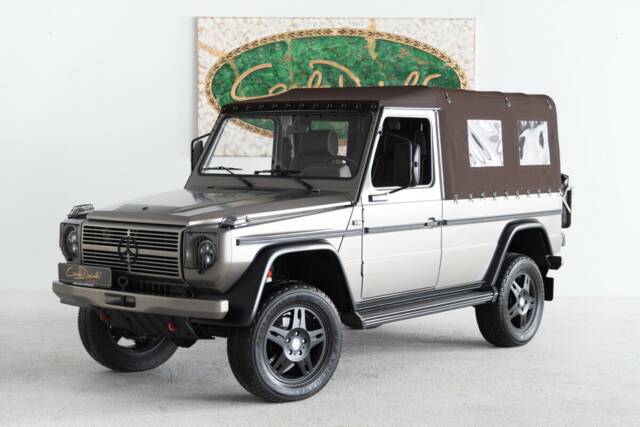
1993 | Steyr-Puch 230 GE (LWB)
Steyr-Daimler-Puch 230GE Cabriolet im Acuma One Design
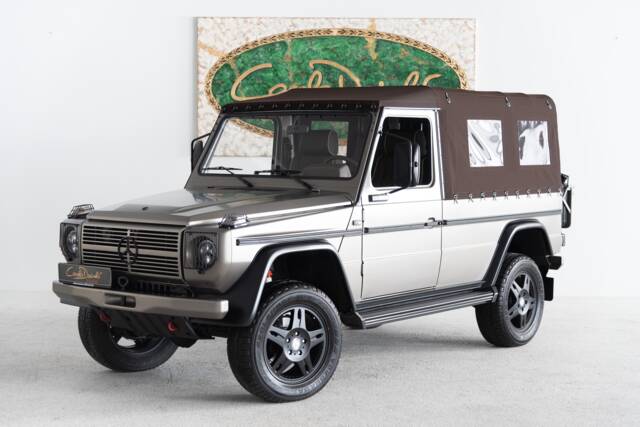
1993 | Steyr-Puch 230 GE (LWB)
ACUMA ONE DESIGN | NEUWAGEN | VOLLSTÄNDIG RESTAURIERT | H-KENNZEICHEN
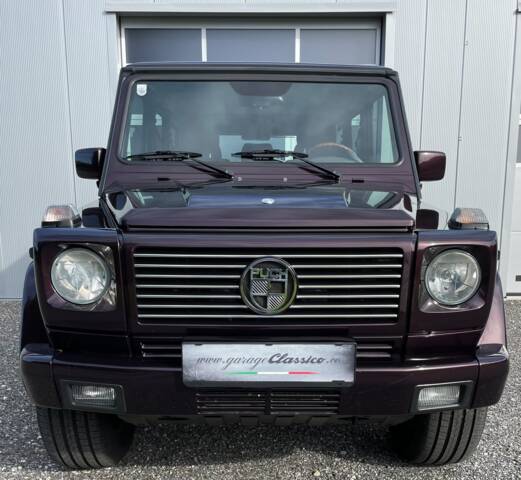
1999 | Steyr-Puch G 500 (LWB)
Legendärer PUCH G500 aus der limitierten (1 von 50 Stück) Letztauflage von 1999
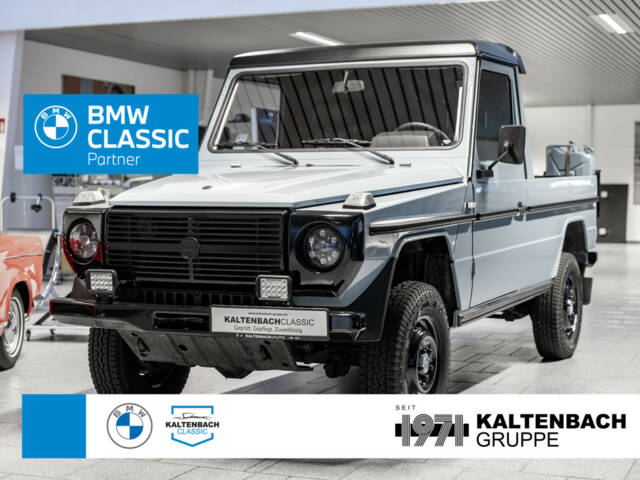
1996 | Steyr-Puch 230 GE (LWB)
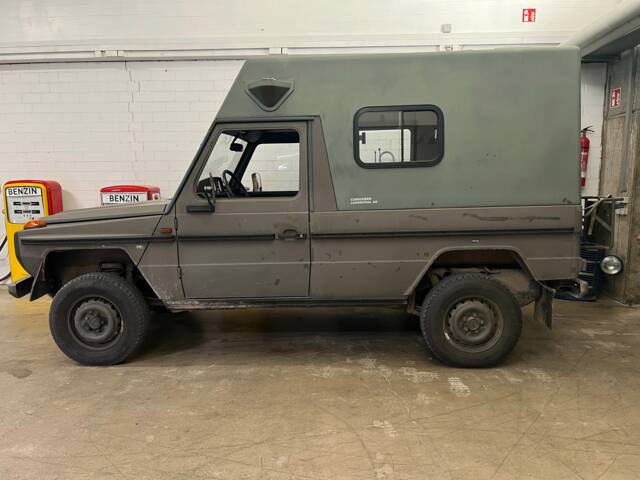
1996 | Steyr-Puch 230 GE (LWB)
Puch G G230
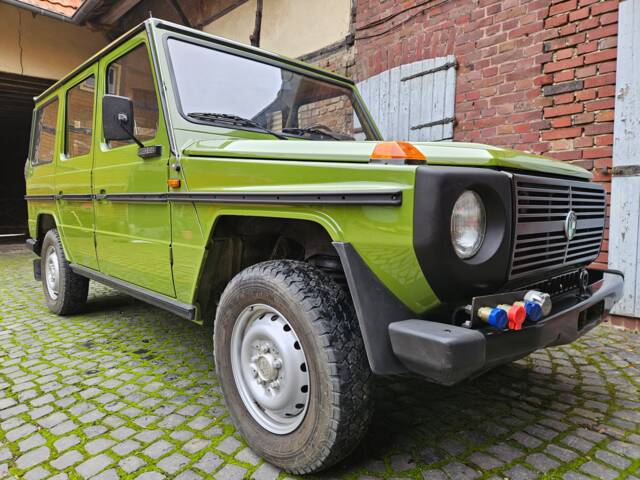
1981 | Steyr-Puch 280 GE (LWB)
(Steyr Daimler Puch)
Steyr-Puch G-Class Classic Cars: Prices & Market Values
History of the Steyr-Puch G-Class
The Steyr-Puch G-Class traces its origins to a 1972 development alliance between Daimler-Benz and Steyr-Daimler-Puch in Graz, Austria. Originally conceived for military deployment, the vehicle quickly became available in a civilian version by 1979, with production concentrated in Graz. The first prototype appeared in 1974, followed by series production five years later. From the start, the G-Class offered unmatched off-road capability thanks to its robust frame, selectable all-wheel drive, and locking differentials. Technically identical to the Mercedes-Benz G-Class, the Puch G was branded differently depending on export regions. Early variants included a range of colours, short and long wheelbases, and a utilitarian interior layout. Steyr-Puch supplied about 10% of all G-Class units under its own badge, with a particular focus on ruggedness and durability, qualities that have since cemented the model’s reputation in both military and civilian roles.
Model history
The G-Class model range began with the W460 series, offered in five distinct body styles, both in short and long wheelbase formats: Station Wagon, Panel Van, and a convertible Off-Roader. Power came from a selection of four- and six-cylinder petrol engines (notably the 230GE and 280GE) and several diesel options. Later, the W461 variant, typically seen in military or commercial service, appeared with reinforced chassis, 24-volt electrics, and special military features. The Puch G also inspired licence-built versions like the Peugeot P4 for France and specialised variants for the Argentinean army. Numerous special configurations and equipment packages allowed diverse roles: from ambulances and command cars to pick-ups and rescue vehicles. The infamous 'Wolf' nickname is reserved for the military W460 configurations, known for their distinctive utilitarianism. In 2000, after the branding agreement lapsed, conversion kits enabled switching badging between Mercedes-Benz and Puch.
Highlights and features
One major distinction of the Steyr-Puch G-Class is its technical heritage—engineered for military use but adaptable to civilian needs. All versions came with selectable four-wheel drive and both front and rear locking differentials as standard ex-factory. All-terrain performance, a ladder-type chassis, and almost modular bodywork underlined its versatility. A wide range of factory paint options and functional interiors underlined its off-road philosophy. Early interior choices included horizontal seat stitching and robust materials like black or date-brown upholstery. Utility-focused accessories such as fold-down rear benches, multiple seating arrangements (up to nine in the long-wheelbase Station Wagon), and sturdy underbody protection were common. Many vehicles were equipped with tow bars, cages, and lighting guards for off-road and tactical use.
Technical data
Special Editions and Collectible Models
Among the G-Class, military 'Wolf' configurations are highly regarded for their battlefield equipment such as reinforced chassis, 24-volt electrical systems, removable or modular tops, and special military fittings. Civilian special editions included open-top Cabriolet models and utility conversions for rescue, fire brigade, or ambulance service. Early production, pre-series vehicles, and those with distinctive features (vertical seat seams, manually welded brackets) are particularly collectable. The label 'Puch G' on a badge is itself a rarity, as only about 10% of G-Class production carried this branding.
Weak Spots and Common Issues
The G-Class is known for durability and simple maintenance, with many parts interchangeable with Mercedes-Benz passenger and commercial vehicles. Still, buyers should inspect for corrosion, especially around the body seams and frame. Early models may show wear on hand-welded seat brackets or manual gearboxes. Older military vehicles require checks on 24V electrics and auxiliary fittings. Parts are widely available, and mechanical repairs are usually straightforward due to the accessible mechanical layout.
Engine and performance, transmission and handling
The Steyr-Puch G-Class delivers strong off-road capability, thanks to its all-terrain chassis, mechanical locking differentials, and robust four- or six-cylinder engines. The drive layout is rear-wheel drive with selectable all-wheel drive, maximising traction on loose or challenging surfaces. The vehicles maintain ground clearance and approach/departure angles suited for military duty but comfortable on the road. Later models with turbo-diesels or fuel-injected petrol engines provide improved driveability and reliability. Transmission options include both manual and automatic, with long-geared ratios for road use and low-range for off-road. - W460 230GE: 2.3L four-cylinder petrol, noted for reliability and flexibility in both military and civilian set-ups.
- W460 280GE: 2.7L six-cylinder petrol (M110), chosen for its power in longer wheelbase versions.
- W461 (military 'Wolf'): Popular for rugged chassis options, military electrics, and modular rear bodywork.
Interior, comfort, exterior and design
The G-Class was designed for function and longevity, with its boxy silhouette and steep walls maximising cargo and interior space. Early vehicles featured simple black or brown upholstery, upright dashboard designs, and manually adjustable seating. Cabriolet and utility versions were available with soft-tops or removable roof panels. Accoutrements such as foldable benches and lashing hooks emphasised versatility. Externally, the G-Class wore its Puch G or Mercedes-Benz badges as per its destination market—the only consistent cosmetic difference. Paint choices during the launch era were utilitarian yet distinctive, including shades like Colorado Beige, Agave Green, and Fire Red. Accessories such as towing eyes, underbody guards, and All-Terrain tires were commonplace. Later or restored models may feature LED lighting, infotainment upgrades, and upgraded interior comfort.
Other relevant features
Many G-Class vehicles originally served in military, government, or emergency vehicle roles, often returning to the market with low mileage and high utility. Several models are delivered with original operator’s manuals, tool kits, and service booklets. Some army variants carry 24-volt electrical systems, splitters for 12V conversion, snow chains, and specialist kit. Flexible homologation permitted numerous local modifications and conversions, from command cars to ambulances.
Summary
The Steyr-Puch G-Class distinguishes itself among classic off-road vehicles for its no-compromise construction, military-grade features, and adaptability. Its technical kinship with the Mercedes-Benz G-Class means wide availability of parts and expertise, while the distinct Puch G branding and a wide variety of specialist models set it apart for collectors and enthusiasts. Supply and search demand are concentrated on early-production W460 and robust W461 variants, evidencing a continued preference for the original, fundamentally purpose-built G-Class designs.