Mazda 818 classic cars for sale
The Mazda 818, known in some countries as the Mazda 808 or Grand Familia, stands out for its robust four-cylinder engines, versatile body styles, and an identity shaped by international trademark tangles. Available as a coupé, sedan, or estate, the 818 appeals to those seeking a classic Japanese vehicle with global flair and strong engineering roots.
Suchergebnisse
Zur Zeit sind keine passenden Inserate zu Ihrer Suche veröffentlicht.
Create search alert
Let yourself be notified as soon as a listing is published that matches your search filters.
Create listing
Do you have a Mazda 818 that you want to sell? Then create a listing now.
Create listingMazda 818 listing references from Classic Trader
Below you will find listings related to your search that are no longer available on Classic Trader. Use this information to gain insight into availability, value trends, and current pricing for a "Mazda 818" to make a more informed purchasing decision.
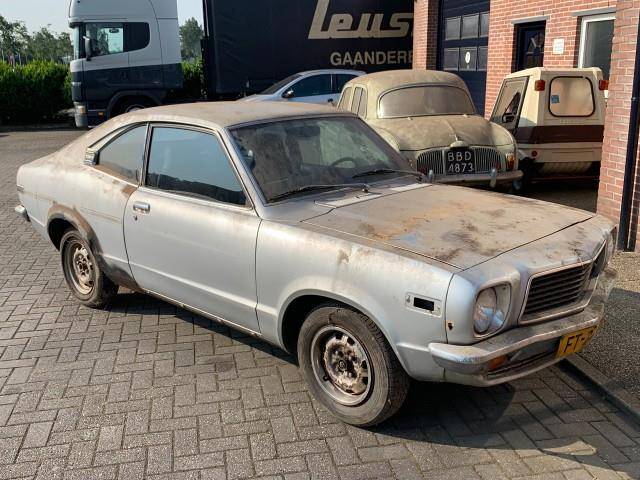
1980 | Mazda 818
Mazda 6 818 1. SL Coupe Org. NL auto #OBJECT
Create search alert
Let yourself be notified as soon as a listing is published that matches your search filters.
Create listing
Do you have a Mazda 818 that you want to sell? Then create a listing now.
Create listingMazda 818 Classic Cars: Prices & Market Values
History of the Mazda 818
Launched in Japan in 1971 as the Mazda Grand Familia, the car quickly found international reach, adopting different names like Mazda 808 or, more commonly in Europe, the Mazda 818. Mazda adapted its branding to local market conditions, reflecting an agility seen in few contemporaries. Manufactured until 1978, the 818 was produced alongside rotary-powered siblings—known at home as the Savanna and abroad as the RX-3. Built exclusively with inline four-cylinder engines, the 818 carried the torch for Mazda's push into the global compact segment, offering reliability and a driving experience rooted in Japanese engineering discipline.
Model Range and Evolution
The Mazda 818 came as a two-door coupé, four-door sedan, and five-door estate (station wagon), catering to a broad spectrum of tastes and uses. Predecessors to the 818 included the Mazda Familia/1200, while successors appeared in Mazda’s 323/Familia line, reflecting the brand’s continuous evolution in the compact segment. The 818 itself shares its platform and many features with the rotary-powered RX-3, although only conventional inline-four engines were used in this model. Changes throughout production were subtle, focusing on refinement and reliability rather than radical redesigns.
Highlights and Unique Features
The Mazda 818 is distinguished by its robust mechanical layout and the global context behind its naming. The availability of three body styles—coupé, sedan, and estate—made it flexible for daily use or recreational needs. The 818’s clear mechanical separation from the rotary RX-3, with a sole focus on inline-fours, contributes to its reputation for longevity and easier maintenance compared to rotary-powered peers. With strong export numbers and enduring enthusiasm among classic Mazda collectors, the 818 has a secure place among Japanese classics.
Technical Data
Special Editions and Collector Models
There are no officially documented special editions for the Mazda 818. Its collectibility arises mainly from specific body styles, original condition vehicles, and rare country-specific trims. Some enthusiasts particularly prize estate versions and low-mileage coupés due to their relative scarcity.
Weak Spots and Common Issues
No manufacturer-specific weak spots are officially documented for the Mazda 818. In classic car circles, however, areas to check typically include body rust in wheel arches and sills, wear in suspension bushings, and age-related engine seals. As with any classic Japanese car from this era, a thorough inspection of the electrical system and regular checks on carburettor settings are prudent for reliable operation.
Engine and Performance, Transmission and Handling
The Mazda 818 offers a balanced and dependable driving experience, prioritising mechanical reliability over outright speed. The inline-four engines deliver adequate power for contemporary driving, with manual transmissions providing direct control. Chassis settings deliver predictable handling, more focused on comfort than race-track sharpness, distinguishing it from its rotary sibling, the RX-3.
Popular variants of the 818 include:
- Two-door coupé – Often favoured for its lightweight body and sportier looks, paired with manual transmission.
- Estate/wagon – Known for its practicality and rarity in the classic market.
- Four-door sedan – Valued for family use and original examples with minimal modifications. undefined
Interior, Comfort, Exterior and Design
The Mazda 818’s design approach is functional and distinctly of the 1970s. The straight shoulders, slanted bonnet, and precise Japanese detailing give the car a unique profile. Inside, the cabin is furnished with utilitarian materials, simple switches, and analog dials reflecting Mazda's focus on practicality. Early models occasionally featured special paint colours for specific markets, while estate versions added versatility with folding rear seats. Accessories like original radio units, period-correct wheel covers, and functional roof racks are highly appreciated by purists.
Other Features and Interesting Facts
The reason for the differing Mazda 808/818 nameplates was a legal necessity: Peugeot had already trademarked three-digit numbers with a middle zero in most European markets, forcing Mazda to change their strategy. Mazda’s ability to pivot branding while maintaining production robustness marks the 818 as a case study in adaptive automotive marketing during the 1970s.
Summary
The Mazda 818 represents a reliable chapter in Japanese automotive history, noted for its robust inline-four technology, market-adapted branding, and versatile trio of body styles. Attractive to enthusiasts for its relative simplicity and distinctive background, the 818 combines everyday usability with a proven mechanical package—a worthwhile option for those seeking an authentic 1970s Mazda experience.