Lotus Mark VIII classic cars for sale
The Lotus Mark VIII stands out in automotive history as Colin Chapman's first fully enclosed, aerodynamic sports racer, born from a desire for agility and engineering purity. Perfect for motorsport purists and collectors focused on performance innovations from the early 1950s.
Search results
Currently, there are no matching listings for your search.
Create search alert
Let yourself be notified as soon as a listing is published that matches your search filters.
Create listing
Do you have a Lotus Mark VIII that you want to sell? Then create a listing now.
Create listingLotus Mark VIII listing references from Classic Trader
Below you will find listings related to your search that are no longer available on Classic Trader. Use this information to gain insight into availability, value trends, and current pricing for a "Lotus Mark VIII" to make a more informed purchasing decision.
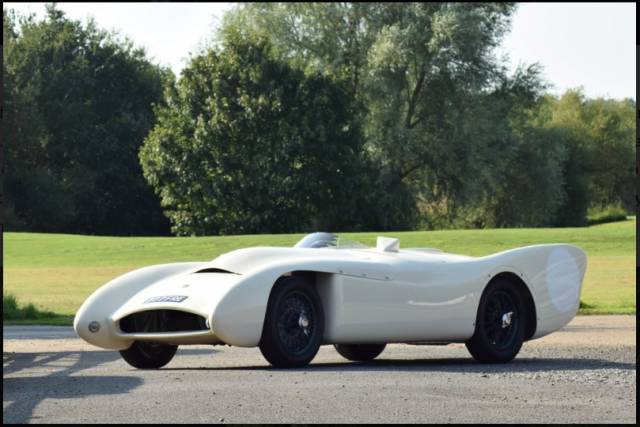
1955 | Lotus Mark VIII

Create search alert
Let yourself be notified as soon as a listing is published that matches your search filters.
Create listing
Do you have a Lotus Mark VIII that you want to sell? Then create a listing now.
Create listingLotus Mark VIII Classic Cars: Prices & Market Values
History of the Lotus Mark VIII
Developed in late 1953, the Lotus Mark VIII was conceived by Colin Chapman as an answer to the growing competitive need for lightweight, aerodynamic sports cars. Chapman, already establishing a reputation for ingenuity, partnered with aerodynamicist Frank Costin, whose expertise was vital in shaping the Mark VIII's streamlined, closed body. The car's debut marked a turning point, emphasising Chapman’s commitment to combining lightweight construction with sophisticated aerodynamic efficiency—a departure from the more basic, open-top Lotus prototypes that had come before.
Model History
The Mark VIII followed the early Lotus Mark VI, which was more of a club race special with an open body. The Mark VIII set the template for subsequent Lotus sportscar racers: featherweight construction, tuned-for-competition engines, and a focus on aerodynamic development. Its principles influenced the Mark IX that followed and helped cement Lotus’s reputation in both club and international racing throughout the 1950s.
Highlights and Market Statistics
The Lotus Mark VIII’s body, designed in close collaboration with Frank Costin, broke new ground for lightweight and aerodynamic efficiency. Chapman’s demand for a svelte 1100 lbs car, capable of 125 mph with only 85 bhp, demonstrated his ability to innovate within tight engineering constraints. This spirit shaped not just the Mark VIII, but Lotus models for years to come.
Technical Data
Special Editions and Collectible Models
There are no officially documented special editions of the Mark VIII, as each example was essentially bespoke—built for serious club racers, with minor variations in engine and specification depending on the preferences of their original owners.
Weak Spots and Common Issues
No documented weak spots specific to the Mark VIII are available. Prospective buyers should be alert to the usual challenges with 1950s racing specials: ageing lightweight chassis, custom-fabricated body panels, and non-standard mechanical components can require specialised restoration and upkeep.
Engine, Transmission, and Handling
The Mark VIII was engineered for competitive speed, with a strict weight cap and a focus on optimal balance. Its aerodynamic bodywork improved top speed and stability. Handling was sharp, typical of early Lotus engineering philosophy, with a chassis tuned for maximum driver involvement and minimal weight. The 85 bhp engine, depending on specification, provided ample power for well under 600 kg, ensuring the car’s performance was highly competitive in its class. Due to the extremely limited number of Mark VIII produced, each car is a known entity among enthusiasts. The car’s performance credentials are tied to its Chapman-designed chassis and the fine-tuned engines chosen by early owners, making period-correct examples especially desirable.
Interior, Comfort, Exterior, and Design
Frank Costin’s expertise resulted in an all-enclosed, smoothly profiled body, a first for Lotus. The tight cockpit was purely functional, focused on racing ergonomics over driver comfort. Body materials were typically lightweight alloys shaped by hand—nothing superfluous remained inside. Special accessories or comfort features were largely omitted, as every detail from seats to switchgear served the primary goal of minimising mass and maximising control. Unique exterior elements included the low drag nose, flush-fitting wheels, and the seamless integration of Chapman’s engineering vision with Costin’s aerodynamic theory.
Other Information
Each Lotus Mark VIII effectively served as a testbed for the brand’s future approach to sportscar engineering. Insight gained from this project shaped Lotus’s rise in motorsport circles and had a direct influence on the design of later models from Hethel.
Summary
With its inception in 1953, the Lotus Mark VIII set a new template for aerodynamically advanced, lightweight racing cars. The result of collaboration between Colin Chapman and Frank Costin, it laid the groundwork for future Lotus competition cars. Today, the rarity and historical significance of the Mark VIII make it a key reference point for those seeking the origins of Chapman’s engineering philosophy and the fast pace of 1950s motorsport innovation.