Ferrari 340 Classic Cars for Sale
The Ferrari 340 model series stands for racing-derived engineering and rare craftsmanship. Produced between 1951 and 1953, these V12 Ferraris combined proven motorsport technology with road presence and exclusivity, creating highly sought-after classics.
Résultats de la recherche
À l'heure actuelle, il n'y a pas d'annonces correspondant à votre recherche.
Create search alert
Let yourself be notified as soon as a listing is published that matches your search filters.
Create listing
Do you have a Ferrari 340 that you want to sell? Then create a listing now.
Create listingFerrari 340 listing references from Classic Trader
Below you will find listings related to your search that are no longer available on Classic Trader. Use this information to gain insight into availability, value trends, and current pricing for a "Ferrari 340" to make a more informed purchasing decision.
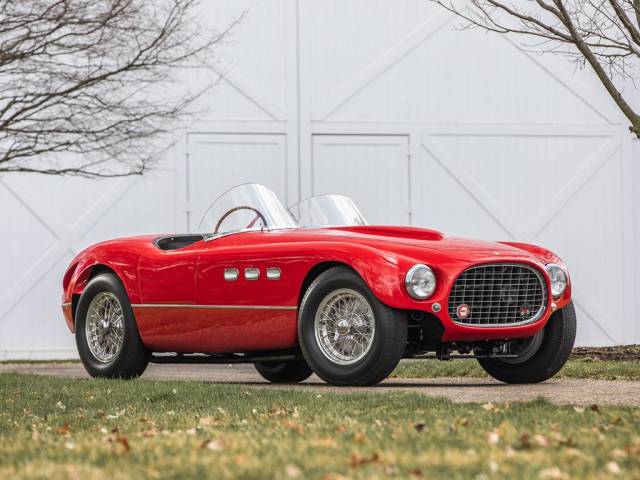
1953 | Ferrari 340 MM Spider Vignale
1953 Ferrari 340 MM Spider by Vignale
Create search alert
Let yourself be notified as soon as a listing is published that matches your search filters.
Create listing
Do you have a Ferrari 340 that you want to sell? Then create a listing now.
Create listingFerrari 340 Classic Cars: Prices & Market Values
History of the Ferrari 340
The Ferrari 340 story is rooted in the marque’s early attempts to build powerful grand tourers and racing sports cars. The model debuted at the 1950 Paris Motor Show as the 340 America, aimed specifically at wealthy US buyers. Enzo Ferrari and Luigi Chinetti, himself a triple Le Mans winner, worked together to ensure the 340 would make a significant impact across the Atlantic. This car was the first production Ferrari powered by the all-aluminium, long-stroke 4.1-litre V12 engine engineered by Aurelio Lampredi, an engine with direct lineage to Ferrari’s 375 F1 Grand Prix car. Only 25 units of the 340 America were created, and many were soon bound for major endurance races, including Sebring and Le Mans. Throughout its brief production run, the 340 evolved and laid the technical groundwork for Ferrari’s dominance in both GT and sports car classes.
Model History
The 340 series splits into several key variants. The original 340 America was available as both coupe and open Barchetta, bodied by renowned Italian coachbuilders such as Touring Superleggera, Vignale, and Ghia, tailored for the road and racing. For the 1952 Carrera Panamericana, Ferrari developed the 340 Mexico—featuring a higher-compression Lampredi V12, and bodied by Vignale (three coupes, one spyder), intended for one of the world’s most demanding rally races. The 342 America followed in limited numbers (just six produced), with softer tuning and luxury features for civilian use. In 1953, Ferrari introduced the 340 MM for GT competition: ten built, with 300 PS from a large SOHC V12, and with considerable racing success, such as victories in the Giro di Sicilia and Mille Miglia.
Highlights
The Ferrari 340 series is defined by scarcity (production in the dozens per variant), a Lampredi V12 with motorsport pedigree, and top speeds exceeding 270 km/h depending on version. The Touring Superleggera Barchettas are especially admired for their styling and period racing exploits. All 340s can trace their technical prowess to direct F1-derived engineering, with specialist frames, rear solid axles, drum brakes, and triple Weber carburettors. The 340 America’s eligibility for today’s high-profile historic events, like the Mille Miglia Storico and Pebble Beach Concours, reassures collectors of its international significance.
Technical Data
Special Editions and Collectible Models
Unique and extremely limited variants define the 340 range. Only six open Barchettas by Touring Superleggera were made, each considered the pinnacle of period Ferrari design. The 340 Mexico, custom-built for the Carrera Panamericana (three Berlinettas, one Spyder), sits atop the rarity scale and showcases Giovanni Michelotti’s Vignale styling. The 342 America and 340 MM also exist in single-digit production numbers, making any 340-series model a major highlight in any Ferrari-focused collection.
Engine and Performance, Transmission and Handling
Performance in the Ferrari 340 is ruled by the Lampredi V12, capable of genuine Grand Prix-level output for the period. The 340 America was praised for being the fastest sports car available at the time, with strong acceleration and a 220 PS output. The 340 Mexico and MM versions increased output further, raising top speeds to 280 km/h and 300 PS, respectively. Handling is defined by a classic combination of a tubular chassis and live rear axle—raw but highly effective in racing contexts, particularly on endurance circuits and rallies. - 340 America: 220 PS, Touring Superleggera Barchetta and closed versions—famous for open-top elegance and racing use
- 340 Mexico: 280 PS, tailored for the Carrera Panamericana—3 Berlinettas, 1 Spyder (all by Vignale), very exclusive
- 340 MM: Up to 300 PS (SOHC V12), ultra-lightweight (900 kg), dominated the Giro di Sicilia and Mille Miglia
- 342 America: More refined, with lower engine output and luxury focus, only 6 built
Interior, Comfort, Exeterior and design
Bodywork came from top-tier Italian ateliers—Touring, Vignale, Ghia. Open Barchetta and closed coupe styles provided both racing and road-going character. Each is hand-built, with bespoke interiors, fine leathers, and artisanal metalwork. Unique coachbuilder details, such as Vignale’s pronounced wings or Superleggera’s slender proportions, set cars apart visually. Colour palettes and materials were often custom-chosen for the original buyer. Accessories were minimal on racing versions; luxury editions (342 America) featured upscale trim and more comfort options.
Other Features
Every Ferrari 340 can demonstrate actual period racing history, frequently appearing in concours events and historic races today owing to documented provenance from Ferrari factory records. Eligibility for prestigious events like Le Mans Classic, Mille Miglia Storico, and Villa d’Este is almost universal.
Summary
The Ferrari 340 series, through a short but significant production run, encapsulates Ferrari’s early 1950s engineering, individual coachbuilder styling, and authentic race-bred performance. Nearly every chassis has a well-documented story, and all offer a direct link to motorsport milestones and automotive art.