- Motorcycle
- Kawasaki (24 offers)
Buy Kawasaki Motorcycle
Since 1960, Kawasaki has built motorcycles that push boundaries and redefine performance. From the revolutionary Z1 900 and the raw power of the two-stroke triples to the Ninja series that shaped the modern sportbike, Kawasaki remains a cornerstone of the Australian classic bike scene.
Search results
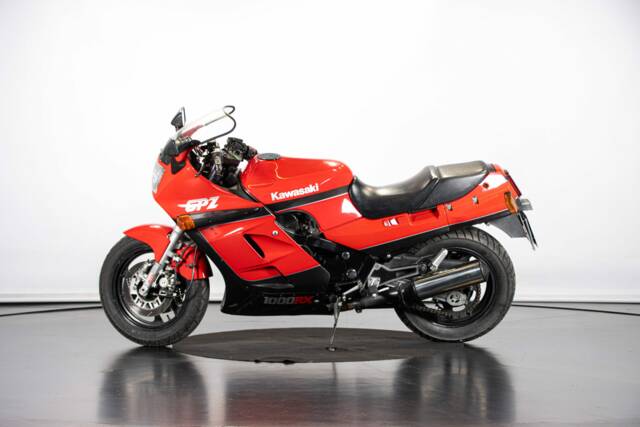
1986 | Kawasaki GPz 1000RX
Kawasaki GPZ 1000 RX

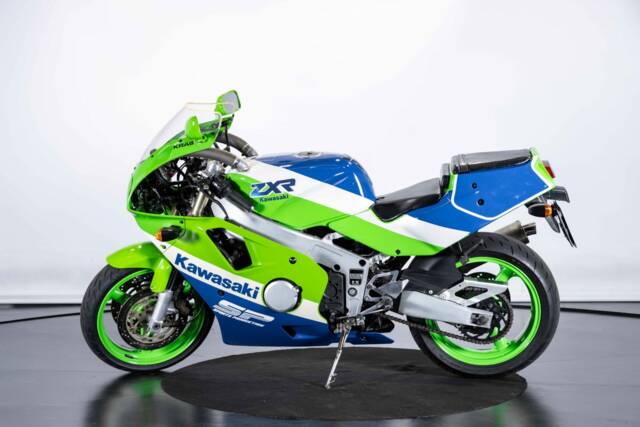
1991 | Kawasaki ZX-R 400
Kawasaki ZX-R 400
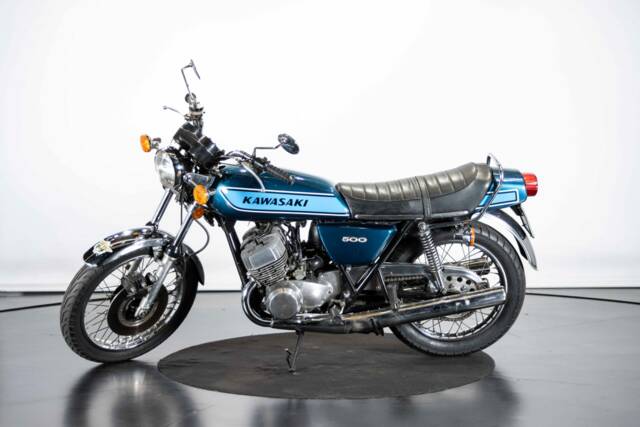
1976 | Kawasaki H1 500 Mach III
Kawasaki 500 MACH III
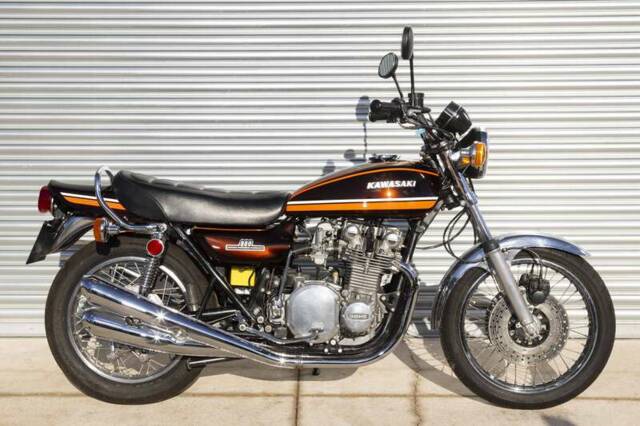
1976 | Kawasaki KZ 900
1976 Kawasaki KZ900 A4 903cc

Newsletter
The best Kawasaki listings, straight to your inbox
Get hand-picked Kawasaki listings, plus the best of cars, motorbikes, and auctions on Classic Trader — all in one place.
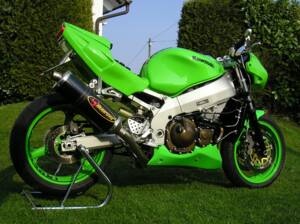
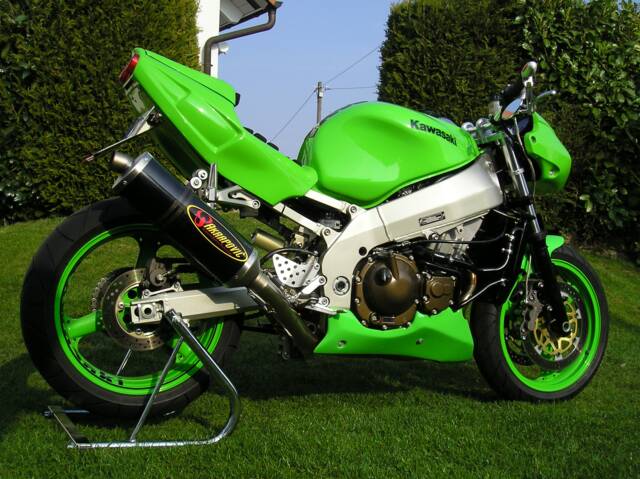
2001 | Kawasaki ZX-9R
Streetfighter conversion for the race track

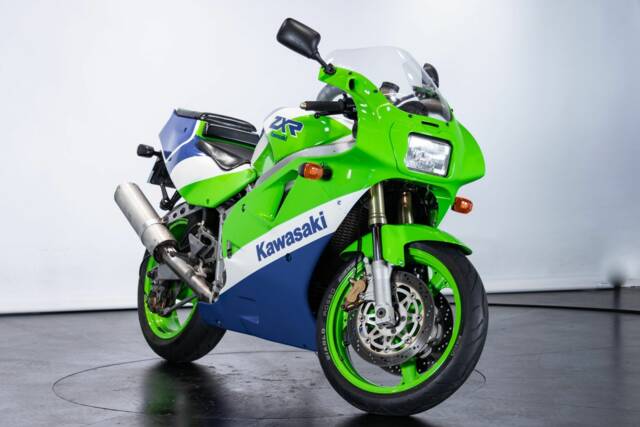
1990 | Kawasaki ZX-R 400
H1 Version - RARE FIRST SERIE !!
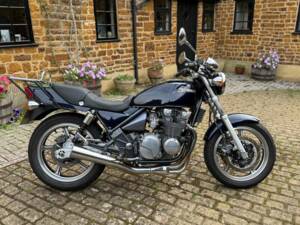
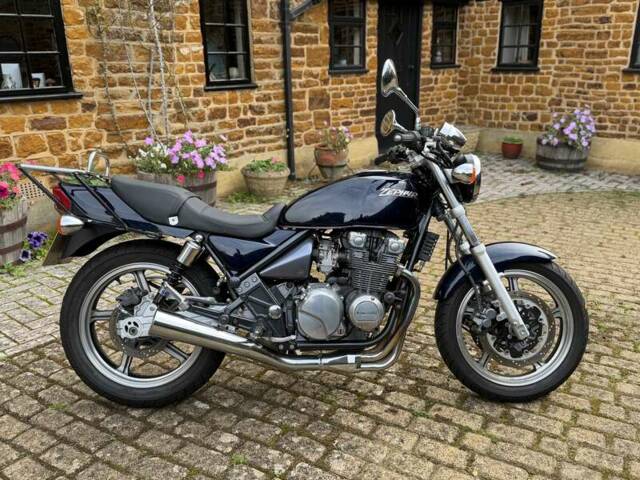
1991 | Kawasaki ZR 550 Zephyr
1991 Kawasaki ZR550 Zephyr 553cc
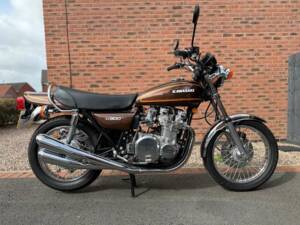
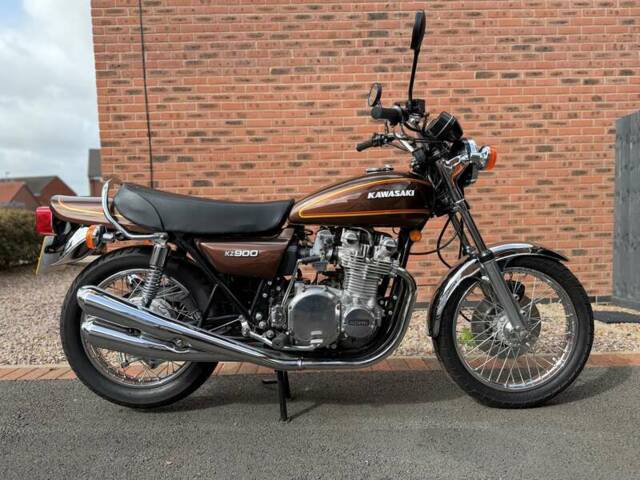
1976 | Kawasaki KZ 900
1976 Kawasaki KZ900 903cc
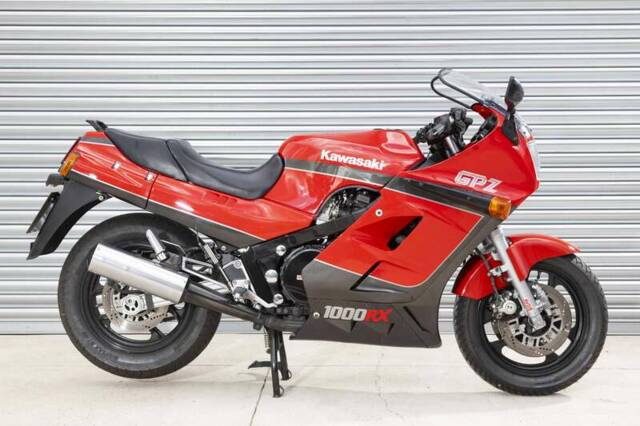
1987 | Kawasaki GPz 1000RX
1987 Kawasaki GPZ1000RX A2/3 997cc
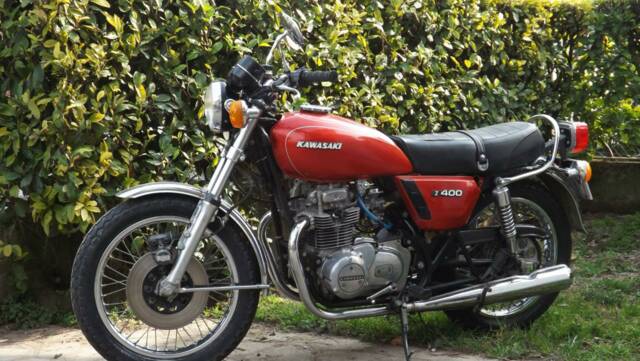
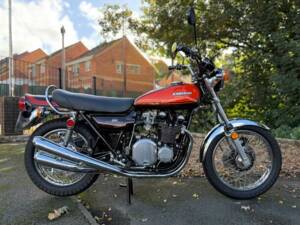
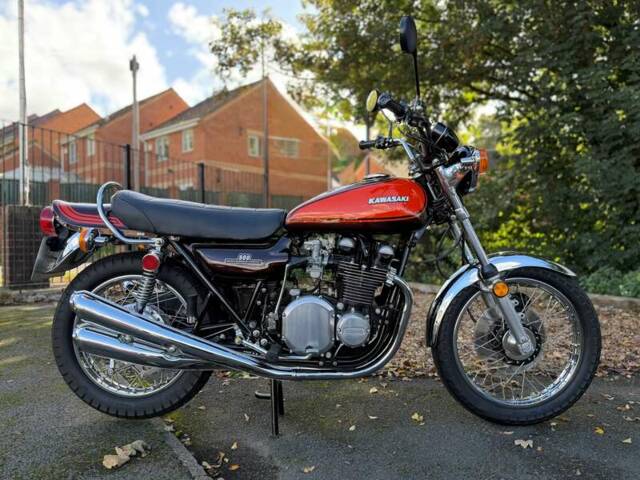
1972 | Kawasaki 900 Z1
1972 Kawasaki Z1 903cc
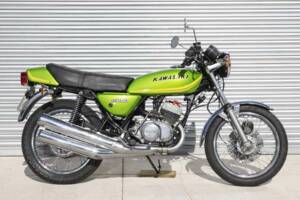
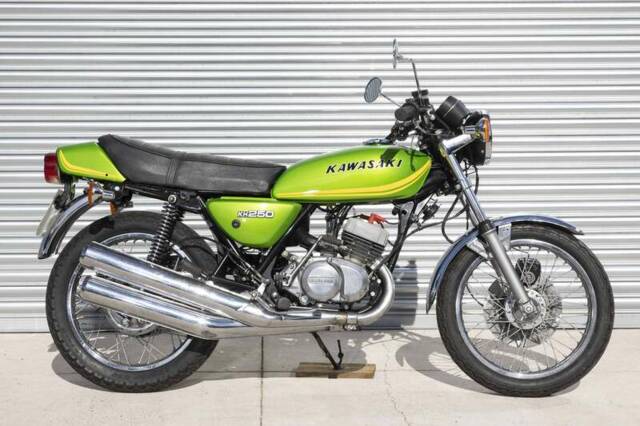
1977 | Kawasaki KH 250
1977 Kawasaki KH250 B2 249cc
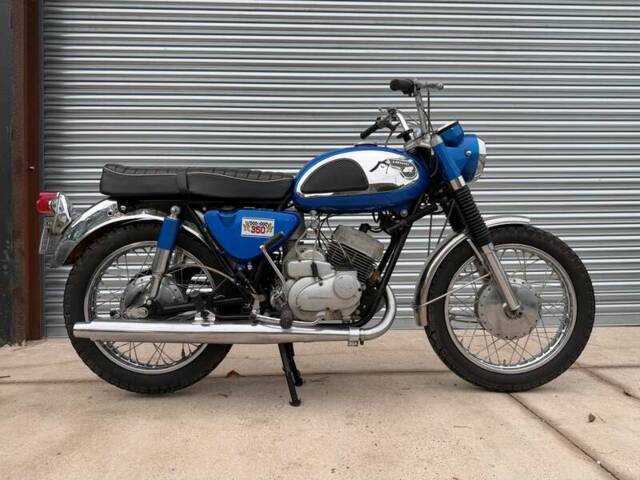
1967 | Kawasaki A 7 Avenger
1967 Kawasaki A7 Avenger 338cc
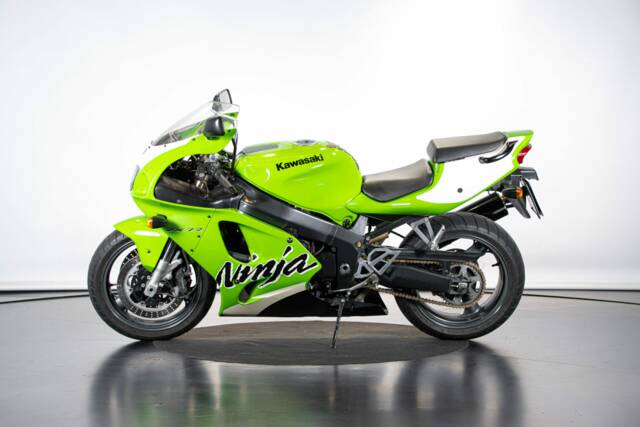
1999 | Kawasaki Ninja 750 ZX-7R
Kawasaki ZX-7R NINJA
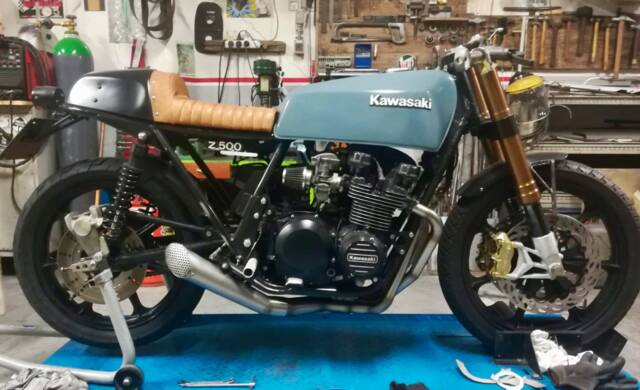
1980 | Kawasaki Z 500
KAWASAKI Z500 Special Café Racer
History & Heritage
Kawasaki Heavy Industries is a titan of Japanese engineering with roots stretching back to 1896. Founded by Shozo Kawasaki, the company initially focused on shipbuilding, locomotives, and aircraft engines. It wasn't until 1960 that Kawasaki entered the motorcycle market by acquiring Meguro, the only Japanese manufacturer at the time with the expertise to build 500cc machines. This acquisition provided the technical foundation for what would become one of the most aggressive and performance-oriented motorcycle brands in history.
The first true Kawasaki-branded motorcycle was the B8 125cc in 1961, a modest two-stroke. However, the brand's ambition was much larger. In 1966, the W1 650 arrived, a 50-hp four-stroke heavily inspired by British twins like the BSA A10. While the W1 established Kawasaki's presence in the large-capacity market, it was the 250 A1 Samurai (1967) that truly signaled the brand's future. This twin-cylinder two-stroke was fast, loud, and uncompromising—traits that would define Kawasaki for decades.
By the late 1960s, Kawasaki was ready to challenge the world. The 500 H1 Mach III (1969) was a revelation. Its three-cylinder two-stroke engine produced 60 hp, propelling it to a 13-second quarter-mile time. It was brutally fast but featured a chassis that struggled to keep up with the engine's power, earning it the notorious nickname "The Widowmaker." Despite, or perhaps because of, its dangerous reputation, the H1 became a cult icon, followed by the even more powerful H2 750 Mach IV in 1972.
The year 1972 also saw the release of the Z1 900, a motorcycle that changed everything. Developed under the internal code name "New York Steak," the Z1 featured a 903cc DOHC inline-four engine producing 82 hp. It was the most powerful and fastest production motorcycle of its time, comfortably eclipsing Honda's CB750. The Z1 wasn't just fast; it was reliable and well-engineered, setting the standard for the "Universal Japanese Motorcycle" (UJM) superbike. Over 85,000 units of the Z-series were produced through 1977, including the Z1-A, Z1-B, and the KZ900.
In 1984, Kawasaki redefined the sportbike category again with the GPZ900R, the first to carry the "Ninja" name. It featured a liquid-cooled 16-valve engine and a top speed of 247 km/h, dominating the Isle of Man TT and achieving global fame as the bike ridden by Tom Cruise in "Top Gun." The Ninja name became synonymous with Kawasaki's racing DNA and continues to lead the brand's sportbike lineup today.
Other significant milestones include the Z1300 (1979), a massive 1300cc six-cylinder "monster," and the Zephyr series (1990), which sparked the modern retro-naked trend. In Australia, these models found a dedicated following, supported by a strong network of enthusiasts and a culture that appreciates the raw, mechanical honesty of classic Japanese engineering.
Highlights & Features
Kawasaki motorcycles have always been defined by their "engine-first" philosophy. While other manufacturers focused on balance or comfort, Kawasaki often prioritised sheer horsepower and top-end speed.
The Z1 900 remains the ultimate collector's Kawasaki. It was the first mass-produced DOHC four-cylinder in the 900cc class, offering a level of performance and sophistication that was previously unavailable to the general public. Its engine is legendary for its robustness, often serving as the basis for drag racing and endurance machines.
The Two-Stroke Triples (H1 500, H2 750) represent the wild side of the 1970s. These bikes are famous for their "light switch" power delivery—nothing happens until the revs hit the power band, and then everything happens at once. For Australian collectors, these bikes offer an visceral experience that modern machinery simply cannot replicate.
The GPZ900R Ninja was a technological tour de force. It introduced liquid cooling and a compact chassis design that allowed for better aerodynamics and handling. It was the bike that forced the rest of the "Big Four" (Honda, Yamaha, Suzuki) to rethink their approach to sportbike design.
Key Features across the range:
- DOHC Engines: Kawasaki was a pioneer in bringing Double Overhead Cam technology to the masses.
- Aggressive Styling: From the four-into-four exhausts of the Z1 to the sharp fairings of the Ninja, Kawasaki bikes look fast even when standing still.
- Kawasaki Green: While early models used various colours, the "Lime Green" racing livery became an iconic brand identifier in the 1980s.
- Reliability: Despite their high performance, Kawasaki's four-stroke engines are known for their longevity if properly maintained.
Technical Data
Example: Kawasaki Z1 900 (1972-1973)
Example: Kawasaki H1 500 Mach III (1969-1975)
Example: Kawasaki GPZ900R Ninja (1984-2003)
Market Overview & Buying Tips
The Australian market for classic Kawasaki motorcycles is vibrant and highly competitive. Prices have seen a significant upward trend since 2020, driven by a combination of local nostalgia and global demand. Australian buyers often look to local auctions like Shannons or Grays, but many also keep an eye on international markets in Japan and the USA.
Z1 900 (1972-1973): These are the "holy grail" models. Early production units with frame numbers between Z1F-00001 and Z1F-19999 are the most prized. In Australia, a high-quality, original Z1 can fetch between A$35,000 and A$55,000. Exceptional examples with matching numbers and original "Jaffa" (Brown/Orange) paint have been known to exceed these figures at premium auctions.
Z1-A, Z1-B, and Z900 (1974-1976): These models are more common but still highly desirable. Expect to pay between A$20,000 and A$35,000 for a well-maintained example. The Z900 A4, often seen in "Diamond Green," is a popular choice for those who want the Z1 experience with slightly improved reliability and handling.
H1 500 & H2 750 Triples: The market for two-stroke triples is niche but intense. An H2 750 in good condition typically ranges from A$25,000 to A$40,000. The H1 500 is slightly more affordable, usually sitting between A$15,000 and A$25,000. Originality is key here, especially regarding the exhaust systems, which are prone to rust and expensive to replace.
GPZ900R Ninja: Early A1 and A2 models (1984-1986) are gaining traction as "modern classics." A clean, original Ninja can cost between A$8,000 and A$15,000. Later models from the 1990s are more affordable, often found for A$5,000 to A$8,000, offering excellent value for money.
Z1300 Six-Cylinder: These "monsters" have a dedicated following. Prices vary wildly based on condition, but a good runner will typically cost between A$12,000 and A$20,000. Maintenance on these complex machines can be costly, which is reflected in the market price.
What to look for when buying in Australia:
- Frame and Engine Numbers: For the Z1, ensure the frame number starts with Z1F. Matching numbers (within a few hundred units) are essential for top-tier investment value.
- Import History: Many classic Kawasakis in Australia were imported from Japan or the USA in the 1990s and 2000s. Check for proper import documentation and compliance plates.
- Originality vs. Restoration: A bike with original paint and parts is almost always worth more than a restored one. If restored, ask for documentation of the work and the source of replacement parts.
- Rust and Corrosion: Australia's coastal climate can be harsh. Check the frame, inside the fuel tank, and the chrome work for signs of "pitting" or deep rust.
- Engine Health: Listen for cam chain noise in Z-models. For two-strokes, a compression test is mandatory to ensure the pistons and rings are in good health.
- Parts Availability: While parts for Z1s are relatively easy to find via specialists like Z1 Enterprises (USA) or Doremi Collection (Japan), shipping costs to Australia can be significant. Factor in an additional 10-20% for shipping and potential GST on imports over A$1,000.
- The "Australian Context": Australia has a strong history of "period correct" modifications. While a completely stock bike is best for investment, a bike with period-correct performance upgrades (like Mikuni smoothbore carbs or Kerker exhausts) can still be highly desirable to the right buyer.
Riding Experience & Performance
Riding a classic Kawasaki is an exercise in mechanical engagement. These are not "set and forget" machines; they require an active rider who understands their quirks and characteristics.
The Z1 900 Experience: The Z1 feels surprisingly modern in its power delivery. The engine is smooth, with a broad spread of torque that makes it easy to ride in modern traffic. However, the chassis reminds you of its age. At low speeds, it feels heavy (230 kg), and at high speeds, the frame can feel "flexy" through fast corners. The brakes require a firm hand, but they are adequate for spirited road riding. It is a gentleman's express—powerful, dignified, and capable of long-distance touring.
The "Widowmaker" (H1/H2): Riding a triple is a different world. The sound is a frantic, metallic cackle, and the smell of two-stroke oil is ever-present. Below 5,000 rpm, the bike feels sluggish. Once it hits the power band, the acceleration is violent. The front wheel gets light, and the bike wants to charge forward. The handling is notoriously "loose," and the brakes are often described as "suggestions" rather than stoppers. It is an adrenaline-fueled experience that demands respect and skill.
The Ninja GPZ900R: The Ninja was the first bike that truly felt like a modern sportbike. The riding position is tucked but not overly aggressive, and the fairing provides excellent wind protection. The engine is seidenweich (silky smooth) and loves to rev. It handles with a precision that was unheard of in 1984. Even today, a well-sorted GPZ900R can keep up with much newer machinery on a twisty road. It is the perfect "usable" classic.
General Characteristics: Classic Kawasakis are known for their "mechanical" feel. You feel every vibration, hear every click of the gearbox, and smell the engine as it warms up. They are honest machines that reward smooth inputs and regular maintenance. In the Australian heat, keeping an eye on oil levels and cooling systems (for the Ninja) is essential, but generally, these bikes are over-engineered and incredibly tough.
Design & Philosophy
Kawasaki's design philosophy has always been about presence. They didn't want their bikes to blend in; they wanted them to dominate.
The Z1 900 design is a masterpiece of 1970s aesthetics. The "teardrop" fuel tank, the elegant tail cowl, and the iconic four-into-four chrome exhausts create a silhouette that is instantly recognisable. The "Jaffa" colour scheme (Orange and Brown) is perhaps the most famous, but the "Yellow Ball" and "Blue/Gold" schemes are equally stunning. The design was handled in-house, focusing on a muscular, purposeful look that reflected the engine's power.
The Two-Stroke Triples followed a "form follows function" approach. They were slim, lightweight, and stripped of any unnecessary weight. The asymmetrical exhaust layout (two on the right, one on the left) gave them a unique, slightly off-balance look that added to their rebellious character.
The GPZ900R Ninja marked a radical shift. It was one of the first bikes designed with extensive wind tunnel testing. The full fairing, integrated indicators, and sharp lines were futuristic in 1984. It moved away from the "naked" look of the 70s towards the "fully clothed" sportbike aesthetic that would dominate the 80s and 90s.
Design Evolution:
- 1970s: Chrome, wire wheels, and exposed engines. Focus on elegance and "superbike" stature.
- 1980s: Aerodynamics, alloy wheels, and liquid cooling. The birth of the "Ninja" identity.
- 1990s: The "Retro" revival with the Zephyr series, returning to the classic lines of the Z1 but with modern brakes and suspension.
In Australia, the design of these bikes is often celebrated at "Show and Shine" events. The level of detail in a factory-correct restoration, from the specific shade of green to the correct "Denco" or "Kerker" stickers, is a testament to the passion of the local community.
Racing, Culture & Pop Culture
Kawasaki's reputation was forged on the racetrack. In Australia, the brand has a long and successful history in production racing and superbike championships.
Racing Heritage: The GPZ900R's success at the Isle of Man TT is legendary, but Kawasaki also dominated the AMA Superbike championship in the US with riders like Eddie Lawson. In Australia, the "Green Meanies" were a constant threat in the Castrol 6-Hour and other endurance races. This racing success directly translated to showroom sales, as buyers wanted the same performance they saw on the track.
Pop Culture: No discussion of Kawasaki is complete without mentioning "Top Gun." The sight of Maverick racing his GPZ900R against a fighter jet cemented the Ninja's place in global pop culture. It wasn't just a motorcycle; it was a symbol of speed, rebellion, and cool. This association remains strong today, with many Australian collectors seeking out "Top Gun" spec Ninjas.
The Australian Scene: Australia has a thriving classic Kawasaki community. Clubs like the Kawasaki Z Owners Club provide a wealth of knowledge and support for owners. Events like the Barry Sheene Festival of Speed and various classic track days see these old machines being ridden as they were intended—fast and hard.
Importing and Shipping: For many Australian enthusiasts, the search for the perfect Kawasaki leads overseas. Importing a bike over 25 years old is relatively straightforward under the "concessional" import scheme, but it requires careful planning. Shipping from Japan or the USA can cost between A$2,000 and A$4,000, and you must account for Australian Border Force requirements, including asbestos testing and biosecurity cleaning. Despite these hurdles, the desire for a "clean" Japanese import remains high.
Summary
Kawasaki motorcycles of the classic era—the Z1, the H-series triples, and the original Ninja—are more than just old bikes. They are milestones in the evolution of the motorcycle. They represent a time when engineers were given the freedom to chase performance above all else, resulting in machines that were often faster than the tyres and brakes of the day could handle.
For the Australian collector, a classic Kawasaki offers a unique blend of investment potential and riding thrills. Whether it's the dignified power of a Z1 900, the terrifying acceleration of an H2 750, or the precision of a GPZ900R, these bikes provide an experience that is deeply rewarding.
When buying, the golden rules apply: research, verify, and inspect. Focus on originality, matching numbers, and a clear history. While the cost of entry is rising, the joy of owning a piece of "Team Green" history is priceless. Classic Trader is your gateway to finding these legends, connecting you with verified sellers and a global marketplace of the finest Kawasaki motorcycles available. Find your dream Kawasaki today and discover why the "Good Times" brand continues to inspire riders across Australia and the world.