- Motorcycle
- Kawasaki
- Kawasaki A 1 Samurai (0 offers)
Kawasaki A 1 Samurai classic bikes for sale
The Kawasaki A 1 Samurai captures the essence of 1960s two-stroke performance, blending a distinctive engine concept with striking styling. This motorcycle stands out as a statement piece from the early era of Japanese sport bikes, attracting collectors and fans with its unique technology and characteristic design.
Search results
Currently, there are no matching listings for your search.
Create search alert
Let yourself be notified as soon as a listing is published that matches your search filters.
Create listing
Do you have a Kawasaki A 1 Samurai that you want to sell? Then create a listing now.
Create listingKawasaki A 1 Samurai listing references from Classic Trader
Below you will find listings related to your search that are no longer available on Classic Trader. Use this information to gain insight into availability, value trends, and current pricing for a "Kawasaki A 1 Samurai" to make a more informed purchasing decision.
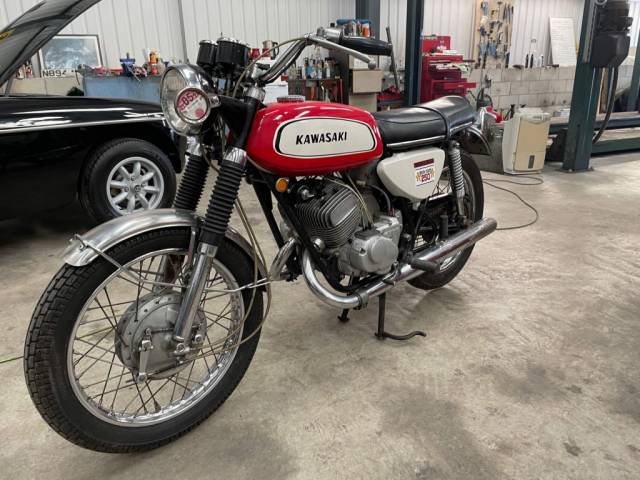
1979 | Kawasaki A 1 Samurai
1969 Kawasaki 250 Samurai A1

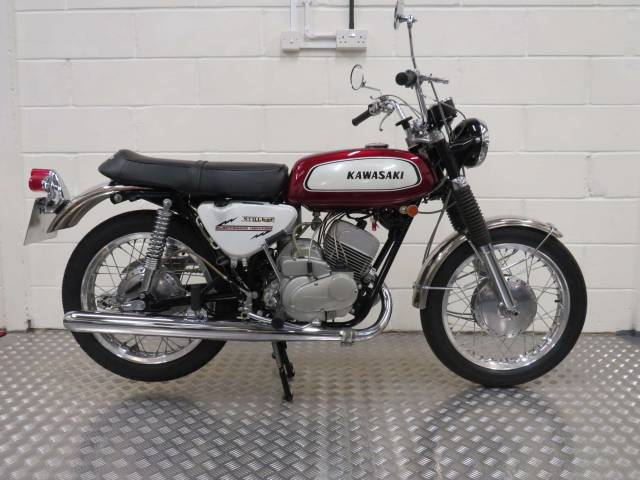
1970 | Kawasaki A 1 Samurai
1970 Kawasaki A1 Samurai 247cc
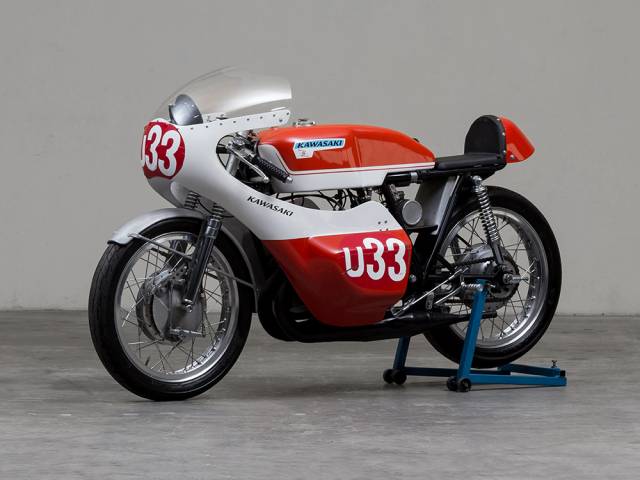
1967 | Kawasaki A 1 Samurai
Classic Cars & Racing Bikes, 08.12.2016, 703

Create search alert
Let yourself be notified as soon as a listing is published that matches your search filters.
Create listing
Do you have a Kawasaki A 1 Samurai that you want to sell? Then create a listing now.
Create listingKawasaki A 1 Samurai Classic Motorbikes: Prices & Market Values
History of the Kawasaki A 1 Samurai
In the late 1960s, Kawasaki entered the spotlight of motorcycle manufacturing with the A 1 Samurai, introduced in 1967. As one of Kawasaki’s first mass-produced high-performance bikes, the A 1 Samurai helped define the Japanese approach to lightweight, fast motorcycles for the Western market. The Samurai set itself apart with its 250 cc air-cooled two-stroke parallel twin, showcasing Kawasaki’s focus on combining cutting-edge engine development and approachable performance. The A 1 Samurai emerged in a period marked by rapid advancements in engine and chassis technology, and contributed to Kawasaki’s reputation for adventurous engineering and reliable build quality.
Model history
The A 1 Samurai followed Kawasaki’s initial foray into modern motorcycles and represented a decisive step into the sport segment. Succeeded by the even more powerful A 7 Avenger in the late 1960s, the Samurai shared several concepts and design cues with its successors, establishing a lineage of compact, fast two-strokes leading up to the famous Kawasaki triples. The Samurai’s success laid the groundwork for Kawasaki’s aggressive expansion into the European and American motorcycle markets.
Highlights of the Kawasaki A 1 Samurai
The A 1 Samurai is celebrated for its rotary disc valve induction – an advanced intake technology for its time that enabled crisp throttle response and improved power throughout the rev range. Its lightweight chassis combined with a robust two-stroke engine made it a competitive option in the sport motorcycle sector of its era. The pronounced tank lines, distinctive side covers, and classic chrome accents underline the model’s 1960s heritage, making it visually unique among its peers.
Technical data
Special Editions and Collectible Models
No special limited editions of the A 1 Samurai are documented. However, well-preserved Samurai models with original paint and accessories or rare colour schemes tend to attract additional attention among enthusiasts.
Engine and Performance, Transmission and Handling
The A 1 Samurai’s parallel twin two-stroke engine is responsive and lively for its displacement, making it an engaging machine to ride for its time. The rotary disc valve intake system gives the engine a strong mid-range and more linear power delivery compared to conventional piston port two-strokes. Handling is agile thanks to the compact frame and low overall weight, but period suspension and drum brakes require attentive maintenance for optimal road manners. The 5-speed gearbox allows for good flexibility, but synching and cable adjustments are essential for crisp operation. The A 1 Samurai defines its category among vintage Kawasaki 250s. With 31 hp and its advanced two-stroke technology, it stands out in collector circles searching for genuine 1960s sport motorcycles.
Interior, Comfort, Exterior and Design
Visually, the A 1 Samurai displays the classic cues of 1960s Japanese motorcycles, with a teardrop-shaped tank, chrome fenders, and prominent badging. The concise, purposeful seat supports a sporting riding position, and the dual side exhausts add both symmetry and character to the bike’s silhouette. Colour options were typically bold for the period, complementing the vibrant chrome trim. Instruments consisted of an analogue speedometer and tachometer nestled in a simple cluster, encased by chrome. Accessories such as original mirror, indicators, and the signature Suzuki-style headlight bucket are features that set well-preserved examples apart.
Other relevant features
The A 1 Samurai represented Kawasaki’s early ambition to combine motorsport-inspired technology with day-to-day usability in midsize motorcycles. Surviving examples often come with period-correct accessories, including crash bars, luggage racks, or dealer-fitted seats, which can add to their historical appeal.
Summary
The Kawasaki A 1 Samurai remains a distinct chapter in the history of Japanese sport motorcycles. Its lively rotary disc twin, unique styling, and significance as a pioneer in Kawasaki’s line make it appealing for serious enthusiasts and collectors of classic two-strokes. With its strong representation both in supply and demand among classic Kawasaki listings, the Samurai offers a pure and unfiltered window into late 1960s motorcycling culture.