- Motorcycle
- Honda
- Honda CB 400 Four (1 offer)
Honda CB 400 Four classic bikes for sale
The Honda CB 400 Four stands as a benchmark for compact four-cylinder motorcycles from the mid-1970s, combining a high-revving inline engine with advanced features like a six-speed gearbox and a distinctive 4-into-1 exhaust. Enthusiasts value the model for its authentic riding experience, stylish design, and eligibility for classic registration.
Search results


1976 | Honda CB 400 Four
SUPERPREZZO – SUPERCONDIZIONI

Honda CB 400 Four listing references from Classic Trader
Below you will find listings related to your search that are no longer available on Classic Trader. Use this information to gain insight into availability, value trends, and current pricing for a "Honda CB 400 Four" to make a more informed purchasing decision.
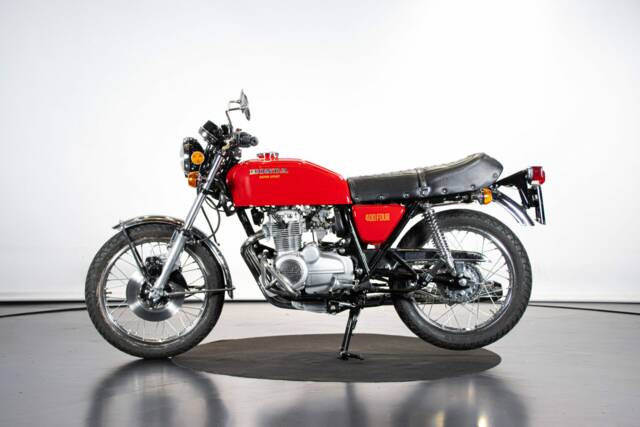
1975 | Honda CB 400 Four
Honda 400 SUPER SPORT
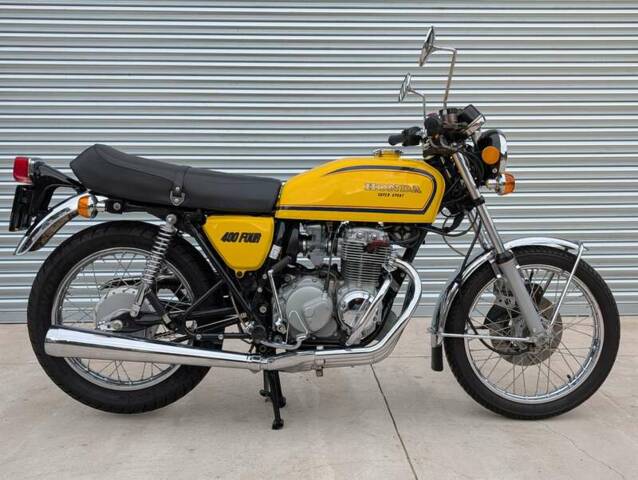
1978 | Honda CB 400 Four
1978 Honda CB400F Super Sport 408cc

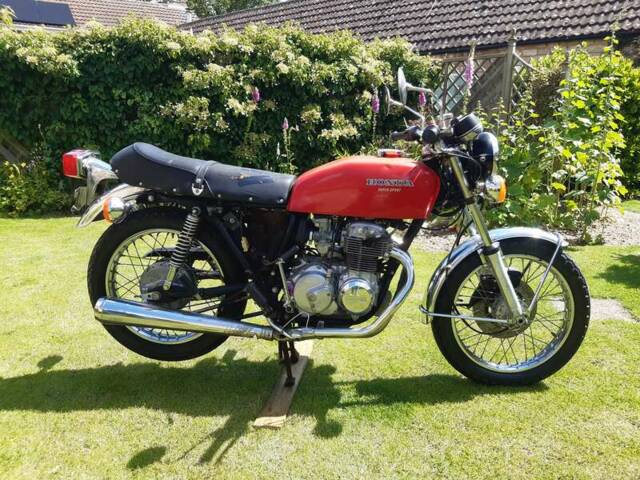
1975 | Honda CB 400 Four
1975 Honda CB400F Super Sport Project 408cc
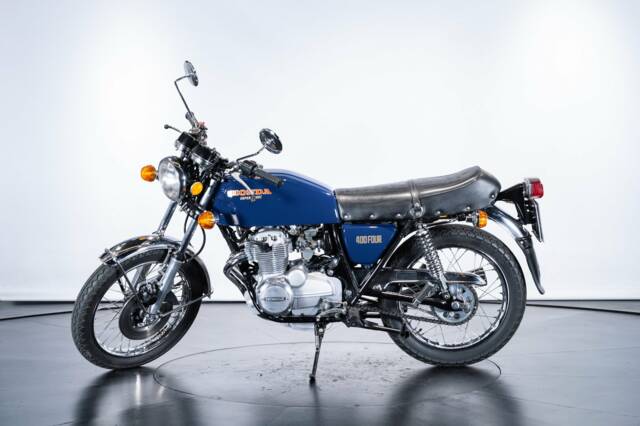
1975 | Honda CB 400 Four
<p>PRESENTE PAD. 26 - FIERA BOLOGNA - 24-27 OTTOBRE</p>
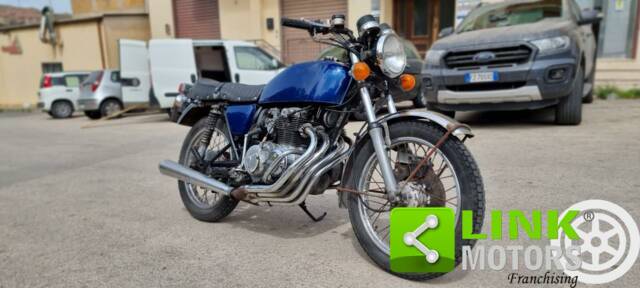
1976 | Honda CB 400 Four
HONDA CB 400 Four SUPERSPORT
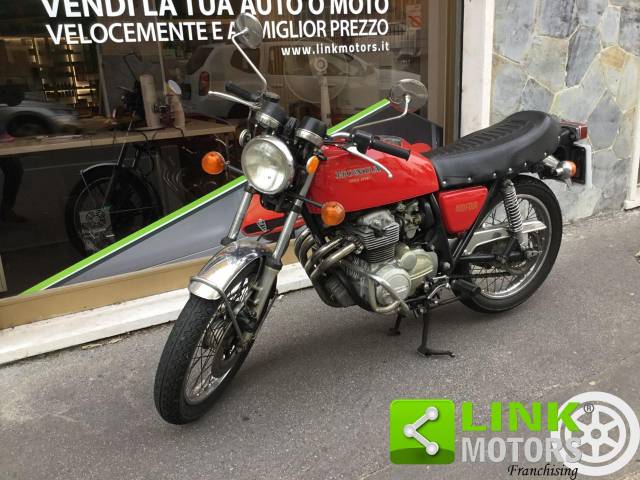
1976 | Honda CB 400 Four
HONDA CB 400 Four SUPER SPORT
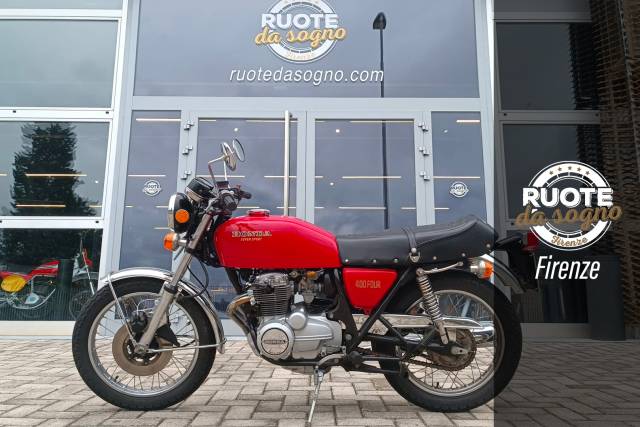
1976 | Honda CB 400 Four
-
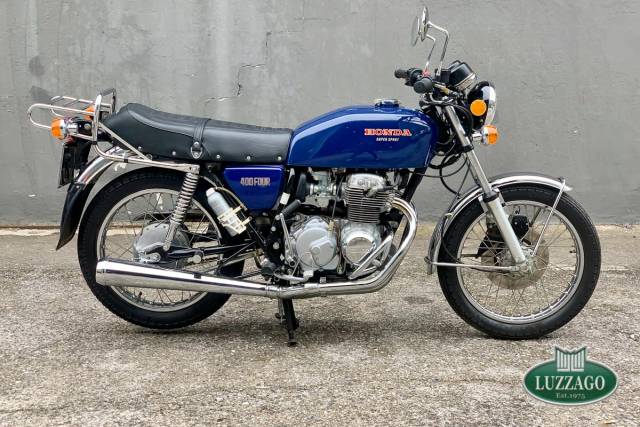
1976 | Honda CB 400 Four
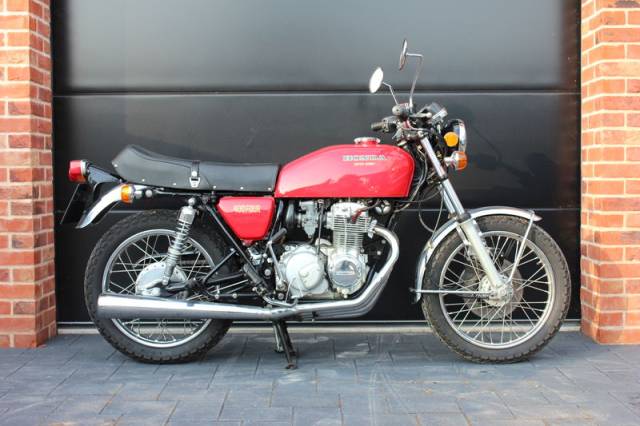
1976 | Honda CB 400 Four
1976 Honda CB400F 408cc
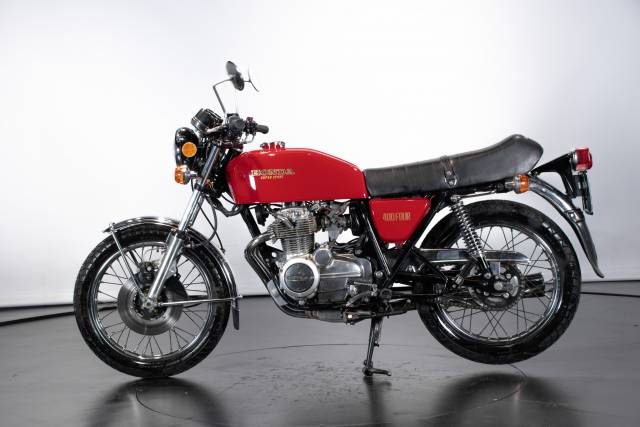
1975 | Honda CB 400 Four
-
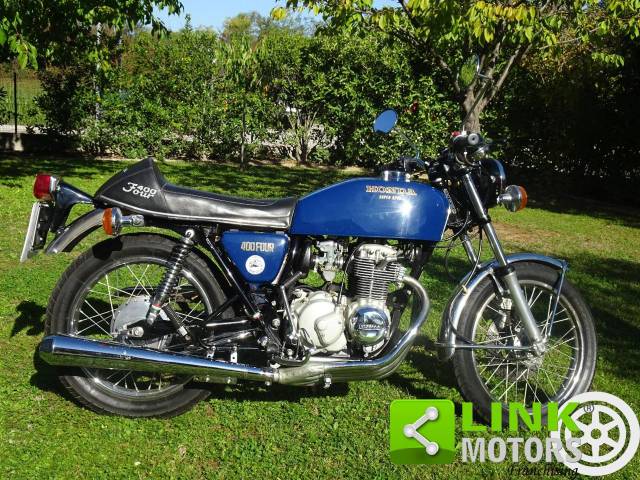
1977 | Honda CB 400 Four
HONDA CB 400 Four SUPER SPORT
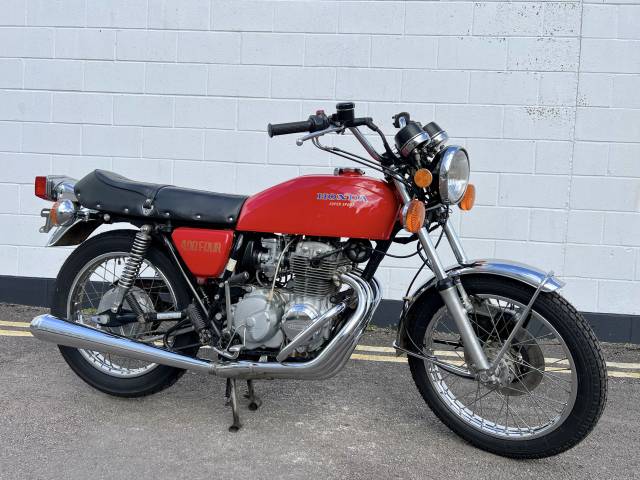
1975 | Honda CB 400 Four
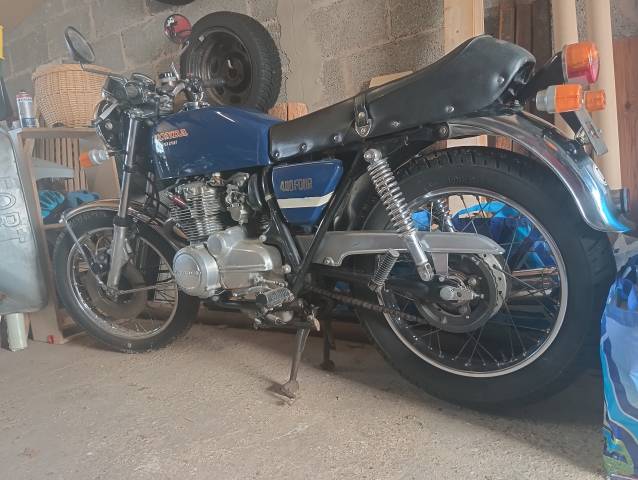
1976 | Honda CB 400 Four

Honda CB 400 Four Classic Motorbikes: Prices & Market Values
The market value of Honda CB 400 Four motorcycles is primarily determined by technical condition, originality, and mileage, as well as rarity, history, and documentation. A well-maintained, largely original vehicle with low, verifiable mileage and a complete history including expert reports and documentation generally achieves significantly higher prices than a comparable vehicle with deferred maintenance, extensive modifications, or an unclear provenance.
Honda CB 400 Four: Market Prices & Value Trends
Based on sales data from the Classic Trader marketplace, the Honda CB 400 Four market (notably 1975–1977 models around 37 hp) shows broadly stable pricing with a mild upward bias over the period from March 2021 to December 2025. Most observed asking prices cluster in the mid-range rather than at the extremes, suggesting steady demand for usable, correctly presented bikes rather than a speculative surge. In European adverts (with many examples appearing from Italy, plus occasional UK and German entries), a realistic current market range is typically about £3,300 to £7,000, with the bulk of transactions and advertised values sitting around £4,000–£6,500 depending on originality, restoration quality and documentation. Higher figures above this bracket appear less frequently and should be treated as condition- or provenance-led rather than a new baseline. For buyers, this means the CB 400 Four remains an accessible Japanese classic with strengthening support from nostalgia, parts availability and the appeal of the distinctive inline-four era, helping values to hold firm.
History of the Honda CB 400 Four
Introduced in 1975, the Honda CB 400 Four was Honda's answer to the growing demand for more refined, high-revving small-capacity motorcycles in Europe and beyond. The CB 400 Four was a direct successor to the CB 350 Four, benefiting from an increased bore for a total displacement of 408 cc. This allowed the bike to deliver a stronger mid-range and improved rideability. Production ran until 1978, during which time the CB 400 Four gained recognition among riders for its innovative engineering and aesthetics, earning classic status in motorcycle circles. The model's historical significance is also recognised by international vintage registers and has earned several awards as a 'Youngtimer' and classic motorcycle.
Model History
The CB 400 Four builds on the legacy of Honda’s CB 350 Four, marking a significant step up in both power and refinement due to the larger bore and improved engine characteristics. The main evolution involved the engine, which grew to 408 cc, paired with a smooth six-speed transmission. After 1978, the CB 400 Four was succeeded by newer mid-range CB models, but it retained a cult following due to its advanced features for the era and its compact, balanced chassis setup.
Highlights and Unique Features
The CB 400 Four's standout attributes include its four-cylinder inline, air-cooled engine, a sophisticated six-speed transmission, and the hallmark 4-into-1 exhaust that routes neatly along the frame to the right side. Double chromed mirrors, chrome wire wheels, and chrome mudguards underscore its classic appeal. Other factory details included a distinctive tear-drop shaped fuel tank, black leather seat, and the inclusion of model and engine badges.
Internationally recognised, the CB 400 Four regularly appears in vintage motorcycle registers (ASI, AAVS) and has been awarded distinctions like Targa Oro for its originality and preservation value.
Technical Data
Special Editions and Collectible Models
The CB 400 Four was available primarily in the standard version, but some market-specific variants offered differences in power output due to local regulations. Collectors often seek bikes with original components, especially models with rare preserved accessories or factory paintwork, as these are more likely to obtain classic certificates and awards from bodies like ASI or AAVS.
Weak Spots and Common Issues
No documented weak spots have been highlighted for the CB 400 Four in the supplied data. However, given its age and air-cooled engine design, regular inspection of the top-end oiling system, carburettors, and electrical connections is advised. Potential buyers should verify the originality of key components such as the exhaust, seat, and side covers, which are valued in classic registration and certification processes.
Engine and Performance, Transmission and Handling
The Honda CB 400 Four is powered by an air-cooled, inline four-cylinder engine renowned for its smooth running and lively power delivery. With its 27 hp output and high-revving nature, it provides a spirited ride within the mid-capacity segment. The six-speed transmission delivers close gear ratios, supporting strong acceleration and enabling flexible cruising across a variety of riding scenarios. Braking is managed by a front disc set-up and a rear drum, while the chassis was engineered for agility and direct handling, further enhanced by its compact frame and low centre of gravity. Highlighted: The 1975–1978 models featuring the original 4-into-1 exhaust and factory paintwork are particularly notable. These variants are often prized by collectors for the authenticity and preservation of stock features.
Interior, Comfort, Exterior and Design
Visually, the CB 400 Four is marked by its tear-drop-shaped fuel tank, chromed wire-spoked wheels, chrome fenders, and a signature black leather seat. The model also features chromed dual mirrors and pronounced side panels, usually bearing the model's designation. Designed primarily for two occupants, the comfort level reflects Honda’s mid-1970s refinement, while the classic exhaust routing on the right side and the minimalist, functional dash emphasise the pure riding focus of this motorcycle. Accessory options were minimal, highlighting the bike's purpose-driven approach and respecting the timeless design language of its era.
Other Noteworthy Features
The CB 400 Four’s eligibility for classic registration in several countries adds value for collectors, as does its frequent recognition in classic and youngtimer awards circuits. Original examples from between 1975 and 1978 often see favourable assessments from international historical motorcycle bodies.
Summary
Honda’s CB 400 Four represents a peak in mid-1970s small displacement four-cylinder motorcycle engineering, standing apart due to its performance, harmonious design, and collectability. Its technical innovations—such as the six-speed transmission and 4-into-1 exhaust—along with a dedicated following among classic enthusiasts, ensure continued appreciation and attention within the classic motorcycle community.