- Motorcycle
- Ducati
- Ducati 750 GT (0 offers)
Ducati 750 GT classic motorcycle for sale
The Ducati 750 GT, produced from 1971 to 1974 with a handful in 1978, marks Ducati’s entry into high-performance large-displacement motorcycles with its innovative 90° V-twin engine. Known for its agile handling, distinctive lines and an engineering pedigree that set the foundation for modern Ducati twins, the 750 GT stands as a milestone in motorcycle history.
Search results
Currently, there are no matching listings for your search.
Create search alert
Let yourself be notified as soon as a listing is published that matches your search filters.
Create listing
Do you have a Ducati 750 GT that you want to sell? Then create a listing now.
Create listingDucati 750 GT listing references from Classic Trader
Below you will find listings related to your search that are no longer available on Classic Trader. Use this information to gain insight into availability, value trends, and current pricing for a "Ducati 750 GT" to make a more informed purchasing decision.
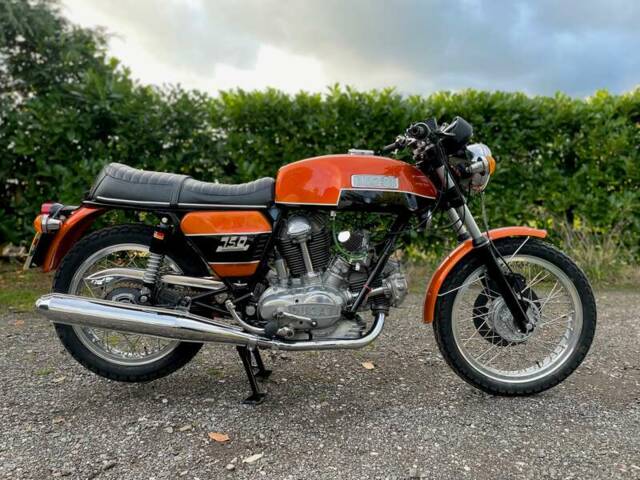
1974 | Ducati 750 GT
1974 Ducati 750 GT 748cc

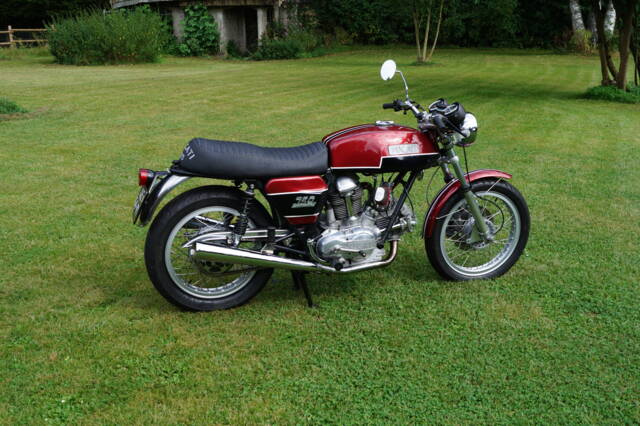
1974 | Ducati 750 GT

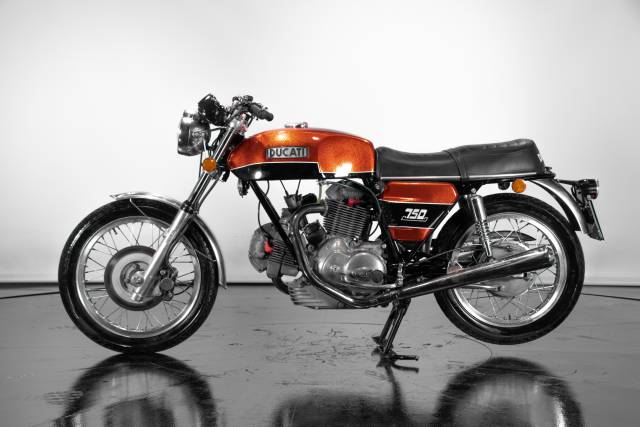
1973 | Ducati 750 GT
-

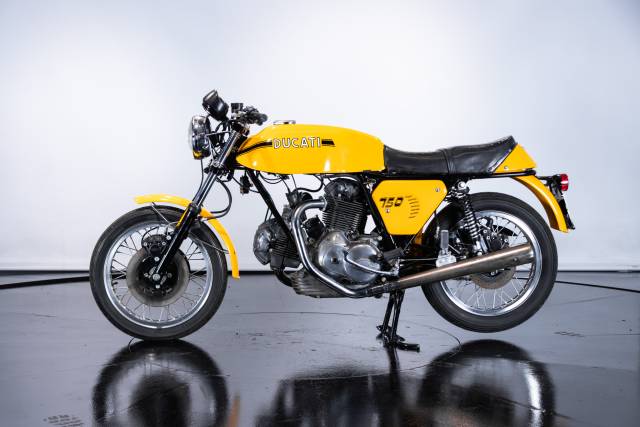
1974 | Ducati 750 GT
-
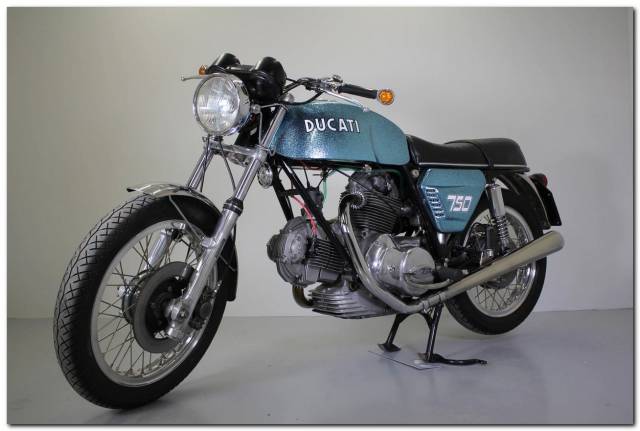
1972 | Ducati 750 GT
Ducati 750 GT

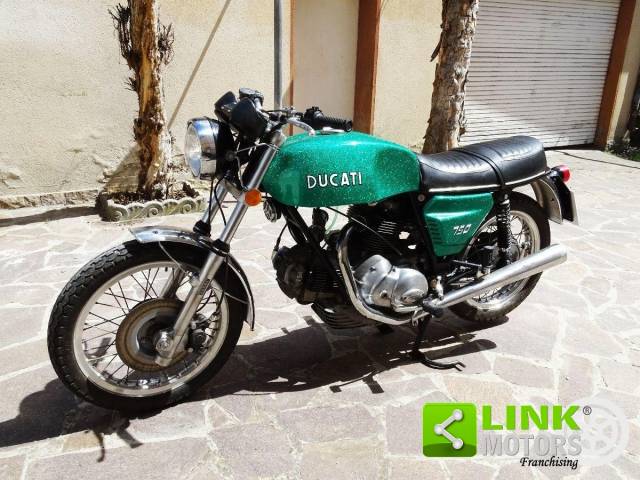
1973 | Ducati 750 GT
Ducati - 750 GT ANNO 1973
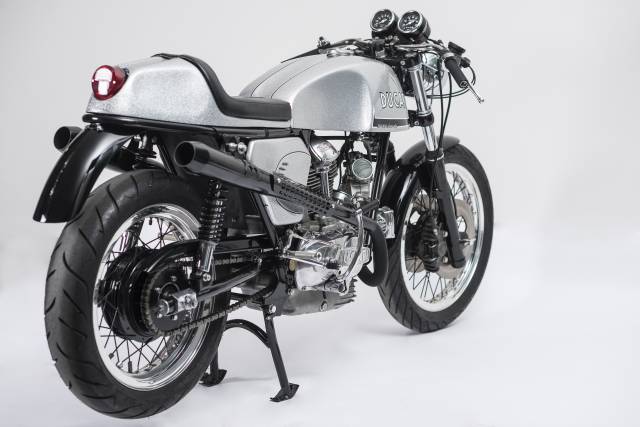
1972 | Ducati 750 GT
Un sogno a carter tondi e coppie coniche
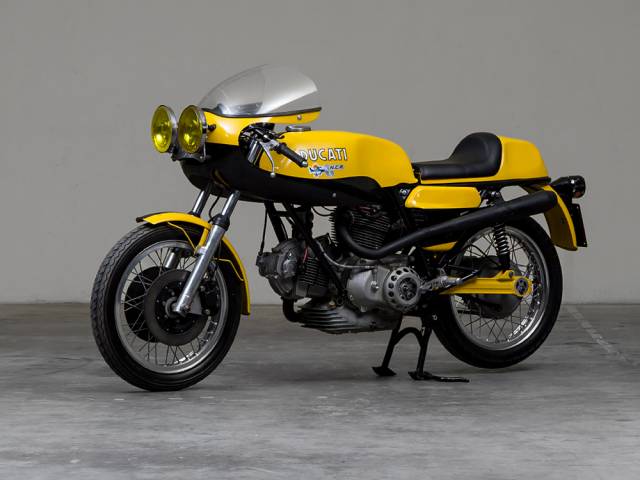
1971 | Ducati 750 GT
Classic Cars & Racing Bikes, 08.12.2016, 703
Create search alert
Let yourself be notified as soon as a listing is published that matches your search filters.
Create listing
Do you have a Ducati 750 GT that you want to sell? Then create a listing now.
Create listingDucati 750 GT Classic Motorbikes: Prices & Market Values
The market value of Ducati 750 GT motorcycles is primarily determined by technical condition, originality, and mileage, as well as rarity, history, and documentation. A well-maintained, largely original vehicle with low, verifiable mileage and a complete history including expert reports and documentation generally achieves significantly higher prices than a comparable vehicle with deferred maintenance, extensive modifications, or an unclear provenance.
Ducati 750 GT: Market Prices & Value Trends
Based on sales data from the Classic Trader marketplace, the Ducati 750 GT market in Europe shows a broadly stable to slightly firming trend over the period from May 2021 to December 2025. Most observed asking prices cluster in a realistic band of around £18,000 to £33,000, reflecting typical, usable classics rather than one-off extremes. A small number of higher-priced examples push beyond this, with an outlier around £45,000, which is best read as a top-end bike (or exceptional condition/provenance) rather than the norm. Recent data points in late 2025 still sit in the low-to-mid £20,000s, suggesting values have held up rather than cooled. For buyers, this implies a relatively mature market: good 1970s 750 GTs (notably 1972–1974 models around 51–52 hp) remain consistently sought-after, supported by the model’s early L-twin appeal, period-correct originality, and the shrinking supply of well-preserved, matching-spec machines.
History of the Ducati 750 GT
Introduced in 1971, the Ducati 750 GT was Ducati’s response to a competitive market dominated by British and Japanese motorcycles. Designed by Fabio Taglioni, this bike was pivotal: it featured the first Ducati 90° V-twin, which would become the brand’s engine signature. Only around 4,500 units were built until 1974 (with 40 more in 1978), making the 750 GT a rare sight today. The 750 GT established Ducati as a maker of high-performing motorcycles and laid the technical groundwork for successive Ducati legends. Its design and performance philosophy influenced future models such as the 750 Sport and 750 Super Sport.
Model History
Preceding the era of bevel-drive twins, the 750 GT had no direct predecessor in the Ducati lineup. Its round-case V-twin platform soon became the basis for the sportier 750 Sport and the racing-bred 750 Super Sport — the latter winning the 1972 Imola 200 with Paul Smart. The GT remains distinct for its blend of everyday rideability and authentic Ducati engineering. Its successors advanced performance but remained indebted to the 750 GT's architecture.
Highlights
The 750 GT made a name with its 90° V-twin (748 cc), 6-speed transmission, and steel tubular frame. Contemporary features included forged con-rods, lightweight pistons, large intake/exhaust valves, and period equipment such as Lockheed brakes, Conti exhausts, Borrani rims, and Marzocchi suspension parts. The original fibreglass fuel tank added character. With about 4,500 units built, its exclusivity is paired with genuine technical innovation.
Technical Data
Special Editions and Collectible Models
Among all Ducati 750 GTs, the extremely limited 1978 production run (just 40 units) stands out for collectors. The 750 GT also gave technical birth to the exclusive, racing-homologated 750 Super Sport (750 SS) — a hand-built series closely related mechanically to the 750 GT but further refined for road and track, with approximately 411 built between 1973 and 1974.
Engine, Transmission and Handling
The 750 GT’s 90° V-twin delivers smooth, linear power, supported by a robust six-speed manual transmission and a forgiving multi-plate clutch. Its acceleration, measured at around 5.5 seconds from 0–100 km/h, and a top speed close to 210 km/h, put it among the fastest road motorcycles of its era. The handling is noted for its agility and predictability, with a chassis tuned for both stable cruising and dynamic cornering. Marzocchi suspension, Borrani rims and Lockheed brakes create a cohesive riding experience that feels mechanically honest yet distinctively Italian. Notable technical siblings include the Ducati 750 Sport and 750 Super Sport, both evolved from the 750 GT’s round-case engine design. The 750 Super Sport, built as a run of approximately 411 units after Ducati’s Imola 200 victory, became famed among purists for its raw performance and race-derived technology.
Interior, Comfort, Exterior and Design
The 750 GT’s aesthetics are marked by a sculpted fuel tank in original fibreglass, flowing yet aggressive lines, and a harmonious integration of classic Italian design cues. Period-correct equipment includes Smiths instruments, CEV lighting, Tommaselli throttle controls, and a distinct Conti exhaust system. Details such as Metzeler tyres and Marzocchi forks capture 1970s European engineering. Seat comfort and ergonomics are genuine for the era – upright and purposeful, reflecting its grand touring intent.
Other features
Aspects like the original Borrani wire-spoke wheels, period look with dual tone paint options, and the bike’s foundational role in Ducati’s evolution from single-cylinder sportbikes to advanced twins, all increase the appeal of the 750 GT for connoisseurs who value provenance as much as performance.
Summary
The Ducati 750 GT is both a technical milestone and an enthusiast’s classic. Built in limited numbers between 1971 and 1974, it introduced the marque’s defining 90° V-twin layout, influencing generations of Ducati sport bikes. With riding dynamics prized for agility, period-correct features, and authentic 1970s design, the 750 GT remains a unique motorcycle for collectors who appreciate both its historical context and riding character.