- Car
- Wiesmann (3 offers)
Buy Wiesmann Classic Cars
Wiesmann builds hand-crafted German sports cars with old-school roadster charm and BMW engineering underneath. In Australia, their rarity, import rules and RHD scarcity make each example feel even more special.
Search results
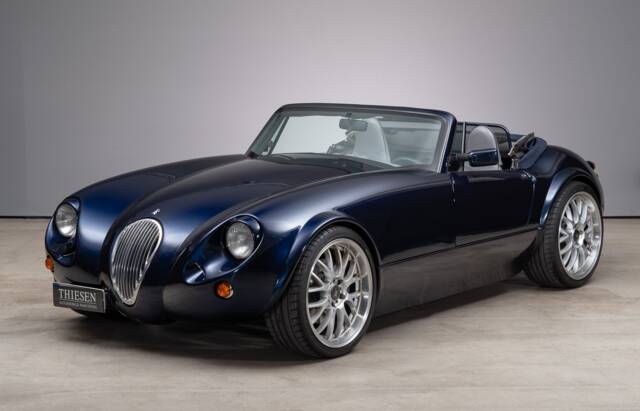
1999 | Wiesmann Roadster MF28
MF 28 - Roadster -

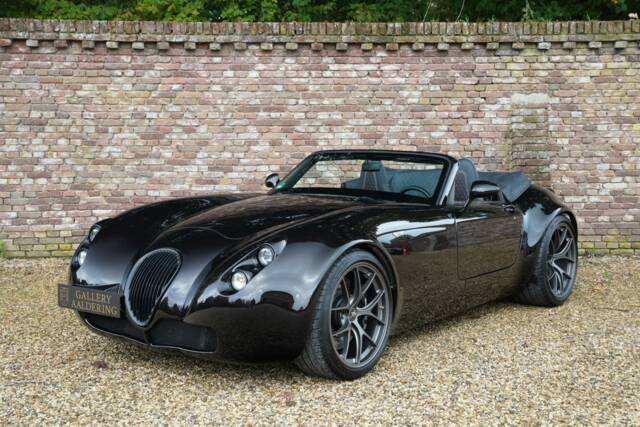
2007 | Wiesmann Roadster MF5
Wiesmann MF5 V10 "Prototype - A collector's item" Equipped with the "notorious" BMW M5 V10 (S85), One of the first built MF5 - Only 43 were manufactured,The vintage retro design with serious supercar performance,Well-maintained and serviced, Stunning condition throughout, A hand-stitched "Brown over Black" leather interior, "If BMW hadn't stopped producing the V10 - Wiesmann would still be using it today",A collector's item,

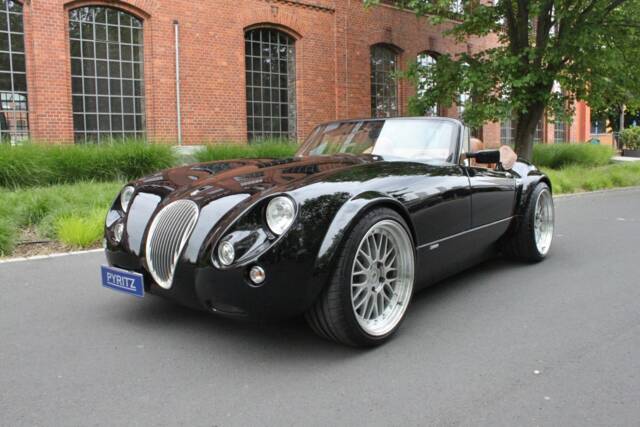
2004 | Wiesmann Roadster MF3
3. Hand
Wiesmann listing references from Classic Trader
Below you will find listings related to your search that are no longer available on Classic Trader. Use this information to gain insight into availability, value trends, and current pricing for a "Wiesmann" to make a more informed purchasing decision.
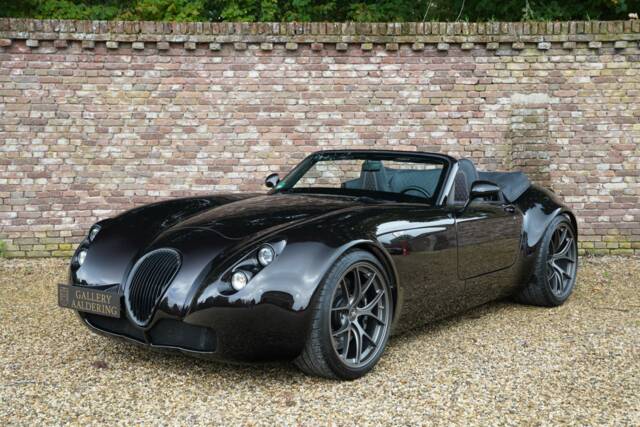
2007 | Wiesmann Roadster MF5
Wiesmann MF5 V10 "Prototype" Equipped with the "notorious" BMW M5 V10 (S85), One of the first built MF5 - Only 43 were manufactured, Stunning condition throughout, A hand-stitched "Brown over Black" leather interior, "Wiesmann - Manufaktur der Individualisten",
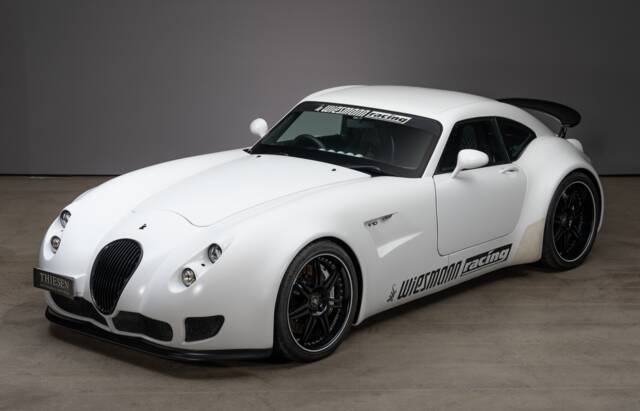
2011 | Wiesmann GT MF5 "20th Anniversary Edition"
GT MF5- “20 Anniversary Edition”- RHD
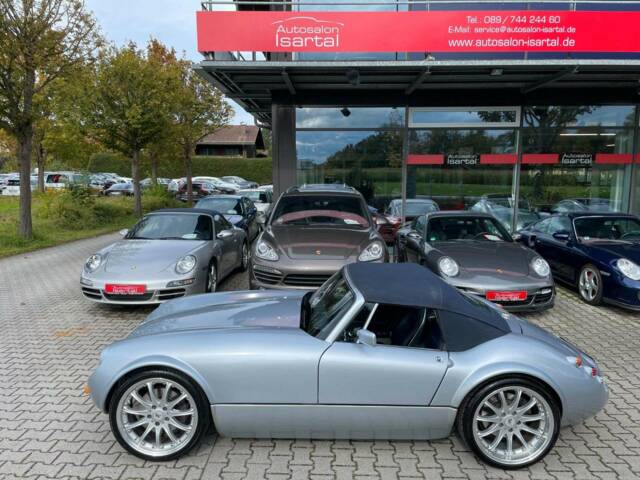
2000 | Wiesmann Roadster MF3
Wiesmann MF 3 Roadster -Schalter- toporiginal !
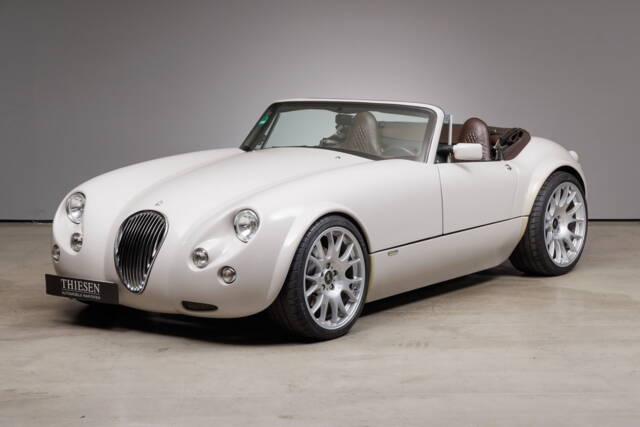
2005 | Wiesmann Roadster MF3
Roadster MF3
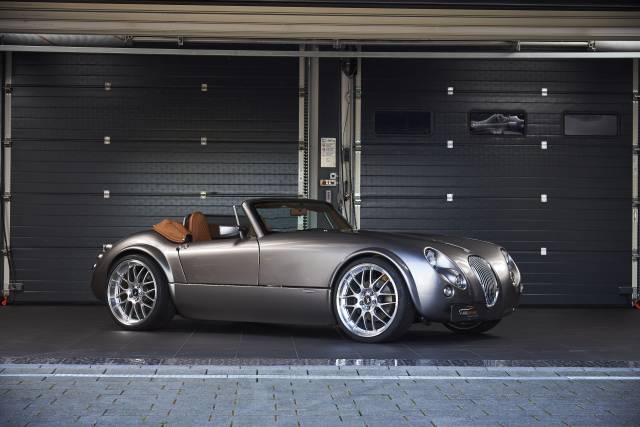
2006 | Wiesmann Roadster MF3
Maserati Nouvelari Metallic / Sonderleder / Geringe Laufleistung
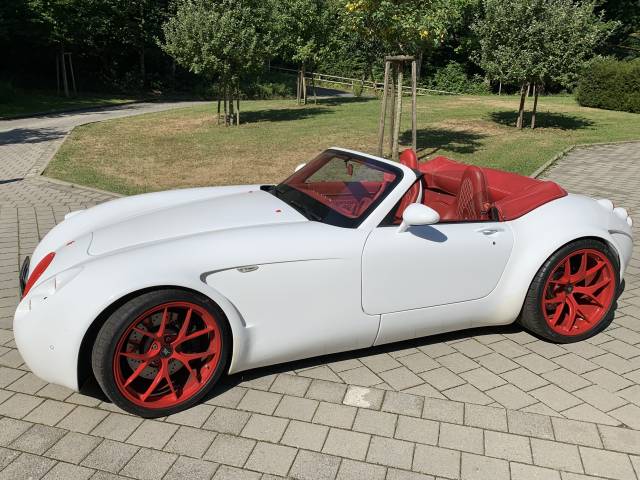
2010 | Wiesmann Roadster MF5
Wiesmann Roadster MF5 V10 1 out of 43
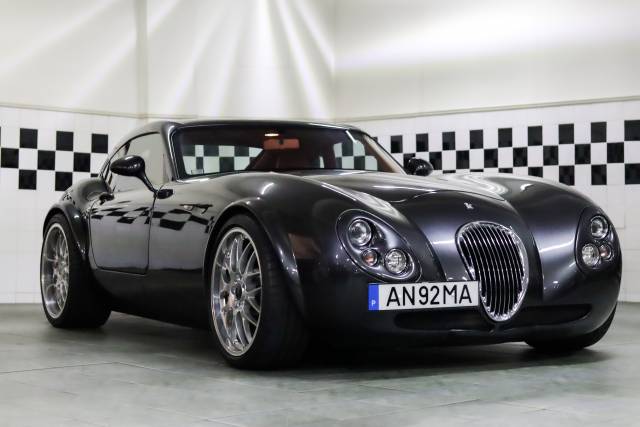
2008 | Wiesmann GT MF4
Great Condition

History
Wiesmann is one of those rare car makers that never tried to be everything to everyone. Founded in Dülmen, Germany, the brand built its reputation on a simple idea: combine the theatre of a traditional British-style sports car with the engineering discipline of BMW. The result was a family of hand-built two-seaters that looked timeless, drove with precision and felt deliberately personal in a world of mass production.
The story begins with brothers Friedhelm and Martin Wiesmann, who developed the company through the late 1980s and early 1990s. Their first production model, the MF30, arrived in the early 1990s and set the tone for everything that followed: a compact roadster, lightweight bodywork, a mostly bespoke cabin and reliable BMW mechanicals. From the start, Wiesmann aimed at enthusiasts who wanted something more individual than a Porsche, but less temperamental than many low-volume exotics.
The model that truly defined the marque was the MF3. With BMW straight-six power, a compact chassis and a shape that echoed classic roadsters without feeling nostalgic for its own sake, the MF3 became the name most collectors associate with Wiesmann today. Its long production run made it the most recognisable entry point into the brand, and it remains the model many buyers search for first.
Wiesmann then expanded upwards with the GT MF4, a closed-coupé interpretation that gave the brand a more serious grand touring personality. The MF4 showed that Wiesmann could move beyond open-top weekend cars and build something capable of longer journeys, higher speeds and broader appeal. Later came the Roadster MF4, which added more muscle and a more contemporary V8 character.
At the top sat the MF5, the most extreme Wiesmann of the classic era. Its BMW-derived V10 and later turbocharged variants pushed the little German coachbuilder into near-supercar territory. Production always remained tiny, and that scarcity is now a huge part of the appeal. Even before the company’s insolvency in 2014, Wiesmann had already earned a reputation as a maker of highly personal machines rather than broad-market products.
For Australian buyers, the story is slightly different from Europe. Wiesmann was never a mainstream local brand, so most examples in Australia are imports, personal acquisitions or cars brought in by dedicated enthusiasts. That rarity adds cachet, but it also means prospective owners need to understand import approvals, compliance work and state-by-state registration rules before they fall in love with a listing.
Highlights
What makes Wiesmann stand out is not one single feature, but the way several strong ideas come together.
First, there is the design language. Every Wiesmann uses a long bonnet, short rear deck, round headlamps and a low stance that clearly nods to classic British sports cars. Yet it avoids imitation. The shape feels familiar, but the proportions are tighter, cleaner and more engineered than most retro-inspired cars.
Second, there is the construction philosophy. Wiesmann used lightweight bodywork, a rigid chassis and BMW engines and drivetrains, so owners get a rare mix of artisan coachbuilding and proven mechanical parts. That matters for buyers, because it keeps servicing more approachable than with many ultra-low-volume exotica.
Third, there is the custom-build ethos. Interiors were heavily individualised, and many cars left Dülmen with unique trim combinations, special leather, special paint or personal details chosen by the original buyer. In the used market, that means provenance and specification matter a lot. A well-documented, tastefully specified car will usually hold more interest than a neglected one with no story.
The most important collector models are usually these:
- MF30 – the earliest chapter and a softer, more accessible roadster.
- MF3 – the defining Wiesmann for most enthusiasts, especially in S54 form.
- GT MF4 – the first closed Wiesmann, and the one that broadens the brand beyond roadster buyers.
- Roadster MF4 – the evolved V8 roadster with stronger performance.
- MF5 – the flagship, sought after for rarity and theatre.
Australian buyers should also consider how the car will actually be used. A Wiesmann is not just a weekend toy; it is a statement car, a conversation starter and, in many cases, a car that will be driven sparingly and cared for carefully. That suits the Australian classic scene well. Local enthusiasts have long embraced unusual European specials, whether they are hand-built British roadsters, Italian berlinettas or low-volume German performance cars.
Technical Data
Across the range, the key constant is that Wiesmann leaned on BMW for the heavy lifting. That is useful because BMW parts support is much stronger than the parts support for many other boutique sports cars. However, the Wiesmann-specific components — body panels, trim, badging, lighting details and interior pieces — are where scarcity can start to bite.
For buyers, the technical formula is attractive for another reason: these are not fragile concept cars pretending to be road legal. They are proper sports cars with real engines, proper gearboxes and a structure intended to be used on the road. The right car can feel raw and special without feeling like a permanent maintenance project.
Market Overview & Buying Tips
The global market for Wiesmanns remains thin, and that is exactly why prices can swing so widely. Condition, mileage, specification, documentation and originality matter more than on more common classics. The strongest cars tend to be those with complete history, tasteful colours and major maintenance already addressed.
Global price picture
Recent asking and auction data point to the following broad ranges:
- MF30: roughly A$100,000–A$140,000 equivalent for tidy cars.
- MF3: about A$165,000–A$280,000 equivalent, with the best S54 cars and special editions higher.
- GT MF4: around A$175,000–A$240,000 equivalent.
- Roadster MF4: often A$230,000–A$320,000 equivalent.
- MF5: commonly A$390,000–A$550,000+ equivalent depending on engine, rarity and provenance.
These are not mass-market values; they reflect a niche market with very few transactions. A well-kept MF5 with the right pedigree can attract serious money, while a rough or incomplete car can sit for a long time.
Australian buying context
In Australia, the picture is shaped by import rules and compliance costs as much as by car value. Since Wiesmanns were not officially sold in any meaningful volume here, most local buyers will be looking at overseas stock. That means budgeting for the whole landed-cost equation:
- purchase price
- shipping and marine insurance
- 5% customs duty
- 10% GST on the duty-inclusive landed value
- compliance and registration
- possible storage, inspection and workshop work
For classic Wiesmanns that are 25 years old or more, Australia’s concessional import pathway is the key route. The Department of Infrastructure states that older vehicles can qualify for concessional RAV entry approval, and all applications must go through ROVER. Once approved and entered on the Register of Approved Vehicles, the car can then move towards state registration, subject to local rules.
That matters because a buyer in Sydney may face slightly different registration expectations from one in Perth or Adelaide. Australian buyers should confirm whether their state allows a left-hand-drive vehicle to remain LHD, whether any age-based exemption applies, and whether club or historic registration is available.
LHD and RHD considerations
Most Wiesmanns are left-hand drive. For Australian enthusiasts, that is not always a deal-breaker, but it does narrow the practical use case. In some states, older LHD classics can be registered without conversion once they clear the relevant age threshold; in others, usage may be more restricted. Newer LHD cars can be much harder to register and may require conversion or a more specialised approval route.
That means the best Australian Wiesmann is often an older, well-documented example that already fits the classic import pathway. A rare RHD Wiesmann can be especially attractive, but those cars are uncommon and often command a premium in global markets.
What to prioritise
- History file – invoices, service stamps, ownership trail and original paperwork.
- Maintenance evidence – especially on the BMW engine, cooling system and clutch.
- Original specification – unique colours and trims are desirable, but highly personal customisation may narrow the buyer pool.
- Condition of body and trim – the car is hand-built, so accident repairs can be expensive.
- Compliance suitability – check whether the car can be landed, approved and registered in your state without unnecessary surprises.
For many Australian buyers, the smartest move is to buy the best example they can afford rather than chase the cheapest entry point. Import and compliance costs quickly make bargain hunting false economy.
Driving Feel
A Wiesmann does not feel like a modern drive-by-wire sports car. It feels mechanical, compact and slightly theatrical in the best way. You sit low, close to the rear axle, with a view over a long bonnet that makes every drive feel special before you have even moved off.
The MF3 is the purest version of the experience. The straight-six loves revs, the steering feels alive and the car’s lightness gives it an eager, alert character. On a good road, the MF3 feels more connected than many bigger and faster machines because it does not isolate the driver from what the chassis is doing. It is a car for rhythm, precision and a clean line.
The GT MF4 brings more composure. It has the feel of a serious grand tourer, with stronger torque delivery and better long-distance ability. The closed roof changes the whole character: quieter, more stable and more useful for Australian conditions where heat, distance and variable road surfaces all matter.
The Roadster MF4 adds more modern punch. Its V8 character suits open-road driving and gives the car a more muscular feel at lower revs. For buyers who want something that can cover distance without losing the boutique charm, it may be the sweet spot.
The MF5 is the showstopper. It is not subtle, and it is not trying to be. The engine response, noise and acceleration give the car a proper sense of occasion. Even on short drives, it feels like a machine that was built to be remembered.
On Australian roads, a Wiesmann can be especially satisfying because so much of the country’s enthusiast culture is built around special weekend drives, long scenic routes and club events. It is the kind of car that fits a Sunday morning run through the hills, a coastal loop or a display day at a classic meet. It is not about blending in.
Design
Wiesmann’s design appeal lies in its balance of nostalgia and discipline. The shape references the classic sports cars of the 1950s and 1960s, but the execution is tighter and more purposeful. Nothing looks decorative for its own sake. The long bonnet serves the engine bay. The short tail keeps the proportions athletic. The open cockpit and exposed posture make the car feel intimate.
Inside, the cars are among the most charming low-volume cabins of their era. The dashboard layout is simple, the materials are rich and the general atmosphere is that of a coachbuilt machine rather than a mass-produced sports car. Many cars feature custom stitching, coloured leather, personalised badges and unique trim combinations. That makes them feel more like commissioned pieces than standardised products.
One detail that enthusiasts love is that Wiesmann never tried to abandon its identity as it grew. Even the later cars kept the same family look. That continuity helps the brand now, because the market understands a Wiesmann instantly. It has a signature face, a distinctive silhouette and a strong visual link between its roadsters and coupés.
For Australian buyers, that matters because rarity alone is not enough. A niche car still needs a recognisable identity to hold collector interest. Wiesmann has that in spades: it is unusual, but not obscure; individual, but not random.
Other
Wiesmann’s cult status has been helped by media attention, enthusiast coverage and the broader appetite for hand-built sports cars. The brand fits neatly into the classic car scene because it speaks to a type of buyer who values craftsmanship, exclusivity and engineering authenticity over badge status alone.
That is especially true in Australia, where the classic and performance community has long had a strong appreciation for imports with a story. Local buyers often chase JDM specials, European homologation oddities, bespoke roadsters and low-volume performance cars. A Wiesmann sits comfortably in that world: rare enough to draw attention, usable enough to drive, and engineered enough to be taken seriously.
The brand’s later revival also keeps it relevant. Even if modern Wiesmann projects sit outside the strict classic-car brief, they reinforce the idea that the company remains a specialist maker rather than a heritage museum piece. That helps the older cars by keeping the badge alive in enthusiast memory.
For buyers in Australia, there is also a cultural bonus. A Wiesmann tends to spark conversations at cars and coffee events, club runs and classic gatherings. It is different without being unfamiliar. That can be a real advantage when buying a car meant to be enjoyed, not hidden away.
Summary
Wiesmann classics are a rare blend of handcrafted style and dependable BMW engineering. For Australian buyers, they offer something especially appealing: a niche European sports car with genuine character, strong collector appeal and enough mechanical common sense to make ownership realistic.
The MF3 remains the key model for most buyers, while the GT MF4, Roadster MF4 and MF5 widen the choice from pure roadster charm to serious grand touring and flagship performance. Prices are highly dependent on condition and specification, and the Australian landed cost must always include import duty, GST, compliance and registration.
If you are looking to buy a Wiesmann in Australia, focus on documentation, originality, state registration fit and mechanical history. The right car will reward you with rarity, style and a uniquely personal driving experience.