Renault Novaquatre classic cars for sale
The Renault Novaquatre represents Renault’s approach to practical motoring during the late 1930s, blending the body of the compact Celtaquatre with the robust engine of the Primaquatre. Built between 1937 and 1940, the Novaquatre stands out for its economical focus and technical simplicity.
Search results
Currently, there are no matching listings for your search.
Create search alert
Let yourself be notified as soon as a listing is published that matches your search filters.
Create listing
Do you have a Renault Novaquatre that you want to sell? Then create a listing now.
Create listingRenault Novaquatre listing references from Classic Trader
Below you will find listings related to your search that are no longer available on Classic Trader. Use this information to gain insight into availability, value trends, and current pricing for a "Renault Novaquatre" to make a more informed purchasing decision.
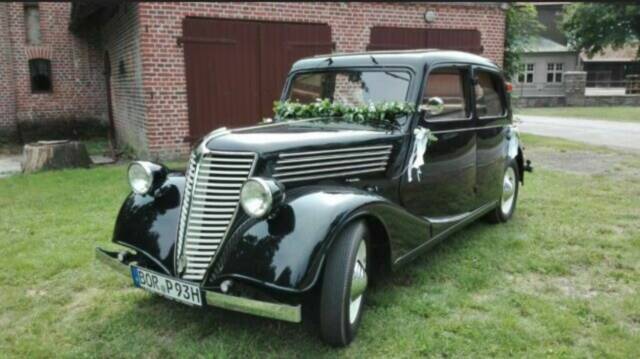
1939 | Renault Novaquatre
Sehr guter Zustand
Create search alert
Let yourself be notified as soon as a listing is published that matches your search filters.
Create listing
Do you have a Renault Novaquatre that you want to sell? Then create a listing now.
Create listingRenault Novaquatre Classic Cars: Prices & Market Values
History of the Renault Novaquatre
The Renault Novaquatre debuted in autumn 1937 as a response to increasing demand for affordable, reliable family cars in pre-war France. Renault engineered the model by pairing the chassis and bodywork of the smaller Celtaquatre with the more powerful 2383 cc four-cylinder engine used in the Primaquatre. This strategy resulted in a car that was less expensive to produce and purchase, while offering improved performance compared to smaller contemporaries. Production of the Novaquatre continued until 1940, when the outbreak of World War II forced many automotive manufacturers, including Renault, to suspend civilian car production.
Model history
Preceding the Novaquatre, Renault offered the Celtaquatre and Primaquatre, which targeted different market segments. The Novaquatre served as a bridge model, utilising the compact design of the Celtaquatre but increasing capability by borrowing the engine from the Primaquatre. After production halted in 1940, Renault did not resume the Novaquatre name post-war, focusing instead on newer models as the brand modernised in the late 1940s and 1950s.
Highlights of the Renault Novaquatre
A key feature of the Novaquatre is the combination of lightweight bodywork and a larger-displacement engine, offering balance between fuel economy and usable power. This model catered specifically to budget-conscious buyers, making it a standout in Renault’s pre-war range. The decision to use established components from existing models also maximised reliability.
Technical data
Special Editions and Collectible Models
No special editions or factory-sanctioned collectible versions of the Renault Novaquatre are documented. All known examples adhered to the same formula of body and engine pairing as described in the production model.
Weak Spots and Common Issues
There are no recorded weak spots or common mechanical issues documented for the Novaquatre in available sources. As with any vehicle from the 1930s, attention should be paid to general aging, corrosion, and wear to mechanical and electrical systems. Sourcing replacement parts may pose a challenge due to the limited production run and advanced age of surviving examples.
Engine and Performance, Transmission and Handling
Powered by a 2383 cc four-cylinder, the Novaquatre delivers greater torque and smoother acceleration than similarly sized contemporaries. Mated to Renault’s period-specific manual transmission, the driving experience balances usability and robustness. Chassis and suspension derive from the compact Celtaquatre, resulting in relatively agile handling characteristics for a vehicle of its era. Because the Novaquatre did not offer distinct versions or variations during its short production period, all models are mechanically and visually similar.
Interior, Comfort, Exterior and Design
Drawing directly from the Celtaquatre, the Novaquatre displays the rounded, streamlined styling cues typical of late-1930s Renaults. The interior focuses on simplicity, with minimal instrumentation and basic seating for up to four passengers. Materials were functional rather than luxurious, adhering to the model’s economic philosophy. No bespoke trim, luxury finishes, or notable factory accessories are associated with the Novaquatre, although individual vehicles may have been personalised by their owners over the decades.
Other relevant features
Due to its short production period just before World War II and subsequent rarity, surviving Novaquatre models may have unique historical details reflecting their individual histories, ownership, or preservation states.
Summary
The Renault Novaquatre occupies a distinctive place in late-1930s automotive history, designed to balance cost efficiency with practical performance. Its unique blend of body and engine, combined with limited production, makes it a rare sight on today’s classic car market—all Novaquatre models listed on Classic Trader represent 100% of Renault entries. Ownership appeals to those seeking a pre-war French car with straightforward engineering and an authentic period driving feel.