Renault 4 CV classic cars for sale
The Renault 4 CV is a compact four-door saloon with unmistakable rear-engine charm, produced between 1947 and 1961. Recognised for its accessibility, everyday practicality, and an appealing palette of period colours, the 4 CV stands out as a beloved classic for enthusiasts and collectors alike.
Search results
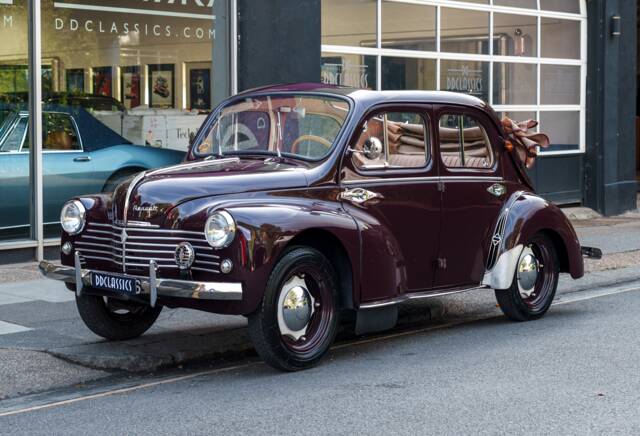



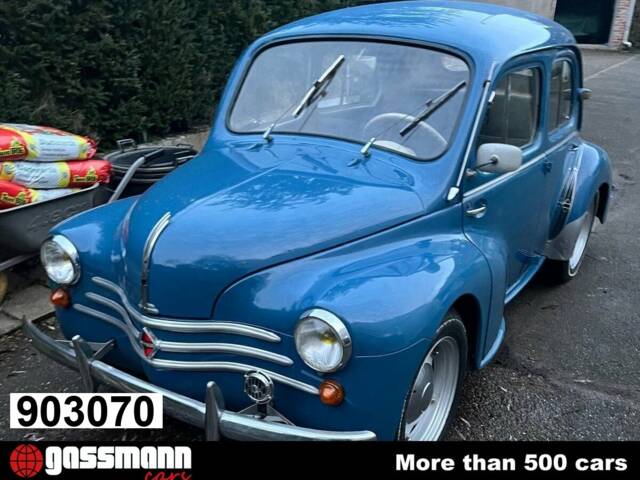
1956 | Renault 4 CV
Original classic with Gordini engine - well maintained and ready to drive - MFK 10.2024!

Auctions ending soon

Loading…
Loading…
Loading…
Loading…
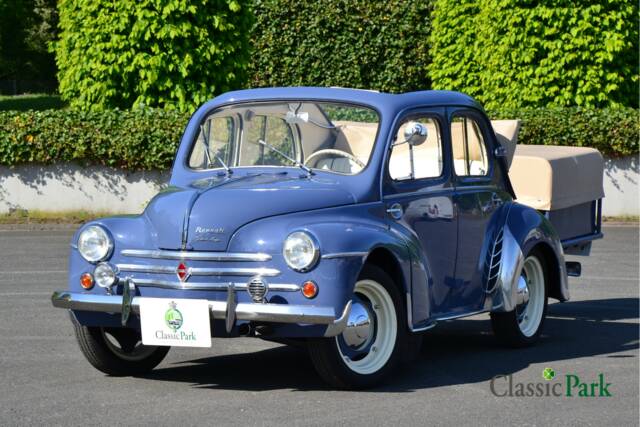
1954 | Renault 4 CV Décapotable
Renault 4CV Découvrable & remorque monoroue Erde
VAT is reclaimable



Newsletter
The best Renault listings, straight to your inbox
Get hand-picked Renault listings, plus the best of cars, motorbikes, and auctions on Classic Trader — all in one place.
Renault 4 CV listing references from Classic Trader
Below you will find listings related to your search that are no longer available on Classic Trader. Use this information to gain insight into availability, value trends, and current pricing for a "Renault 4 CV" to make a more informed purchasing decision.
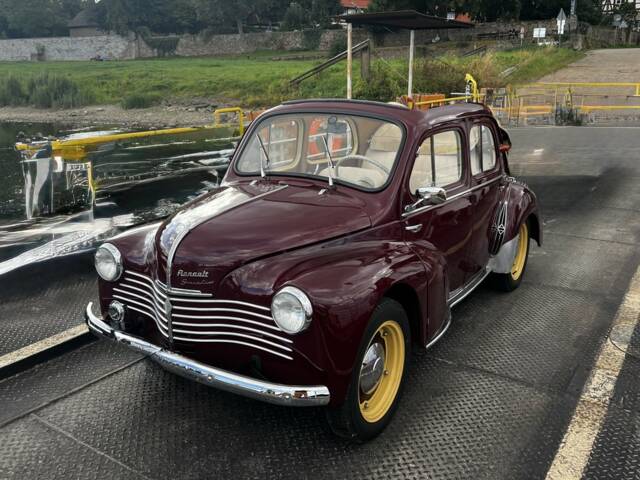
1951 | Renault 4 CV Décapotable
Renault 4 CV Cabriolet | 1951 | Route 66 Auctions - For sale by auction. Estimate 8500 EUR
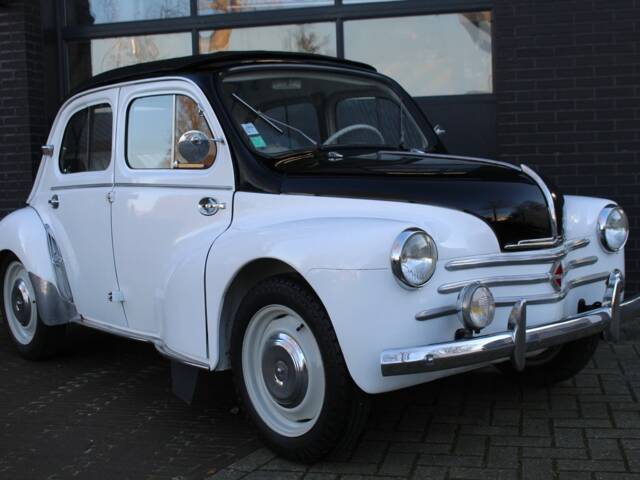
1960 | Renault 4 CV
Renault 4CV Cabriolet | 1960 | Route 66 Auctions - For sale by auction. Estimate 8500 EUR
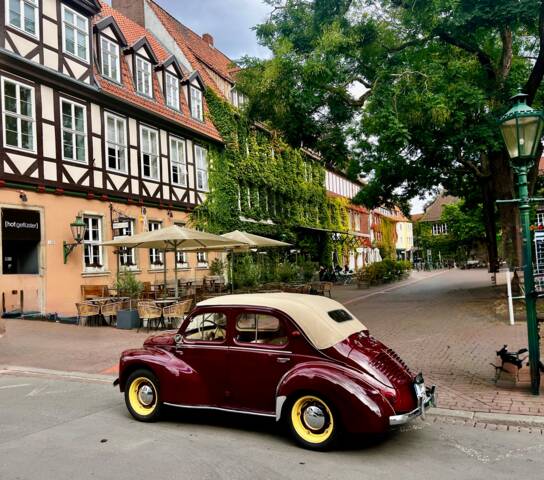
1951 | Renault 4 CV Décapotable
Französischer Klassiker mit Charme
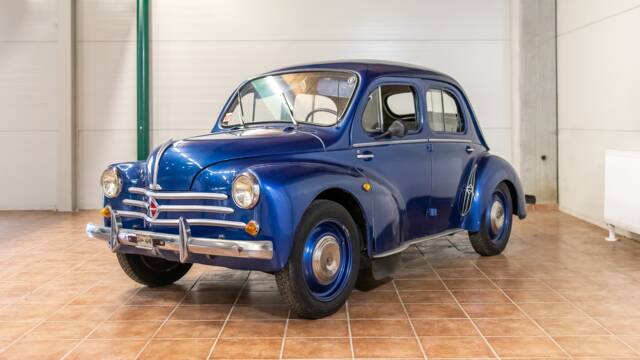
1960 | Renault 4 CV
Iconic model from French small car history

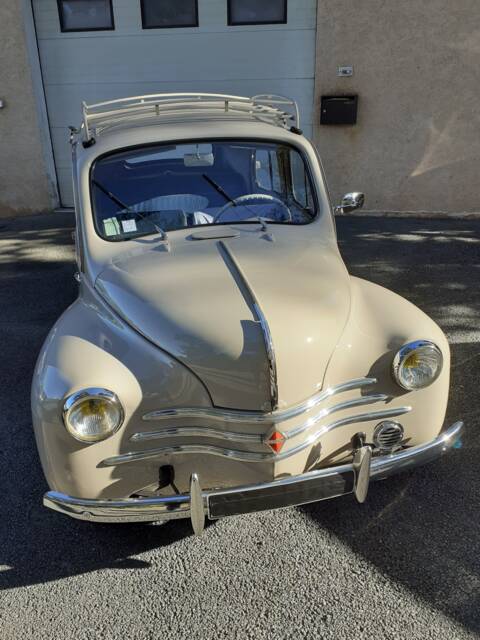
1957 | Renault 4 CV
RENAULT 4CV MODELE 1957

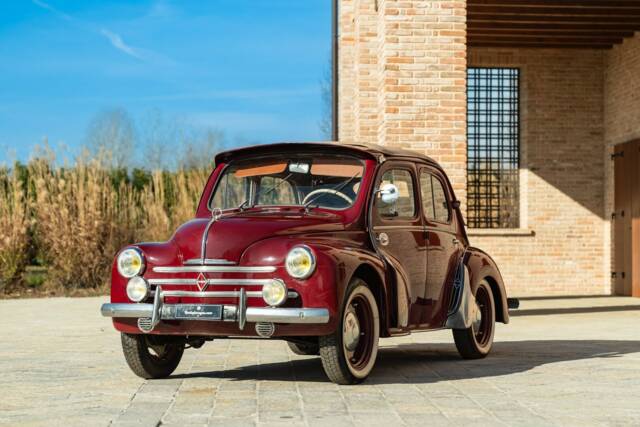
1957 | Renault 4 CV Décapotable
Renault 4 CV Décapotable

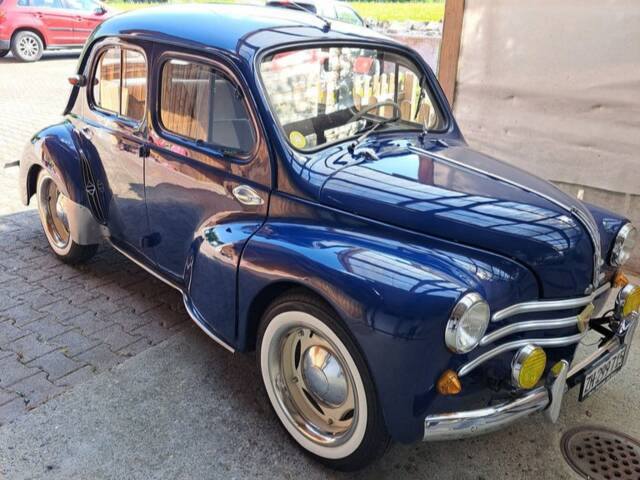
1957 | Renault 4 CV
Renault 4CV | 1957 | Route 66 Auctions - For sale by auction. Estimate 7500 EUR
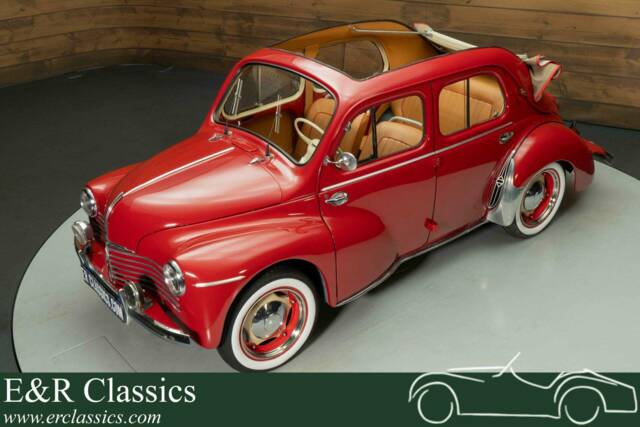
1951 | Renault 4 CV Décapotable
Renault
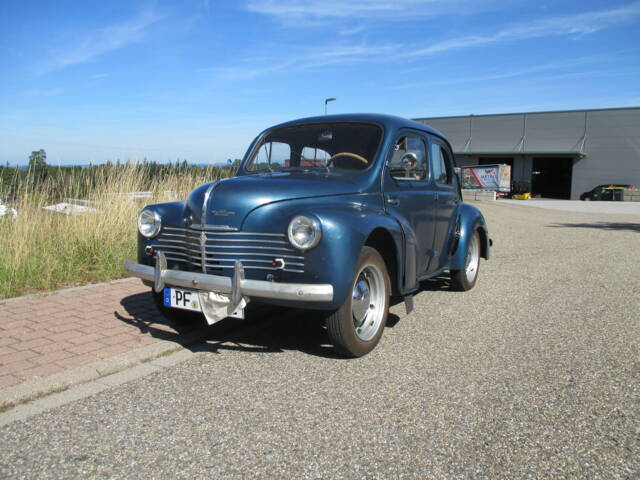
1952 | Renault 4 CV
Cremschnittchen, Luxe/Sport, Modell 1062, 21 PS
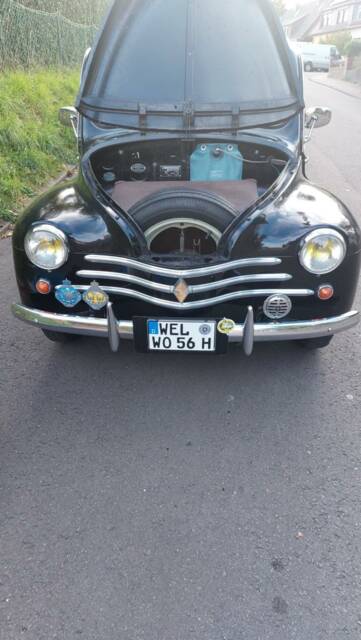
1956 | Renault 4 CV
Cremeschnittchen
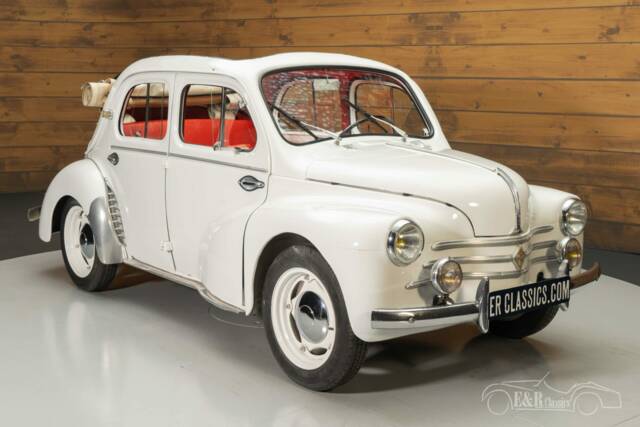
1952 | Renault 4 CV
Renault 4CV Cabriolet | 1952 - For sale by auction. Estimate 22950 EUR
Renault 4 CV Classic Cars: Prices & Market Values
The market value of Renault 4 CV classic cars is primarily determined by technical condition, originality and mileage, as well as rarity, history and documentation. A well-maintained, largely original vehicle with low, verifiable mileage and complete history including appraisals and documentation typically achieves significantly higher prices than a comparable vehicle with deferred maintenance, many modifications or unclear provenance.
Renault 4 CV: Market Prices & Value Trends
Based on sales data from the Classic Trader marketplace, the Renault 4 CV market in Europe has been broadly stable to gently rising over the period from early 2021 to January 2026. Most standard Renault 4 CV saloons (typically 1950–1959 cars with around 18–22 hp) cluster in a realistic asking-price band of roughly £7,000 to £15,000, reflecting a mix of usable drivers and tidier, well-presented examples from Germany, the Netherlands and Italy. At the top end, Décapotable versions (notably early-1950s and mid-1950s cars) repeatedly sit higher, commonly around £18,000 to £30,000, which appears consistent across multiple entries rather than being driven by a single outlier. Very low prices do appear occasionally, but these are likely project cars or incomplete vehicles and should not be taken as representative of the wider market. For buyers, today’s pricing suggests steady demand for simple, characterful post-war French classics, with convertibles attracting a clear premium due to rarity and collectability.
History of the Renault 4 CV
Development of the Renault 4 CV began in secret during World War II, at a time when small, efficient vehicles were in demand throughout Europe. Officially unveiled at the Paris Motor Show in October 1946, the 4 CV went into series production in August 1947. This rear-engined model, seating four, was a clever response to the economic realities of the post-war period. Its engineering, notably the water-cooled inline-four mated to a three-speed gearbox, prioritised reliability, fuel efficiency, and simple maintenance. Rapid success allowed Renault to construct over a million examples, making the 4 CV a visible presence across European roads right up to its production end in July 1961. The wide appeal also led to international assembly under licence in countries including Japan, Mexico, Romania, and Vietnam.
Model History
Across its 15-year run, the Renault 4 CV evolved steadily but retained its compact four-door formula. The model variety included the standard 'Normale', the more appointed 'Luxe', and the crowd-pleasing 'Grand Luxe Décapotable' with a folding roof. An affordable 'Service' version for commercial use was added in 1953, reflecting the model’s versatility. Technical updates occurred throughout production: power output grew incrementally (from 17 to over 21 PS), aesthetic tweaks were implemented, and mechanical refinements such as the adoption of steel disc wheels and a starter solenoid switch improved everyday usability. The 4 CV’s production finally concluded in 1961, succeeded by the more modern Renault Dauphine, but its longevity attests to the original’s widespread acceptance.
Highlights and Unique Features
The Renault 4 CV was the first French mass-market car to pass the million-unit production threshold. With four true doors, rear-wheel drive, and a reliable overhead-valve engine mounted above the rear axle, it offered ample interior space relative to its modest footprint. One signature trait is its use of surplus paint from Renault’s wartime factories, leading to unique colour nicknames like 'Cremeschnittchen' and 'Butterklumpen'. Special features in higher trims included a fabric roof, additional chrome, and comfort-oriented upgrades like moquette carpet, interior lighting, and even an optional floor shifter. Distinctive for lateral chrome ribs behind the rear doors, the 4 CV could be specified in both left- and right-hand drive directly from the factory.
Technical Data
Special Editions and Collectible Models
Special models included the 'Grand Luxe Décapotable' (convertible with enhanced trim), and various market-specific editions like the Japanese-assembled 4 CV. The 'Service' version focused on commercial or fleet users. Competition models—such as the 1062 and 1063—were designed for motorsport, with lighter bodies and increased performance. Notably, the car was entered successfully in events like the Monte Carlo Rally and 24 Hours of Le Mans, cementing certain versions as true collectors’ pieces. Options such as one-wheel trailers by Erdé and rare coachbuilt cabriolets further enrich the 4 CV's model diversity.
Weak Spots and Common Issues
Common issues are not specified for the Renault 4 CV, but as with many vehicles from the era, buyers should closely examine rust-prone areas, the condition of the electrical system, and wear in the transmission synchronisers. Spare parts availability remains strong thanks to active owners’ clubs and specialist suppliers. Documentation is often still available, and many examples come with historical paperwork such as the 'Carte Grise'. Restoration projects are a frequent sight due to good parts supply and structural simplicity.
Engine and Performance, Transmission and Handling
Performance in the Renault 4 CV focuses on urban usability and low fuel consumption rather than outright speed. The rear-engine, rear-wheel-drive layout contributes to neutral handling traits and a surprising sense of agility for such a compact car. The lightweight construction (well under 600 kg in most cases) enhances responsiveness, while the low centre of gravity assists in competent cornering. Enthusiasts appreciate the characterful engine note from the small-capacity four-cylinder, and a three-speed gearbox that encourages relaxed cruising. Later versions—particularly competition-prepared variants—can offer an extra degree of nimbleness and power. - 4 CV Grand Luxe Décapotable: folding roof, enhanced chrome, luxury trim
- 4 CV Service: simplified trim, designed for economical motoring and commercial use
- Competition models (1062, 1063): uprated for motorsport with lighter bodies and tuned engines
Interior, Comfort, Exterior and Design
The Renault 4 CV’s design reflected a blend of practicality and postwar optimism. Its narrow bodyline, rounded form, and lateral chrome accents on the engine cover remain unmistakable. Period colour options—such as Bordeaux Red, Bleu Perle, Azzurro Pastello—alongside recognisable two-tone factory finishes helped the 4 CV stand out. Interiors frequently featured grey or beige cloth, while luxury variants provided leather upholstery and moquette carpets. Optional accessories included fog lights, auxiliary gauges, roof racks, and the rare Erdé single-wheel trailer. Factory features like the sunroof, chrome headlight surrounds, and left- or right-hand drive built to order underline the car’s adaptability.
Other Relevant Features
The Renault 4 CV holds a special place among French classics for its accessibility, low running costs, and widespread club support. It is eligible for historic number plates and is often seen at classic car events, including regular entries in rallies like the Mille Miglia. Contemporary reviews praised its economy and dependability. Owners today benefit from a robust network of clubs and specialists, with comprehensive documentation and repair manuals readily available for restoration or maintenance. Many cars survive with period documents, further enriching their appeal for collectors.
Summary
The Renault 4 CV combines compact dimensions, an efficient rear-mounted engine, and accessible mechanics with a rich variety of versions and vibrant period colours. Its crucial historical role in postwar European motoring, matched with strong community and parts support, ensures its continued visibility among vintage car enthusiasts.