Opel P 4 classic cars for sale
Produced from 1935 to 1937, the Opel P 4 stands out as a fundamental model in German automotive history, offering robust engineering and unique period features such as a 1.1-litre four-cylinder engine, selectable as either saloon or cabriolet, and only available in grey or dark blue. It marks Opel’s transition phase prior to the Kadett, with 65,864 units made. Distinct characteristics like external spare wheel and fold-out luggage rack underscore its practicality for its era.
Search results
Currently, there are no matching listings for your search.
Create search alert
Let yourself be notified as soon as a listing is published that matches your search filters.
Create listing
Do you have a Opel P 4 that you want to sell? Then create a listing now.
Create listingOpel P 4 listing references from Classic Trader
Below you will find listings related to your search that are no longer available on Classic Trader. Use this information to gain insight into availability, value trends, and current pricing for a "Opel P 4" to make a more informed purchasing decision.
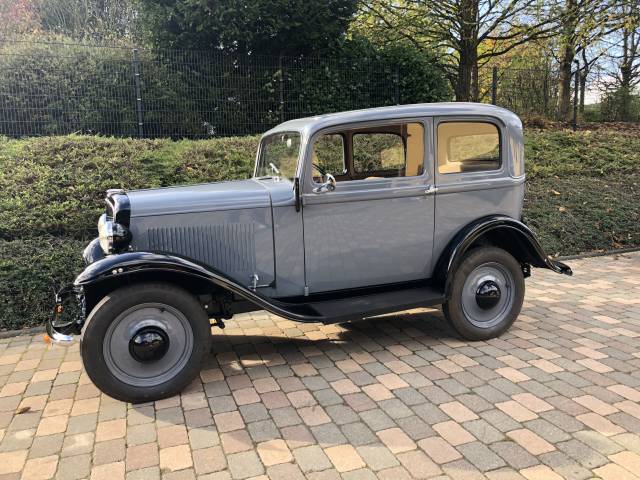
1936 | Opel P 4
Top Zustand!

Create search alert
Let yourself be notified as soon as a listing is published that matches your search filters.
Create listing
Do you have a Opel P 4 that you want to sell? Then create a listing now.
Create listingOpel P 4 Classic Cars: Prices & Market Values
History of the Opel P 4
The Opel P 4 was manufactured at the Rüsselsheim plant from 1935 until 1937. Designed as an affordable vehicle for wider audiences, it replaced the earlier Opel 1.2-litre model but with several technical and visual improvements. The body was mounted on a U-profile frame. Leaf-sprung solid axles and hydraulic shock absorbers made for robust handling, while the braking relied on a cable-pull mechanism operating via both foot and hand brake. The car’s lifespan was relatively short, ending in 1937 when the P 4 made way for the new Opel Kadett. With 65,864 units produced, the P 4 became a significant milestone in the pre-war German automotive landscape, signalling Opel’s commitment to mass production and practical solutions.
Model history
The Opel P 4 was built as the direct successor to the Opel 1.2-litre model, adopting much of its predecessor’s technology but featuring advancements in design and equipment. The P 4 itself was available in several body styles: standard saloon, cabriolet saloon, and a commercial van derived from the same platform. In 1937, the versatile and more advanced Opel Kadett replaced the P 4 in the lineup, moving Opel’s entry-level offering forward both technically and visually.
Highlights and statistical insights
The P 4’s appeal lies in its clear identification features: an external spare wheel mounted to the right wing, a fold-out luggage rack, and distinctive bodywork limited to grey or dark blue finishes. Technological highlights included leaf-sprung axles, hydraulic dampers, cable-operated brakes, and a plastic roof insert for fixed-roof variants. Accessories like a waterproof luggage container and the optional commercial van variant add to the model’s versatility.
Technical Data
Special Editions and Collectible Models
During its production run, the P 4 series was also available as a small delivery van based on the passenger car chassis, catering to commercial operators. Bespoke orders could include a waterproof container fitted to the luggage rack, and special features distinguishable by the external spare and luggage setup. Limited paint and trim choices provided a level of exclusivity among the offerings.
Engine and performance, transmission and handling
The P 4’s 1.1-litre engine is tuned for reliability and ease of maintenance rather than outright power, making 23 hp sufficient for the traffic conditions of the 1930s. With a top speed of around 85 km/h, it allowed relatively swift travel for its time. The rigid axles with leaf springs, alongside hydraulic shock absorption, provide a durable, low-maintenance setup, though ride comfort is expectedly firm. Braking—operated via cables—demands driver anticipation, typical for the era. Popular body types include the two-door standard saloon and the cabrio-saloon with its retractable roof and glass rear window. The rare small commercial van version, derived from the P 4, is notable for its historical utility role.
Interior, comfort, exterior and design
The P 4’s styling is functional with subtle design choices, such as the plastic roof insert found on fixed-roof versions, and a folding roof on the cabrio-saloon, both practical and innovative for its segment. Interior materials adhered to the practical conventions of the 1930s, focusing on durability. External features like the spare wheel on the right wing, the fold-out trunk rack, and optional waterproof container summed up its utilitarian ethos. Paintwork was restricted to grey and dark blue, offering a distinct period look. The delivery van version exchanged rear seating for cargo space, catering to small businesses and tradespeople.
Other relevant features
The P 4’s pricing during its production reflected its market position: nearly 1,700 Reichsmark for the standard saloon, with cabrio variants and commercial vehicles costing slightly more. Today, market prices for restored and original examples vary significantly, with standard two-door saloons reaching up to €15,000 and rarer three-door models achieving even higher values.
Summary
The Opel P 4 serves as a key chapter in Opel’s pre-war engineering, combining solid German craftsmanship, practical configuration, and unique period details. With all current Classic Trader listings in the P 4 series, interest in this model remains focused among enthusiasts searching specifically for this early entry-level Opel.