Horch 930 Classic Cars for Sale
The Horch 930 V stands out as a rare upper-class German saloon from the late 1930s, equipped with a robust V8 engine, innovative double-joint rear axle, and crafted performance. Both supply and demand in the classic car market are exclusively defined by this model within the Horch marque.
Search results
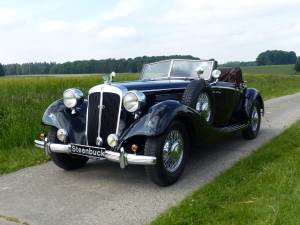
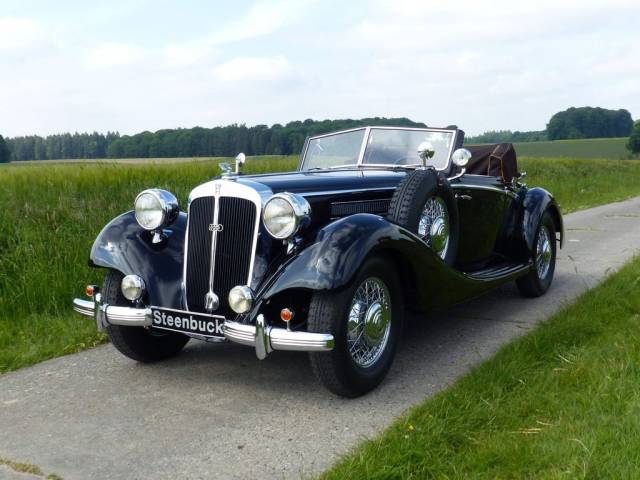
1939 | Horch 930 V
Special Convertible (Hornig), only made once!

Horch 930 listing references from Classic Trader
Below you will find listings related to your search that are no longer available on Classic Trader. Use this information to gain insight into availability, value trends, and current pricing for a "Horch 930" to make a more informed purchasing decision.
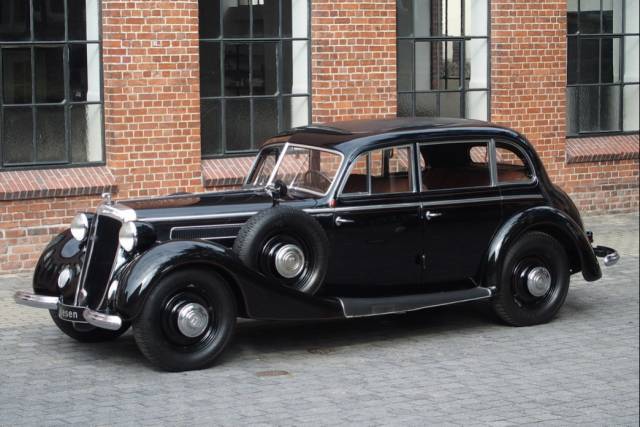
1938 | Horch 930 V
1938 Horch 930 V Limousine orig. 30 TKM!
Horch 930 Classic Cars: Prices & Market Values
History of the Horch 930
The Horch 930 marks one of the final achievements from Horch, once a dominant force in German luxury automotive engineering. After its success with large eight-cylinder engines, Horch sought to broaden its appeal and positioned the 930 below its ultra-luxury class. Developed under Fritz Fiedler and introduced as a refined evolution of the acclaimed Horch 830, the 930 debuted in 1938, integrating technical advancements seen in predecessors. Manufactured until 1940, the 930 V consolidated Horch's reputation in the upper-class segment, standing today as a testament to the marque’s engineering focus just before the Second World War halted production.
Model History of the Horch 930 Series
Horch, as part of Auto Union in the 1930s, built the 930 as a direct descendant of the successful 830 series, which itself replaced the Horch 8. The 930 V, representing its final and most developed version, featured a modified wheelbase reduced by 10 cm compared to its predecessor and deployed an 8-cylinder engine based on the earlier V12 of the 670/700 models. Officially designated as 'Horch 930 V'—with 'V' for 'verkürzt,' referring to the shortened wheelbase—the car did not see a direct successor due to production ceasing in the early 1940s.
Highlights of the Horch 930
A hallmark of the 930 V is its side-valve V8 engine with a 3,823 cc displacement, generating 92 hp and enabling speeds up to 130 km/h. The model’s drivability was enhanced by the introduction of a double-joint rear axle and a highly synchronised ZF-Aphon four-speed manual gearbox, with a centre-mounted gear lever. Unique coachwork, such as special bodies from Hornig of Meerane, further distinguishes the 930 V. The share of Horch 930s on the market represents 100% of both supply and demand for Horch on Classic Trader, indicating the exclusivity of this model in today’s listings.
Technical Data for Horch 930
Special Editions and Collectible Models
Collectors often seek out Horch 930s with bespoke coachwork, particularly those bodied by Hornig of Meerane. These versions feature unique design details and craftsmanship above the standard factory configuration, making them especially prized at historic automotive competitions such as Concours d’Elegance.
Engine and Performance, Transmission and Handling
The V8 engine’s layout, derived from V12 engineering, delivers smooth power and allows for a brisk driving experience for saloons of this era. The double-joint rear axle significantly improves handling and ride comfort. The ZF-Aphon gearbox’s synchronised 2nd to 4th gears and the central gear stick support relaxed gear changes, notable for 1930s standards. With a top speed of 130 km/h and an average consumption of 19 l/100 km, the Horch 930 V was competitive in its segment. The highlighted model is the Horch 930 V with special coachwork by Hornig, sought after because of its unique styling combined with robust mechanical engineering: V8, 3.8 L, 92 PS, double-joint rear axle, 4-speed ZF-Aphon.
Interior, Comfort, Exterior and Design
The Horch 930 V is distinguished by its generously proportioned saloon body and luxurious interior appointments, true to the craftsmanship expected from Horch in the late 1930s. Special attention was often given to upholstery materials, wooden dashboard inlays, and classic instrumentation. Models with bespoke coachwork—especially those by Hornig—are marked by elaborate exterior designs, chrome accents, and one-off paint finishes. Accessories of the time, such as integrated luggage racks and advanced radio units, bear witness to the model's luxury positioning.
Summary
The Horch 930 V is the definitive representative of Horch’s engineering from the pre-war period, significant for its V8 configuration, bespoke coachwork, and advanced chassis design. With all supply and demand for Horch in the classic car market currently centred exclusively on the 930 series, this model commands special status among historic vehicles from German automotive history.