Horch 830 Classic Cars for Sale
The Horch 830 redefined the German upper-class segment from 1933 to 1940. With its V8 engine and a variety of body styles ranging from touring cars to Pullman limousines, the 830 established itself as a technological benchmark and the volume model below Horch’s luxury flagships. Read more to discover the unique history and features of this remarkable series.
Search results
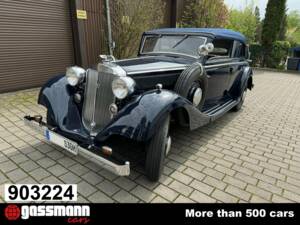
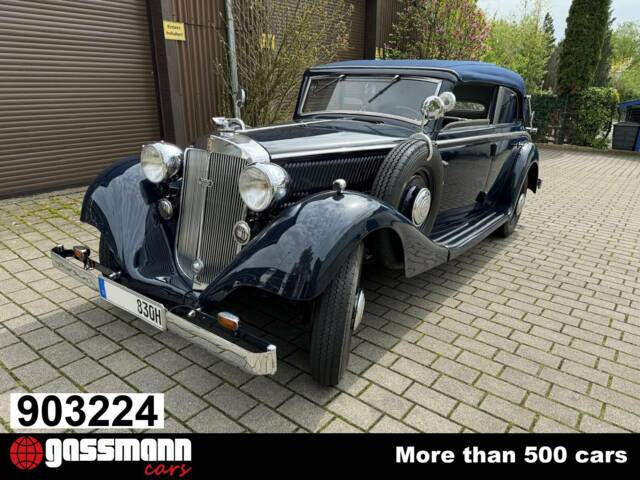
1936 | Horch 830 BL
830 BL Cabriolet

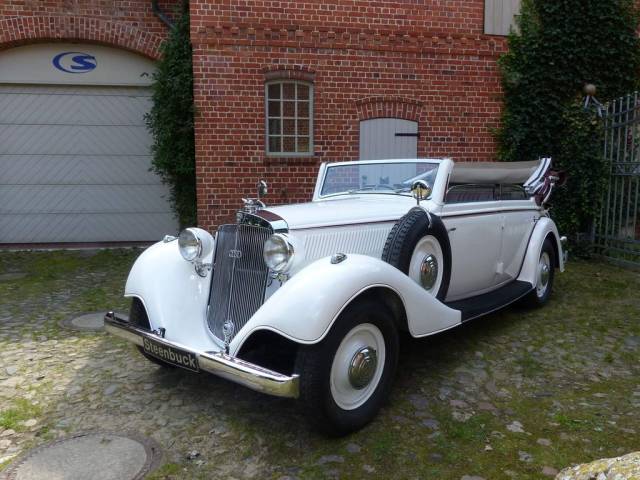
1936 | Horch 830 BL
Beautiful Horch Convertible
Horch 830 listing references from Classic Trader
Below you will find listings related to your search that are no longer available on Classic Trader. Use this information to gain insight into availability, value trends, and current pricing for a "Horch 830" to make a more informed purchasing decision.
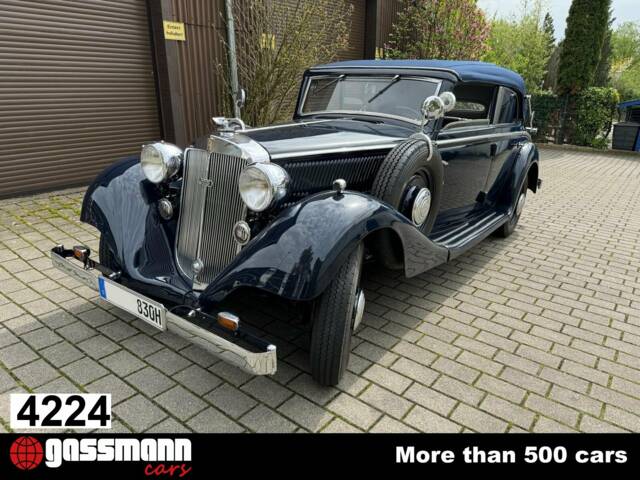
1936 | Horch 830 BL
HORCH 830 BL Cabriolet
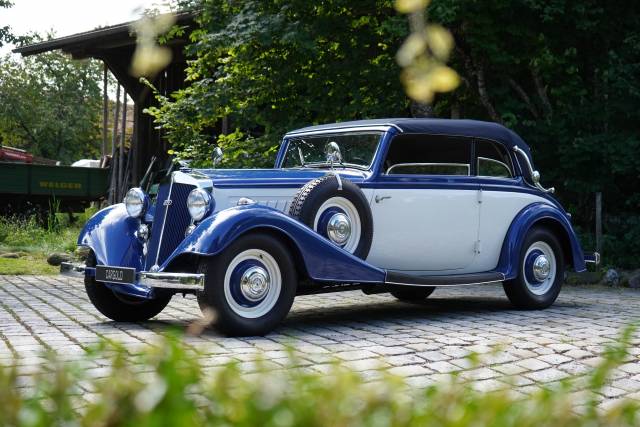
1935 | Horch 830 BL
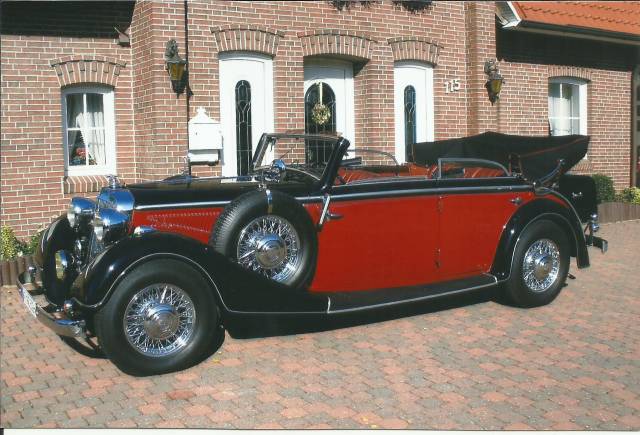
1939 | Horch 830 BL
Horch 830 BL Cabriolet
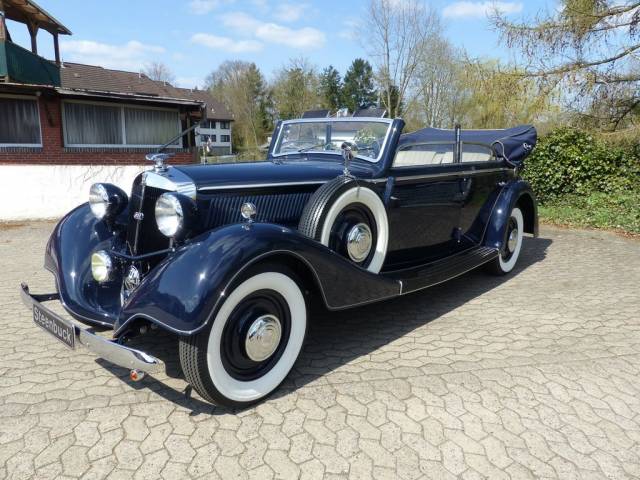
1939 | Horch 830 BL
Excellent 4-door convertible
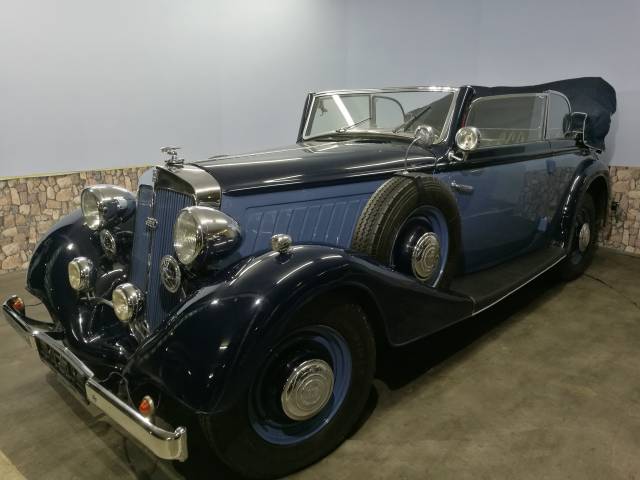
1935 | Horch 830 BL
Cabrio
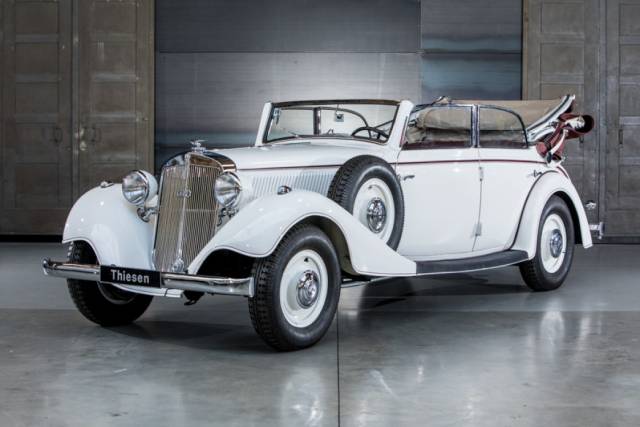
1936 | Horch 830 BL
4-türiges Cabriolet
Horch 830 Classic Cars: Prices & Market Values
History of the Horch 830
The Horch 830 was first unveiled at the 24th International Motor Show in Berlin in 1933, just as Horch sought expansion beneath its established luxury class. As part of Auto Union, Horch introduced the 830 as the successor to the Horch 8. Setting itself apart with a V8 four-stroke engine, the 830 delivered 70 hp from a 3.0-litre displacement in its original form. Over time, the model series evolved to feature larger engines and more power, with the 830 BL topping at 3.8 litres and 92 hp. By the outbreak of World War II, 11,625 civilian examples and 4,536 military ‘Kübelwagen’ (830 R) had been produced. The model’s production ended in 1940 due to the war, and no direct successor followed.
Model History of the Horch 830 Series
The Horch 830 marked a new direction for the manufacturer, standing as a ‘volume model’ below Horch’s premium vanguard. Its lineage began with the base 830 in 1933, moving through variants like the 830 B, 830 BK, and culminating in the refined 830 BL with greater engine displacement and output. The predecessor of the 830 series was the Horch 8 (produced 1926–1935), while no direct successor was launched post-1940. The 830 BL, distinguished by its 3.8-litre V8 and 92 hp, became the most prominent and numerous, with 6,123 examples. The versatile range of body variants and continual technical refinement underlined Horch’s adaptability and ambition in the ever-competitive market.
Highlights of the Horch 830 Series
The Horch 830 stood out with its advanced eight-cylinder engine, offering a sophisticated four-speed ZF gearbox with three synchronized gears. Bodywork ranged from elegant convertibles and limousines to practical Landaulets, and even military ‘Kübelwagen’ for harsher conditions. The series was perceived as superior to direct German rivals like the Mercedes 320, particularly in road performance and refinement. The 830 BL cabriolet, notably owned by Charles de Gaulle, further highlights the model’s international allure and prestige.
Technical Data
Special Editions and Collectible Models
Among special editions, the Horch 830 BL stands out for its increased displacement (3.8 litres), higher output (up to 92 hp), and production numbers (6,123 units). The 830 R military Kübelwagen is notable for its off-road capability and dual solid axles, making it a collectible for both pre-war luxury and military vehicle enthusiasts. The association with historic figures like Charles de Gaulle, who drove a 830 BL Cabriolet, adds significant collector's appeal to specific models within the series.
Engine, Transmission and Driving Dynamics
The Horch 830 series delivered refined power with its V8 configuration—a rarity in its class at the time—combined with a ZF four-speed gearbox. Second to fourth gears were synchronized, which reduced gear grinding and improved driving comfort. Even the earliest 830s offered a dependable 70 hp, with later BL models reaching 92 hp and a top speed around 115 km/h. Acceleration and touring capacity surpassed many contemporary German rivals. In military configuration (830 R), the model featured robust axles for off-road durability. - Horch 830 (original, 3.0L V8, 70 hp)
- Horch 830 B/BK (intermediate variants, incremental power and chassis improvements)
- Horch 830 BL (3.8L V8, 92 hp, most robust and highly produced variant)
- Horch 830 R Kübelwagen (military version, 4,536 produced, rugged mechanical spec)
Interior, Comfort, Exterior and Design
The Horch 830 displayed visual authority through elegant body lines, elongated bonnets, and a dignified grille. Coach-built bodies—from the prestigious Cabriolet to the stately Pullman limousine—offered luxurious materials such as fine leathers and wood trim, and the factory provided an array of special equipment to meet customer preferences. The dash exuded opulence with classic yet functional instrumentation. Cabriolet and Landaulet roof mechanisms were advanced for their time, reflecting Horch's priority on technical sophistication and passenger comfort.
Other Noteworthy Features
Many Horch 830s were exported and put to use beyond Germany’s borders, notably in Sweden and Czechoslovakia. Horch established itself as the market leader in German eight-cylinder models during the 1930s, solidifying its reputation for technical competence and adaptability with the V8 series.
Summary
The Horch 830 series encapsulates technical advancement, robust V8 engineering, and adaptability across diverse variants—from luxury touring cars to military vehicles. Its unmatched presence in the historic eight-cylinder segment and 100% representation among available Horch classics today reinforce its enduring fascination for dedicated enthusiasts.