- Car
- Dixi (0 offers)
Buy Dixi Classic Cars
A Dixi is a rare and compelling route to the beginning of German small-car motoring and to BMW’s first automobile chapter. Find a carefully documented Dixi classic on Classic Trader, whether you value a light open tourer, a practical saloon or the direct Austin Seven connection.
Search results
Currently, there are no matching listings for your search.
Create search alert
Let yourself be notified as soon as a listing is published that matches your search filters.
Dixi listing references from Classic Trader
Below you will find listings related to your search that are no longer available on Classic Trader. Use this information to gain insight into availability, value trends, and current pricing for a "Dixi" to make a more informed purchasing decision.
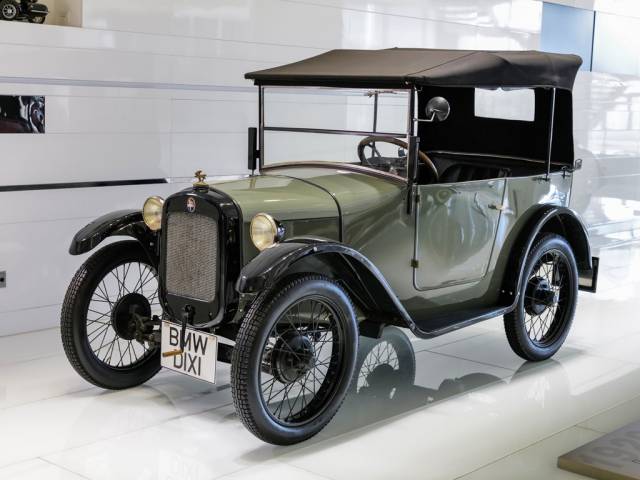
1928 | Dixi 3/15 DA
1928 Dixi 3/15 DA-1 Open Tourer

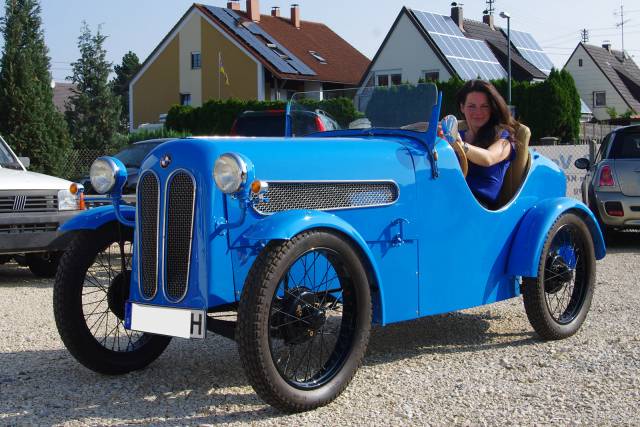
1929 | Dixi 3/15 DA1
Ihle Roadster

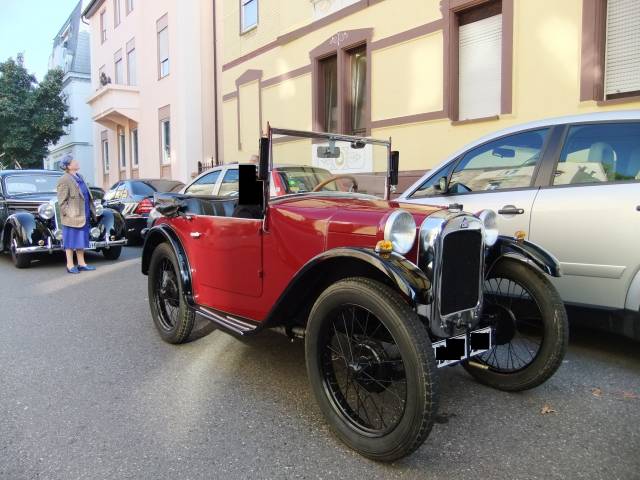
1929 | Dixi 3/15 DA1
DIXI DA1 2-Sitzer Cabrio für Liebhaber
Create search alert
Let yourself be notified as soon as a listing is published that matches your search filters.
Dixi: Eisenach’s decisive small car
The Dixi name belongs to one of the most important, if least common, starting points in German motoring. For an Australian collector, that importance is not based on local delivery numbers or a broad domestic club scene. It lies in the unusually direct connection between a modest Eisenach-built light car, the British Austin Seven, and BMW’s first production automobile. A genuine Dixi is therefore both a pre-war microcar and a piece of BMW history; it rewards a buyer who enjoys mechanical simplicity, accepts modest performance and values a well-documented survivor over a superficially glamorous restoration.
Eisenach had built cars under the Dixi name before the celebrated 3/15. Fahrzeugfabrik Eisenach began car production in the early twentieth century and made larger, more conventional machines, including cars produced under licence. By the middle 1920s the German market needed an economical car that could be made in meaningful volume. Austin’s Seven was an astute answer. Its compact dimensions, four-cylinder engine and straightforward chassis had already shown Britain that a light car could be practical transport rather than a toy. In 1927 Eisenach secured a licence to build it in Germany.
The first cars were assembled from Austin-supplied parts, but the production Dixi 3/15 PS DA 1 was soon adapted for its new home. DA meant Deutsche Ausführung, or German version. The number 3 referred to the taxable rating; 15 described the claimed output in PS. The design retained the Austin’s front-engine, rear-wheel-drive layout and side-valve four, but Dixi moved the driver to the left, used metric fasteners and made other detail changes suited to continental operation. These details matter now. A car advertised simply as an “Austin-type Dixi” needs close examination, because an authentic DA 1 has a particular place in the story and should not be priced as a generic special or later recreation.
The 3/15 arrived at a moment when manufacturing technique mattered as much as the mechanical specification. Eisenach introduced line production for the model during 1927. Period body choices made the small chassis surprisingly flexible: open four-seat tourers, sport two-seaters, closed saloons, coupés and commercial variants all appeared. Most were compact even by contemporary small-car standards, but the open cars gave buyers fresh-air motoring without the size, fuel use or purchase price of a six-cylinder tourer. The four-seat tourer was the volume form, while surviving sporting and closed variants are far less likely to appear for sale.
About 9,308 Dixi 3/15 DA 1s were made, including the model range, before the badge’s transition. This was a substantial figure for Eisenach and almost matched the output of the earlier Dixi range combined. Yet it should not be mistaken for present-day abundance. The survival rate of light pre-war cars was reduced by hard use, war, scarcity of storage and later dismantling for parts. In Australia, where the marque was not officially represented in volume, a correct Dixi is an import proposition and an occasional international-market opportunity rather than a car to expect at every club display.
BMW acquired the Eisenach factory and the Dixi rights on 1 October 1928. This transaction gave BMW a ready-made route into car manufacture. At first, the established small car continued under the Dixi identity. From July 1929, revised examples were sold with BMW badging as the BMW 3/15 PS DA 2, making the Dixi the immediate ancestor of BMW’s first car. The DA 2 added four-wheel brakes, improved accommodation and an all-steel saloon body among its developments. It is closely related and historically essential, but it is not a Dixi make-page substitute: collectors should distinguish the pre-BMW-badged DA 1 from later BMW 3/15s in descriptions, paperwork and valuation.
The line continued through the DA 3 Wartburg sports car and DA 4 before BMW ended the Austin licence programme in 1932 and moved on with the 3/20. For a Dixi buyer, that succession is useful context. It explains why Austin Seven specialists, Dixi interest groups and early BMW clubs can all be valuable sources of knowledge, parts leads and engineering advice. It also explains why an apparently minor badge, radiator or body detail can change a car’s historical identity. The Dixi is not merely “an early BMW”: it is the precise transitional car that made BMW automobile production possible.
Highlights of the Dixi range
The Dixi’s appeal begins with honest lightness. A DA 1 is roughly 2.8 metres long and around 440kg in factory form. Its 748cc four-cylinder makes only 15PS, yet it does not need modern power to be engaging. There is little mass, a direct view over the narrow front wings and a clear relationship between steering input, engine effort and road speed. In a world of large, fast classics, this makes a sound Dixi feel refreshingly intimate.
Its second attraction is the Anglo-German engineering story. The Austin Seven licence was not a superficial styling exercise; it gave Eisenach a practical production design, then prompted local adaptation. The left-hand-drive layout is particularly relevant in Australia. Unlike a British Austin Seven, a Dixi DA 1 is normally left-hand drive from new. That does not prevent historic registration everywhere, but it affects overtaking sightlines, everyday use and state-based registration decisions. Buyers seeking a right-hand-drive early light car should not assume a Dixi will provide it; verify the original steering position, and investigate any conversion with exceptional care.
Third is variety. A standard tourer is often the most logical entry because its structure is readily inspected and its open body suits the period character. A saloon offers weather protection and a more substantial cabin, but timber framing, steel panels and roof construction must be assessed together. A sport two-seater may be especially attractive, though its rarity makes accurate body provenance essential. A body that looks period-correct is not necessarily original to the chassis. Obtain photographs of restoration work, old registration records, chassis stamping images and correspondence with marque specialists before accepting a special-body claim.
Finally, the Dixi is a car for people who prefer a usable historical object to a speculative commodity. It can be mechanically approachable: a side-valve engine, single carburettor, cable-operated brakes and simple leaf-spring suspension have no electronics to conceal neglect. But simplicity is not immunity from cost. A correct radiator shell, wings, lamps, hood frame, windscreen hardware or timber repair can take longer to source and fit than work on a later luxury car. The best purchase is usually the complete, running car with evidence of careful preservation, even if its paint has patina.
Technical data: representative Dixi 3/15
Figures below describe the Dixi 3/15 PS DA 1 and closely related BMW 3/15 development for orientation. Body style, year and restoration can alter weight and detail; confirm every individual car against its chassis records and period documentation.
The 748cc engine has a 5.6:1 compression ratio, a single Zenith or Solex updraught carburettor and thermosiphon cooling. It is not a high-speed engine; sympathetic warm-up, clean oil and attention to cooling are more valuable than chasing a peak figure. The 20-litre fuel tank and typical consumption of roughly 5–6L/100km underline how economical the original design was, although modern traffic conditions require a realistic route plan and a calm approach to speed.
Market Overview & Buying Tips
Dixi values are driven by rarity, correctness and provenance rather than by a busy Australian price guide. Public 2024–26 auction evidence is extremely thin: this is not a marque with regular, comparable global sales like an Austin Seven or a post-war BMW. Treat asking prices and isolated overseas results as starting points only, not a local valuation. A Dixi offered for sale deserves individual appraisal, ideally by someone familiar with both early BMW history and Austin Seven-era construction. The absence of frequent auction turnover is itself a buying consideration: resale may take time, but a well-bought, well-recorded car will appeal to a focused international audience.
For an Australian buyer, calculate the landed cost, not merely the overseas purchase price. Include foreign inspection, inland transport, shipping, marine insurance, customs duty where applicable, 10% GST, possible luxury car tax, biosecurity cleaning, port handling, broker fees, storage, local transport, repairs, engineering requirements and state registration. A cheap project can become dear very quickly if it needs an incomplete hood, timber reconstruction or a long search for correct running gear. Conversely, the higher initial price for a complete car with documentation can be economical once freight and the scarcity of pre-war trim are included.
Before shipping, obtain the applicable import approval. The Australian Government’s Department of Infrastructure states that a vehicle manufactured more than 25 years ago can be eligible for concessional entry on the Register of Approved Vehicles, with entry approval also allowing importation. This is an import pathway, not an automatic right to drive the car on Australian roads. Registration, roadworthiness inspections, compulsory insurance and historic-vehicle concessions are governed by the state or territory in which the car will be registered. Ask the relevant authority and a recognised historic-car club about the current rule before committing funds.
The Dixi’s usual left-hand-drive configuration makes that step especially important. State arrangements vary and can change. Some jurisdictions can register left-hand-drive historic vehicles under age-based provisions or concessions, while others apply conditions or require specific evidence. Never rely on a seller’s statement that “old cars are exempt”, nor on rules from another state. Establish the requirements for the exact vehicle, including lighting, mirrors, seat belts if required for its category, brake performance, tyre condition and any club-permit limitations. Keep the import approval, customs records, overseas title or registration, bill of sale, chassis photographs and every inspection report together.
Condition assessment begins with identity. Locate and photograph the chassis number before money changes hands. Compare it with factory or club records where possible, then make sure the engine number, body style and documents tell a coherent story. A replacement engine need not make a Dixi unusable, but it should be disclosed and reflected in price. Be cautious with assertions such as “first BMW”, “factory sports model” or “one of a few”. These cars invite romantic descriptions; evidence should consist of records, period photographs, known ownership and expert confirmation.
Then inspect the structure without sentiment. On an open car, examine the ash or other timber frame for softness at the scuttle, door posts, rear body corners, floor edges and hood mountings. Look for cracked paint along joints, uneven door gaps, loose hinges and fresh filler hiding frame movement. Check steel wings, splash aprons, running boards and the lower body for corrosion from trapped mud and moisture. On a saloon, inspect the roof insert, door frames, window surrounds, floor and lower quarters as one system. A fresh exterior respray is not evidence that the underlying timber or steel is sound.
The chassis deserves equal attention. Inspect the A-shaped frame and its crossmembers for corrosion, distortion, old welds and damage around spring mounts. Check the front beam axle, transverse front spring, rear quarter-elliptic springs, shackles, steering box and friction dampers for play or incorrect replacement parts. Wheels should be examined for cracked spokes, rim corrosion, tyre age and proper seating. A car that has been standing may need tyres, tubes, wheel bearings and brake cables regardless of how bright its paint appears.
Brake assessment should be factual. The DA 1 uses cable-operated braking with the foot brake acting on the rear wheels and the hand brake on the front wheels. That arrangement needs correct adjustment and a driver who understands its limitations. Do not expect a 1920s light car to stop like a modern hatchback, but neither accept weak, uneven or binding brakes as “character”. Inspect drums, linings, cables, pivots and the condition of every linkage. The later BMW DA 2’s four-wheel brakes are a meaningful usability improvement, but a DA 1’s originality is part of its significance.
On the engine, ask for a fully cold start. Listen for excessive bearing knock, piston slap, valve noise and timing-gear distress; watch for smoke after warm-up and check the coolant for leaks or persistent boiling. Thermosiphon cooling depends on a clean radiator, unobstructed passages and correct operating habits. Confirm that the carburettor, magneto or ignition components, dynamo and 6-volt electrical system function reliably. A compression test and oil-pressure observation are sensible, but a specialist familiar with side-valve engines should interpret them. Correctness and easy starting can matter more than a notional power figure.
The gearbox has no synchromesh. A careful driver can make clean changes with double-declutching, while a hurried test drive can produce noise that looks worse than it is. Still, listen for rumble, jumping out of gear and persistent gear-clash from a sympathetic driver. Check clutch action, propshaft joints, differential noise and leaks. Cars restored with later electrical, fuel or brake upgrades should be assessed case by case. Discreet safety improvements may help a touring car, but a buyer should know exactly what is original, what is reversible and what could complicate registration or historic authenticity.
Parts support is best described as networked rather than retail. The Austin Seven relationship can help with selected mechanical concepts and some consumables, while Dixi interest groups and early BMW communities can assist with specific knowledge. It does not mean every part interchanges without checking: German metric conversion, body fittings and Dixi-specific details are precisely where assumptions become expensive. Before buying a project, make a list of missing items and ask clubs or specialists whether each is available, reproducible or likely to require fabrication in Australia.
Driving a Dixi on Australian roads
A Dixi is not a car for a freeway commute or a hurried urban errand. Its charm begins when the driver chooses the right road: a quiet country lane, a historic rally route, a club run with similarly paced machinery. The steering is physical but communicative, the upright windscreen and exposed wings make placement easy, and the little four-cylinder has a determined, busy note rather than a surge of acceleration. At 75km/h it has reached the territory its makers intended; the pleasure is maintaining momentum with anticipation rather than overpowering the road.
The controls ask the driver to participate. The unsynchronised three-speed gearbox rewards a pause and a proper double-declutch on downshifts. The engine responds best to measured throttle and mechanical sympathy. An owner familiar only with later classics may need a short period of tuition or practice, but that learning is one of the Dixi’s satisfactions. In a well-sorted car, the experience feels delicate rather than fragile: light steering effort at speed, modest mass and open-air visibility make even a modest journey memorable.
Australian conditions add practical constraints. Heat asks more of the cooling system; long distances and fast traffic demand conservative route choices; rain can test a hood and side curtains designed for another era. Carry basic tools, water, suitable spares and a recovery plan on longer runs. A Dixi that runs cool, charges consistently and stops straight is more enjoyable than a highly polished example that has not been exercised. The best owners preserve the car by using it within its limits.
Design, bodies and historical identity
Dixi design is functional, compact and appealing precisely because it does not pretend to be grand. The narrow track, short wheelbase, upright radiator and separate wings give it the recognisable light-car silhouette of the late 1920s. On a tourer, the folded hood, simple screen and exposed spare-wheel details make the car look ready for a village road rather than a concours lawn. The sport two-seater brings a more purposeful, intimate stance; the saloon demonstrates how much utility Eisenach could place on a very small footprint.
Body construction and finish are central to authenticity. Early cars may combine aluminium or steel panels with timber framing and fabric-covered elements, depending on body type and production detail. BMW-era DA 2 all-steel bodies, some made by Ambi-Budd, are a different proposition. This distinction should be recorded accurately in an advertisement and understood by the buyer. A Dixi chassis carrying a later or recreated body may still make a charming event car, but it should not receive the same description or price as a documented original-bodied survivor.
Colour, lamps, wheels, hood material, upholstery and dashboard instruments are not trivial finishing points. They tell a buyer whether a restoration followed evidence or merely a generic idea of a 1920s car. Request close photographs and identify reproduction components honestly. A quality restoration can use new materials while respecting original pattern and construction; what matters is that the work is transparent and appropriate to the car.
Why Dixi matters to collectors
The Dixi’s enduring cultural value is its place at the junction of British design, German industrial production and BMW’s future. BMW Group Classic identifies the 3/15 DA 2, built after the Eisenach acquisition, as the first automobile to wear the BMW emblem. That makes the preceding Dixi DA 1 a tangible prelude rather than an unrelated curiosity. It is also a reminder that BMW’s car story began not with a large sporting saloon but with an efficient little licensed design.
For Australian collectors, this makes a Dixi an excellent companion to a broader pre-war collection: it can sit beside an Austin Seven, early Morris, Fiat 509 or later BMW while telling a distinct story. It is unlikely to be the most convenient or anonymous classic at a gathering. Its rarity instead creates conversation, and its modest scale makes it a rewarding car for owners who value research, club relationships and gentle regular use.
Summary: choose the right documented Dixi
A Dixi classic is a rare opportunity to own the German-built predecessor to BMW’s first car. The 3/15 DA 1 combines a 748cc side-valve four, compact Austin Seven-derived engineering, left-hand-drive German specification and unusually significant Eisenach history. Its 9,308-car production run is enough to establish a real model family, but surviving examples remain scarce—particularly in Australia.
Buy on structure, identity and completeness. Confirm the chassis, body provenance, steering position and mechanical condition; inspect timber, corrosion, brakes, cooling and the non-synchromesh drivetrain with a pre-war specialist. For an imported car, budget the complete Australian journey from approval and shipping to state registration, and confirm left-hand-drive requirements where it will live. Find a Dixi with evidence, usable condition and a strong paper trail on Classic Trader, then enjoy it at the pace for which it was made.