- Car
- Donkervoort (7 offers)
Buy Donkervoort Classics
Hand-built in the Netherlands since 1978, Donkervoort creates ultra-lightweight sports cars that channel Colin Chapman's philosophy into machines weighing under 750 kg. From the raw S7 to the 500 hp F22, every Donkervoort is an uncompromising driver's car.
Search results
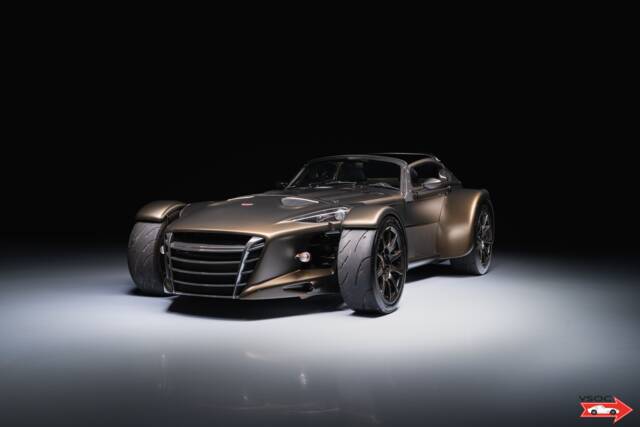
2019 | Donkervoort D8 GTO-RS
Very limited & ultra-light, track-oriented Dutch sports car. Only 9.233km!

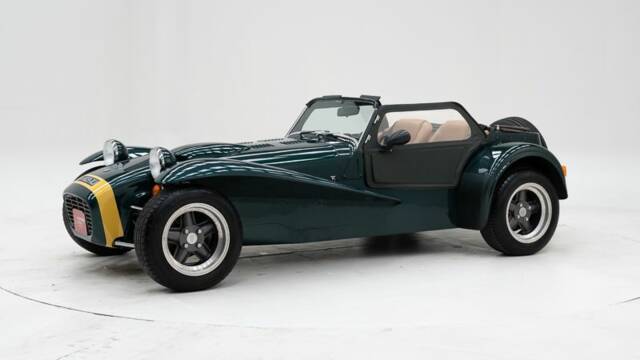
1985 | Donkervoort S8A
1985 Donkervoort Super Eight '85

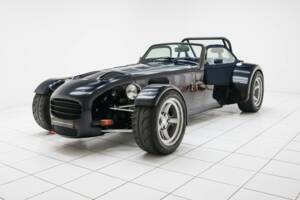
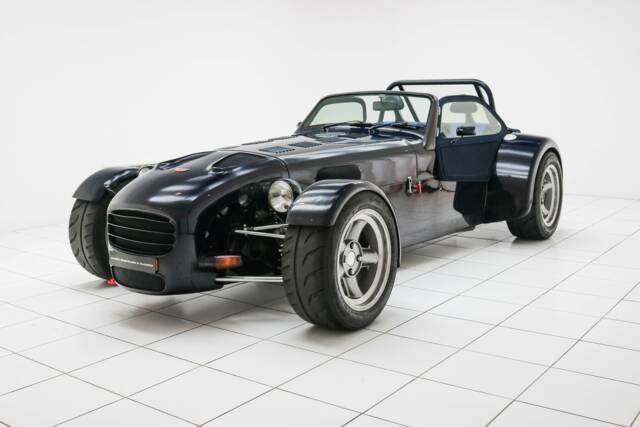
2002 | Donkervoort D8 180R
Carbon - Master Switch - Cup version - 1 of 29
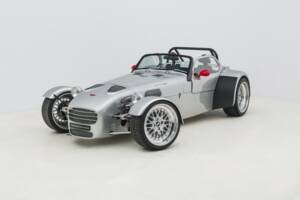
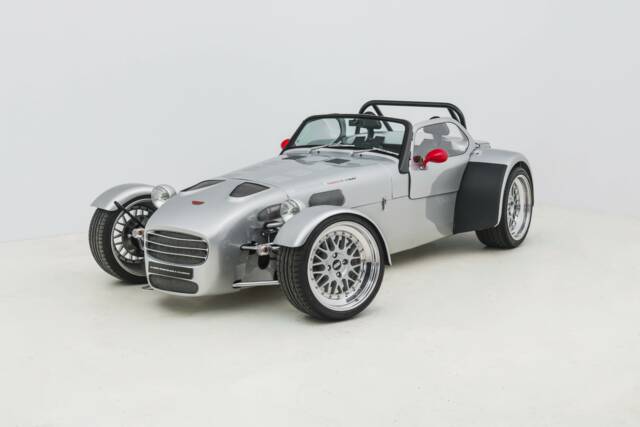
2004 | Donkervoort D8
1.8 Audi 320R Wide-Track BBS – 320 hp – Dry sump – History – Serviced
Newsletter
The best Donkervoort listings, straight to your inbox
Get hand-picked Donkervoort listings, plus the best of cars, motorbikes, and auctions on Classic Trader — all in one place.
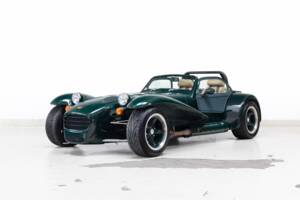
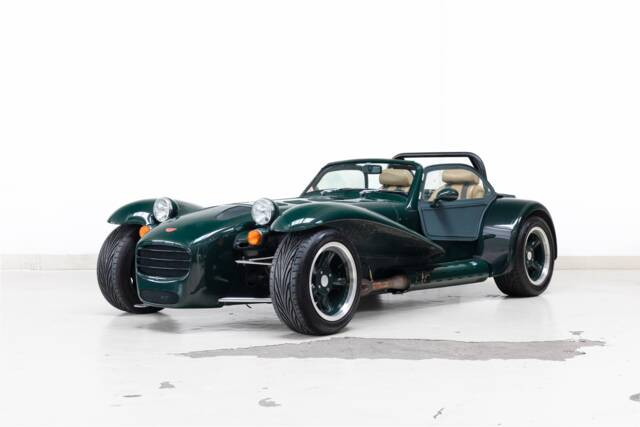
1997 | Donkervoort D8 Zetec
Long Term Ownership - Upgraded Zetec -
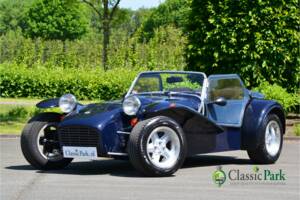
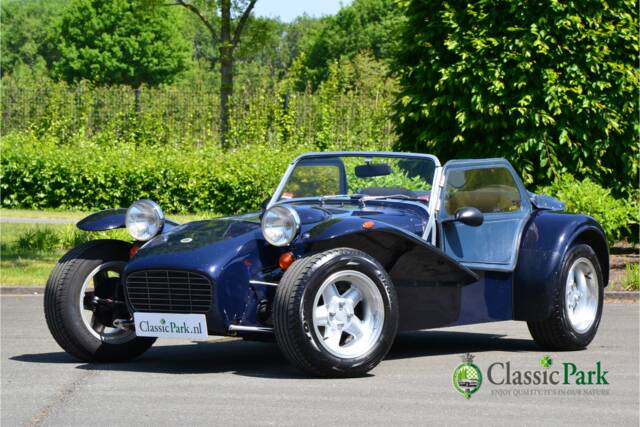
1984 | Donkervoort S8
Donkervoort S8 2.0
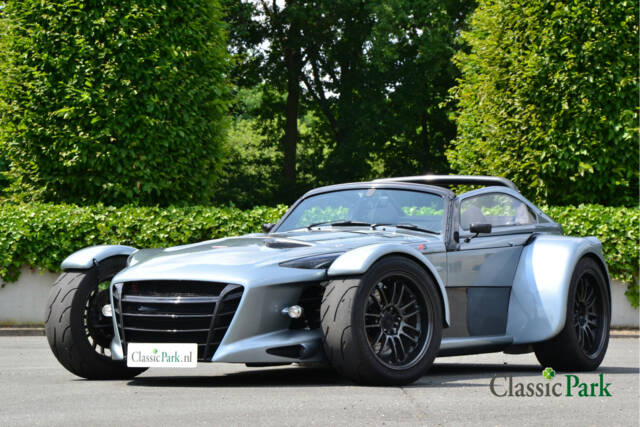
2017 | Donkervoort D8 GTO-RS
Donkervoort D8 GTO-RS
Donkervoort listing references from Classic Trader
Below you will find listings related to your search that are no longer available on Classic Trader. Use this information to gain insight into availability, value trends, and current pricing for a "Donkervoort" to make a more informed purchasing decision.
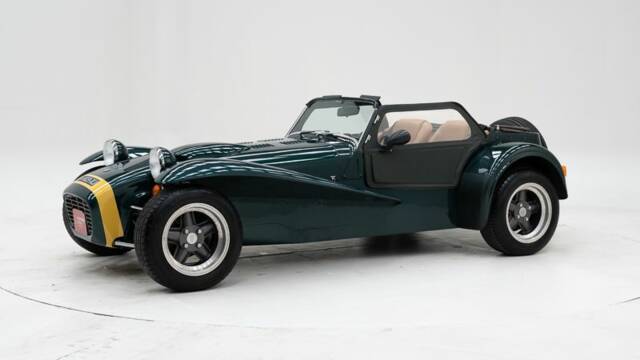
1985 | Donkervoort S8A
1985 Donkervoort Super Eight '85
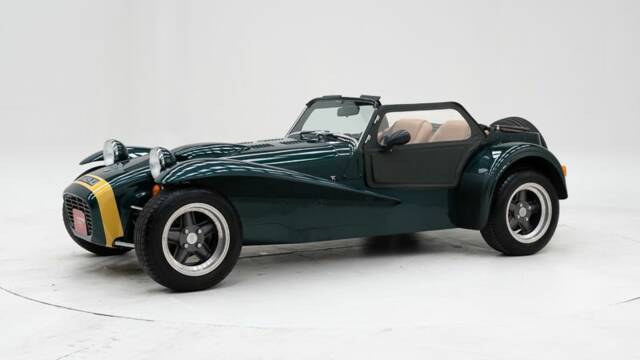
1985 | Donkervoort S8A
1985 Donkervoort Super Eight '85
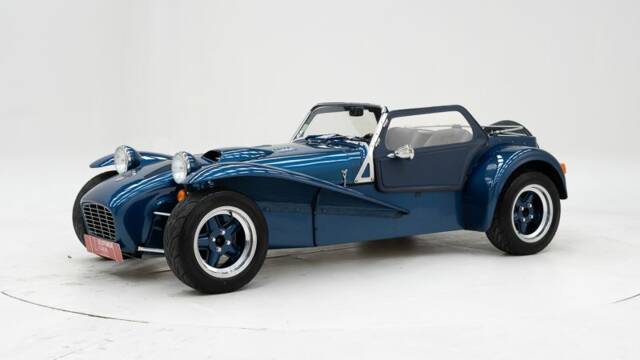
1984 | Donkervoort S8
1984 Donkervoort Super Eight '84
History
The Donkervoort story begins with a frustration that became an obsession. In 1978, Dutch engineer Joop Donkervoort acquired the Netherlands import rights for Lotus Seven kit cars, only to discover they could not receive Dutch type approval. Rather than abandon the project, Joop decided to redesign the chassis to meet local regulations — and in doing so, inadvertently created one of Europe's most distinctive sports car marques.
The first Donkervoort S7 emerged from a small workshop in Tienhoven that same year. Powered by a 1.6-litre Ford Crossflow engine producing 90 bhp and mated to a four-speed gearbox, the sub-500 kg roadster reached a top speed of over 170 km/h. The front suspension used Triumph components, while the rear axle came from a Ford Escort. Raw, direct, and utterly focused, the S7 embodied Chapman's famous dictum: "Adding power makes you faster on the straights, subtracting weight makes you faster everywhere."
By 1980, the S8 (Super Eight) arrived with a wider track, a 2.0-litre Ford OHC engine producing 110 bhp, and a five-speed gearbox. Passive safety was improved with a dual braking system and twin aluminium fuel tanks mounted ahead of the rear axle. Around 140 S7 and S8 cars were built in Tienhoven before the company relocated to larger premises in Loosdrecht in 1983.
The S8A represented a significant engineering leap. The new chassis was wider and lighter, with aluminium panels bonded and blind-riveted — a revolutionary technique never before used in the automotive industry. Independent rear suspension and electronic fuel injection set the S8A apart from its predecessors. The 2.0-litre Ford OHC now produced 117 bhp. The "A" in the type name stood for Amber, Joop Donkervoort's daughter — whose first journey home from the hospital was, naturally, in a Donkervoort.
The S8AT (1986–1994) answered growing demand for more power: the Ford engine received a Garrett T3 turbocharger with intercooler, producing 170 bhp initially and later 190 bhp with a 2.2-litre displacement. The turbo compensated for the power loss caused by the now-mandatory catalytic converter.
An extravagant exclamation mark came in 1988 with the D10, unveiled at the Paris Motor Show to mark the company's tenth anniversary. Only 10 examples were built — extreme in every respect: no windscreen, no spare wheel, just a helmet for protection. In 1989, the D10 broke the world acceleration record for production cars: 0–100 km/h in 4.85 seconds. With the D10, the "S" prefix disappeared permanently from model names — the departure from the Super Seven was now complete.
1993 marked the beginning of the D8 era with the Ford Zetec engine. The 1.8- and 2.0-litre Zetec replaced the ageing Ford OHC units, and a new chassis signalled the brand's definitive independence. The Sport version swapped metal body parts for carbon fibre, downsized the battery, and used an aluminium clutch housing — weight saving as perpetual obsession. The Sport was distinguished by cycle-style front wings instead of traditional long mudguards.
The D8 Cosworth (1995–1998) became the brand's first genuine supercar killer: the 2.0-litre Cosworth YB turbo — famous from the Ford Sierra and Escort RS Cosworth — produced 220 to 280 bhp, launching the 695 kg roadster to 100 km/h in 4.1 to 4.8 seconds and reaching 235 km/h. On track, the Cosworth was notorious — driving skill was mandatory.
The partnership with Audi began in 1998 after a chance encounter in the paddock at the Nürburgring 24 Hours. From 1999, the 1.8-litre 20-valve turbo (AGU) replaced the Ford engines — lighter, more compact, and meeting the strictest emissions standards. Available in 150, 180, 210, and later 245 bhp outputs. In 2000, Donkervoort moved to a purpose-built facility in Lelystad, with capacity for 100 cars per year. In 2003, chassis production was brought in-house — Donkervoort was now a complete sports car manufacturer from first sketch to final bolt.
The D8 270 RS broke the Nürburgring Nordschleife lap record for road-legal cars in 2004 — by 15 seconds over the previous holder, Porsche. Only 25 numbered examples of the 270 bhp RS were built, selling out within months. From 2008, the D8 270 became a regular production model and was the seventh-fastest production car on the Nordschleife in 2011 (7:14.9 minutes).
The D8 GT (2007–2012) was the first closed Donkervoort — with butterfly doors, 8 cm wider track, Tarox brakes, and 17-inch forged wheels by Rays Engineering. The roof, entire rear section, doors, and wings were all carbon fibre. At just 650 kg, the D8 GT was the world's lightest GT. Production was limited to 50 examples per year.
In December 2011, the D8 GTO was unveiled as the next generation — sharing just 5% of its parts with the D8 270. The longitudinally mounted 2.5-litre five-cylinder TFSI from Audi produced 340 to 380 bhp, the body was entirely carbon fibre, and the GTO was 35 cm longer and 15 cm wider than its predecessors. In 2012, Donkervoort became the first company worldwide to achieve European Community Small Series Type Approval (ECSSTA) — enabling sales across Europe, Switzerland, Eastern Europe, and the Gulf states.
The D8 GTO-JD70 (2020) became the first production car to break the 2G lateral acceleration barrier on road-legal tyres. 415 bhp, 680 kg, 95% carbon-fibre body, optional power steering and ABS — a tribute to Joop Donkervoort's 70th birthday, limited to 70 examples.
In 2021, Joop handed the managing director role to his son Denis Donkervoort. In December 2022, Denis unveiled the F22 — the first entirely new Donkervoort under his leadership: 500 bhp, 750 kg, Twin Targa carbon-fibre roof, 298-litre boot. The initially planned 50-unit run was extended to 75 and then 100 cars — all sold before the first car hit the road.
Since 1978, over 1,500 Donkervoorts have been hand-built in Tienhoven, Loosdrecht, and Lelystad — each one unique.
Highlights
What sets Donkervoort apart from every other sports car manufacturer is radical uncompromisingness. The brand slogan "No Compromise" is not marketing — it is a build instruction. Every gram is questioned, every component optimised for its weight-to-benefit ratio.
The five most important collector models:
- S7 (1978–1984): The founding father. 1.6-litre Ford Crossflow, 90 bhp, under 500 kg. Extremely rare and highly coveted as the brand's genesis document.
- D8 Cosworth (1994–1998): The first Donkervoort to terrify supercars. 220–280 bhp from the legendary Cosworth YB turbo, 695 kg, 235 km/h. Notorious on track, a statement on the road.
- D8 GT (2007–2012): The first closed Donkervoort with butterfly doors and 650 kg — the world's lightest GT. Carbon roof, carbon rear, carbon doors. 50 examples per year.
- D8 GTO-JD70 (2020): 415 bhp, 680 kg, 2G lateral acceleration. 70 examples for the founder's 70th birthday. The technological pinnacle of the D8 era.
- F22 (2022–present): 500 bhp, 750 kg, Twin Targa roof, 666 bhp per tonne. The first model under Denis Donkervoort — and the first Donkervoort that can genuinely be called a supercar.
Construction features that make Donkervoort unique:
- Tubular steel spaceframe with copper welds and bonded aluminium panels — a construction method Donkervoort has perfected since the 1980s.
- Ex-Core carbon-fibre technology: Developed from Formula 1 research, enabling complex shapes at minimal weight and maximum rigidity.
- Audi five-cylinder turbo engines: The powertrain foundation since 1999 — from the 1.8-litre four-cylinder to the 2.5-litre inline-five producing up to 500 bhp.
- No electronic aids (on most models): No power steering (optional on JD70 and F22), no brake servo, no ESP — just driver, mechanics, and road.
- Hand-built in Lelystad: Every car assembled by hand in the Flevoland factory — from the first weld to the final screw.
Technical Data
Market Overview & Buying Tips
For Australian buyers, Donkervoort represents one of the most exclusive — and logistically challenging — propositions in the collector car market. All Donkervoorts are left-hand drive, built in the Netherlands, and Australia has never been an official market. Importing requires navigating Personal Import Scheme or Registered Automotive Workshop Scheme (RAWS) pathways, with costs that can add A$30,000–A$50,000 on top of the purchase price.
Price guide by model (2024–2026, European market — add import costs for Australia):
- S7/S8 (1978–1984): €18,000–€26,000 (A$30,000–A$43,000 before import). Catawiki achieved €26,000 for a 1990 S8AT in 2023. Classic.com lists the S7 CMB at ~$28,625, with the highest result at $57,250.
- S8A/S8AT (1985–1994): €30,000–€48,000 (A$50,000–A$80,000 before import). The turbo S8AT is the most sought-after.
- D8 Zetec (1993–1998): €36,000–€55,000 (A$60,000–A$92,000 before import). Solid entry into the D8 world with reliable Ford engineering.
- D8 Cosworth (1994–1998): €47,000–€70,000 (A$78,000–A$117,000 before import). The Cosworth YB engine enjoys cult status.
- D8 Audi (1999–2012): €48,000–€75,000+ (A$80,000–A$125,000+ before import). Wide Track models with 210–270 bhp sit at the top end.
- D8 GT (2007–2012): €80,000–€120,000 (A$133,000–A$200,000 before import). The first closed Donkervoort with butterfly doors — a future classic.
- D8 GTO (2013–2022): €130,000–€200,000 (A$217,000–A$333,000 before import). The factory offers a 2015 GTO with 6,400 km at €159,900.
- D8 GTO-JD70 (2020–2022): €143,000–€234,900 (A$238,000–A$392,000 before import). Collecting Cars achieved €214,000 in December 2022; SBX Cars sold one for €143,000 in March 2025.
- F22 (2023–present): €359,900 (factory pre-owned, A$600,000+ before import). All 100 examples sold.
What Australian buyers should check:
LHD and import considerations:
- All Donkervoorts are LHD. In Australia, LHD vehicles over 30 years old can be registered in most states under historic/club plate schemes. Newer LHD vehicles face stricter requirements — check your state's VSB14 compliance rules.
- RAWS compliance is required for vehicles imported under the Registered Automotive Workshop Scheme. Budget A$15,000–A$30,000 for compliance modifications.
- Shipping costs from the Netherlands to Australia typically run A$5,000–A$8,000 for a single vehicle in a shared container.
Mechanical inspection:
- Audi engines (1.8T and 2.5 TFSI) are robust. Check turbo oil feed lines and oil cooling system — these age faster under high thermal loads.
- Differential mounting bracket: On high-power D8 models (Cosworth, AGU 210+, E-gas 270), the weld on the diff bracket is a known weak point. Donkervoort offers an official reinforcement modification.
- Tubular steel chassis: Check for corrosion, especially on cars used in wet conditions. Inspect copper welds at suspension mounting points.
- Carbon-fibre bodywork (GTO, JD70, F22): Check for cracks, delamination, and repairs. Carbon repairs are expensive and require specialists.
- Tarox and AP Racing brakes need regular pad and fluid changes. Check discs for grooves and hotspots.
Documentation:
- Verify VIN with the Donkervoort factory — they offer a heritage service and can confirm specification and build number.
- Service history is critical for these hand-built vehicles. Donkervoort recommends annual oil changes and oil level checks at every refuel.
Parts supply:
- Donkervoort in Lelystad supplies spare parts directly and offers a comprehensive heritage service for classics. Many parts are in stock; bespoke items are manufactured in-house.
- Audi engine parts are available through the regular Audi dealer network — a major advantage over other small-series manufacturers.
Driving Feel
Driving a Donkervoort means losing every illusion of distance between driver and machine. You don't sit in a Donkervoort — you wear it. The seat is mounted centimetres above the tarmac, the steering wheel (on most models a Momo racing wheel with quick-release) sits directly in front of your chest, and the engine throbs just one firewall away.
Even the S7 with its 90 bhp feels thrilling in the featherweight chassis. Every bump, every stone, every joint in the road surface travels unfiltered through the frame into your body. The steering is heavy at low speeds — no surprise with the direct, unassisted rack-and-pinion — but above 60 km/h it becomes a precision instrument translating every millimetre of input into immediate directional change.
The D8 Cosworth is a different category entirely: when the Garrett T3 turbo spools to full boost around 3,000 rpm, the 695 kg roadster explodes forward like a projectile. The Cosworth engine barks, snarls, and whistles through the wastegate — an addictive sound. The five-speed Borg-Warner gearbox demands deliberate shifts, and the Torsen limited-slip differential with 40% lock keeps the car tracking true even under hard acceleration out of corners. No ESP, no ABS — just the driver and physics.
The D8 GTO elevates the experience to another level. The Audi five-cylinder sings its distinctive, unmistakable sound — that hoarse, rhythmic howl that only an inline-five can produce. 340 to 415 bhp meets 680 to 730 kg: the power-to-weight ratio of 1.8 kg/bhp (on the JD70) means every throttle input triggers an immediate, almost violent response. 0–100 km/h in 2.7 seconds — faster than most supercars costing ten times as much.
In corners, the true strength reveals itself: the Nankang AR1 tyres (on the JD70), combined with the ultra-light chassis and aerodynamic downforce (80 kg at the rear axle via the twin diffuser), generate lateral forces that challenge comprehension. 2G in a corner — that means your body is pushed sideways with twice its own weight. There are barely any road-legal vehicles that can match this.
The F22 adds a new dimension: the Twin Targa roof lifts off with three manual latches and stores in the boot. The TracTive adaptive dampers allow switching between comfortable road settings and uncompromising track stiffness at the push of a button. The optional hydraulic ride height system lifts the car 35 mm — finally, speed bumps and car park ramps are no longer obstacles. The 298-litre boot makes the F22 the first Donkervoort you could genuinely take on a weekend trip.
Yet through all the technology, the essential character remains: the absence of any distance. No ESP correcting your inputs. No power steering diluting feedback (except optionally on JD70 and F22). No brake servo masking pedal feel. A Donkervoort demands the whole driver — and rewards them with an experience that is practically extinct in the modern automotive world.
Design
The design of every Donkervoort is a direct consequence of its function — and that is precisely the point. Joop Donkervoort never employed a designer in the traditional sense; form follows the lightweight philosophy, and every line has a technical reason.
The early models — S7, S8, S8A — wear their Lotus Seven heritage openly: long bonnet, freestanding wings, tiny cabin, exposed tubular steel frame. The S7 is practically a Lotus Seven with a Dutch passport — narrow, low, purist. The S8A introduced the first independent design elements in 1985: the nose and side wings received a more elegant, streamlined shape that broke away from the angular Lotus aesthetic.
The D8 Zetec marked the visual break with the past in 1993: the traditional long front wings (Classic version) gave way on the Sport version to cycle-style front wings — individual mudguards covering just the wheels, exposing the suspension and making the car look more aggressive and open. These cycle wings became the defining Donkervoort design feature of the 1990s and 2000s.
The D8 GT changed everything in 2007: for the first time, a Donkervoort had a fixed roof — and butterfly doors that made entry into the tight cabin barely practical. The headlamp housings were redesigned, the track widened by 8 cm, and the entire rear section was a single carbon-fibre sculpture. The D8 GT looked like a race car with number plates — because it was.
The D8 GTO (2013) grew in every dimension: 35 cm longer, 15 cm wider than its predecessors. The body was entirely carbon fibre — on the Bare Naked Carbon Edition (BNCE, from 2015), the carbon wasn't even painted but merely clear- or colour-coated, leaving the weave pattern visible. The hexagonal cooling intakes in the nose became the new brand signature. The side-exit exhausts on the GTO-40 and JD70 were both an acoustic and visual statement.
The JD70 perfected the GTO form: the nose with its signature hexagonal intakes, the twin diffuser at the rear (instead of a large wing), the 95% carbon-fibre body — everything served aerodynamic downforce and weight reduction. The optional Bare Naked finish made every example unique.
The F22 under Denis Donkervoort is the largest and most civilised Donkervoort yet — and still instantly recognisable as one. The proportions have grown (4,039 mm length, 1,912 mm width), the lines are sleeker, the headlamps narrower. The Twin Targa carbon-fibre roof with its central Ex-Core reinforcing bar is both a design and engineering statement. The butterfly doors remain, as does the open-air character. The interior with bespoke Recaro seats and the first road-legal six-point harnesses shows how far Donkervoort has stretched comfort — without losing its soul.
Other
Motorsport: Donkervoort has an active racing heritage. The Donkervoort Cup (one-make series) served as a development platform for road technology. In 2008, the D8 GT competed in the FIA GT4 European Championship and finished first and third in class at Spa-Francorchamps in its very first race. The D8 270 RS broke the Nürburgring Nordschleife road-legal lap record in 2004 and was the seventh-fastest production car on the circuit in 2011 (7:14.9 min).
Bilster Berg Edition: The partnership with the Bilster Berg Drive Resort in North Rhine-Westphalia led to the limited D8 GTO Bilster Berg Edition (2014–2015), specifically tuned for the demanding circuit. Donkervoort operates a branch there.
US Market: In July 2022, the D8 GTO Individual Series became the first Donkervoort officially sold in the United States, starting at US$240,000. The first example was delivered to a buyer in Florida, with others following in California and Colorado.
Summary
Donkervoort is the most uncompromising realisation of Colin Chapman's lightweight philosophy available on the market today. Since 1978, the Dutch manufactory has hand-built over 1,500 sports cars — from the modest 90 bhp S7 to the 500 bhp, 750 kg F22. Five models define the collector landscape: the S7 as the founding document, the D8 Cosworth as the first supercar killer, the D8 GT as the world's lightest GT, the D8 GTO-JD70 as the technological pinnacle of the D8 era, and the F22 as the first true Donkervoort supercar.
For Australian buyers, the exclusivity comes with logistical challenges: all cars are LHD, import costs add significantly to the purchase price, and servicing requires either specialist knowledge or shipping parts from the Netherlands. But the Audi engine lineage means mechanical parts are accessible through the regular dealer network, and the factory in Lelystad offers comprehensive support.
The market is exclusive but stable: classic S7/S8 models start around €18,000, the D8 Cosworth reaches €70,000, and limited special editions like the JD70 or F22 range from €143,000 to €360,000. Whoever buys a Donkervoort doesn't buy a car — they buy a conviction. No electronic aids, no unnecessary weight, no compromises. Just driver, machine, and road.