Daimler Ferret classic cars for sale
The Daimler Ferret stands out as a post-war British armoured scout car known for its compact dimensions, agile off-road capability, and role in military reconnaissance. Produced from 1952 to 1971, the Ferret is sought after by collectors and enthusiasts for its proven military record and distinctive engineering.
Search results
Currently, there are no matching listings for your search.
Create search alert
Let yourself be notified as soon as a listing is published that matches your search filters.
Create listing
Do you have a Daimler Ferret that you want to sell? Then create a listing now.
Create listingDaimler Ferret listing references from Classic Trader
Below you will find listings related to your search that are no longer available on Classic Trader. Use this information to gain insight into availability, value trends, and current pricing for a "Daimler Ferret" to make a more informed purchasing decision.
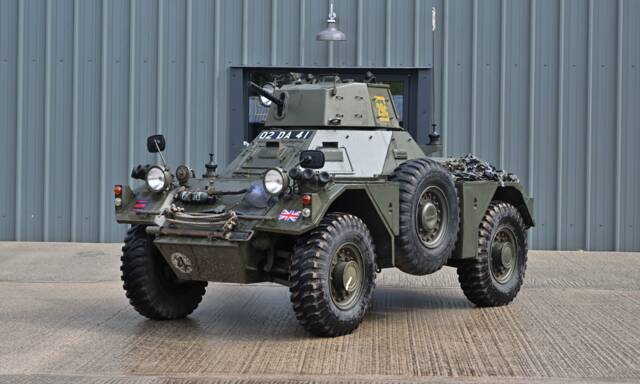
1960 | Daimler Ferret Armoured Car
1960 Daimler Ferret Scout Car 4x4 Mk. II Model B

1967 | Daimler Ferret Armoured Car
DAIMLER D200 iscritta ASI ben conservata

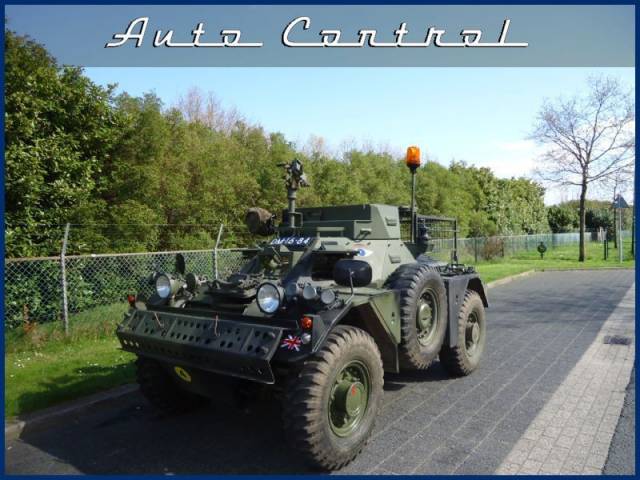
1965 | Daimler Ferret Armoured Car

Create search alert
Let yourself be notified as soon as a listing is published that matches your search filters.
Create listing
Do you have a Daimler Ferret that you want to sell? Then create a listing now.
Create listingDaimler Ferret Classic Cars: Prices & Market Values
History of the Daimler Ferret
The Daimler Ferret armoured car, originally commissioned for reconnaissance missions, was conceived in the late 1940s as a successor to the Daimler Dingo. Production ran from 1952 to 1971, reflecting the evolving needs of the British forces during the Cold War era. Built by Daimler in the UK, the Ferret was rapidly adopted by the British Army, RAF Regiment, and various Commonwealth militaries due to its reliability and tactical versatility on diverse terrains. Its impact is rooted in its extensive deployment over two decades, securing its status in postwar British military vehicular history.
Model history
The Ferret's development drew on the knowledge accumulated through previous military vehicles such as the Daimler Dingo. With an extended production period spanning nearly two decades, the Ferret was offered in various marks. The most well-known versions are the Mk 1 with open turret, Mk 2 with enclosed turret, and later upgrades like the Mk 2/3 with improvements in protection and reliability. The Ferret did not have a direct civilian successor but influenced armoured car design in Britain for years to come.
Highlights of the Daimler Ferret
Unlike civilian off-roaders, the Daimler Ferret features a fully welded, all-steel armoured monocoque hull, providing ballistic protection against small arms. Its drivetrain and suspension were tailored for rapid deployment and reconnaissance, with a full-time 4x4 system and run-flat tyres. The Ferret's low silhouette and nimble handling allowed it to operate with discretion and efficiency in diverse combat zones.
Technical data
Special Editions and Collectible Models
Over its production span, multiple variants of the Ferret were introduced: the Mk 1 with open-top for crew visibility, Mk 2 featuring a turret for enhanced defence, and Mk 2/3 with augmented armour and revised internals. These evolutions correspond with operational feedback, making later marks particularly desirable for collectors focusing on technical advancements and combat-enduring features.
Weak Spots and Common Issues
No explicit weak spots have been documented, but buyers should scrutinize the Ferret for corrosion on hull joints, check the condition of the engine and pre-selective gearbox, and ensure proper maintenance of the 4x4 driveline and braking system. Attention to the integrity of the armoured hull is critical, especially at potential stress points around hatches and wheel arches.
Engine, Performance, Transmission and Handling
The Rolls-Royce B60 engine grants the Ferret commendable off-road potential and on-road reliability. Coupled with a five-speed pre-selective transmission, the Ferret achieves speeds up to 93 km/h—remarkable for an armoured vehicle of its era. Its full-time four-wheel drive and run-flat tyres ensure versatile operation across rugged landscapes, while the low centre of gravity and short wheelbase promote agile manoeuvres. The robust transmission, designed for repeated gear changes under harsh conditions, is a characteristic feature. The Mk 2/3, accounting for all Daimler Ferret listings, stands out for its improved armour and mechanical refinements, underlining its current popularity among enthusiasts of historic armoured vehicles.
Interior, Comfort, Exterior and Design
True to its reconnaissance role, the Ferret was designed with a compact hull and provision for a small crew—typically driver and commander/gunner. Interior comfort was minimal and strictly functional, prioritising rapid egress and operational efficiency over luxury. The external form is defined by the armoured hull with an angular, low-profile silhouette and turret on certain variants. Accessories such as radio equipment and storage for personal armaments were integral to the design. Standard paint schemes were regulation military green, with adaptations for different theatres—such as desert or arctic patterns.
Other features
Many Ferrets on the classic market have been demilitarised, with weaponry decommissioned and some adapted for private ownership or historic vehicle rally use. Spare parts availability benefits from the vehicle's widespread production, though specialist knowledge is required for authentic restoration.
Summary
The Daimler Ferret exemplifies the technical evolution and utility focus of post-war British armoured vehicles. Sought out for its robust construction, engineering significance, and historical value, the Ferret appeals to collectors seeking a unique segment of mobile heritage—where military engineering and classic vehicle enthusiasm meet.