- Motorcycle
- Tecnomoto (0 offers)
Buy Tecnomoto Motorbikes
Tecnomoto built rare, lightweight Italian sports, trail and youth motorcycles in Vignola from the late 1960s into the 1970s. Find colourful Squalo, Sport Special and Mistralino two-strokes, with listings ranging from honest projects to carefully preserved survivors.
Search results
Currently, there are no matching listings for your search.
Create search alert
Let yourself be notified as soon as a listing is published that matches your search filters.
Create listing
Do you have a Tecnomoto that you want to sell? Then create a listing now.
Create listingTecnomoto listing references from Classic Trader
Below you will find listings related to your search that are no longer available on Classic Trader. Use this information to gain insight into availability, value trends, and current pricing for a "Tecnomoto" to make a more informed purchasing decision.
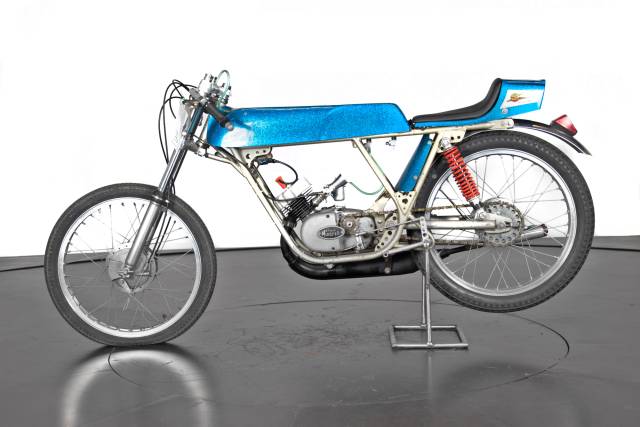
1972 | Tecnomoto Special 50
-

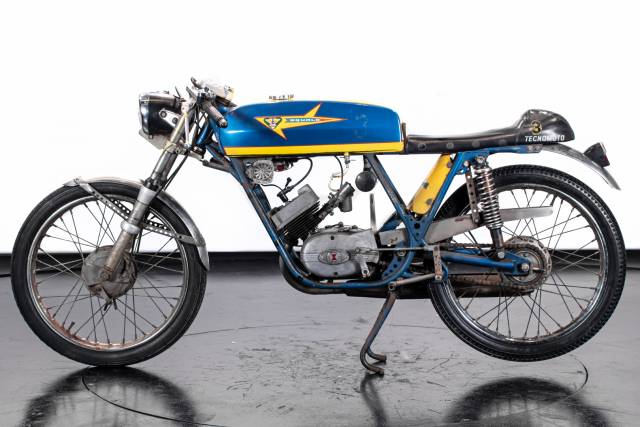
1972 | Tecnomoto Special 50
-
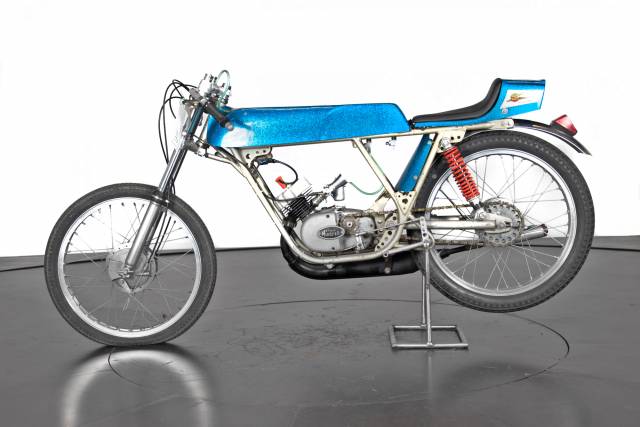
1972 | Tecnomoto Special 50
-
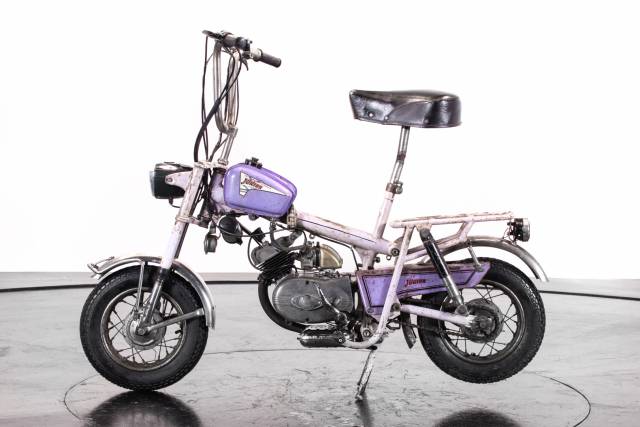
1970 | Tecnomoto Junior
-
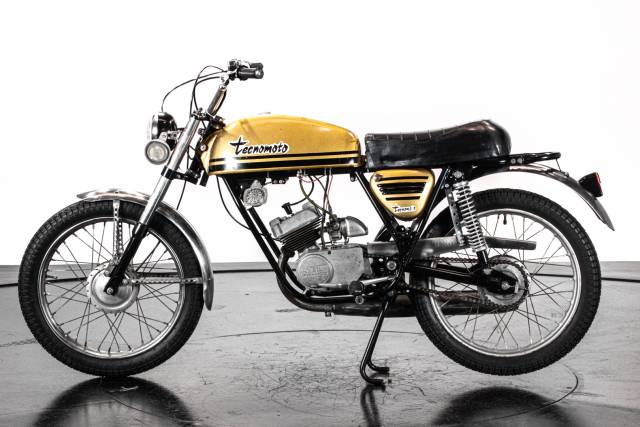
1973 | Tecnomoto Special 50
-
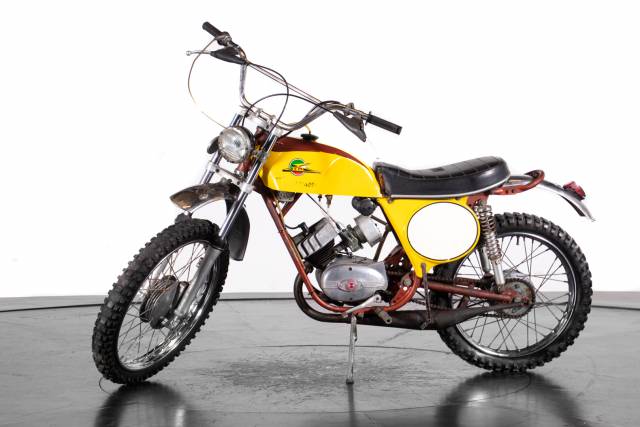
1971 | Tecnomoto Special 50
-
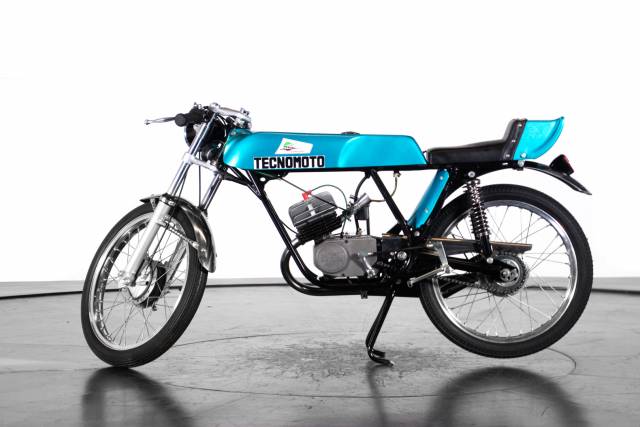
1973 | Tecnomoto Special 50
-
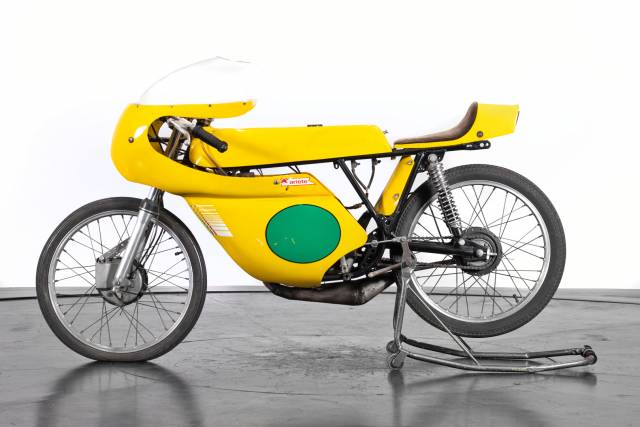
1971 | Tecnomoto Special 50
-
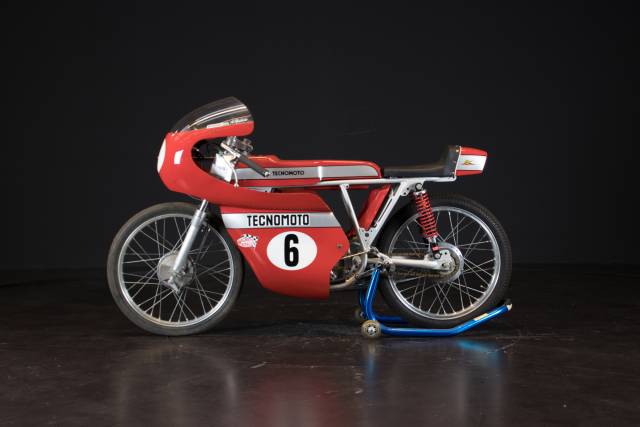
1972 | Tecnomoto Special 50
-
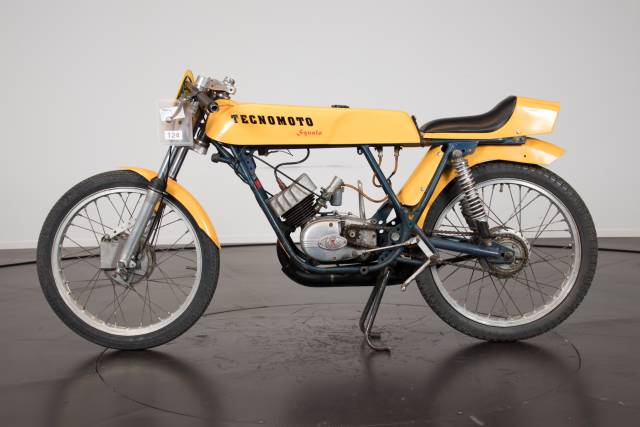
1972 | Tecnomoto Special 50
-
Create search alert
Let yourself be notified as soon as a listing is published that matches your search filters.
Create listing
Do you have a Tecnomoto that you want to sell? Then create a listing now.
Create listingHistory and origins
Tecnomoto S.r.l. was a small but imaginative motorcycle maker from Vignola, in the Modena area of Emilia-Romagna. Its address, Via Modenese 236, places the company roughly 25 kilometres south of Modena, in one of Italy’s most productive motor-industry districts. Brothers Vittoriano and Giancarlo Pellegrini founded Tecnomoto in 1968, at a time when Italian teenagers wanted the appearance and excitement of a racing machine without the size or cost of a full motorcycle.
That setting shaped the company’s method. Tecnomoto did not have the resources of Moto Guzzi, Ducati or Benelli, nor did it need to manufacture every component. Instead, the Pellegrinis combined distinctive frames, tanks and bodywork with engines already proven in Italy’s light-motorcycle trade. Franco Morini, Minarelli and, for several versions, Zündapp supplied the mechanical identity. The result was a genuine manufacturer’s product rather than a single uniform engine family: two motorcycles bearing a Tecnomoto badge may require quite different parts and expertise.
The earliest programme concentrated on compact machines. Junior was a small minimoto, in some descriptions a folding machine, while Paciugo and Paciughino occupied the youth and recreational end of the range. These names are easy to overlook in a catalogue, yet complete examples are now among the hardest Tecnomotos to find because many were used roughly, stored outdoors or discarded when a child outgrew them.
Around 1969 the firm moved decisively towards the road-going sports moped with the Squalo. “Squalo” means shark, an apt name for the long, narrow tank and low, purposeful silhouette. S Export, Squalo Turbo and Special Squalo developed the same idea in different directions: a 50 cc machine designed to look fast, encourage spirited riding and appeal to a young buyer who cared about style as much as transport. In the British context, that visual confidence sits comfortably beside the later café-racer and moped custom scene, even though Tecnomoto’s styling was unmistakably Italian.
The 1972 range demonstrates just how broad the little company’s ambitions were. Dolly and Personal offered practical transport; Sport Squalo Turbo and Sport Special Turbo supplied road performance; Scrambler Turbo and Cross-Strada S brought a trail flavour. There were also Zündapp-powered 50 cc and 125 cc cross machines, alongside 125 cc versions using Franco-Morini engines. A listing described simply as “Tecnomoto 50” therefore deserves careful investigation: model, market, motor and year all matter.
The later Mistralino TM 50 Z6 is one of the most appealing surviving examples. Its Minarelli 49.6 cc engine, six-speed gearbox and light enduro chassis gave it a more serious off-road character than the Squalo. The Mistralino TM 80 extended the concept. Tecnomoto also prepared Zündapp engines for competition; the initials TMZ are commonly understood as Tecnomoto-Zündapp and help explain why some period competition machines have a different mechanical feel from the company’s road mopeds.
Tecnomoto’s end date is not perfectly settled. Some marque references give 1979, while British auction catalogues and period compilations make a cessation around 1975 seem more plausible. Buyers should treat both dates as useful context, not as a substitute for evidence. The frame number, engine number, identification plate, Italian registration booklet and import documents establish the identity of an individual motorcycle far better than a generic online date.
The principal collector families are:
- Squalo, Squalo Export and Special Squalo: the recognisable 50 cc sports roadsters.
- Sport Special and Sport Special Turbo: sporting Franco-Morini versions with particularly strong café-racer appeal.
- Mistralino TM 50 Z6 and TM 80: lightweight Minarelli trail and enduro machines.
- Cross-Strada S and Regolarità: road-legal and competition-influenced cross motorcycles, including Zündapp-powered examples.
- Junior, Paciugo and Paciughino: rare early mini and youth machines where completeness is crucial.
Highlights and features
Tecnomoto’s appeal lies in visible engineering and visual exuberance. The bikes are small, but they do not look apologetic. Slim steel-tube frames, narrow tanks, bright paint, high front mudguards and compact seats give them a sense of movement even when parked. A Squalo can look like a miniature road racer; a Mistralino looks ready for a farm track or Italian regolarità event.
The engine variety is a collector strength as well as a buying complication. A Franco-Morini four-speed, a six-speed Minarelli and a Zündapp installation each have their own clutch, ignition, carburettor and parts story. Generic “50 cc two-stroke” descriptions hide important differences. Correct engine cases, exhaust routing, inlet manifold, airbox and controls can tell more about originality than a freshly painted tank.
Period equipment was ambitious for the capacity. Depending on model, buyers could find Dell’Orto carburettors, Ceriani forks, Borani or other Italian alloy rims, small drum brakes, clip-on handlebars and sports exhausts. The 1971 S50 Sport is documented with a four-speed Franco-Morini engine, clip-ons, a Ceriani fork and Borani alloy wheels. A Monza kit is associated with a larger cylinder, higher compression, sports exhaust and 20 mm carburettor. Those parts may be period-correct, but they should not automatically be described as factory standard.
The Mistralino shows a different kind of sophistication: six ratios, enduro geometry and a claimed six horsepower at 8,000 rpm from a 49.6 cc Minarelli. At roughly 52 kg, it did not need much power to feel lively. The lightness is the point. Tecnomoto made a small engine entertaining through gearing, low mass and direct controls rather than by pretending it was a large motorcycle.
Technical data
These figures describe documented specifications, not a universal Tecnomoto data sheet. Markets, kits and competition conversions created variations. Confirm the specification of the actual motorcycle before using the figures for insurance, registration or valuation. In Britain, a capacity and power discrepancy can also affect the correct historic registration category and the licence requirements for use on the road.
Market Overview and Buying Tips
Tecnomoto is a very thin, low-transparency market. There are too few public sales to create a dependable average, and a complete Squalo cannot be valued by applying the price of a damaged Cross-Strada. Condition, completeness and proof of identity dominate. The same model name can describe a preserved original, a sympathetic mechanical restoration or a collection of parts wearing a replacement tank.
Recorded prices provide useful anchors when converted carefully. A 1971 Tecnomoto Squalo was advertised at €4,200 in 2020, and a 1972 Special Squalo at €4,300. A 1973 Trail 50 appeared at £2,150, while Bonhams recorded £2,990 including buyer’s premium for a water-cooled Tecnomoto racing machine dated around 1971. These are historic public references, not guaranteed 2024 or 2025 values. Recent UK Tecnomoto transactions are too scarce to support a meaningful market average, so treat a seller’s asking price as an invitation to inspect, not proof of worth.
For a British buyer, a sensible working expectation is broad rather than falsely precise: a substantially incomplete project may be worth only a few hundred pounds if its special parts are missing; a usable, honest 50 cc can sit around the low-thousands; and a documented, complete Squalo, Sport Special or Mistralino can command several thousand pounds. Exceptional race specifications may exceed that range. Transport from continental Europe, VAT or import treatment, registration work, specialist paint and missing bodywork can quickly change the total cost.
Numbers and identity: inspect the frame number on the metal, not just in the advert. The plate should not look newly riveted or carry typeface and stamping inconsistent with the rest of the bike. Check that the engine number belongs to the claimed Franco-Morini, Minarelli or Zündapp family. A correct Zündapp engine in a Tecnomoto frame does not by itself prove a factory Regolarità.
Two-stroke condition: insist on a cold start where possible. Listen for main-bearing rumble, check throttle response and look for a persistent gearbox-oil smell or unexplained smoke. Inspect cylinder fins, head studs, exhaust threads and crankcase repairs. Water-cooled racing examples need a sound radiator, hoses and water jacket; corrosion in those areas can turn an exciting purchase into a long fabrication project. Compression is useful evidence, but it cannot replace checks of the crank, gearbox and clutch.
Carburation and tuning: Dell’Orto parts remain obtainable through Italian small-bike suppliers and specialist UK stockists, but correct jetting is not guaranteed. Ask which main jet, needle, slide, air filter and exhaust are fitted. A 20 mm carburettor may be a genuine Monza conversion or a later owner’s attempt to make a tired engine faster. The motorcycle should run cleanly with its complete intake system, not only with the filter removed.
Chassis and wheels: look beneath the tank, around the headstock, under the seat and at the footrest mounts for bent tubes, fresh welds or extra brackets. Cross bikes were often ridden hard. Check fork stanchions for pitting, steering bearings for notchiness and rear shock mounts for cracks. Inspect alloy rims around spoke holes and verify that wheel sizes match the model. Old tyres and oil-contaminated drum linings are safety issues, not cosmetic details.
Documentation and UK registration: an Italian libretto, old number plate record, purchase invoice and photographs taken before restoration add real value. For an imported machine, retain the bill of sale and evidence of the ownership chain. The DVLA route depends on the vehicle’s age, existing documentation and whether it has previously been registered in Great Britain; check the current requirements before purchase. A dating certificate or engineer’s report may be needed, and a frame number that does not match the paperwork should stop the deal until resolved.
Parts are a mixed story. Pistons, seals, bearings, Dell’Orto service parts and some Minarelli, Morini and Zündapp internals are comparatively manageable. Tecnomoto tanks, side panels, badges, seat bases, exhausts and model-specific brackets are not. UK owners may also face carriage and customs charges when sourcing an Italian reproduction. The best value is therefore often the most complete bike, even if its paint is faded. A cheap shell missing its identity parts rarely remains cheap.
Performance and riding experience
A Tecnomoto does not ride like a modern learner motorcycle. Its first impression is lightness: the steering responds immediately, the narrow tyres follow road cambers and the controls feel close to the rider. The engine’s modest output encourages momentum. Rather than selecting a high gear and relying on torque, the rider listens for the two-stroke’s useful rev range, feeds in the clutch and keeps the motor singing.
The Squalo and Sport Special put the rider forward in a compact, purposeful crouch. Clip-ons, a narrow tank and a small seat make even a quiet country lane feel like a circuit. Braking is an anticipatory exercise. Period drums can be effective when round, clean and correctly adjusted, but they do not offer the immediate bite of a modern disc. Old rubber, damp roads and poor cables deserve respect. The enjoyment comes from carrying speed neatly, changing gear accurately and exploiting every available horsepower.
The Mistralino is more playful still. Its six-speed gearbox keeps the Minarelli engine active, while the low mass makes a narrow track or green-lane surface feel inviting. It is not a modern enduro: suspension travel, ground clearance, lighting and braking belong to another era. Used within those limits, it offers a vivid connection with the terrain. A Cross-Strada feels less specialised and more like a lightweight road-and-trail machine, with a different balance between stability and agility.
The 125s bring greater urgency but also greater responsibility. A claimed 19 bhp for a Regolarità 125 is substantial in such a light chassis, and originality matters especially where competition equipment, brakes and frame modifications are concerned. None of these motorcycles should be judged by top speed alone. Their pleasure is tactile and involving, not effortless.
Design and equipment
Tecnomoto’s design language evolved from mini-bike playfulness to credible sporting purpose. The Squalo uses a long, graphic tank and low line to suggest speed. Sport Special details sharpen that impression with racing-style controls and a more committed stance. The trail machines exchange the streamlined tank profile for high mudguards, number boards, exposed frame tubes and a slim bench seat.
Colour is part of the identity. Period Cross-Strada S examples are documented in blue, green and red, while the road models often use bold contrasts and prominent decals. A glossy modern repaint can be attractive but may conceal incorrect graphics, filler over dents or a tank from another model. Consistent patina is often more valuable than flawless paint. Compare decals, badges, cap shape, switchgear and seat stitching with period photographs before approving a restoration.
British owners have long understood how a small Italian bike can become a personal statement. The UK mod tradition, café-racer movement and moped scene all reward compact proportions, bright finish and mechanical character. A tasteful period-style conversion can be enjoyable, but the seller should distinguish an original Sport Special from a standard Tecnomoto fitted with clip-ons and a racing seat. Keep removed parts and document changes; reversibility protects both history and value.
Sport and export markets
Tecnomoto was never a mass-market Grand Prix manufacturer, yet its cross bikes and prepared Zündapp engines placed it within Italy’s energetic small-capacity competition culture. A Super Cross 50 with a Zündapp engine is associated with a second-place result at its first event at the Autodromo di Modena. Such individual results should not be inflated into a complete factory racing record, but they help explain why competition-looking Tecnomotos attract disproportionate interest.
Britain is an important part of the marque’s surviving story. John Rudge Imports of Overseal, Staffordshire, imported Tecnomoto and promoted the bikes with the memorable promise of “flair, imagination, quality and colour”. This was more than an export footnote. It gave British riders access to a distinctive alternative when the local moped market was dominated by familiar utility machines, and it helps explain why a UK-registered Tecnomoto may carry period modifications or paperwork unlike an Italian example.
When viewing a British bike, ask whether its speedometer, lighting, number plate bracket, silencer and controls were altered for local use. A period UK conversion can be historically interesting; a recent mixture of parts should be priced as such. John Rudge documentation, an old British logbook or a contemporary advert can turn an uncertain import into a more convincing piece of Tecnomoto history.
Summary
To buy a Tecnomoto motorbike is to choose rarity, Italian styling and engaging two-stroke mechanics over easy interchangeability. The Squalo and Sport Special are the natural road-going collector choices; the Mistralino TM 50 Z6 offers the most distinctive lightweight trail experience; Cross-Strada and Regolarità machines appeal to buyers who value competition character. Junior and Paciughino are charming but especially dependent on completeness.
The strongest purchase is usually a technically honest, fully identified motorcycle with its original tank, exhaust, wheels, engine and paperwork. Spend more for evidence, not shine. Check numbers, cold-start behaviour, chassis integrity, carburettor specification and the cost of missing parts before agreeing a price. Then find Tecnomoto listings on Classic Trader and discover a small Italian marque whose colour and imagination remain remarkably persuasive on British roads.