- Motorcycle
- Laverda (11 offers)
Buy Laverda Motorcycles
From the agricultural roots of Breganze emerged motorcycles that defined the superbike era, most notably the Jota—a machine born in Italy but perfected in the workshops of Herefordshire to become the fastest production bike of its time.
Search results
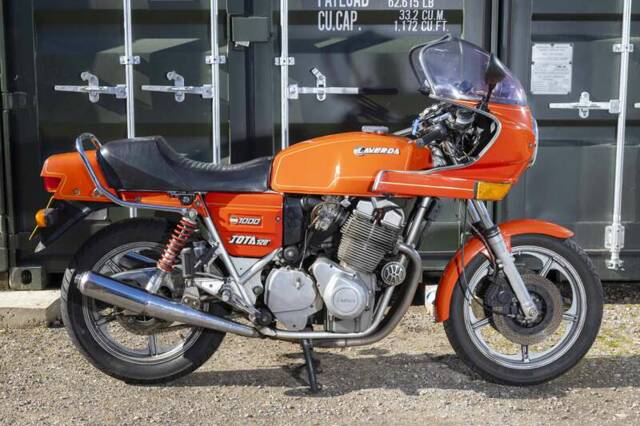
1982 | Laverda Jota 1000
1982 Laverda Jota 120 981cc

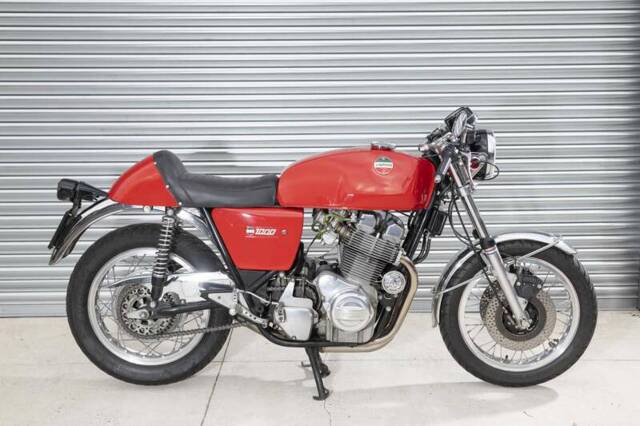
1974 | Laverda 1000 3 C I
1974 Laverda 3C 981cc
Newsletter
The best Laverda listings, straight to your inbox
Get hand-picked Laverda listings, plus the best of cars, motorbikes, and auctions on Classic Trader — all in one place.
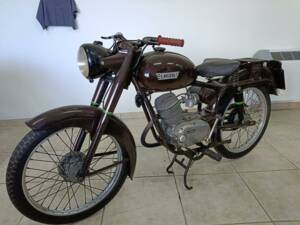
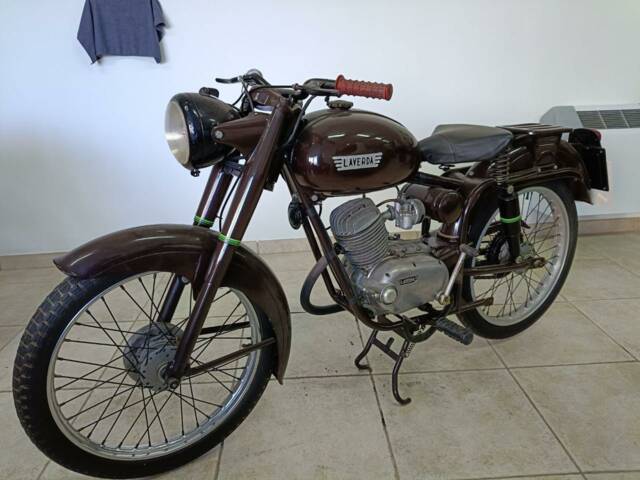
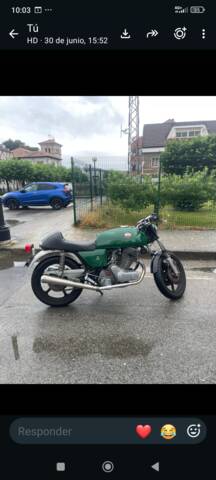
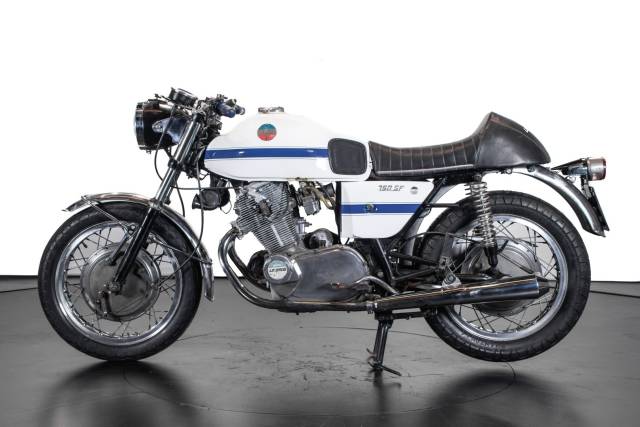
1975 | Laverda 750 SF 3
Laverda 750 SF3

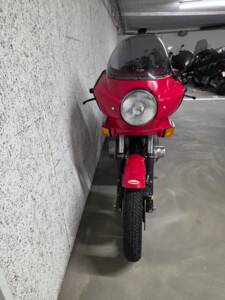
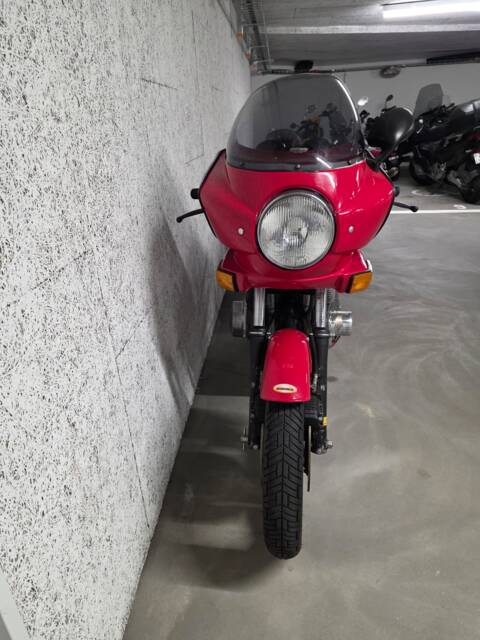
1981 | Laverda Jota 1000
Veteran motorcycle. Very good condition

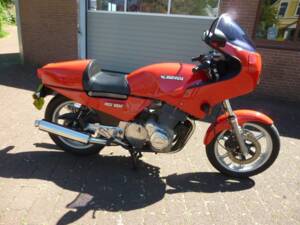
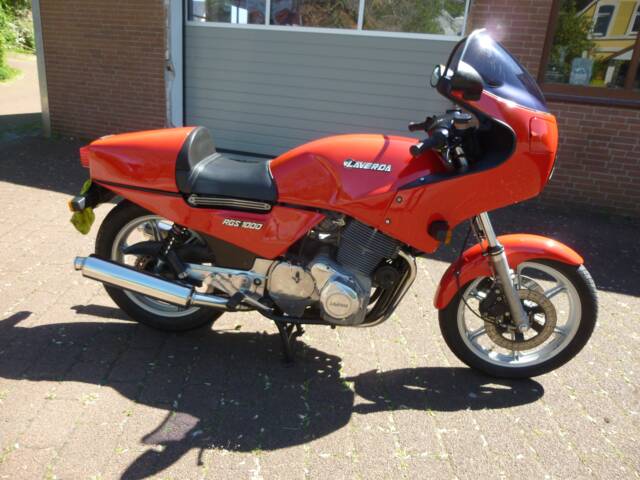
1983 | Laverda 1000 RGS
With original 27,100 km, very well-maintained, beautiful condition

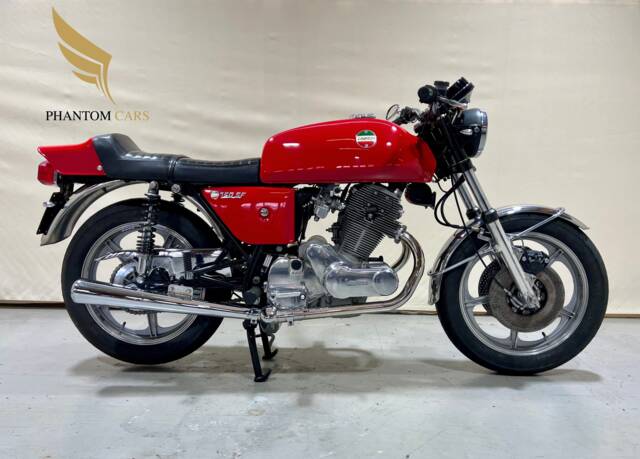
1976 | Laverda 750 SF 3
*** VETERAN *** Restauriert *** Guter Zustand mit Patina*** Eintausch & Finanzierung möglich ***
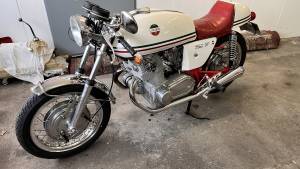
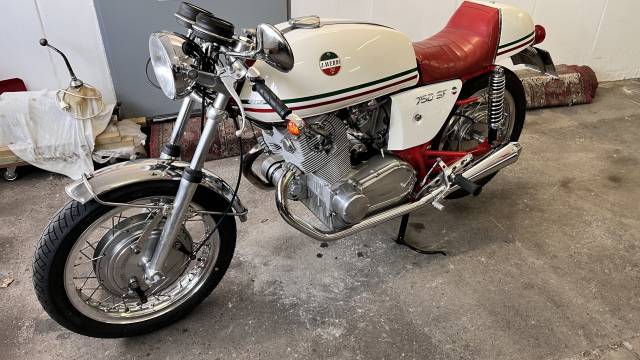
1970 | Laverda 750 SF
Schöner restaurierter Zustand
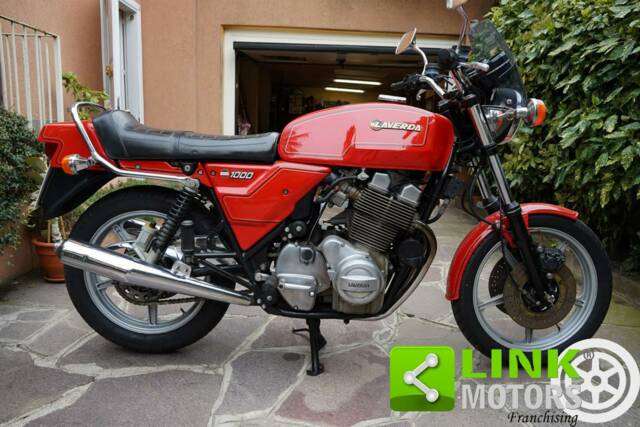
1977 | Laverda 1000 3 C I
LAVERDA 3C/CL 1000 1977 - 17.000KM ORIGINALI - ISCRITTA FMI
Laverda listing references from Classic Trader
Below you will find listings related to your search that are no longer available on Classic Trader. Use this information to gain insight into availability, value trends, and current pricing for a "Laverda" to make a more informed purchasing decision.
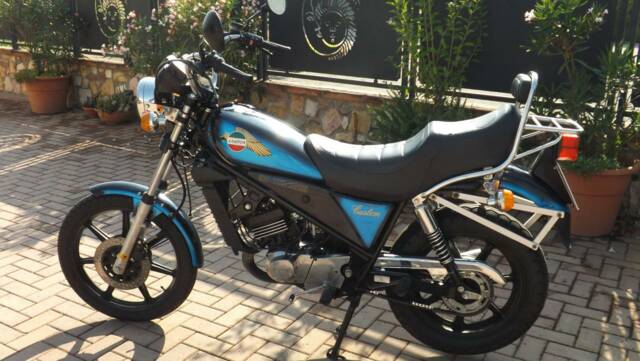
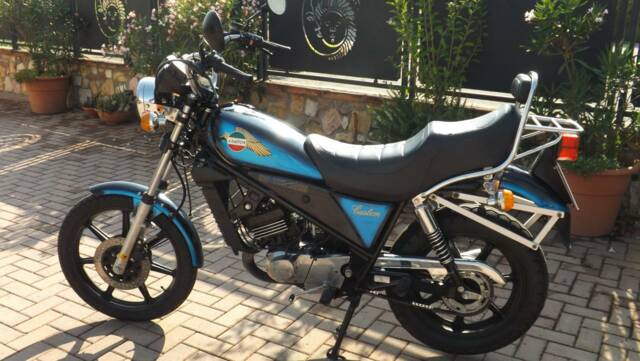
1988 | Laverda 125 LB Custom
-
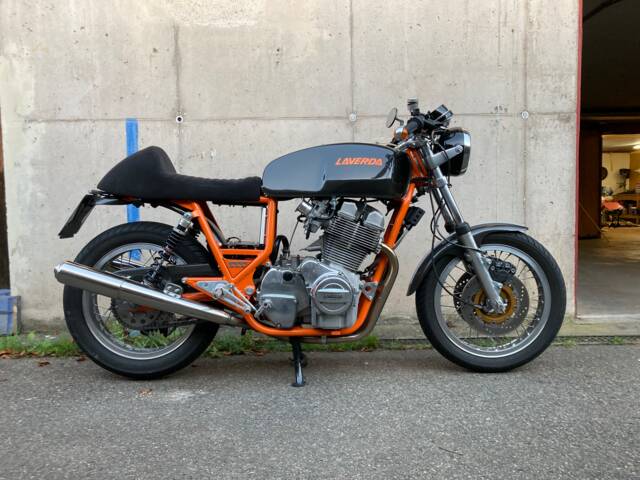
1976 | Laverda 1000 3 C I
Cafe Racer
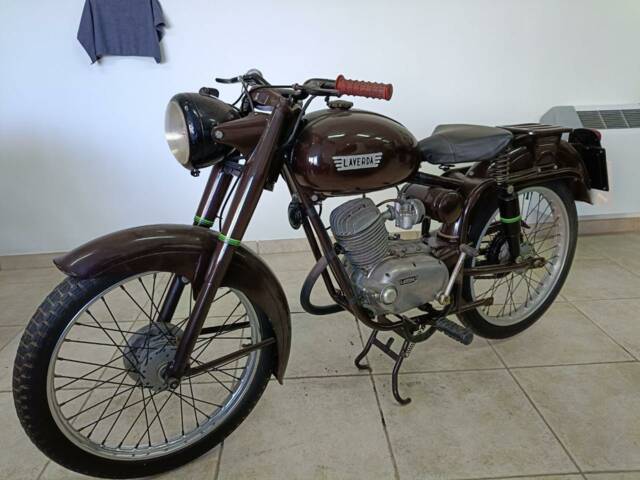
1954 | Laverda 75 Sport
-
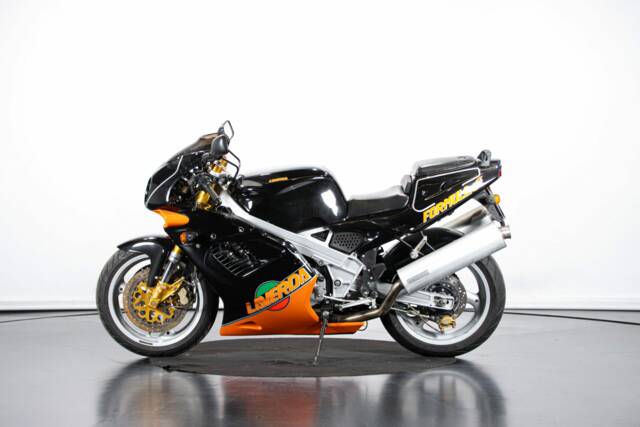
2000 | Laverda 750 S Formula
Laverda 750 FORMULA S
The name Laverda resonates with a particular kind of enthusiast: one who values over-engineered robustness, raw mechanical presence, and a racing pedigree that prioritises endurance over fragile sprinting. While the factory sat in the foothills of the Italian Alps, the brand's soul is inextricably linked to the British Isles, where the Slater Brothers transformed the 1000cc triple into a global performance benchmark.
History & Heritage
The Agricultural Genesis (1949–1960)
The story of Moto Laverda S.p.A. begins not with speed, but with soil. Francesco Laverda, grandson of the agricultural machinery pioneer Pietro Laverda, founded the motorcycle division in 1949 in Breganze. The transition from tractors to two-wheelers was marked by a commitment to durability that would become the brand's hallmark. The first production model, the Laverda 75, was a modest 75cc four-stroke that prioritised reliability and fuel economy for a post-war Italy in need of mobility. By 1952, these small machines were already proving their mettle in long-distance races like the Milano-Taranto, where Laverda took the first five places in its class. The Laverda 100 followed in 1955, further cementing the reputation for "bulletproof" engineering that would later define their larger superbikes.
The Shift to Large Capacity (1961–1972)
As the 1960s progressed, Massimo Laverda—Francesco’s son and a keen rider—recognised that the future lay in larger, more prestigious motorcycles. After touring the United States and observing the success of British twins and the emerging Japanese threat, he pushed for the development of a 650cc parallel twin. Launched in 1968, the Laverda 650 was quickly followed by the 750 GT and the more sporting 750 S. These bikes featured a massive, overbuilt engine that acted as a stressed member of the frame. The 750 SF (Super Freni) arrived in 1970, introducing Laverda’s own high-performance drum brakes, followed by the legendary 750 SFC (Super Freni Competizione), a hand-built production racer that dominated endurance events across Europe.
The Triple Era and the British Connection (1973–1982)
The introduction of the 1000cc triple in 1973 marked Laverda's entry into the top tier of the superbike market. The 1000 3C featured a 180-degree crankshaft, giving it a unique, raucous exhaust note and a "shaking" character that enthusiasts adored. However, it was the British importers, Slater Brothers of Bromyard, who truly unlocked the machine's potential. By fitting high-compression pistons, 4C camshafts, and a free-flowing exhaust, they created the Laverda Jota. Named after a Spanish dance in triple time, the Jota became the fastest production motorcycle in the world in 1976, reaching speeds of 140 mph. This Anglo-Italian collaboration defined the brand's peak, with the Jota becoming the must-have superbike for the British "ton-up" generation.
Evolution and Decline (1982–2004)
In 1982, Laverda attempted to civilise the triple with the Jota 120°, which used a smoother 120-degree crank and rubber engine mounts. While more refined, some purists felt it lost the "brute" character of the 180-degree models. The RGS 1000 (Real Gazzella Sportiva) followed, offering a sophisticated, aerodynamic tourer that was ahead of its time but expensive to produce. Financial difficulties mounted in the mid-80s, leading to a series of ownership changes. A brief revival in the 1990s under Francesco Tognon saw the production of the Zane-era twins (650, 668, and 750), which were modern and sharp-handling but suffered from reliability issues. The brand was eventually acquired by Aprilia in 2000 and subsequently Piaggio in 2004, after which production ceased, leaving Laverda as a cherished name in the annals of motorcycling history.
Highlights & Features
The 180-Degree Crankshaft
The defining characteristic of the classic Laverda triple is its 180-degree crankshaft. Unlike modern triples that use a 120-degree offset for smoothness, the early Laverdas (up to 1981) had the outer two pistons moving together, with the middle piston 180 degrees out of phase. This resulted in an asymmetric firing order that produced a sound more akin to a high-revving twin and a visceral vibration that became part of the riding experience. It is this "raw" feeling that makes the 180-degree Jota one of the most sought-after collector bikes today.
Slater Brothers Heritage
For the UK market, the Slater Brothers connection is paramount. Based in Bromyard, Herefordshire, Roger and Richard Slater were more than just importers; they were developers. The Jota was their brainchild, and a "Slater-spec" bike carries a premium in the British market. Buyers often look for the Slater Brothers certificate of authenticity, which confirms the bike was delivered to the UK in the high-performance Jota specification rather than the standard 3CL trim.
The 750 SFC: A Production Racer
The 750 SFC is the "Holy Grail" for Laverda collectors. Finished in a distinctive vibrant orange, these bikes were hand-built in the competition department. With only 549 units produced between 1971 and 1976, they are exceptionally rare. The SFC was designed for 24-hour endurance racing, featuring a low-slung fairing, a single seat, and a massive fuel tank. It wasn't just a styling exercise; it won the 24 Hours of Montjuïc and the Bol d'Or, proving that Laverda's "over-engineered" philosophy translated directly into racing success.
Brembo and Marzocchi Components
Laverda never skimped on cycle parts. While many contemporary Japanese bikes suffered from spindly forks and wooden brakes, Laverda utilised the best Italian components. Brembo disc brakes (often three of them) and Marzocchi suspension were standard on the triples, providing a level of stopping power and handling stability that was rare for the era. This high-quality hardware is one reason why these heavy machines can still be ridden with confidence on modern roads.
Technical Data
Laverda Jota 1000 (180° Series 2, 1980–1981)
The Series 2 Jota represents the pinnacle of the 180-degree triple, featuring the desirable Bosch electronic ignition and improved alternator output.
Laverda 750 SFC (1974 Electronica)
The "Electronica" version of the SFC is the most refined of the production racers, featuring electronic ignition and disc brakes.
Market Overview & Buying Tips
Current Price Trends (2024–2025)
The market for Laverda motorcycles in the UK remains robust, particularly for bikes with documented British history. Unlike some Italian marques that have seen wild fluctuations, Laverda values have shown steady appreciation, driven by a dedicated community of "Rivet Counters" and riders who appreciate the bikes' usability.
- Laverda Jota 1000 (180°): Expect to pay between £12,000 and £18,000 for a high-quality, roadworthy example. Exceptional "Slater" bikes with low mileage and original paint can exceed £22,000. Recent 2025 auction results show that even bikes requiring minor recommissioning are fetching close to £10,000 (e.g., a 1980 Jota sold for £9,775 at Bonhams in January 2025).
- Laverda 750 SFC: These are blue-chip investments. Prices start at £35,000 for later models and can soar past £80,000 for early, original "drum brake" versions with racing provenance. A 1971 SFC recently achieved over £100,000 at a global auction, though UK prices typically sit slightly lower due to the smaller market.
- Laverda 750 SF/SF2/SF3: The "sensible" classic Laverda. Good examples range from £7,000 to £11,000. They offer 80% of the SFC experience for 20% of the price.
- Laverda RGS 1000: Often undervalued, these can be found for £6,000 to £9,000. They are excellent long-distance classics but lack the "bad boy" image of the Jota.
- Zane-era Twins (650/750): These remain affordable at £2,500 to £4,500, but buyers must be wary of potential crankshaft and oiling issues.
Buyer Profiles
- The Heritage Collector: Specifically seeks out UK-market Jotas with Slater Brothers documentation. Originality is key—correct Dell'Orto carburettors, original Marzocchi shocks, and the distinctive orange or silver/red livery.
- The "Real" Rider: Looks for a 120-degree Jota or an RGS. These buyers value the smoother engine and better parts availability for touring. They are less concerned with "matching numbers" and more with modern upgrades like Sachse ignition systems.
- The Restoration Enthusiast: Often starts with a 750 SF or a 1200 Mirage. These bikes are mechanically simpler than the triples but still require a deep pocket for quality Italian spares.
What to Look For (The "Laverda Checklist")
- The "Slater" Certificate: If buying a Jota in the UK, ask for the Slater Brothers certificate. Without it, the bike might be a 3CL dressed as a Jota, which significantly affects the value.
- Engine Health: Listen for excessive top-end noise. While Laverdas are "clattery" by nature, a heavy knock can indicate worn cam buckets or timing chain issues. A full engine rebuild on a triple can easily cost £5,000 to £8,000.
- The Sprag Clutch: A common weak point on the triples. If the starter motor spins but doesn't engage the engine, the sprag clutch is failing. It's a labour-intensive fix.
- Charging System: The original ND alternators on early bikes were weak. Check if the bike has been upgraded to a modern regulator/rectifier or a higher-output alternator.
- Frame Cracks: Inspect the frame around the engine mounts and the headstock. The vibration of the 180-degree engine can lead to stress fractures over decades of use.
- Exhaust Systems: Original Jota "collector" boxes and silencers are rare and expensive. Many bikes wear aftermarket systems (like Motad or Campbell), which are functional but less desirable for collectors.
Performance & Character
Riding the Jota: A Physical Challenge
Riding a Laverda Jota is not a passive experience; it is a workout. The first thing a rider notices is the weight—at over 250 kg fully fuelled, it is a massive machine. The clutch pull is notoriously heavy, often requiring a "two-finger" or even "four-finger" effort that can become exhausting in city traffic. However, once on the open road, the Jota transforms.
The 180-degree engine is "lumpy" at low revs, but as the needle passes 4,000 rpm, the three Dell'Orto carburettors open up, and the bike lunges forward with a ferocity that belies its age. The sound is a mechanical symphony—a mix of intake roar, gear whine, and a thunderous exhaust note that is uniquely Laverda. At 100 mph, the bike feels incredibly stable, its heavy crank acting like a giant gyroscope that keeps it pinned to the tarmac.
The Handling: Stability over Agility
Don't expect a Jota to flick through corners like a modern sports bike. It requires a deliberate "push" on the bars to initiate a turn. The steering is slow but precise. On fast, sweeping bends, the Laverda is in its element, tracking with a rock-solid confidence that few Japanese bikes of the 70s could match. The Brembo brakes, while requiring a firm squeeze, offer excellent feel and were the best in the business when new.
The 120° Difference
Switching to a 120-degree model (like the Jota 120 or RGS) is a revelation in refinement. The vibration is largely gone, replaced by a smooth, turbine-like power delivery. It is a much better long-distance machine, but some riders miss the "soul" of the 180. In the UK, where the Jota's legend was built on its raw power, the 180 remains the definitive choice for those seeking the ultimate "Italian Stallion" experience.
Design & Philosophy
Form Follows Function (and Strength)
Laverda design was never about delicate aesthetics; it was about muscularity. The bikes look like they were carved from a solid block of aluminium. The massive engine dominates the silhouette, with the frame tubes wrapped tightly around it. The styling is purposeful—the large, round headlight, the expansive fuel tank, and the duck-tail seat unit of the Jota are iconic elements of 70s superbike design.
The Colour of Speed
While Ducati is synonymous with red, Laverda is the brand of Orange. Originally chosen for the SFC to make it visible to pit crews during night racing, the vibrant orange became the factory's signature racing colour. For the Jota, the UK market favoured the classic silver frame with red bodywork and gold pinstriping, a combination that remains the most popular among British collectors today.
The "Over-Engineered" Ethos
The Laverda family’s background in agricultural machinery deeply influenced their motorcycle design. Components were often larger and heavier than strictly necessary, leading to the "bulletproof" reputation. This philosophy extended to the smallest details—the switchgear was often sourced from Bosch (German) rather than the more fragile Italian alternatives of the time. This blend of Italian flair and Teutonic reliability is what gave Laverda its unique position in the market.
Racing Culture & Success
Endurance Kings
Laverda’s racing history is defined by the Bol d'Or and the 24 Hours of Montjuïc. They didn't chase Grand Prix glory; they chased the ultimate test of reliability. The 750 SFC was the weapon of choice, winning the 500-mile race at Thruxton and numerous national production championships. In the UK, the Jota was a dominant force in production racing during the late 70s, often seen at the front of the pack at circuits like Brands Hatch and Mallory Park.
The "PK" Davies Legacy
In the British racing scene, the name Pete "PK" Davies is synonymous with Laverda. Riding for the Slater Brothers, Davies took the Jota to multiple victories in the Avon Production Championship. His aggressive riding style and the Jota's sheer speed made them a formidable combination, cementing the bike's legendary status among British race fans.
The V6 Experiment
No discussion of Laverda racing is complete without mentioning the 1000cc V6. Built for the 1978 Bol d'Or, this incredible machine featured a liquid-cooled, 90-degree V6 engine with shaft drive. It was a technical tour de force, reaching 175 mph on the Mistral Straight. While it only raced once (retiring with a minor component failure), it remains a symbol of Laverda's engineering ambition—a bike that was perhaps too advanced for its own good.
Summary
Buying a Laverda is an entry into an exclusive club of enthusiasts who appreciate mechanical honesty and historical significance. In the UK, the brand's identity is forever tied to the Slater Brothers and the Jota, a bike that proved Italy could build a machine to beat the world.
For the collector, the 750 SFC remains the ultimate prize, a hand-built piece of racing history that commands six-figure prices. For the rider, a well-sorted Jota 1000 (180°) offers a visceral, physical experience that no modern motorcycle can replicate. It is a machine that demands respect and rewards the rider with a sense of accomplishment that only a true "heavyweight" can provide.
Key Takeaways for the British Buyer:
- Verify the Heritage: Always check for Slater Brothers documentation when buying a Jota.
- Budget for Maintenance: These are robust bikes, but parts are expensive and specialist knowledge is required.
- Join the Community: The International Laverda Owners Club (ILOC) is exceptionally active in the UK and is an invaluable resource for parts and advice.
- Embrace the Character: A Laverda is heavy, loud, and vibrates—if you want a sewing machine, buy a Honda. If you want a legend, buy a Laverda.
Whether it's the orange glow of an SFC or the thunderous roar of a Jota on a Sunday morning, a Laverda is more than just a motorcycle; it is a testament to a time when engineering was raw, racing was for the brave, and the fastest bike in the world came from a small town in Italy via a workshop in Herefordshire.