- Motorcycle
- Itom (1 offer)
Buy Itom motorcycles
Itom is one of the most interesting small-capacity Italian makes for British collectors, with a racing record that reaches right into Brands Hatch and the Isle of Man. The UK connection is unusually strong, from A.H. Tooley’s role as sole importer to the riders who made Itom a name in 50cc competition.
Search results
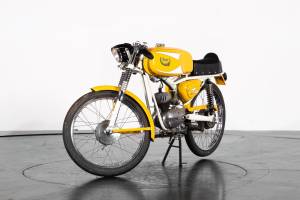
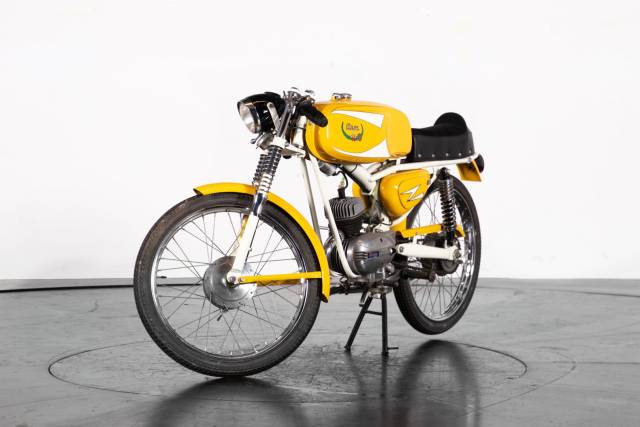
1965 | Itom Astor 4 M Competizione
VERY RARE !!!

Itom listing references from Classic Trader
Below you will find listings related to your search that are no longer available on Classic Trader. Use this information to gain insight into availability, value trends, and current pricing for a "Itom" to make a more informed purchasing decision.
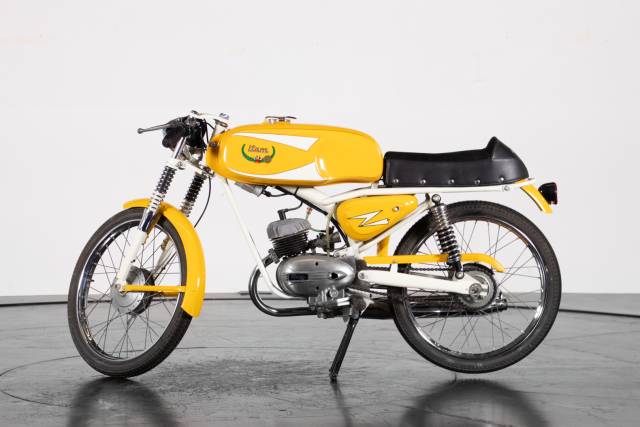
1965 | Itom Astor 4 M Competizione
-
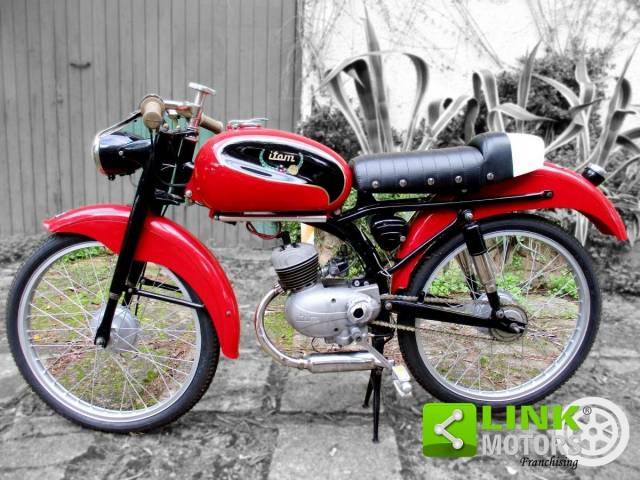
1958 | Itom 50 Sport
ITOM ASTOR SPORT 50 (1958) RESTAURATO
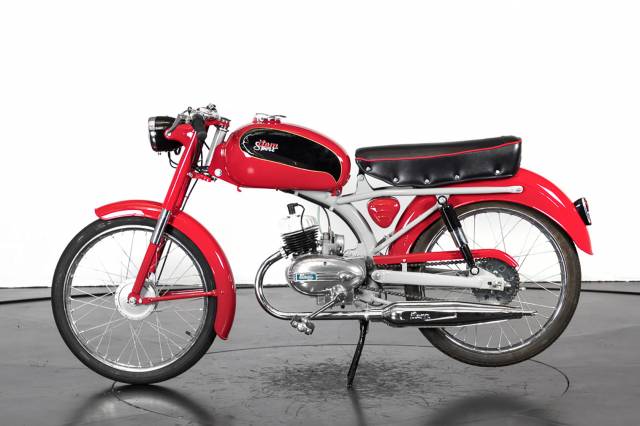
1963 | Itom Astor 4 M Competizione
-
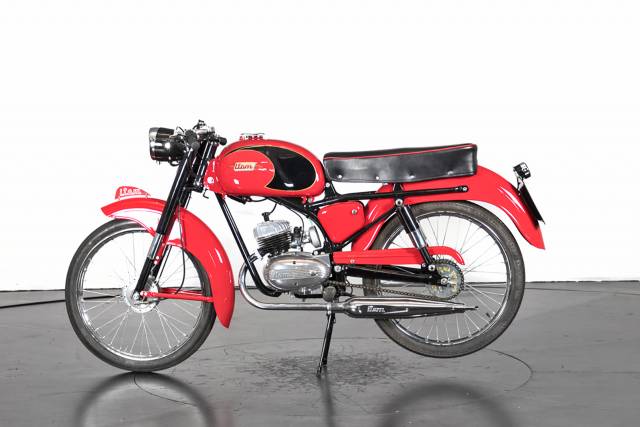
1964 | Itom Astor 4 M Competizione
-
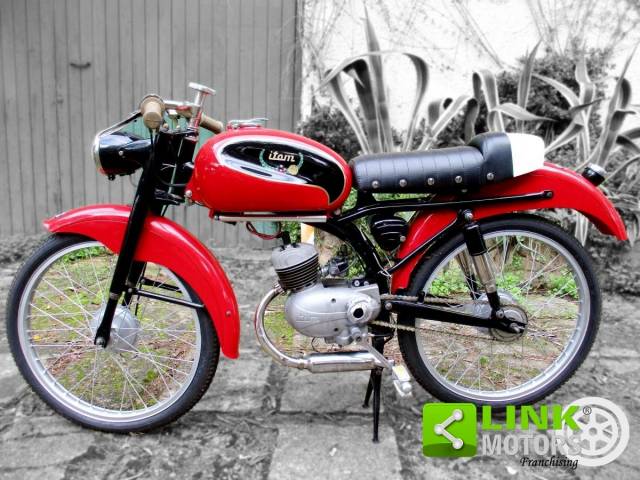
1958 | Itom Astor Competizione
ITOM ASTOR SPORT 50 (1958) RESTAURATO
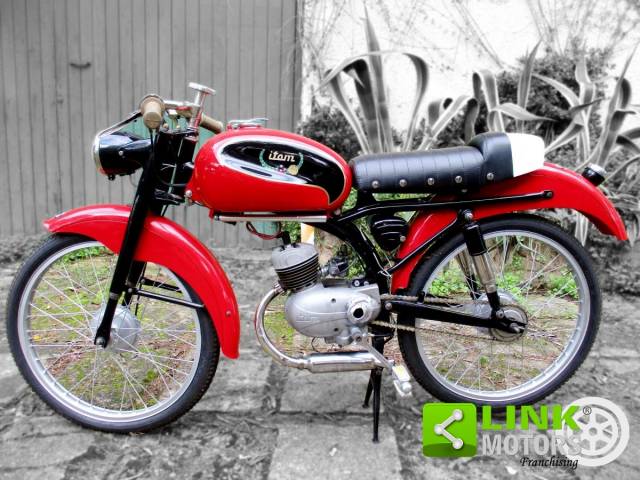
1958 | Itom Astor Competizione
ITOM ASTOR SPORT 50 (1958) RESTAURATO
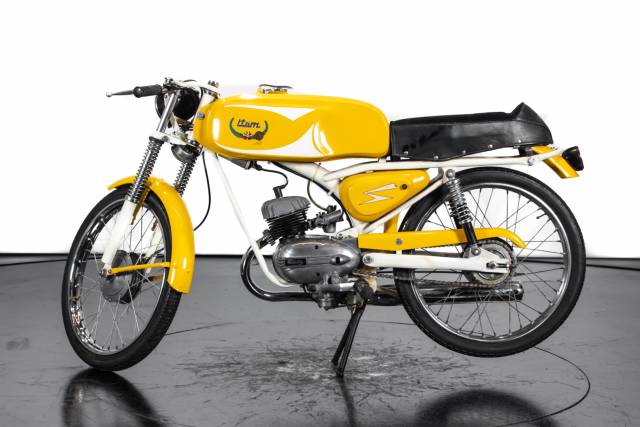
1967 | Itom 50 Sport
-
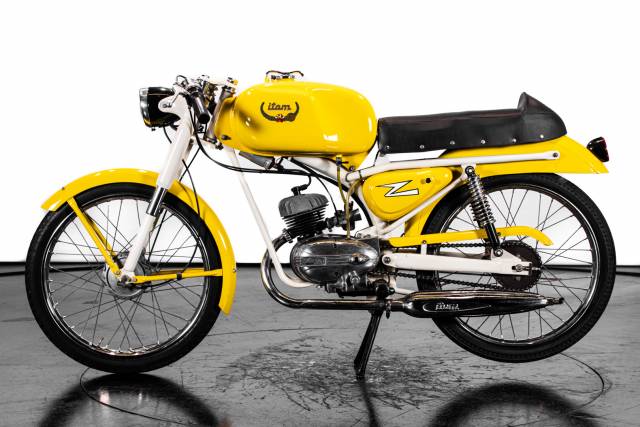
1962 | Itom Astor Competizione
-
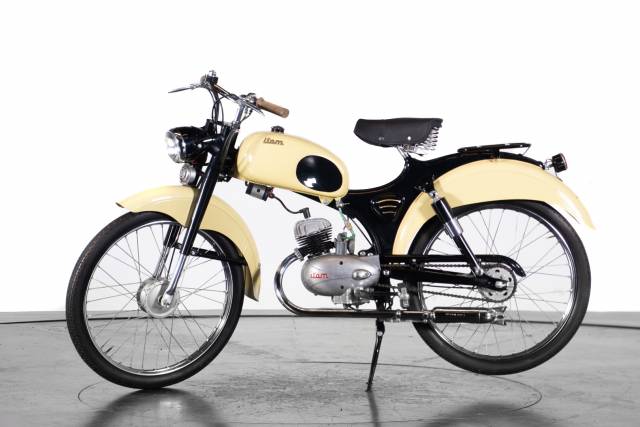
1950 | Itom Astor Donna
-
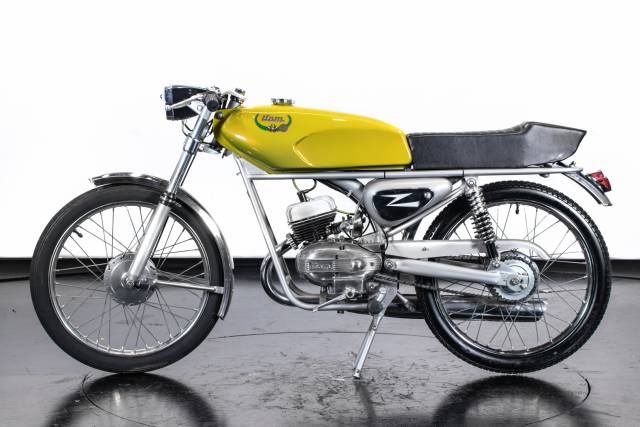
1971 | Itom Astor Competizione
-
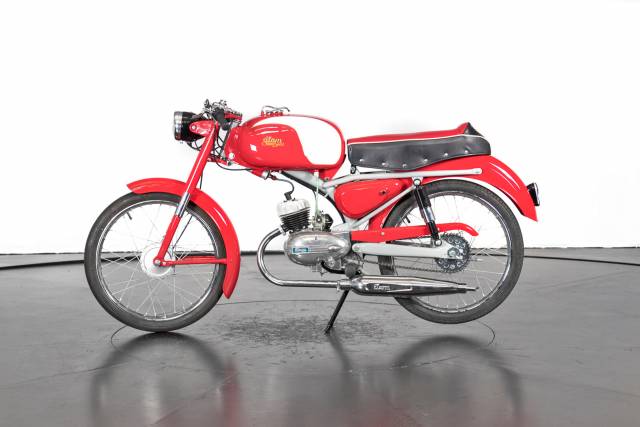
1967 | Itom Astor Competizione
-
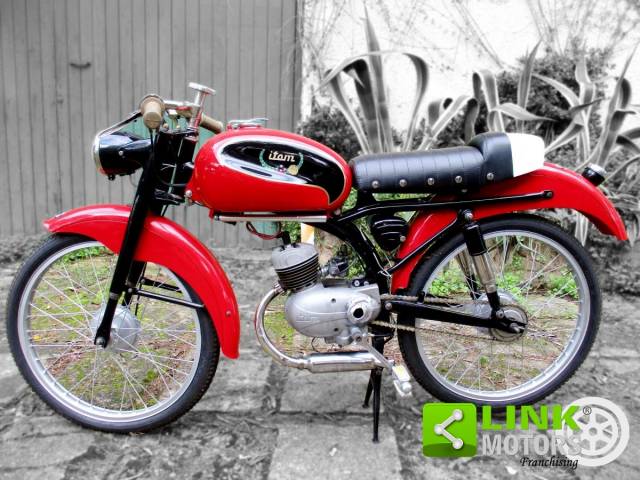
1958 | Itom Astor Donna
ITOM ASTOR SPORT 50 (1958) RESTAURATO
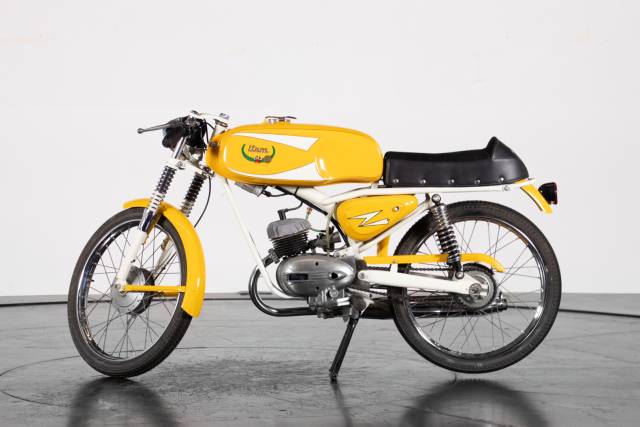
1965 | Itom Astor 4 M Competizione
-
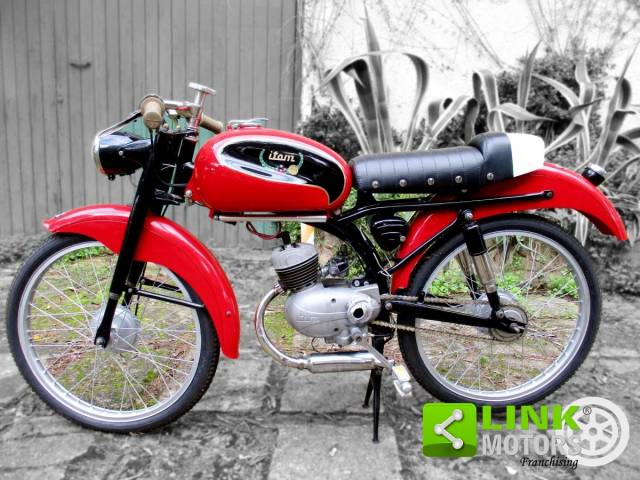
1958 | Itom Astor Competizione
ITOM ASTOR SPORT 50 (1958) RESTAURATO
History
Itom’s story begins in wartime Turin, where lawyer Corrado Corradi founded the company in 1944 under the name Industria Torinese Meccanica. What started as a modest engineering concern quickly developed into a specialist maker of lightweight two-wheelers, and by 1948 Itom had moved from small-scale experiments into genuine production. That early start matters for collectors today, because Itom is not just another post-war Italian moped brand: it is a marque that grew out of a very specific engineering culture in northern Italy, where practical transport, competition ambition and home-grown ingenuity often met in the same workshop.
The first decade defined the character of the brand. The Tourist arrived in 1949 and established Itom as a maker of light, accessible machines rather than purely racing specials. In 1954 the Astor and Astor Sport pushed the company further into the sporting end of the market, while the Astor Super Sport Competizione from 1957 sharpened the racing image even more. These were small-displacement motorcycles, but they were built with serious intent. They were light, quick to tune, and much more competitive than many buyers would expect from a 50cc machine.
The move from Turin to Sant’Ambrogio di Torino in 1957/58 marked another important phase. Production continued there under the parent company IMSA, while the Itom name remained on the tanks and in the minds of riders. By the time the company reached its peak, Itom had established a reputation that stretched well beyond Italy. Production lasted until 1975, and the final years included the Sirio Cross in 1969 and the Sprint in 1972, before the brand slowly faded from the market.
For British buyers, however, Itom’s history is inseparable from the UK scene. The sole importer was A.H. Tooley of London SE12, which gave the brand a direct link to the British market at exactly the right time: the late 1950s and early 1960s, when 50cc road racing and club competition were thriving. Itoms became familiar on British grids, and that visibility helped the marque build a status that it still enjoys among enthusiasts today.
The model line is compact but highly distinctive:
- Tourist (1949)
- Astor / Astor Sport (1954)
- Astor Super Sport Competizione (1957)
- Tabor 65cc (1959)
- Astor 4M (1965)
- Sirio Cross (1969)
- Sprint (1972)
If you are searching for an Itom on the British market, that history matters. The best bikes are often the ones with a clear chain of ownership, old UK registration evidence, and a story that can be traced back to the period when British riders and dealers helped make the brand famous.
Highlights
What makes Itom so appealing is the balance between small-engine simplicity and real racing pedigree. Many classic mopeds are admired for charm alone; Itom is different. These machines earned respect on track, in hill climbs and in club racing, and that competition background gives even the most modest-looking model a sense of purpose.
The first major strength is weight. Itoms are light, narrow and easy to manage, which was a real advantage when 50cc racing demanded momentum rather than brute force. That same lightness also makes them attractive to collectors today. They are easier to store than larger classics, easier to display, and often easier to recommission after long periods off the road.
The second strength is mechanical character. Early Astor models used hand-change systems, which may sound primitive today but actually add to the appeal. They create a direct mechanical relationship between rider and machine, and they are a reminder that small-displacement racing once required skill, timing and mechanical sympathy. Later models such as the Astor 4M switched to foot change and became more practical for hard riding, but they retained the same compact, eager feel.
The third and perhaps most important point for UK buyers is the British racing connection. Itoms did not just appear in Britain; they mattered there. Late 1950s to mid-1960s 50cc racing in the UK was one of the brand’s strongest stages, and the list of riders associated with Itom remains remarkable. Bill Ivy, who would go on to become 125cc World Champion in 1967, began his racing story on an Itom at Brands Hatch in 1959, entered by Chisholms dealers of Maidstone. Mike Hailwood also raced early on Itoms, and Dave Simmonds started his career with the make as well.
Then there is Beryl Swain. In 1962 she became the first woman to ride solo in the Isle of Man TT, doing so on an Itom Astor. For British collectors, that is not a side note; it is one of the most important stories in the brand’s history. Itom is part of the UK’s racing memory, not just an Italian import.
The Astor 4M deserves special attention because it is the best-known and most sought-after road-going Itom. Introduced in 1965, it brought together a 49.5cc two-stroke engine, Dell’Orto UA18S carburettor, 4-speed foot change and around 5.5–6 hp at 10,000 rpm. In period form it could reach roughly 95–97 km/h, which is an impressive figure for a tiny machine from the mid-1960s. The yellow-and-white livery is also part of the appeal: it looks purposeful, sporty and unmistakably 1960s.
Technical Data
The technical picture varies across the range, but the Astor family gives the clearest view of what Itom was about.
These figures are best treated as period-typical rather than factory gospel. Itom documentation is not always as complete as that of larger manufacturers, so buyers should expect minor variations between catalogues, surviving bikes and restored examples.
The key point is that Itom’s machines were never simply about numbers on paper. They were about getting a tiny engine to work hard, rev freely and stay reliable enough for racing or spirited road use. That combination is exactly why the brand still draws attention at auction and in private sales.
Market Overview & Buying Tips
The Itom market in Great Britain is small but very active relative to the number of surviving bikes. Good examples do not appear every week, and when they do, provenance matters. For British buyers, the strongest cars—rather, the strongest bikes—are usually the ones with old UK paperwork, known history and original-spec parts.
Offers & Prices
Recent UK and UK-relevant sales show a fairly wide spread depending on model, completeness and restoration quality:
- 1966 Astor 4M sold for £2,875 at Iconic Auctioneers, Shuttleworth, May 2025
- 1958 Astor Super Sport Competizione sold for £1,265 at Bonhams in 2023
- 1957 Astor Super Sport sold for £335 at Manor Park Classics in October 2024
Taken together, these results suggest a realistic market band of roughly £920 to £4,200 for the most interesting Itoms, with exceptional restorations and very original competition machines capable of moving beyond that range.
What buyers should look for
1. UK documentation
A proper British paper trail is a major advantage. A bike with a V5C, old UK registration history and supporting dating evidence is generally easier to buy, insure and resell. For imports from Italy, check whether the machine has a NOVA reference and that import status is fully resolved. This is particularly important if you want to avoid delays during re-registration or future transfer.
2. Originality over shine
Itoms are often restored to a bright, tidy standard, but originality still counts. Factory-correct finishes, decals, tank colours and component choices can make a noticeable difference to value. A correct Astor 4M in yellow and white will normally attract more interest than a bike repainted in a non-period colour.
3. Engine condition
The 49.5cc two-strokes are simple, but age has its way with bearings, seals, pistons and carburettors. Listen for a clean idle, check for smoke on start-up and make sure the engine takes revs without hesitation. A healthy Itom should feel eager rather than strained.
4. Gearbox and controls
Early hand-change systems are charming, but they must work precisely. Sloppy selectors, worn linkages or damaged grips can make the bike frustrating to ride. On later foot-change machines, make sure the shift action is positive and free from crunching.
5. Frame and metalwork
These are light machines, but age and poor storage can still cause rust around seams, mounts and hidden lower sections. Check the frame carefully, especially if the bike has been cosmetically restored. Fresh paint can hide poor repairs.
6. Exhaust and tuning parts
Racing-spec Itoms often have rare exhausts, period carburettors or other competition components. These can be hard to source, so originality is a real asset. Missing race parts are not impossible to replace, but they can be expensive and time-consuming to find.
Buyer profiles
Itom suits three kinds of buyer especially well. First, the British racing historian, who wants a machine linked to Brands Hatch, the Isle of Man or club racing. Second, the small-bike collector, who values compact dimensions and display appeal. Third, the practical enthusiast, who wants a light classic that can still be started, ridden and enjoyed without the bulk of a larger motorcycle.
Because supply is limited, patience pays. The best buying strategy is usually to wait for a complete machine with sensible history rather than chase the cheapest unfinished project. On an Itom, missing details can be expensive to correct.
Performance
Riding an Itom is a reminder that speed is not always about outright power. These bikes ask the rider to stay involved, keep the engine in the right part of the rev range and work with the gearbox. That makes them engaging in a way that many larger classics are not.
An Astor 4M feels alert from the first few yards. The engine note is crisp, high and busy, and the bike rewards riders who are willing to keep the throttle open. It is not a relaxed cruiser and never pretends to be. Instead, it has the nervous energy of a proper lightweight competition machine that just happens to be road-legal.
The handling is one of the main pleasures. Because the bike is so light, direction changes are quick and natural. On a twisty British B-road, an Itom can feel almost playful, darting into bends with less effort than most classic motorcycles require. The small drum brakes are period-correct rather than powerful, so anticipation is important, but the overall package works as a coherent whole.
Older hand-change models create a very different riding experience. They are more tactile and a bit more involved, which some collectors love and others find awkward at first. Once learned, the system becomes part of the charm. Later foot-change bikes are easier to use in traffic and on longer runs, which is one reason the Astor 4M is often the sweet spot for buyers who want both history and usability.
For British riders, there is also the emotional layer. These are the sorts of machines that lined up at short circuits, club meetings and TT-related events at a time when 50cc racing was serious business. The sense of speed may be modest by modern standards, but the atmosphere is not. An Itom delivers that very particular feeling of being right inside motorcycling history.
Design
Itom design evolved from practical post-war simplicity to a more deliberate sporting identity. Early machines were compact and functional, but the brand soon developed a recognisable visual language. By the time the Astor 4M arrived, that language had become one of the marque’s strongest selling points.
The best-known look is the yellow and white scheme: white frame, yellow bodywork, and contrasting details that make the machine stand out immediately. It looks cheerful, purposeful and distinctly Italian. More importantly, it gives even a tiny 50cc bike the presence of a much larger racing machine. That visual punch helps explain why Itoms still photograph well and draw interest on marketplace pages.
The Astor Super Sport Competizione has a different appeal. It feels more stripped-back, with a tougher, more competition-focused look. This is the sort of bike that appeals to buyers who want something closer to a period racer than a bright road moped. The proportions are lean, the stance is low, and the whole machine looks built to go quickly rather than merely to commute.
The Tabor and Sprint show another side of the brand. They demonstrate that Itom was not fixed on one formula, but continued to adapt as the market changed. The Sprint in particular marks the end of an era, a later model from a marque whose visual identity was already well established by then.
For collectors, small details matter: tank badges, control levers, paint tone, rims, seat trim and exhaust shape all contribute to authenticity. Itom is a make where correct presentation can transform a bike from “interesting old moped” into a genuinely desirable collector piece.
Other
Itom’s importance goes beyond the showroom and the auction room. The brand is deeply tied to racing culture, especially in Britain, where small-capacity competition had a long and serious tradition. That is one reason the name still carries weight among enthusiasts who remember the era of lightweight machines, tight grids and hard-fought club events.
The racing story is exceptional. Bill Ivy started his career on an Itom at Brands Hatch in 1959, entered by Chisholms dealers in Maidstone. Mike Hailwood and Dave Simmonds also used Itoms early in their careers. These are not minor footnotes; they place Itom in the formative years of some of the most famous names in motorcycle racing.
The British link becomes even stronger with Beryl Swain, whose 1962 TT ride on an Itom Astor made history. As the first woman to ride solo in the Isle of Man TT, she occupies a unique place in British motorcycling, and the bike she rode connects Itom directly to that milestone. For UK collectors, that association gives the make an emotional and historical depth that many competitors simply do not have.
Itom also had broader international credibility. The marque was successful in 50cc racing across Europe and found a following in other markets as well, but for Great Britain it was the combination of importer support, competitive visibility and famous riders that created lasting appeal. A.H. Tooley’s role is especially important here: being the sole importer meant that British buyers could encounter Itom through a defined, traceable channel rather than as a random grey import.
That matters today because the market for classic Italian small bikes is increasingly paperwork-sensitive. A machine with documented UK history, especially one that has spent time in British club or road use, may be easier to place than a fresh import without clear status. If you are searching for an Itom in Great Britain, pay attention to the paperwork as much as to the paintwork.
Summary
Itom is a rare case where a small Italian make has a genuinely strong British story. The brand’s combination of Turin engineering, lightweight racing design and UK competition history makes it highly attractive to collectors who want more than just a pretty classic. From the early Tourist to the sought-after Astor 4M, the range offers compact, characterful machines with real motorsport credibility.
For British buyers, the strongest themes are clear: A.H. Tooley importing, Brands Hatch, Bill Ivy, Mike Hailwood, Dave Simmonds and Beryl Swain. Add the importance of V5C documentation, NOVA for Italian imports and the scarcity of good examples, and it becomes obvious why a correct Itom is worth serious attention.
Current UK auction results show that values are still accessible, but good machines are not cheap in a historical sense. The best bikes sit at the intersection of originality, provenance and condition, and that is exactly where Itom is strongest. If you want a lightweight classic with real racing heritage and a distinct British footprint, Find an Itom, Buy with care, and discover now why these small motorcycles still command respect.